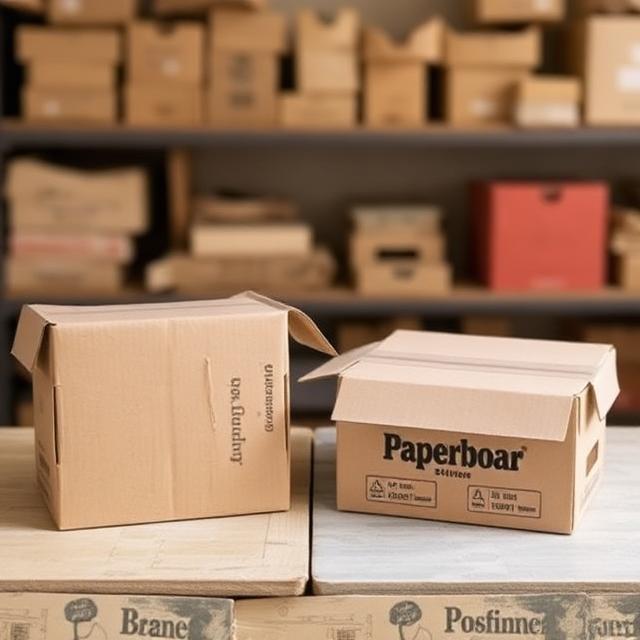
If you’re new to custom packaging, you’ve likely encountered two primary material categories: corrugated and paperboard (also called folding carton). While both are types of “cardboard,” they serve very different purposes.
Choosing the wrong material can mean damaged products, higher costs, or missed branding opportunities. At PackagingVista, we help Los Angeles businesses make the right choice. This guide breaks down the differences so you can decide with confidence.
What Is Paperboard?
Paperboard, also known as carton board or folding carton, is a single-layer material used primarily for retail packaging.
Characteristics:
-
Single-ply construction
-
Lightweight
-
Excellent print surface
-
Folds easily
-
Typically used for boxes that sit on shelves
Common Applications:
-
Cosmetic boxes
-
Cereal boxes
-
Candle boxes
-
Pharmaceutical packaging
-
Gift boxes
What Is Corrugated?
Corrugated fiberboard consists of three layers: an outside liner, an inside liner, and a fluted (wavy) middle layer. The flutes provide strength and cushioning.
Characteristics:
-
Multi-ply construction with fluting
-
Heavier and stronger than paperboard
-
Good to excellent print quality (depending on flute)
-
Superior stacking strength
-
Typically used for shipping and heavy products
Common Applications:
-
E-commerce shipping boxes
-
Heavy product packaging
-
Moving boxes
-
Industrial packaging
-
Subscription boxes
Head-to-Head Comparison
| Factor | Paperboard | Corrugated |
|---|---|---|
| Strength | Low to medium | Medium to very high |
| Weight | Lightweight | Heavier |
| Print Quality | Excellent | Good to excellent (E-flute) |
| Cost | Lower | Moderate to higher |
| Eco-Friendly | Recyclable | Highly recyclable (high recycled content) |
| Best Use | Retail, display | Shipping, protection |
| Stacking Ability | Limited | Excellent |
| Customization | Easy to die-cut | Die-cut available |
When to Choose Paperboard
Choose paperboard if:
-
Your product will be displayed on retail shelves
-
High-quality printing and vibrant colors are essential
-
The box is primarily for presentation, not shipping protection
-
Your product is lightweight
-
You need lower per-unit costs
Example: A luxury skincare brand selling in Sephora needs paperboard boxes with matte lamination and foil stamping. The box sits on a shelf, so print quality and aesthetics are paramount.
When to Choose Corrugated
Choose corrugated if:
-
Your product will be shipped directly to customers
-
Protection during transit is critical
-
Your product is heavy or fragile
-
Boxes will be stacked during storage or shipping
-
You need structural strength
Example: An electronics company shipping headphones to customers needs B-flute corrugated boxes with custom foam inserts to prevent damage during transit.
The Hybrid Approach: When Both Make Sense
Many brands use both materials for different purposes:
| Use Case | Material |
|---|---|
| Retail display boxes | Paperboard |
| E-commerce shipping boxes | Corrugated |
| Gift sets sold in stores | Rigid paperboard or corrugated with premium finish |
| Subscription box outer | Corrugated |
| Inner product compartments | Paperboard or foam |
Corrugated Flute Types (Refresher)
| Flute | Thickness | Print Quality | Strength |
|---|---|---|---|
| E-Flute | 1.5mm | Excellent | Low |
| B-Flute | 3mm | Good | Medium |
| C-Flute | 4mm | Fair | High |
| Double Wall | 6-7mm | Limited | Very High |
If you need strong protection but also high-quality printing, E-flute corrugated offers the best of both worlds.
Cost Comparison
| Factor | Paperboard | Corrugated |
|---|---|---|
| Per-unit cost (small runs) | Lower | Moderate |
| Per-unit cost (large runs) | Low | Low to moderate |
| Shipping cost (due to weight) | Lower | Higher |
| Tooling/die costs | Similar | Similar (waived at PackagingVista) |
Still Not Sure? Let’s Decide Together
At PackagingVista, we help you evaluate:
-
Your product’s weight and fragility
-
How the box will be used (retail, shipping, or both)
-
Your budget and order volume
-
Your printing and finishing requirements
Ready to choose the right material? Contact PackagingVista for expert guidance and a free quote.