Custom Food & Beverage Boxes
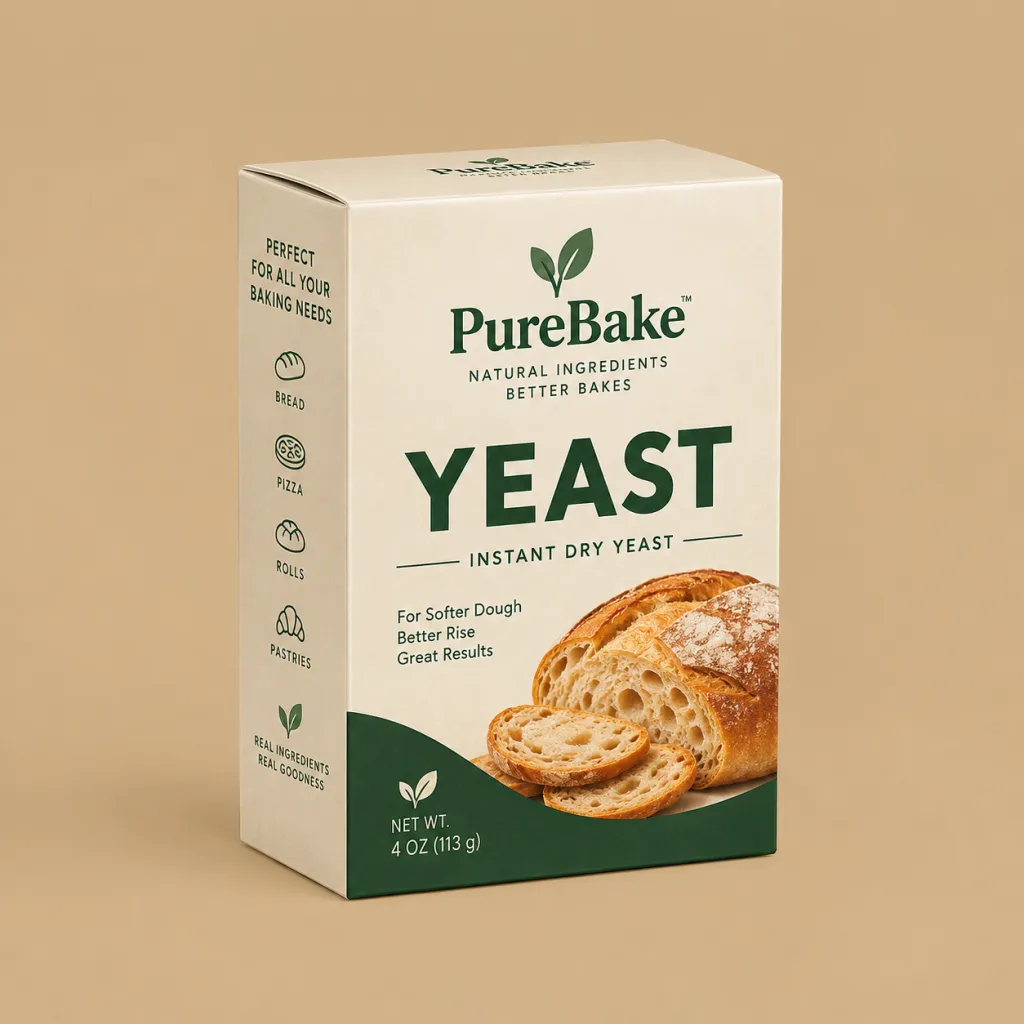
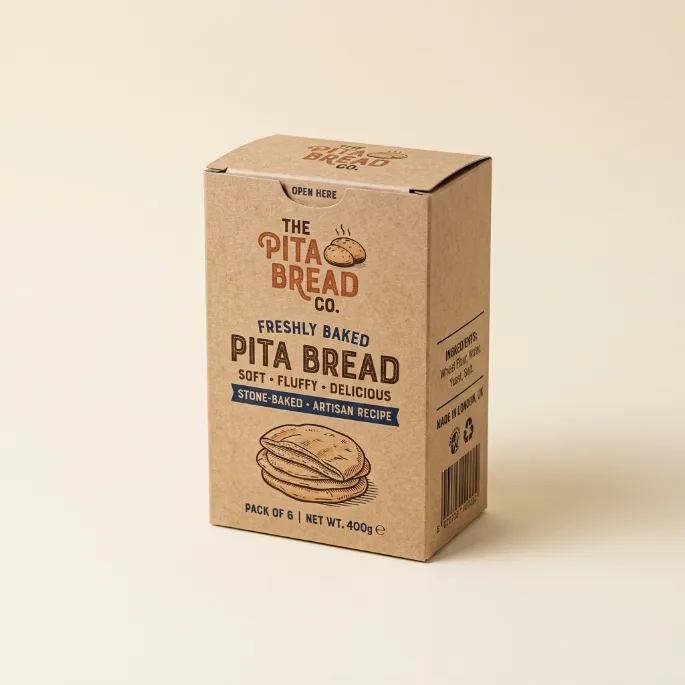
Food and beverage boxes are food-safe printed cartons. Restaurants, bakeries, cafes, and CPG brands use them to hold, guard, and brand food and drinks.
To touch food, the stock and ink must meet US FDA 21 CFR 176.170 (paper and paperboard for wet and fatty foods). Packaging Vista prints them on food-grade SBS, virgin kraft, and food-safe corrugated. We use soy-based, low-migration inks in full CMYK or Pantone color.
We can add grease and moisture barriers for takeout, bakery, and hot food. The minimum is 100 boxes. No die or plate fees. You get a free digital proof and free US shipping in 8 to 10 business days.
Key takeaways
- Food-safe by default: FDA-compliant, food-grade stocks and food-contact-safe inks, with grease and moisture barriers where needed.
- Built for the category: bakery, takeout, beverage, cereal, and confectionery formats – printed to your spec.
- Low barrier: no die or plate fees, a 100-box minimum, free design and dielines, and an 8–10 day turnaround.
- Go deeper: read our custom food packaging guide.
- Get started: request a free quote with your product type, dimensions, and finish.
What is a food & beverage box?
A food and beverage box is FDA-compliant printed paperboard, corrugated, or rigid packaging engineered around a specific food product or drink container — built on food-grade stocks approved under FDA 21 CFR 176.170 (paper and paperboard for wet and fatty foods), printed with soy-based low-migration inks on the outside, and specified with barrier coatings (grease-resistant, PE, PLA, wax) matched to the product's heat, oil, and moisture exposure.
This is the umbrella category covering everything from a printed cereal carton and a bakery pastry box to a 4-pack beer carrier and a chocolate assortment box.
Food and beverage packaging has three unusual requirements that separate it from every other custom-box category: FDA food-contact compliance (the stock, coating, and inks all must be on FDA's approved food-contact substance list — not optional), barrier-to-product match (grease for buttery/fried, PE for hot/wet, PLA for compost claims, wax for classic bakery — the wrong barrier fails within the shelf life), and category-specific compliance labeling (Nutrition Facts + FALCPA for retail food, TTB for alcohol, cocoa % for chocolate, FSC/SFI for sustainability claims — each food subcategory has its own regulatory panel stack).
What are custom food and beverage boxes?
Custom food and beverage boxes are food-grade cartons built around a specific food or drink, not a stock size. "Custom" covers the shape, the food-safe stock, the print, and any barrier coat. Each part is tuned to keep the food fresh and the brand sharp.
Food packaging touches what people eat. So it must clear a higher bar than plain cartons. That means food-safe inks, FDA-compliant stocks, and barriers for grease and wet. Packaging Vista prints them in any shape on food-safe SBS, kraft, or corrugated stock with no die or plate charges.
Food and beverage box styles by product
The right shape depends on what goes inside. The table below maps common food and drink items to the right box. Links open the dedicated page.
| Product | Recommended packaging |
|---|---|
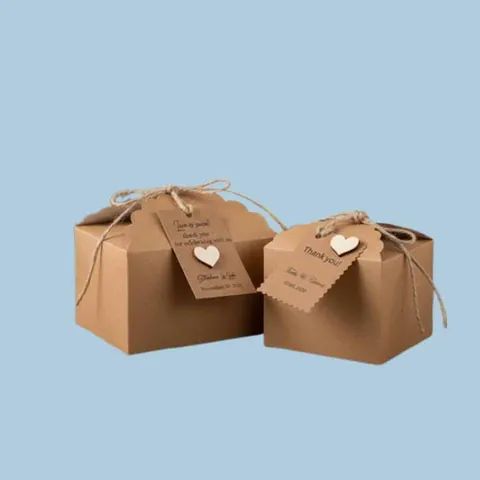
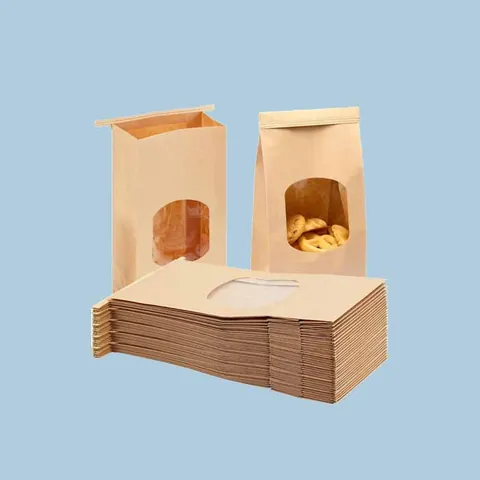
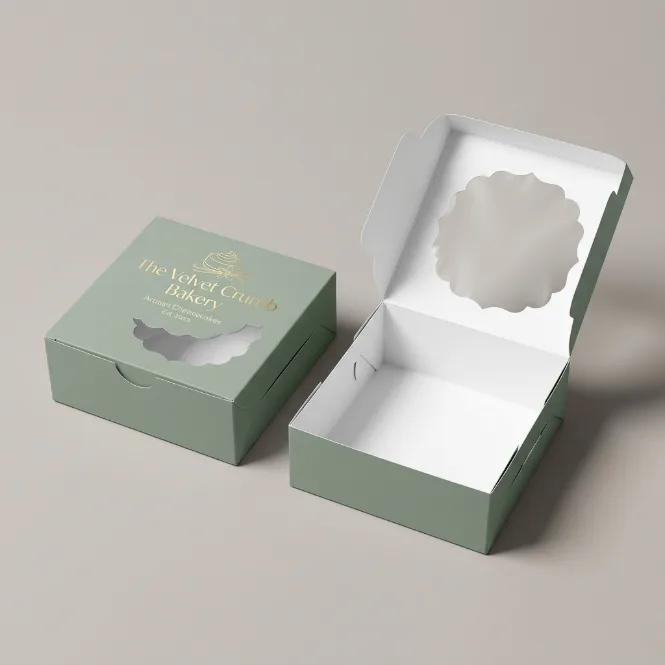
| Pastries & baked goods | Grease-resistant cartons with optional windows – see bakery boxes. |
| Cakes | Sturdy, tall cartons that protect tiers and frosting – see cake boxes. |
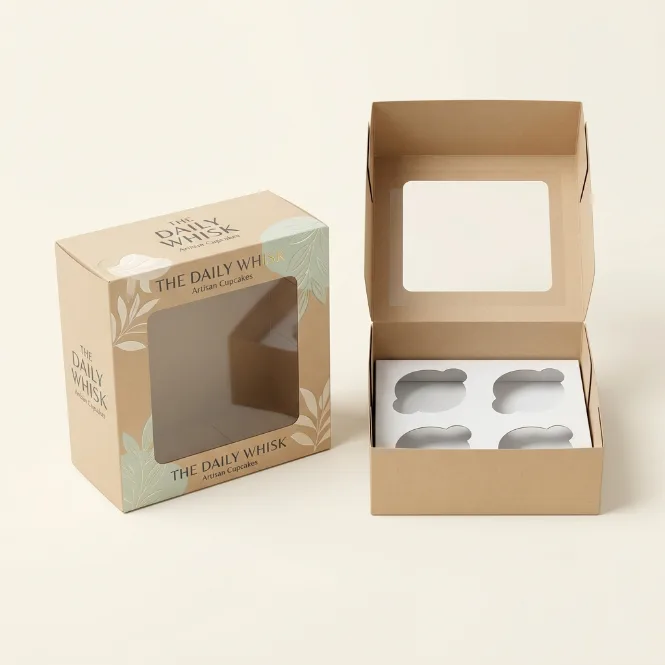
| Cupcakes & muffins | Insert-fitted boxes that hold each cup in place – see cupcake boxes. |
| Bottled & canned drinks | Divided cartons that secure glass and cans – see beverage boxes. |
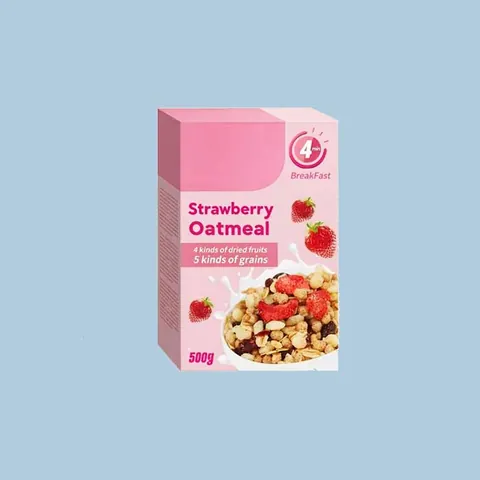
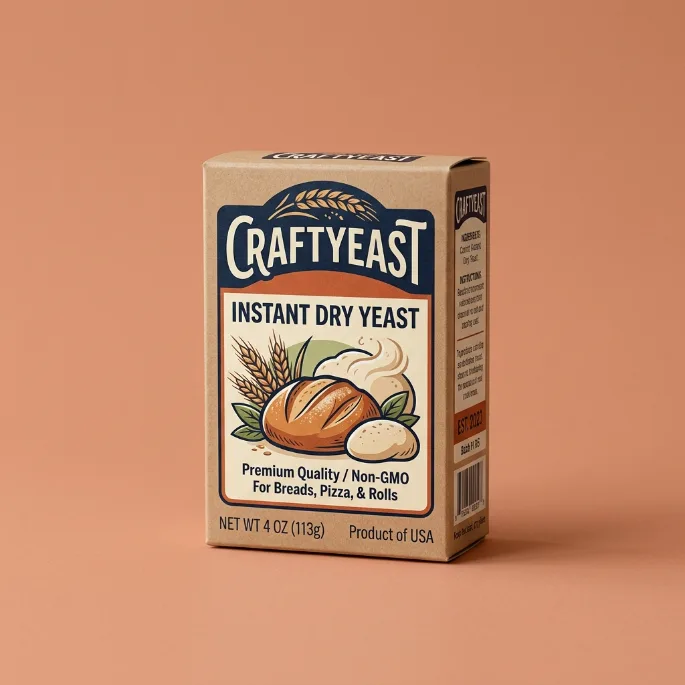
| Cereal & dry goods | Printed retail cartons with strong shelf presence – see cereal boxes. |
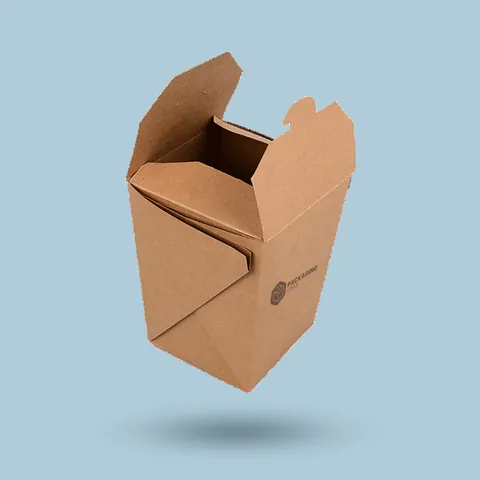
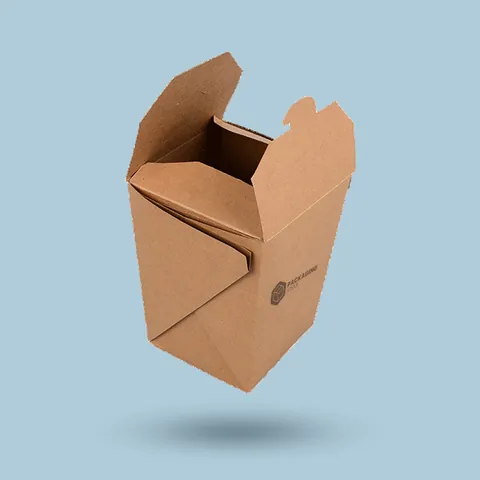
| Takeout & hot food | Leak- and grease-resistant folded cartons – see Chinese takeout boxes. |
| Chocolate & confectionery | Premium rigid or windowed boxes with inserts – see chocolate boxes. |
What materials are food-safe for packaging?
Three stocks cover most food and drink SKUs. All meet FDA 21 CFR 176.170 for food-contact use.
| Stock | Feel | Barrier options | Best for |
|---|---|---|---|
| Food-grade SBS (18-24 pt) | Bright, smooth, retail | PE coating, grease-resistant | Cereal, confectionery, bakery cartons |
| Virgin kraft (18-24 pt) | Natural brown, uncoated | Grease-resistant, wax | Artisan, organic, coffee, bakery |
| E-flute corrugated | Sturdy, protective | Optional PE-lined liner | Beverage 4/6-packs, meal kits, shipping |
| Rigid chipboard (wrapped) | Thick, luxurious | Sealed wrap | Premium chocolate, tea, gifting |
Grease, moisture, and heat barriers
- Grease-resistant (GR) coat - a food-safe barrier that blocks oil for 60 to 120+ minutes at food-service heat. Standard for fried and buttery items.
- PE (polyethylene) liner - a thin food-safe film on the inside for wet, hot, or freezer use.
- PLA (compost) liner - a plant-based coat for brands that need food-safe plus commercial compost.
- Wax coat - the classic bakery and produce barrier. Water-safe but not oven-safe.
- Water or matte varnish - light guard for dry retail cartons.
How to package food safely (a checklist)
- Match the stock to the heat. Hot food needs PE-lined kraft or corrugated. Frozen items need moisture-safe, freezer-rated stock.
- Add a barrier for oily or wet food. Grease-resistant coat or PE liner stops soak-through and label damage.
- Right-size the dieline. A snug fit stops product shift, cracks, and leaks in transit.
- Use food-safe inks only. Soy-based, low-migration inks meet FDA 21 CFR 176.170. They print on the outside. The inside stays uncoated or lined.
- Add compliance panels. Ingredients, allergens, nutrition facts, net weight, and (where needed) UPC and country of origin.
- Test the closure. Auto-lock or 1-2-3 bottom for wet items. Tuck-top for dry retail cartons.
Only have a logo? Our free design team builds a food-safe, print-ready dieline around your product. Just note it on your quote request.
Are eco-friendly food boxes available?
Yes, and they land well with clean-label shoppers. Kraft, paperboard, soy inks, and right-sized boxes cut waste. They also back up a natural food story. Start with our eco-friendly boxes. Then ask us to match a recyclable, food-safe stock to your format.
How much do custom food and beverage boxes cost?
Food and beverage box pricing spans the entire cost range on the site because the category covers everything from a $0.25 single-serve cereal box to a $6 rigid chocolate assortment. Typical ranges at a 500-unit run by category:
- Bakery boxes — single-pastry tuck $0.25–$0.75, windowed pastry $0.50–$1.20, deep pie $0.60–$1.50 (see bakery boxes).
- Cake boxes — round layer $0.60–$1.50, tall/12-in reinforced $1.20–$2.80, 3-tier wedding $2.00–$5.00 (see cake boxes).
- Cupcake boxes — 1–2 count $0.35–$0.85, 6-count $0.60–$1.40, 12-count $0.90–$2.00 (see cupcake boxes).
- Chocolate boxes — 4/6-piece folding $0.70–$1.80, 9/12-piece rigid $1.50–$3.20, 16/24-piece prestige $2.50–$5.00, magnetic-closure $4.00–$9.00 (see chocolate boxes).
- Cereal boxes — single-serve $0.25–$0.60, standard retail $0.60–$1.40, family/large $0.90–$2.00, granola window $1.00–$2.40 (see cereal boxes).
- Beverage carriers — 4-pack can $0.30–$0.80, 6-pack basket $1.00–$2.20, 12-count case $1.50–$3.20 (see beverage boxes).
- Chinese takeout boxes — oyster pail 16 oz $0.30–$0.70, 26 oz $0.45–$0.90, 32 oz $0.55–$1.10 (see Chinese takeout boxes).
Barrier coatings add cost regardless of category: PFAS-free grease-resistant $0.15–$0.50, PE liner $0.20–$0.60, PLA compostable liner $0.30–$0.80, wax coating $0.10–$0.30. Per-box cost drops 30–40% moving from 500 to 5,000 units. There are no die, plate, or setup fees on any run. Send your product, quantity, and shelf environment on the quote form for exact per-box pricing.
How long do custom food and beverage boxes take to make?
Standard production is 8 to 10 business days after proof approval. Rush production runs in 4 to 6 business days on most orders at no additional charge, including standard barrier-coated builds. Wax-coated freezer stock and litho-laminated corrugated (photo-quality print on large shippers) add 1 to 2 days.
Multi-flavor variant runs on the same dieline add 1 to 3 days for staged press setups. Ground freight from Cheshire, Connecticut adds 2 to 5 days to the West Coast — expect a full quote-to-dock timeline of about 2 to 3 weeks for a first order. Food brands with seasonal peaks (Valentine's Day chocolate, holiday cereal, pumpkin bakery, craft-beer seasonal releases): back-plan 60–120 days ahead of the peak so co-packer fill lines have printed boxes before the first PO ships.
Food packaging by category: which sub-slug should you use?
Food and beverage packaging is a family of related but distinct build systems. This hub page covers the compliance and material principles; the specific structural and cost details live on category-specific pages. Use this quick decision guide:
| Product | Best sub-slug | Key spec anchor |
|---|---|---|
| Pastries, cookies, donuts, pies | bakery boxes | PFAS-free grease-resistant; auto-lock counter-fast build |
| Decorated cakes (single-layer to 3-tier wedding) | cake boxes | Reinforced bottom + moisture-safe coating for refrigerated transport |
| Cupcakes (1/2/4/6/12/24-count) | cupcake boxes | Well tray insert sized to liner diameter |
| Bonbons, truffles, bars, chocolate assortments | chocolate boxes | Cavity insert + bloom prevention (60–68°F storage) |
| Breakfast cereal, granola, muesli, snack mix | cereal boxes | FDA 21 CFR 101.9 Nutrition Facts panel + inner PE-coated liner |
| Bottled/canned drinks, craft beer, kombucha, wine | beverage boxes | ECT-rated corrugated matched to loaded pack weight + TTB for alcohol |
| Hot takeout, delivery, oyster pails | Chinese takeout boxes | Poly-lined + wire or folded handle for hot food |
| Ice cream, frozen dessert, freezer-stable | Use bakery structure with wax or PE liner spec | Freezer-rated stock + condensation-safe corners |
All of the sub-slugs above share the same 100-box minimum, no plate or setup fees, and FDA 21 CFR 176.170 food-grade stock defaults. What differs is the structure, insert, barrier coating, and category-specific regulatory panel — which is why the sub-slug pages have the deeper cost, structure, and compliance detail for that food type.
Pricing, minimums, and turnaround
Packaging Vista charges no die, plate, or setup fees. The 100-box minimum suits new SKUs, seasonal items, and short runs. Every order includes free design help, a free dieline, and a 3D mockup. Standard production runs 8 to 10 business days after proof approval, with free US shipping.
Sourcing for a US food brand? See why brands pick a US food box maker. Learn why brands pick us on why choose us. Then request a free quote or contact our team.
Food packaging by service model: retail, QSR, cloud kitchen, and subscription
How the food gets to the customer changes the packaging brief more than the food itself.
Retail food packaging (bakery, snack, specialty food on a grocery shelf) needs shelf-ready structure, front-panel branding, and nutrition-facts space. Quick-service restaurants (QSR) need speed-of-assembly at pack-out: auto-lock and fold-and-close builds that a line worker can build in 2-3 seconds during a rush.
Cloud kitchens (delivery-only brands, often operating multiple brands from one kitchen) need packaging that survives 30-45 minute delivery times AND fits into a driver's insulated bag efficiently. Subscription food (meal kits, snack boxes, monthly gourmet) needs cold-chain-ready structure, insulation layers, and an unboxing experience that justifies the price.
A single brand often needs two or three of these models. A bakery might sell retail cookies on grocery shelves, direct-to-consumer subscription boxes, AND catering trays for corporate orders. We design a shared brand system across the whole line-up so the retail box, the delivery mailer, and the catering tray all read as the same brand family without duplicating tooling for every SKU.
FDA food-contact substances and third-party certifications (FSC, SFI, BPI)
Food-contact packaging in the U.S. has to use materials on FDA's food-contact substance list (or with a Food Contact Notification on file). Standard SBS paperboard, kraft paperboard, and E-flute corrugated with a food-safe coating are all on the list and are what we use for direct-contact food packaging.
Coatings matter: a poly-lined stock is food-safe out of the box, while an uncoated stock needs a food-safe barrier lacquer if it will touch greasy or moist food. Tell us the food type at quote time and we spec the coating.
Third-party certifications add credibility. FSC (Forest Stewardship Council) and SFI (Sustainable Forestry Initiative) certifications on the paperboard tell shoppers the forest fiber is responsibly sourced; BPI (Biodegradable Products Institute) certification proves industrial-compostable claims.
We work with FSC-certified paperboard on request at no material change; SFI is available on similar terms. For BPI certification, the specific coating and any adhesives have to be part of the certified stack, so plan that at design time rather than as an add-on.
Are custom food and beverage boxes worth it for a small food brand?
Yes, and small food-CPG brands — farmers-market bakers, home cottage-food operations, craft breweries and cideries, indie chocolatiers, boutique cereal and granola startups, kombucha brands, cold-press juice, DTC subscription snack clubs, hot-sauce and specialty condiment makers, artisan tea and coffee, ghost kitchens serving multi-brand delivery menus — are exactly who the 100-box minimum was built for.
Food is one of the most crowded and compliance-heavy categories in retail, and a stock white carton with a printed sticker signals hobbyist to grocery buyers, natural-food retail buyers, and DTC subscribers alike. Custom packaging is unusually consequential for small food brands for three reasons: compliance is not optional (FDA 21 CFR 176.170 food-contact stock, FDA 21 CFR 101.9 Nutrition Facts for pre-packaged retail food, FALCPA allergen callouts, TTB for alcohol, PFAS-free grease-resistant coating in CA/NY/WA/CO — a stock carton with a sticker doesn't guarantee any of these), the shelf is unforgiving (grocery buyers assess brands on packaging fit-and-finish before they consider taste, so a printed 24pt SBS box with FSC certification stands next to established brands without the "is this legit?" question), and food photographs poorly on generic packaging (Instagram, TikTok, and DTC unboxing all reward visually distinctive branded packaging that a plain white box cannot deliver).
Common launch pattern: 100 boxes for a farmers-market or Kickstarter debut of a single SKU, then 250–500 as regional retail placement expands, plus 100 DTC subscription-mailer boxes as the online channel builds. For category-specific SMB positioning, see bakery boxes, beverage boxes, chocolate boxes, cereal boxes, and subscription boxes.
Are food and beverage boxes recyclable?
Uncoated paperboard: yes almost universally. Coated stock: it depends on the coating. Food-grade SBS, kraft, and CCNB paperboard food cartons are all curbside-recyclable in nearly every US municipal program — paper and paperboard recovery in the US is 76% per US EPA, and corrugated (OCC) recovery is above 90% per American Forest & Paper Association.
Soy and water-based inks keep the box recyclable and are FDA-compliant under 21 CFR 176.170. Barrier-coating recyclability varies significantly by type: PFAS-free grease-resistant coatings stay in the recyclable paper stream (legacy PFAS-based coatings now banned in California AB 1200, New York, Washington, and Colorado because they contaminate paper recycling); PE liners are accepted by ~60% of US curbside programs that also take milk cartons; wax coatings are typically NOT curbside-accepted but are industrial-compostable where facilities exist; PLA compostable liners require industrial composting access (limited US availability — most consumers don't have it) and are BPI-certified when marketed as compostable.
Under FTC Green Guides (16 CFR Part 260), "recyclable" and "compostable" claims on food packaging must be substantiated — a claim that doesn't hold up under Green Guides is a greenwashing risk. For a fully recyclable food packaging program, we recommend FSC-certified SBS or kraft, PFAS-free grease-resistant coating (not wax or PE where curbside is preferred), soy inks, and printing the recycling-stream mark directly on the carton so shoppers know how to sort.
See eco-friendly boxes for the full sustainable range.
Frequently asked questions
Are your food and beverage boxes safe for direct contact with food?
Yes. We print on FDA-compliant, food-grade stocks: SBS, virgin kraft, and food-safe corrugated. They meet US FDA 21 CFR 176.170 for food-contact use. Inks are soy-based and low-migration, printed on the outside. For hot, greasy, or wet food, we add a grease-resistant, PE, or PLA barrier on the inside.
What FDA rule covers food-contact packaging?
US FDA 21 CFR 176.170 covers paper and paperboard parts that touch wet and fatty foods. Compliant boxes use approved fibers, coatings, and glues with safe migration limits at contact heat. Our food-grade stocks and inks meet this rule.
What is the minimum order and are there setup or plate fees?
The minimum is 100 boxes with no die, plate, or setup fees. So food brands can test a new SKU or seasonal item without a huge overseas run.
How fast can I get my food and beverage boxes?
Standard production runs 8 to 10 business days after art and proof approval. Free US shipping is included. Rush is on the table for launches and events.
Can you make boxes for both dry foods and bottled or canned drinks?
Yes. We build dielines for dry food cartons, 4-pack and 6-pack drink carriers with glass or can dividers, meal kit shippers, and multipack retail cases. So one brand can pack a whole line with one look.
Do you offer grease-resistant and moisture-barrier options?
Yes. Grease-resistant coat, PE (polyethylene) liner, PLA compost liner, and wax coat are on the menu. They suit fried food, bakery goods, takeout, coffee, and hot drinks. We match the barrier to the heat and moisture of the product.
Are your food boxes microwave-safe or oven-safe?
PE-lined and standard-coated cartons are not microwave or oven safe. For heat-in packs, ask for uncoated virgin kraft with a PLA liner rated to your target heat. Or use a parchment liner insert. We flag the right spec for your reheat guide.
Can you print eco-friendly or compostable food packaging?
Yes. Kraft with soy inks and a PLA liner suits clean-label and green food brands. It works wherever food safety and product protection allow. Ask us to match a recyclable or compost stock to your format.
Can you print nutrition, allergen, and ingredient panels?
Yes. We set aside panels for legal content: ingredients, allergens, nutrition facts, net weight, UPC, and country of origin. We print them true to size and clear to read. You send the content. We lay it out in the dieline.
What is the difference between SBS and kraft for food cartons?
SBS (solid bleached sulfate) is a bright white board. Color pops on it. It is the retail-carton standard for cereal, bakery, and candy. Virgin kraft is unbleached natural brown. Craft, organic, and coffee brands pick it for the natural look. Both are food-safe.
Do you supply beverage carriers for cans and bottles?
Yes. We print 4-pack, 6-pack, and 12-pack carriers with die-cut dividers. They lock around glass or aluminum. Corrugated (E-flute or B-flute) is the standard for weight-bearing drink cases.
Are your food and drink boxes made in the USA?
Packaging Vista is a US-based packaging supplier headquartered in Cheshire, Connecticut. Our food and drink boxes are produced through our global production network, not in the US. Every order ships free across the US in 8 to 10 business days with US-based design and customer support.
What certifications should I ask for on food-safe packaging?
At minimum, confirm the paperboard and coating are on FDA's food-contact substance list. Beyond that, FSC or SFI certification adds a credible sustainability signal; BPI certification is required if you claim “industrial compostable” on the pack. Certifications should match the claims you make on the box; unsupported claims are a regulatory risk.
Can you make packaging for a cloud kitchen operating under multiple brand names?
Yes. Cloud-kitchen packaging often uses one shared dieline across two or three virtual brands with variable print artwork per brand. We can print short runs per brand on the same die, so the physical box is the same but the branding varies. This keeps tooling costs low while letting each virtual brand look independent to the delivery customer.
How do I handle compostable claims (BPI or ASTM D6400) vs 'recyclable' on the pack?
“Recyclable” means the box can go in a curbside recycling stream that accepts paperboard or corrugated. “Industrial compostable” (BPI or ASTM D6400 certified) means it breaks down in a commercial composting facility, not backyard compost.
Only make the claim your material actually supports; the FTC Green Guides treat unsupported claims as deceptive. We can advise on which claim your stack supports before you commit to on-pack copy.
What is a food and beverage box?
A food and beverage box is FDA-compliant printed paperboard, corrugated, or rigid packaging engineered around a specific food product or drink container — built on food-grade stocks approved under FDA 21 CFR 176.170, printed with soy-based low-migration inks on the outside, and specified with barrier coatings (grease-resistant, PE, PLA, wax) matched to the product's heat, oil, and moisture exposure.
Three unusual requirements: FDA food-contact compliance (not optional), barrier-to-product match (wrong barrier fails within shelf life), and category-specific compliance labeling (Nutrition Facts + FALCPA retail, TTB alcohol, cocoa % chocolate, FSC/SFI sustainability).
How much do custom food and beverage boxes cost?
Pricing spans the widest cost range on the site because the category covers everything from $0.25 single-serve cereal to $6 rigid chocolate assortments. Rough anchors at a 500-unit run: bakery $0.25–$1.50, cake $0.60–$5.00, cupcake $0.35–$2.00, chocolate $0.70–$9.00, cereal $0.25–$2.40, beverage $0.30–$4.50, takeout $0.30–$1.10.
Barrier adders apply regardless of category: PFAS-free grease-resistant $0.15–$0.50, PE liner $0.20–$0.60, PLA compostable $0.30–$0.80, wax $0.10–$0.30. Per-box cost drops 30 to 40 percent moving from 500 to 5,000 units.
Which food packaging sub-slug should I use for my product?
Bakery goods → /bakery-boxes. Decorated cakes → /cake-boxes. Cupcakes → /cupcake-boxes. Chocolate/confection → /chocolate-boxes. Cereal/granola → /cereal-boxes. Bottled/canned drinks → /beverage-boxes. Hot takeout → /chinese-takeout-boxes. All share the same 100-box MOQ, no plate/setup fees, and FDA 21 CFR 176.170 food-grade defaults.
What differs is structure, insert, barrier coating, and category-specific regulatory panel — which is why sub-slug pages have deeper cost, structure, and compliance detail for that food type.
How do you choose the right food packaging, step by step?
Six steps: (1) identify the food or beverage product and its state at packaging (dry retail vs baked vs hot takeout vs frozen vs confectionery vs beverage), (2) confirm FDA 21 CFR 176.170 food-contact compliance for stock + coating + ink, (3) spec the right barrier for heat/grease/moisture (PFAS-free grease-resistant for buttery/fried, PE for hot/wet, PLA for compost claims, wax for classic bakery), (4) choose structure by service model (retail vs QSR vs cloud kitchen vs subscription), (5) reserve compliance panel space for category (Nutrition Facts + FALCPA for retail, TTB for alcohol, cocoa % for chocolate), (6) print with soy/water-based inks and ship flat-packed to co-packer.
Are custom food and beverage boxes worth it for a small food brand?
Yes — small food-CPG brands (farmers-market bakers, home cottage-food, craft breweries, indie chocolatiers, boutique cereal/granola startups, kombucha, cold-press juice, DTC subscription snack clubs, artisan tea/coffee, ghost kitchens) are exactly who the 100-box MOQ was built for.
Compliance is not optional (FDA 21 CFR 176.170 + 21 CFR 101.9 + FALCPA + TTB + PFAS-free where required), the shelf is unforgiving (grocery buyers assess packaging fit-and-finish before taste), and food photographs poorly on generic packaging. A stock white carton with a sticker signals hobbyist to grocery buyers and DTC subscribers alike.
Are food and beverage boxes recyclable?
Uncoated paperboard: yes almost universally. Coated stock: depends on coating. Food-grade SBS, kraft, and CCNB are curbside-recyclable (US paper recovery 76% per US EPA, corrugated OCC recovery above 90% per AF&PA). Soy inks stay recyclable. Barrier-coating recyclability varies: PFAS-free grease-resistant stays in paper stream (legacy PFAS-based now banned in CA/NY/WA/CO); PE liners accepted by ~60% of programs that take milk cartons; wax typically NOT curbside-accepted but industrial-compostable where available; PLA needs industrial composting access (limited US availability) and BPI certification.
Under FTC Green Guides (16 CFR Part 260), claims must be substantiated.
Who orders custom food & beverage boxes?
Custom food and beverage packaging is ordered by operators whose packaging must be food-safe, grease-resistant, and camera-ready in the same moment.
- Bakeries and pastry shops — window cake boxes, cupcake trays, and cookie cartons in grease-resistant SBS with your logo on the lid.
- Restaurants, cafés, and ghost kitchens — takeout containers, sandwich wraps, and delivery-ready boxes that survive a 30-minute delivery bag.
- Craft beverage and coffee brands — 6-pack and 12-pack carriers, coffee bag boxes, and gift crates with FDA-compliant food-contact inks.
- Chocolate and confectionery makers — rigid gift boxes and folding cartons with foil, embossing, and food-safe internal dividers.
- Meal-kit and subscription food services — mailer boxes with cold-chain-compatible liners and recipe-card compartments.
How to order custom food & beverage boxes
Five steps from quote to delivery. Every order includes free design support, a free custom dieline, and a digital mockup for approval before anything hits the press.
- Share your specs. Send box dimensions (or a photo of the product), quantity, material preference, and any artwork or logo files. If you're unsure of the size, our design team can advise from a product photo.
- Get a quote and mockup. Within one business day we return a firm quote, a printable dieline, and a 3D digital mockup of your food & beverage boxes. No die, plate, or setup fees are added.
- Approve the proof. Review the mockup, request color, layout, or dieline changes, and give final approval. Revisions are unlimited before press.
- Production (8–10 business days). Your order runs on offset or digital press, then moves through finishing — lamination, spot UV, foil stamping, embossing, die-cutting, and assembly if needed.
- Free US shipping. Orders ship flat-packed with tracking. Assembled bundles or master-carton packing are available on request at no charge.
Resources & tools
Free tools and trusted references to help you size, spec, and choose the right food & beverage boxes before you order.
Free tools & guides
- Food packaging by product – match the right food-safe box to what you sell.
- Packaging materials – compare SBS, kraft, corrugated, and rigid stocks.
- Box Size & Dimensional Weight Calculator – size your box and see the billable weight UPS, FedEx, and USPS charge.
Trusted references
- FDA — Packaging & Food Contact Substances – the federal rules on materials that touch food.
- FDA — Food Labeling & Nutrition – the federal rules for food product labels and nutrition facts.
- USDA — Food Safety & Inspection Service – federal food-safety guidance for meat, poultry, and processed foods.
- How2Recycle – the standardized on-pack recycling label for paperboard and kraft packaging.