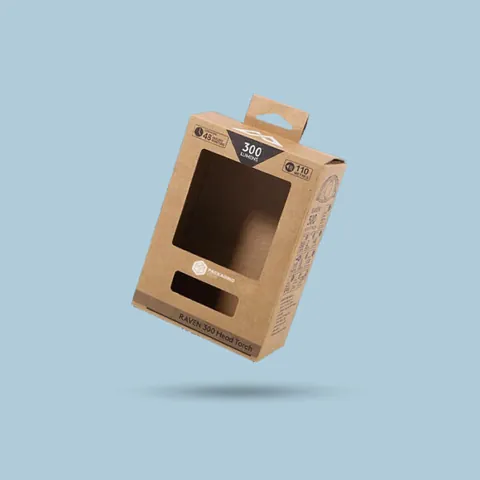
Custom Window Boxes
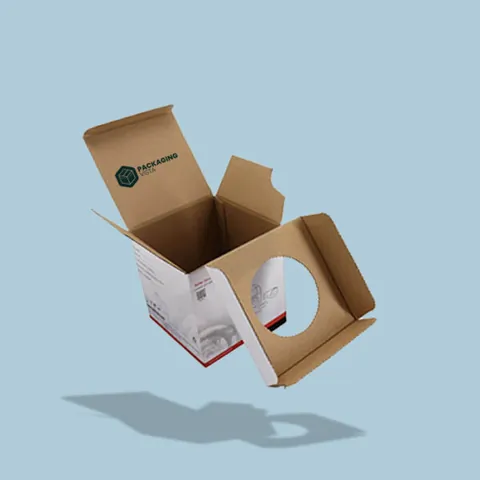
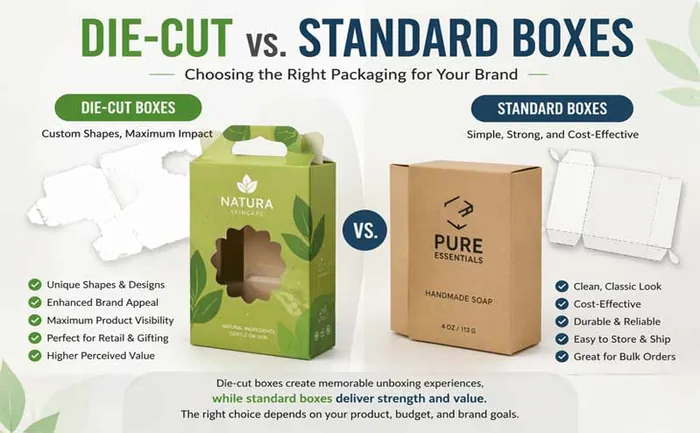
A window box is any carton with a die-cut opening that lets shoppers see the product inside before they buy it. The window is not a box style of its own – it is a feature added to a base structure like a tuck-end carton, a gable box, a sleeve, or a mailer.
The cut can be left open or covered with a clear film patch heat-sealed behind it, turning an ordinary printed carton into a miniature display that sells the contents on sight.
Key takeaways
- A feature, not a structure: a window is die-cut into a base carton – tuck-end, gable, sleeve, or mailer – so you choose the box first, then add the opening.
- Open cut vs. film patch: a bare cut keeps the box fully recyclable; a clear PVC or eco PET patch protects and dust-seals but adds a mixed material.
- Built for shelf appeal: ideal wherever seeing the product drives the sale – bakery, soap, candles, cosmetics, toys, and gift sets.
- Fully custom: any window shape, white SBS or kraft stock, foil or spot UV framing – no die or plate fees, 100-box minimum, 8-10 day turnaround.
What a window box is
Every window box starts as a complete carton and gains an opening cut through one or more panels. Because the window is added to an existing structure, the box keeps all the mechanics of its base style: a tuck-end carton still tucks closed, a gable box still folds up with its handle, and a sleeve still slides over a tray.
The window itself is defined by three things – its shape, its size relative to the panel, and whether it is open or backed with film. The result does two jobs at once: it protects and brands the product like any printed carton, and it acts as a see-through display that removes the guesswork for the shopper.
How the window is cut and finished
The window is created on the same die that cuts the carton flat, so there is no extra tooling step in the structure itself. Our team draws the aperture into your free custom dieline, then the flat sheet is printed, cut, and creased in one pass. If you want a film patch, a clear sheet is heat-sealed to the inside of the panel behind the cut before the box is folded and glued – this is called a patch-window and it keeps dust, crumbs, and fingers off the product.
Boxes ship flat and assemble by hand: fold up the walls, engage the base, and close the top. An open-cut window needs nothing extra; a film-patched box arrives ready. Because the window weakens the panel slightly, we place it away from load-bearing folds and keep a frame of board around the cut for rigidity.
Where window boxes work best
Window boxes earn their keep in any category where appearance is the product. Bakeries and confectioners use them for cupcakes, cookies, and chocolates – pair the window with our bakery boxes for food-grade stock. Soap, bath-bomb, and candle brands use windows to show color and texture; cosmetics and gift-set makers use them so the palette or bottle is visible without opening the box.
Toys, stationery, and specialty retail lean on the same instinct: people buy what they can see. See how a window compares to other structures in our box styles explained guide.
Window styles and variations
- Shape: rectangle and rounded-corner windows are the workhorses; circles, ovals, and fully custom die-cuts to a logo or product silhouette are all possible on the same dieline.
- Coverage: a partial window frames one face and leaves room for branding, while a full-face or wrap-around window turns most of the panel into glass for maximum reveal.
- Film: standard PVC is crisp and low-cost, PET is the more recyclable and eco choice, and frosted film gives a soft, premium haze that hints at the product without fully exposing it.
- Multiples: two or three small windows can create a pattern or show off a multi-pack, and windows can be cut into more than one panel of the same box.
Window film comparison
| Film | Gauge | Clarity | Recyclable | Best for |
|---|---|---|---|---|
| PVC | 125-200 microns | high (crystal clear) | Limited | Cost-effective, standard shelf |
| PET / RPET | 150-250 microns | high | Yes (curbside in most US) | Eco brands, food packaging |
| Acetate | 100-175 microns | High | Compostable (cellulose) | Luxury, biodegradable claim |
| Frosted PET | 150-250 microns | Translucent haze | Yes | Premium mystery reveal |
| Open cut (no film) | - | - | 100% (single material box) | Dry sturdy products, eco |
Aperture design rule: keep at least 1/2 in of board around the window on load-bearing edges to preserve rigidity. Windows over 60% of panel area need a corner brace or gusset. Food-contact-safe PET is needed for direct contact with bakery, confectionery, and produce.
Open cut or film patch – making the right call
This is the trade-off that matters most. An open cut adds no plastic, so the carton stays a single material and is fully recyclable – the right choice for a dry, sturdy product like a candle jar, a toy, or a wrapped bar of soap. A film patch protects the product and seals out dust, which you want for anything perishable, crumbly, or scented, such as fresh bakery or loose confectionery.
When sustainability is a headline claim, PET film or an open cut keeps the story clean; when protection wins, a PVC patch does the job at the lowest cost.
Materials, printing, and framing the window
Stock choice controls how the product reads through the opening. Bright white SBS cardstock gives the truest color and cleanest backdrop, which is why most cosmetic and bakery brands choose it, while uncoated kraft suits natural and handmade positioning by letting the window pop against a rustic panel.
Every box prints in full CMYK with Pantone (PMS) matching, and the window becomes a design anchor: foil stamping or spot UV drawn as a frame around the cut adds a premium border, and soft-touch or matte lamination on the surrounding panel makes the clear window feel sharper by contrast.
Sizing and how to measure
Size the box to the product first, then place the window. Internal dimensions are length x width x height measured to the product with a few millimeters of clearance so it seats without forcing. Keep the aperture within the panel with a margin of board on every side so the carton stays rigid and the film has a surface to seal against.
If you are unsure, send us the product dimensions and our design team drafts the dieline and a free 3D mockup so you can see the exact reveal before printing.
Pricing, minimums, and turnaround
Window boxes are quoted per project because size, stock, film, and finishing all move the number, but the core terms are simple: no die, plate, or setup fees, a low 100-box minimum, and free US shipping. An open-cut box costs the same as the base carton since the window rides on the existing die; a film patch adds a small per-unit cost.
Standard production runs 8-10 business days after you approve the digital proof, and every order includes free design, a free custom dieline, and a 3D mockup. Compare the base structures on tuck-end boxes and die-cut boxes, then get a quote to price your exact window.
Window shapes that convert best on shelf
The window shape does more work than most brands realize. A simple rectangle is safe but generic, which is why it dominates budget shelves. A round window frames a bath bomb, a candle top, or a soap disc like a portrait and pulls shopper eyes on a crowded shelf.
A keyhole or arch window signals gift and premium and works well for perfume, luxury soap, and specialty chocolates. A product-silhouette window (traced around the product outline) is the loudest visual statement of all and works best when the product itself has a distinct shape, like a lipstick tube or a die-cut soap bar.
A panoramic window that wraps the front and one side of the box lets a shopper see the product from two angles at once. This is common on premium candles, where the wax color and label both matter. Wrap windows do cost more to die-cut and film because the film patch has to bend around the corner without lifting, but the shelf pop is worth it for hero SKUs.
Keeping window film clean and scratch-free in transit
Window film is the part of the box most likely to arrive at a warehouse looking tired. Two things scuff it: nested boxes rubbing against each other in a shipper, and dust or loose corrugate fibers from the shipping carton. We interleave with a light tissue sheet between rows of window boxes on longer runs, so the film face of one unit never rides against the printed back of the next.
A cleaner shipper (white board or a Kraft with a smooth inner liner) also cuts fiber shed.
For direct-to-consumer brands, the master shipper size matters more than most product managers expect. A too-loose shipper lets window boxes bounce during transit, and every bounce is a scuff. A too-tight shipper compresses the film against the neighboring box and can crease it.
We spec the shipper to the exact SKU count so the boxes hold each other in place without pressing hard. The rule is: window boxes should feel snug when you push a hand into the shipper, not tight.
What is a window box?
A window box is any carton with a die-cut aperture that lets shoppers see the product inside before they buy it, cut through one or more panels of a base folding-carton structure and optionally backed with a heat-sealed clear film patch. The window is a feature added to a base carton, not a carton style of its own — a windowed tuck-end still tucks closed with friction-fit flaps (see tuck end boxes), a windowed gable box still folds up with its handle intact (see gable boxes), a windowed sleeve still slides over a tray, and a windowed mailer still ships as a corrugated parcel (see mailer boxes).
Because the aperture is drawn into the same die that cuts the carton flat, there is no separate tooling step and no additional die fee.
Window packaging has three unusual properties that separate it from every other structural pack-style feature: the format is a feature layer applied on top of any base carton — you pick the base structure first and add the window second, so window-cost economics scale off the underlying carton rather than as a separate SKU, the aperture design rule (1/2 in board margin on load-bearing edges, corner brace or gusset above 60% panel coverage) is a slug-specific structural engineering constraint that non-windowed cartons never face, and the open-cut-vs-film-patch decision is a sustainability-vs-protection trade-off unique to window boxes — open cut keeps the box single-material and fully recyclable while a film patch protects the product from dust and handling but adds a mixed material.
How much do custom window boxes cost?
Window box pricing is quoted on top of the base carton cost because the window is a feature layer, not a separate structure. Ballpark cost adders (per unit on a 3×2×5 in benchmark at 1,000+ units):
- Open-cut window (no film patch) — $0 to $0.05 per box adder over the base carton. The aperture rides on the existing die at no additional tooling cost; the only cost is the small amount of scrap paperboard cut away from the aperture.
- Standard rectangle or rounded-corner PVC film patch — $0.10 to $0.25 per box adder. The everyday retail workhorse film for cosmetics, bakery, and confectionery.
- PET / RPET film patch (curbside-recyclable, food-grade for direct contact) — $0.15 to $0.35 per box adder. The eco-brand default for food-contact and sustainability-forward retail.
- Acetate compostable-cellulose film patch (biodegradable claim) — $0.25 to $0.60 per box adder. Luxury and eco-luxury tier where the film sustainability angle matters.
- Frosted PET film patch (translucent haze mystery-reveal) — $0.20 to $0.45 per box adder. Premium tier for gift and specialty retail.
- Custom-shape window (circle, oval, keyhole, product-silhouette, or panoramic wrap) — $0.05 to $0.20 adder over a rectangle window depending on shape complexity. Panoramic wrap (front + side continuous cut) adds the most because the film patch must bend around the corner without lifting.
Window-count adders unique to /window-boxes: two-sided window (front + back) roughly doubles the cost of a single window since it adds a second die-cut and second film patch. Multi-window (two or three small windows creating a pattern) adds $0.05–$0.12 per additional aperture.
There are no die, plate, or setup fees for any window shape — the aperture is drawn into the same dieline that cuts the base carton. Request a free quote with your base carton, window shape, film choice, and quantity.
How long do custom window boxes take to make?
Standard window box production is 8–10 business days after proof approval (same as the base carton — the window adds no extra production days for die-cutting since the aperture is on the same die), with rush lanes available in 4 to 6 days for launch dates.
Add 1 day for film-patch heat-sealing on runs over 5,000 units (the patch is applied to the flat sheet before folding and gluing). Add 1–2 days for panoramic-wrap windows because the film patch must be die-cut and pre-bent to match the corner fold before heat-sealing.
Add 1–3 days for multi-SKU variant runs where different windows appear on different SKUs sharing one dieline.
Launch back-plans for window boxes: the timeline typically matches the base carton (30–45 day DTC/subscription, 60–90 day natural-food/specialty retail, 90–120 day big-box) with one additional gate: food-contact window film certification. If the window is for direct food contact (bakery, chocolate, confectionery), food-grade PET certification adds 5–10 business days for supplier documentation on first-time runs and should be back-planned into buyer-vetting timelines with Whole Foods, Erewhon, Sprouts, and mass grocers.
PVC vs PET vs acetate vs frosted vs open cut — which window film do I need?
The film decision is the biggest cost, sustainability, and brand-tier lever on any window box. Five film options mapped to use case:
| Film | Gauge | Clarity | Recyclable | Cost adder | Best for |
|---|---|---|---|---|---|
| PVC | 125–200 microns | Crystal clear | Limited | $0.10–$0.25 | Cost-effective standard retail; short-cycle promo (can yellow in UV over months) |
| PET / RPET | 150–250 microns | High | Yes (curbside most US) | $0.15–$0.35 | Eco brands, food packaging, food-grade direct contact |
| Acetate | 100–175 microns | High | Compostable (cellulose) | $0.25–$0.60 | Luxury, biodegradable claim |
| Frosted PET | 150–250 microns | Translucent haze | Yes | $0.20–$0.45 | Premium mystery-reveal tier (fragrance, luxury soap, specialty chocolate) |
| Open cut (no film) | — | Full unobstructed view | 100% (single material) | $0–$0.05 | Dry sturdy products, eco (candles, wrapped soap, toys) |
Cost-adder + recyclability rows unique to /window-boxes: because the window is a feature layer, the film decision is the biggest single sustainability lever on the whole carton — an open-cut window keeps the entire box single-material and fully curbside-recyclable, while a PVC film patch is often the sole thing preventing a paperboard carton from qualifying for the FTC Green Guides unqualified "recyclable" claim.
PET/RPET is the compromise choice — clarity of PVC with recyclability comparable to open cut. Acetate is the luxury-eco choice — cellulose-based, compostable, but the film gauge is thinner (100–175 microns) so it flexes more on larger panels.
Are custom window boxes worth it for a small brand where product visibility drives the sale?
For any small brand in a category where seeing the product drives the purchase decision, a window box is a shelf-conversion investment more than a packaging upgrade. The typical buyers of custom window boxes at the 100–5,000 box range include: bakery and cake brands showing cupcakes, cookies, and iced treats (see bakery boxes, cake boxes, cupcake boxes); chocolate assortment and confectionery brands with molded chocolates or assorted truffle sets (see chocolate boxes); soap and bath-and-body brands showing hand-poured color and texture (see soap boxes); indie chandlers showing wax color and label design (see candle boxes); cosmetic brands with palettes and dropper bottles visible without opening (see cosmetic boxes); hemp-oil and CBD tincture brands showing full-spectrum oil color as a shelf-differentiation cue (see hemp oil boxes); gift-set and multi-product programs where the arrangement inside is part of the reveal (see gift boxes); and DTC subscription brands where the unboxing reveal drives Instagram/UGC shares (see subscription boxes).
Three reasons the window is worth the film-patch adder over an unprinted-window carton: (1) appearance-driven categories close purchases faster when shoppers can see the product without opening the box — bakery, confectionery, hand-poured soap, artisan candles, and molded chocolates all photograph poorly on stock cartons and photograph well through a window; the visibility is doing the sales work the marketing copy would otherwise have to do. (2) The aperture is drawn into the same dieline that cuts the base carton at no additional tooling cost — brands pay only for the small paperboard scrap plus (optionally) the film patch, so window customization is one of the highest-ROI upgrades available on a folding-carton base. (3) The window frames a design opportunity that other closures cannot — foil, spot UV, or emboss drawn as a border around the aperture reads as premium at a folding-carton price point, letting an SBS carton compete for shelf attention with rigid-luxury builds.
Are window boxes recyclable?
Recyclability of a window box hinges entirely on the film decision. Open-cut windows keep the box single-material paperboard and are broadly curbside-recyclable across virtually every US municipal program — the aperture cut adds no plastic and the paperboard qualifies for the FTC Green Guides unqualified "recyclable" claim.
PET and RPET film patches are curbside-recyclable in most US municipal streams as long as the film is separated from the paperboard first — many programs handle mixed paper + PET; eco-brands add a "separate film before recycling" consumer note. Acetate is compostable cellulose and biodegrades in commercial compost.
Frosted PET recycles the same as clear PET. PVC film patches are the primary recyclability challenge — PVC is not accepted in most curbside programs, so a PVC-film-patched window box is typically a mixed-material item requiring the "recyclable where facilities exist" qualified claim.
For a fully recyclable window box: pair FSC-certified SBS or kraft paperboard with an open cut (no film) or a PET/RPET film patch, skip PVC, and if using film add a consumer-side film-separation note. Food-grade PET is available for direct food contact where the window covers bakery, chocolate, or confectionery.
FTC Green Guides (16 CFR Part 260) govern the specific "recyclable" claim wording — plain uncoated open-cut window cartons qualify for the unqualified claim; PET/RPET-patched variants qualify for a qualified "recyclable after film separation" claim; PVC-patched variants should carry the "recyclable where facilities exist" qualified claim only.
Every window film we spec is available in food-grade formulation where the product requires direct food contact.
Frequently asked questions
Is a window box its own box style?
No. A window is a die-cut feature added to a base carton such as a tuck-end box, a gable box, a sleeve, or a mailer. You pick the structure first, then we cut the opening into it, so the box keeps its original closing and assembly mechanics.
Should I choose an open cut or a film-covered window?
Use an open cut for dry, sturdy products where full recyclability matters, since it adds no plastic. Use a clear film patch when the product needs protection from dust or handling, such as fresh bakery or loose confectionery. Film seals better but makes the box a mixed material.
What is the difference between PVC and PET window film?
PVC is the standard, low-cost clear film with excellent clarity. PET is the more eco-friendly and recyclable option, which suits brands making a sustainability claim. Frosted film softly obscures the product for a premium look.
Can you cut a window in a custom shape?
Yes. Beyond rectangles and circles, we can die-cut the window to a custom shape such as your logo or the product silhouette. Because it is drawn into the same dieline that cuts the carton, custom shapes carry no extra tooling fee.
What stock shows the product best through the window?
Bright white SBS cardstock gives the truest color and the cleanest backdrop, which is why most cosmetic and bakery brands use it. Kraft works well for natural and handmade brands where a rustic look supports the product.
What is the minimum order and turnaround for window boxes?
The minimum is 100 boxes with no die, plate, or setup fees. Standard turnaround is 8-10 business days after you approve your digital proof, and every order includes free design, a free custom dieline, a 3D mockup, and free US shipping.
Will the window film fog or yellow over time?
PET film stays clear and does not yellow, which is why we default to it for retail runs. PVC film is slightly cheaper but can yellow after several months in bright store lighting or UV exposure, so we reserve it for short-cycle promotional runs where the box will sell through fast.
Can I do a window on both sides of the box?
Yes. Two-sided windows let a shopper see the product from the front and back, which works well on candles, soaps, and premium chocolates. It roughly doubles the die-cut and film-patch cost of a single window, so it is usually reserved for hero SKUs rather than the whole line.
Is a window box safe for direct food contact?
The paperboard itself and the window film we use are food-safe when specified. For direct-contact use with bakery, chocolate, or greasy foods we add a food-grade coating or an inner liner. Tell us the food type at quote time and we spec the right food-safe stack.
What is a window box, and how is it different from other structural styles?
A window box is a die-cut aperture added to a base folding-carton structure (tuck-end, gable, sleeve, or mailer), optionally backed with a heat-sealed clear film patch. It is a feature layer, not a carton style of its own — a windowed tuck-end still tucks closed, a windowed gable still folds with its handle, a windowed sleeve still slides.
Because the aperture is drawn into the same die that cuts the base carton flat, there is no separate tooling step and no additional die fee. Three unusual properties: feature-layer economics scale off the base carton; the aperture design rule (1/2 in board margin on load-bearing edges, corner brace above 60% coverage) is slug-specific; the open-cut-vs-film-patch decision is a sustainability-vs-protection trade-off unique to windows.
How much do custom window boxes cost per box on top of the base carton?
Adders per box on a 3×2×5 in benchmark at 1,000+ units: open-cut (no film) $0–$0.05, standard rectangle PVC film patch $0.10–$0.25, PET/RPET film patch (recyclable, food-grade) $0.15–$0.35, acetate compostable film patch $0.25–$0.60, frosted PET film patch $0.20–$0.45.
Custom-shape adder over rectangle: $0.05–$0.20 depending on shape complexity. Panoramic wrap window (front + side continuous cut) adds the most because the film must bend around the corner without lifting. Two-sided window roughly doubles the cost; multi-window adds $0.05–$0.12 per additional aperture.
No die, plate, or setup fees for any window shape.
Which film do I need — PVC, PET/RPET, acetate, frosted, or open cut?
Five-way decision. Open cut (no film): best for dry sturdy products (candle jars, wrapped soap, toys), 100% single-material recyclable, no dust protection. PVC: crystal-clear low-cost standard retail; can yellow in UV so short-cycle promo tier; limited recyclability.
PET/RPET: high clarity, curbside-recyclable in most US municipal streams, food-grade for direct contact — the eco-brand default. Acetate: compostable cellulose (biodegradable claim), luxury and eco-luxury tier, thinner gauge so flexes more on larger panels.
Frosted PET: translucent haze for mystery-reveal premium tier (fragrance, luxury soap, specialty chocolate). Rule: dry + eco headline = open cut; perishable/scented = film patch; direct food contact = food-grade PET required.
How do I spec a custom window box step by step?
Six steps: (1) Pick the base carton first (tuck-end / gable / sleeve / mailer) — window is a feature, not a structure. (2) Choose window shape and coverage (rectangle, rounded, circle/oval, keyhole/arch, product-silhouette, panoramic wrap; partial vs full-face). (3) Choose film or leave open cut (PVC / PET / acetate / frosted PET / open cut). (4) Apply the aperture design rule — 1/2 in board margin on load-bearing edges, corner brace or gusset above 60% panel coverage, place window away from load-bearing folds, leave 1/4 in glue-flange around aperture for film sealing. (5) Frame the window with foil, spot UV, emboss, or debossed border and pick backdrop stock (bright white SBS for cosmetics/bakery, kraft for artisan/handmade, recycled paperboard for eco). (6) Spec interleaving tissue between rows and shipper size to prevent film scuff in transit.
Are custom window boxes worth it for a small brand where product visibility drives the sale?
Yes, and one of the highest-ROI upgrades available on a folding-carton base. Three reasons: (1) Appearance-driven categories close purchases faster when shoppers can see the product — bakery, confectionery, hand-poured soap, artisan candles, molded chocolates, hemp oil (showing full-spectrum color) all photograph poorly on stock cartons and photograph well through a window. (2) The aperture is drawn into the same dieline as the base carton at no additional tooling cost — brands pay only for paperboard scrap plus (optionally) the film patch. (3) The window frames a design opportunity foil, spot UV, or emboss can anchor around, letting an SBS carton compete for shelf attention with rigid-luxury builds.
Fits bakery, cake, cupcake, chocolate, soap, candle, cosmetic, hemp-oil, gift, and subscription reveal-kit SKUs.
Are window boxes recyclable, and which film should I choose for sustainability?
Recyclability hinges entirely on the film decision. Open-cut windows keep the box single-material paperboard and qualify for the FTC Green Guides unqualified 'recyclable' claim — the aperture cut adds no plastic. PET and RPET film patches are curbside-recyclable in most US municipal streams after film separation from paperboard; eco-brands add a 'separate film before recycling' consumer note.
Acetate is compostable cellulose (commercial compost). Frosted PET recycles the same as clear PET. PVC film patches are the primary recyclability challenge — not accepted in most curbside programs, so a PVC-patched window box requires the 'recyclable where facilities exist' qualified claim.
Most-recyclable build: FSC-certified SBS or kraft + open cut or PET/RPET + skip PVC + consumer-side film-separation note.
Who orders custom window boxes?
Custom-structured boxes are ordered by brands and operators who need a specific box shape or format built to their product — not a stock size.
- E-commerce and DTC brands — mailer boxes and custom shippers sized to the product so freight is billed on actual volume, not dead air.
- Product designers and startups — die-cut prototypes with free custom dielines so a launch box can be tested before it goes to press at volume.
- Premium and gift brands — rigid, magnetic-closure, and pillow-box formats that carry a giftable feel with foil, embossing, and inserts.
- Retail merchandisers — counter-display and window-box structures built to sit on a shelf and pull the shopper's eye at eye level.
- Print buyers and packaging engineers — any material and finish with no die, plate, or setup fees so a spec sheet becomes a firm quote in one business day.
How to order custom window boxes
Five steps from quote to delivery. Every order includes free design support, a free custom dieline, and a digital mockup for approval before anything hits the press.
- Share your specs. Send box dimensions (or a photo of the product), quantity, material preference, and any artwork or logo files. If you're unsure of the size, our design team can advise from a product photo.
- Get a quote and mockup. Within one business day we return a firm quote, a printable dieline, and a 3D digital mockup of your window boxes. No die, plate, or setup fees are added.
- Approve the proof. Review the mockup, request color, layout, or dieline changes, and give final approval. Revisions are unlimited before press.
- Production (8–10 business days). Your order runs on offset or digital press, then moves through finishing — lamination, spot UV, foil stamping, embossing, die-cutting, and assembly if needed.
- Free US shipping. Orders ship flat-packed with tracking. Assembled bundles or master-carton packing are available on request at no charge.
Resources & tools
Free tools and trusted references to help you size, spec, and choose the right window boxes before you order.
Free tools & guides
- Packaging materials – compare SBS, kraft, corrugated, and rigid stocks.
- Custom boxes hub – every box style we print, in one place.
- Box Size & Dimensional Weight Calculator – size your box and see the billable weight UPS, FedEx, and USPS charge.
Trusted references
- How2Recycle – the standardized on-pack recycling label for paperboard and kraft packaging.
- Forest Stewardship Council (FSC) – certification for responsibly sourced paper and board.
- FEFCO — International Fibreboard Case Code – the standard code (0201, 0427, etc.) that defines every box style.
- ISTA — International Safe Transit Association – the industry-standard packaging performance test protocols.