Custom Cosmetic Display Boxes
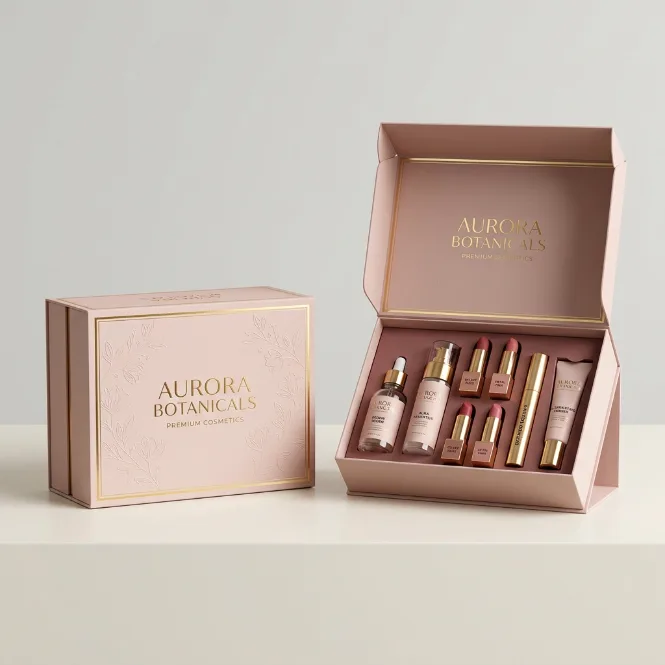
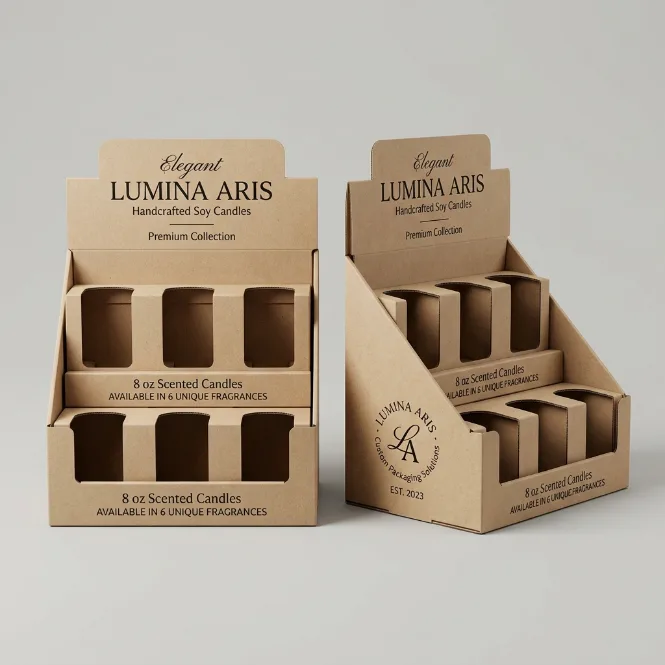
Custom cosmetic display boxes are printed countertop units that hold makeup, nail, and skincare products in an organized shade or regimen lineup at a beauty counter, salon, or checkout, so shoppers can compare colors and pick one up without asking for help. Packaging Vista builds them in SBS paperboard or E-flute corrugated with die-cut cavities, tester rows, and a printed header card that carries your brand.
Order from just 100 displays with no die, plate, or setup fees. Every order includes a free dieline and 3D mockup. Standard production is 8 to 10 business days with free US shipping.
Key takeaways
- Built for shade lineups: stepped trays and cavity inserts that hold lipsticks, glosses, polishes, compacts, and serums in a set color order.
- Tester-ready: separate tester wells, wipe-clean coatings, and optional mirror panels in the header.
- Prestige finishes: soft-touch, foil, spot UV, and Pantone matching to your unit cartons.
- Low barrier: 100-display minimum, no die, plate, or setup fees, 8–10 day turnaround. Compare our counter display boxes and cosmetic boxes, or request a free quote.
What is a cosmetic display box?
A cosmetic display box is a point-of-purchase unit designed around beauty products. Unlike a general PDQ tray that holds a pile of one item, a beauty display usually carries many shades or variants of the same product, and the way those shades are arranged is part of the sale.
A shopper scanning a lip lineup wants to see every color at once, read the shade name, and often try a tester before buying.
That changes the engineering. Cosmetic displays rely on precise cavities so slim components stand upright, stepped rows so back shades are not hidden behind front shades, and premium print because the display sits beside prestige packaging and has to look like it belongs. For smaller individual units, see our lipstick boxes and lip gloss boxes.
Cosmetic display box styles
Stepped shade tray
Two to four raised rows with die-cut holes or slots, so every lipstick, gloss, or liner shows its cap or swatch. Shade names and printed color dots sit on the riser face under each column.
Tester stand with header mirror
A front tester row sits ahead of sealed sale units, with a coated, wipe-clean deck. The header can hold a small mirror panel so shoppers can try a shade right at the counter.
Nail polish well tray
Round wells sized to your bottle base keep glass polish bottles from tipping, with the color visible from above. A low front lip stops bottles sliding off a sloped counter.
Skincare regimen display
Compartments sized for a cleanser, serum, and moisturizer in their unit cartons, printed step 1, step 2, step 3, so the display explains the routine as well as selling it.
Standard cosmetic display sizes
Every display is built to your products. These are common starting points:
| Format | Typical capacity | Approx. footprint W × D × header H | Board |
|---|---|---|---|
| Lipstick or liner stepped tray | 18 units, 6 shades × 3 | 7 × 5 × 9 in | 24 pt SBS |
| Lip gloss shade tray | 24 units, 8 shades × 3 | 8.5 × 5 × 10 in | 24 pt SBS or E-flute |
| Nail polish well tray | 20 bottles | 9 × 6 × 10 in | E-flute |
| Tester stand with mirror | 6 testers + 18 sale units | 10 × 7 × 13 in | E-flute or B-flute |
| Skincare regimen display | 3 SKUs × 4 facings | 12 × 8 × 12 in | B-flute |
Materials and beauty-grade finishes
- 24 pt SBS paperboard: the smoothest surface for photo-quality shade swatches on lightweight lip, brow, and liner lineups.
- E-flute corrugated with a white face: strength for glass bottles and jars while still printing crisply.
- B-flute: taller tester stands and regimen displays that must stay rigid under handling.
- Soft-touch or matte lamination: the prestige look, and it resists fingerprints near testers.
- Foil stamping and spot UV: used on the header logo so the display reads as part of the brand family.
Labeling and retail rules for beauty displays
Required cosmetic labeling, such as the identity statement, net quantity, ingredient declaration, and the responsible person contact details under MoCRA and the Fair Packaging and Labeling Act, belongs on each product's own container or unit carton, not on the display.
The display is merchandising. Two practical points still matter: if units come out of their cartons to sit in the display, each component must carry its required label on its own, and testers should be clearly marked so they are never sold. Beauty retailers also publish vendor guides that set maximum footprints and header heights, so share yours and we will build the dieline to it.
Your regulatory adviser signs off on final product label wording.
How much do custom cosmetic display boxes cost?
Typical ranges at a 500-unit run: $1.90 to $3.60 for an SBS stepped shade tray, $2.40 to $4.80 for an E-flute nail polish or gloss tray, $5.50 to $11.00 for a tiered skincare regimen display, and $7.00 to $14.00 for a tester stand with a mirror panel.
Soft-touch lamination adds roughly $0.15 to $0.35 and foil adds $0.20 to $0.50 per display. Price depends on size, cavity count, board, finishes, and quantity, with no die, plate, or setup fees. Send your SKU list on the quote form for exact pricing.
How long do custom cosmetic display boxes take to make?
Standard production is 8 to 10 business days after proof approval, and rush runs are available on most orders. Complex tester stands may need an extra day or two of structural work. If you want to check cavity fit with your actual components first, we make a non-printed sample in your exact size and board for USD 75, credited to your first order.
SBS shade tray vs corrugated tester stand vs regimen display
| SBS shade tray | Tester stand | Regimen display | |
|---|---|---|---|
| Best products | Lipstick, gloss, liner, brow | Color cosmetics with testers | Skincare sets and routines |
| Weight capacity | Light | Medium | Medium to heavy (glass jars) |
| Main selling job | Show every shade at once | Let shoppers try before buying | Explain the routine |
| Typical cost (500-run) | $1.90–$3.60 | $7.00–$14.00 | $5.50–$11.00 |
Are cosmetic display boxes worth it for a small beauty brand?
Yes. Boutique and salon owners give counter space to brands that make selling easy, and a clean shade display does that: it shows the whole range, keeps testers tidy, and reorders cleanly when a shade sells out. It also turns a wholesale pitch into a ready-to-place kit.
Indie color brands, salon retail lines, and nail brands can test a 100-display run with a handful of stockists before committing to a larger program. For wider store programs, see our retail display boxes.
Are cosmetic display boxes recyclable?
Paperboard and corrugated displays are recyclable in most US curbside programs. Soft-touch and gloss films and large foil areas can reduce acceptance at some facilities, so matte aqueous coating is the most recyclable finish, and mirror panels should be removed before recycling.
Under the FTC Green Guides, print a qualified claim such as “display is recyclable where facilities exist” rather than an unqualified “recyclable” statement.
Frequently Asked Questions
What cosmetics fit in a custom display box?
Almost any small beauty product: lipsticks, lip glosses, liners, brow pencils, mascaras, nail polish, compacts, and skincare in unit cartons. We size cavities or compartments to your exact components so each item stands upright.
Can the display hold testers separately from sale units?
Yes. We add a dedicated tester row or well in front of the sealed sale units, with a wipe-clean coated deck. Testers should be marked Tester - Not for Sale so they are never rung up.
Can you print shade names and color swatches under each slot?
Yes. Shade names and printed color dots can sit on the riser face under each column, and we match colors to your swatch files so the print reads true under store lighting.
Does product labeling go on the display?
No. Required cosmetic labeling such as ingredients, net quantity, and responsible person details belongs on each product container or unit carton. The display is for merchandising, branding, and shade navigation.
Can you add a mirror to the header?
Yes. Tester stands can include a small mirror panel in the header so shoppers can try a shade at the counter. We plan the mirror opening in the dieline and 3D mockup.
How much do custom cosmetic display boxes cost?
At 500 units, SBS shade trays typically run $1.90 to $3.60, E-flute polish or gloss trays $2.40 to $4.80, regimen displays $5.50 to $11.00, and tester stands $7.00 to $14.00 each. There are no die, plate, or setup fees.
What is the minimum order and lead time?
The minimum is 100 displays. Standard production is 8 to 10 business days after proof approval, with rush available and free US shipping.
Can I get a sample to test fit with my products?
Yes. A non-printed sample in your exact size and board costs USD 75, and that amount is credited to your first order.
Who orders custom cosmetic display boxes?
Custom display boxes are ordered by brands that sell at the counter, the checkout lane, or the shelf edge, where the box itself has to stop a shopper and hold the product upright.
- Consumer brands entering retail — PDQ trays and counter displays that ship packed, open in seconds, and meet a buyer's planogram.
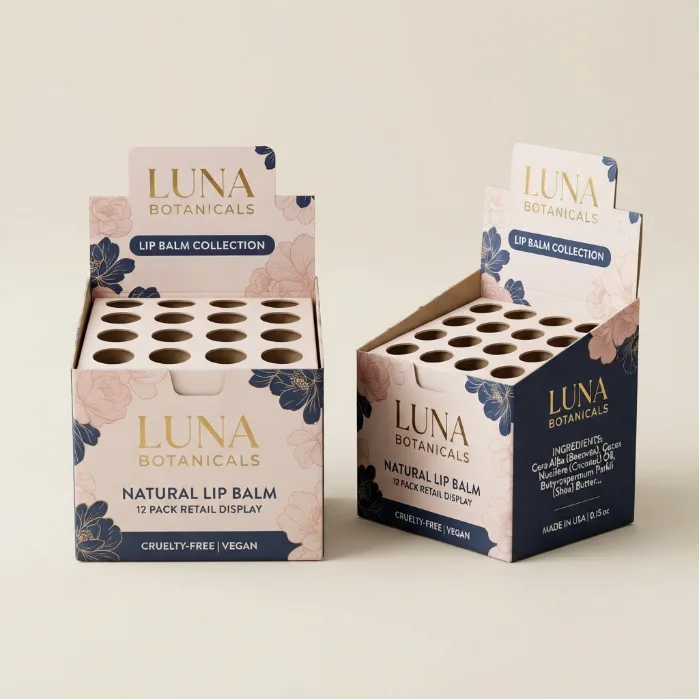
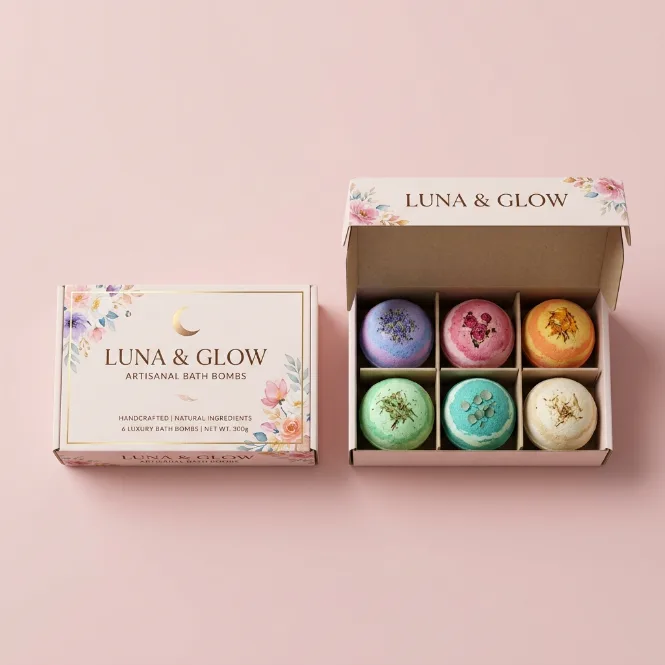
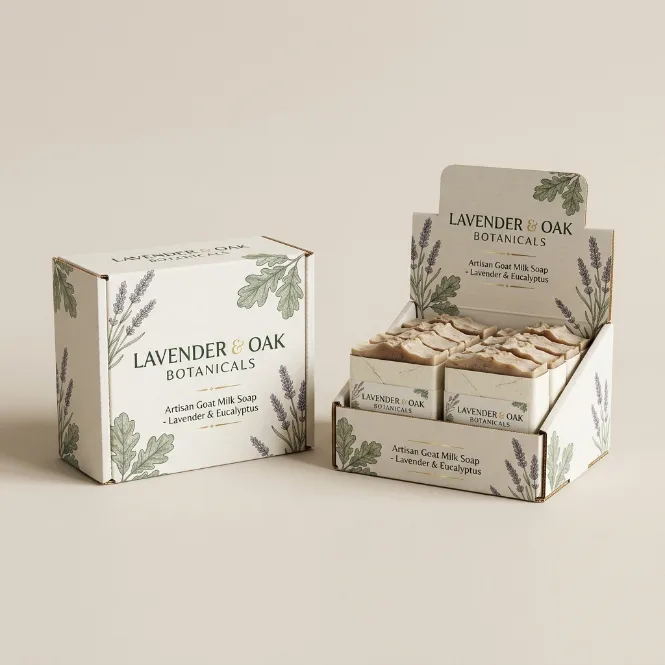
- Beauty and personal-care makers — lip balm, bath bomb, soap, and cosmetic display trays with cavities sized to each unit.
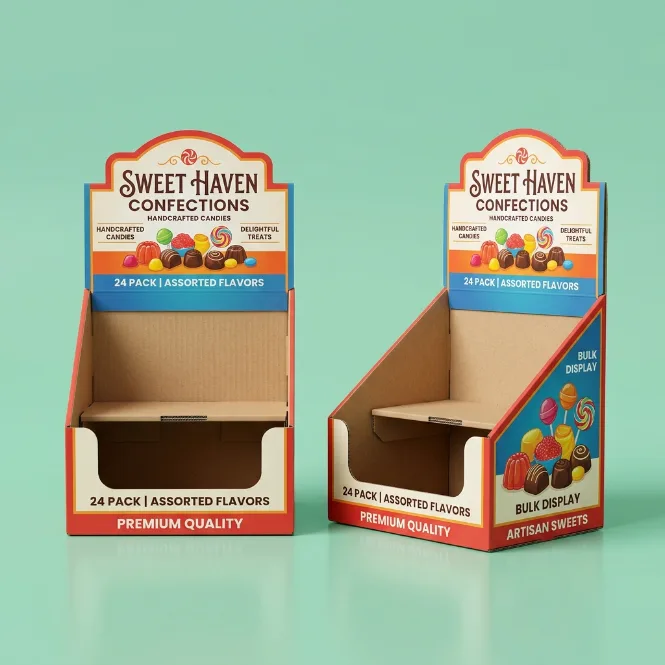
- Candy, snack, and convenience brands — checkout-lane display boxes with tall printed headers built for impulse buys.
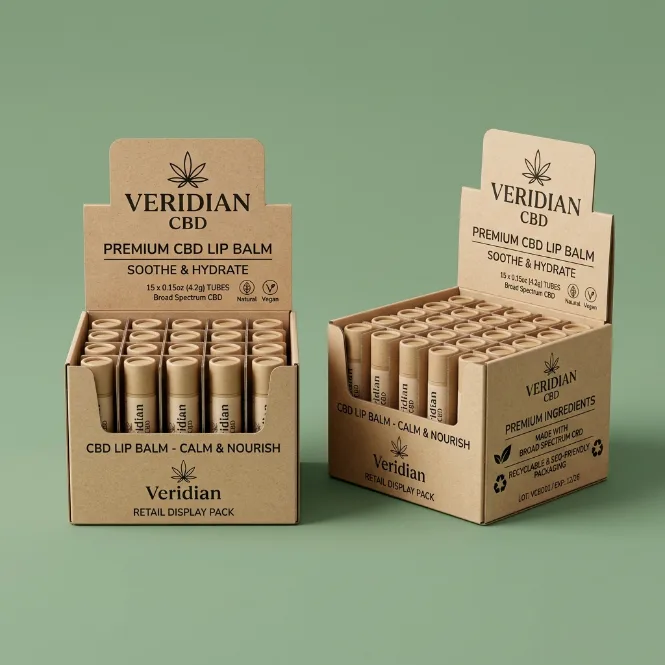
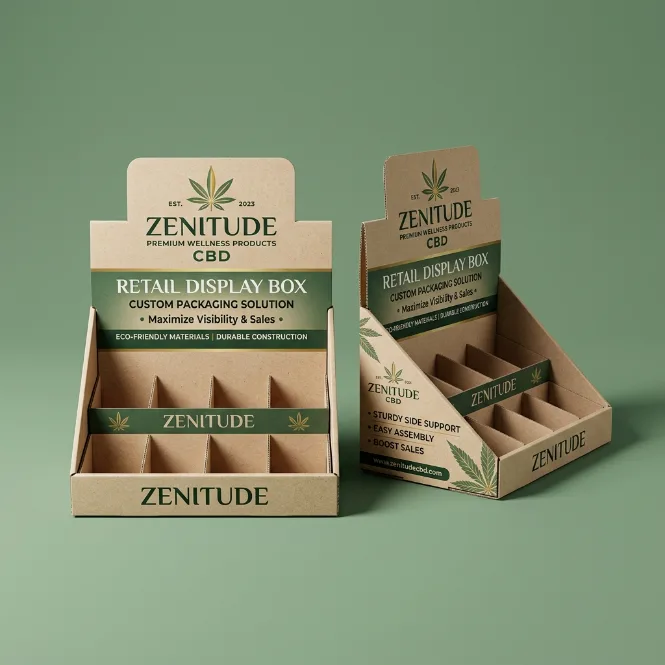
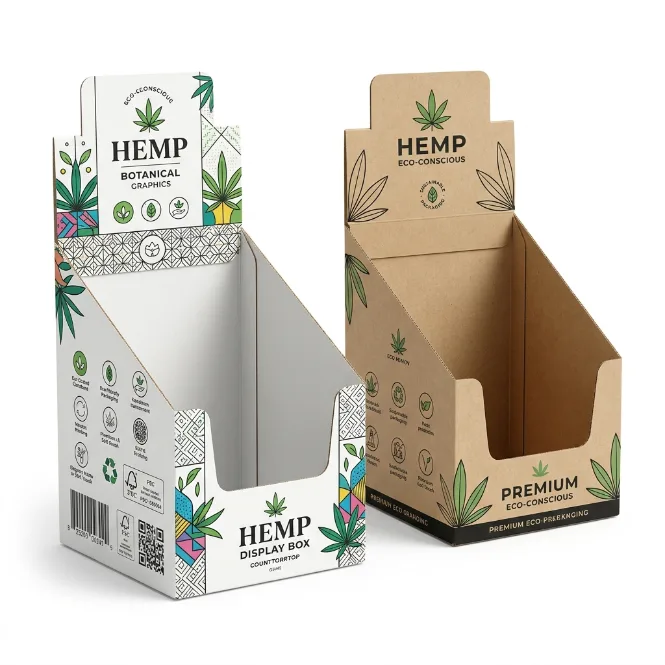
- CBD, hemp, and smoke-shop suppliers — countertop display boxes with room for the compliance copy each product line needs.
- Wholesale reps and trade-show teams — display mailers and pop-up displays that ship to the store and turn into a merchandiser on arrival.
How to order custom cosmetic display boxes
Five steps from quote to delivery. Every order includes free design support, a free custom dieline, and a digital mockup for approval before anything hits the press.
- Share your specs. Send box dimensions (or a photo of the product), quantity, material preference, and any artwork or logo files. If you're unsure of the size, our design team can advise from a product photo.
- Get a quote and mockup. Within one business day we return a firm quote, a printable dieline, and a 3D digital mockup of your cosmetic display boxes. No die, plate, or setup fees are added.
- Approve the proof. Review the mockup, request color, layout, or dieline changes, and give final approval. Revisions are unlimited before press.
- Production (8–10 business days). Your order runs on offset or digital press, then moves through finishing — lamination, spot UV, foil stamping, embossing, die-cutting, and assembly if needed.
- Free US shipping. Orders ship flat-packed with tracking. Assembled bundles or master-carton packing are available on request at no charge.
Resources & tools
Free tools and trusted references to help you size, spec, and choose the right cosmetic display boxes before you order.
Free tools & guides
- Cosmetic & beauty packaging hub – every beauty box style and finish we print.
- Cosmetic label requirements – what US cosmetic labels must include.
- Packaging materials – compare SBS, kraft, corrugated, and rigid stocks.
Trusted references
- FDA — Cosmetics Labeling – federal labeling rules for cosmetic and beauty products.
- FDA — MoCRA (Modernization of Cosmetics Regulation Act) – the current federal law governing US cosmetic products.
- FTC — Advertising & Marketing Guidance – federal truth-in-advertising rules for on-pack product claims.
- How2Recycle – the standardized on-pack recycling label for paperboard and kraft packaging.