Custom Rigid Boxes
Custom rigid boxes – also called setup boxes – are premium packaging built from thick chipboard wrapped in printed paper. They have the sturdy, non-folding feel linked with luxury goods like cosmetics, jewelry, electronics, and gifts.
Packaging Vista prints rigid boxes with your logo in any style: magnetic closure, two-piece lid-and-base, drawer, lift-off lid, or book-style. Add custom inserts and refined finishes like soft-touch lamination, foil stamping, embossing, and spot UV. With a 100-box minimum, free design, dieline, and 3D mockup, and no die, plate, or setup fees, your luxury packaging ships in 8 to 10 business days with free US delivery.
Key takeaways
- Built for luxury: rigid (setup) boxes use thick chipboard wrapped in printed paper for a solid, non-folding feel.
- Every style: magnetic closure, two-piece lid & base, drawer/slide, lift-off lid, book-style, and collapsible rigid boxes.
- Low barrier: 100-box minimum, no die, plate, or setup fees, free dieline & 3D mockup, 8-10 day turnaround, free US shipping.
- Go deeper: compare cosmetic boxes, jewelry boxes, and gift boxes, then request a free quote.
What is a rigid box?
A rigid box – also called a setup box – is a premium packaging style built from thick, non-folding chipboard (usually 25 to 36 pt grayboard, sometimes heavier) that is die-cut, wrapped in printed paper, and hand-assembled. Unlike a folding carton, a rigid box does not fold flat; it ships assembled and holds its solid, square-cornered shape on the shelf and in the hand.
Rigid boxes are the standard packaging format for luxury cosmetics, jewelry, watches, high-end electronics, spirits, corporate gifts, and premium subscription unboxing. Three design cues make a box "rigid": the solid non-folding chipboard base, the printed paper wrap covering every face, and a deliberate closure (magnetic lid, two-piece lift-off, drawer, or telescoping shell) that turns the open into a moment.
Rigid box styles we print
The build sets the unboxing feel and the price. These are the rigid box styles we make most often:
Magnetic closure rigid boxes
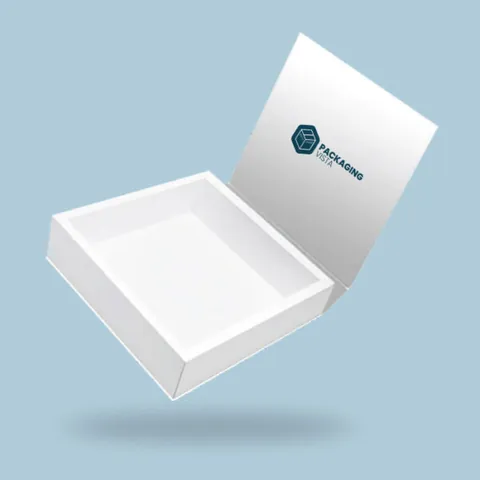
A book-style box with hidden magnets in the flap for a crisp, steady close. The premium, repeatable open-and-shut makes magnetic rigid boxes the go-to for luxury cosmetics, electronics, and gift lines. They can ship flat-packed to save on storage.
Two-piece (lid and base) rigid boxes
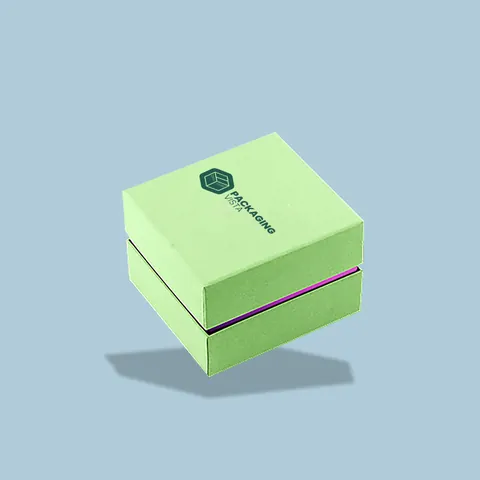
A separate lid lifts off a matching base for a clean product reveal. This is the classic, retail-friendly setup box used for apparel, jewelry, gourmet, and gift sets. Easy to make and easy to stack on a shelf.
Drawer and slide rigid boxes
An inner tray slides out of an outer sleeve, like a matchbox. Drawer rigid boxes feel playful and hold inserts firmly. A great fit for chocolates, watches, and premium subscription boxes.
Lift-off lid and telescoping boxes
A deep lid slides over the base for extra strength and a solid feel. Well suited to heavier products and multi-piece sets.
Book-style and collapsible rigid boxes
Book-style boxes open on a hinge like a hardcover. Collapsible rigid boxes fold flat for shipping and snap up on arrival. That cuts freight and storage cost while keeping the rigid look.
Finishes and branding
Finish is where a rigid box earns its premium. Mix any of the following:
- Soft-touch lamination for a velvet, high-end hand-feel.
- Foil stamping (gold, silver, or color) to make your logo catch the light.
- Embossing and debossing for a raised, 3D mark.
- Spot UV to add gloss contrast against a matte wrap.
- Window patching, ribbons, and custom inserts in foam, paperboard, or molded fiber to cradle the product.
How thick is a rigid box?
Rigid boxes are built from solid chipboard (grey board). Usually 28 pt to 36 pt and heavier, far thicker than the folding-carton stock used for plain boxes. It is then wrapped in your printed paper.
That thickness is what gives a rigid box its solid, non-folding feel and its guard for fragile or premium goods. We match the board weight to your product and box size. So a small jewelry box and a large gift set each get the right stiffness.
Custom rigid boxes with your logo
We print custom printed rigid boxes to your exact art in full CMYK and Pantone-matched color. A free custom dieline and 3D mockup let you sign off the fit and finish before we print. Our rigid box printing has no die, plate, or setup fees. Your brand, your sizes, from the first 100 boxes. As a US-based supplier, we ship custom rigid box packaging free to brands across the USA.
Rigid boxes by product
Rigid packaging suits any product that gains from a premium first look:
| Product | Recommended rigid box |
|---|---|
| Gifts & sets | Two-piece or magnetic - see gift boxes. |
| Cosmetics & skincare | Soft-touch magnetic boxes - see cosmetic boxes. |
| Jewelry | Small lift-off lid or drawer boxes - see jewelry boxes. |
| Candles | Sturdy two-piece boxes - see candle boxes. |
| CBD & cannabis flower | Premium rigid cartons - see CBD packaging. |
| Apparel & electronics | Lid-and-base or magnetic boxes sized to your product. |
Wholesale rigid boxes at a low minimum
Most rigid box suppliers force a large wholesale minimum because each box is hand-built. We do not. You get true wholesale per-unit pricing from a low 100-box minimum, with no die, plate, or setup fees. So a new brand can launch a premium box without ordering thousands.
The per-box cost still drops as your volume grows. So the same boxes scale with you from a first run to bulk reorders. That makes a custom luxury box within reach for small brands, subscription launches, and limited editions – not just well-known names.
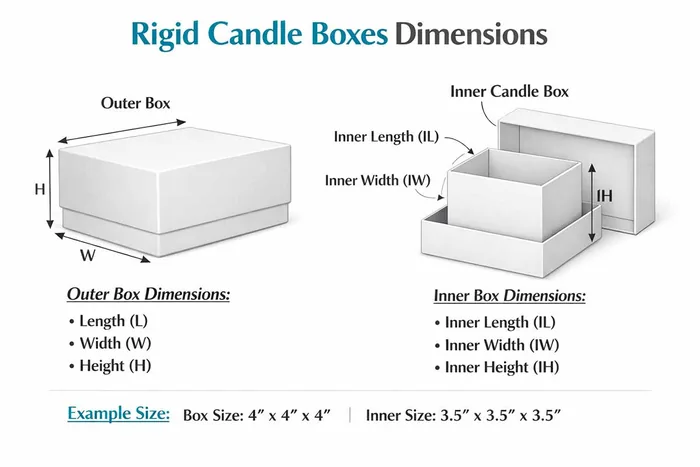
Rigid box sizes and dimensions
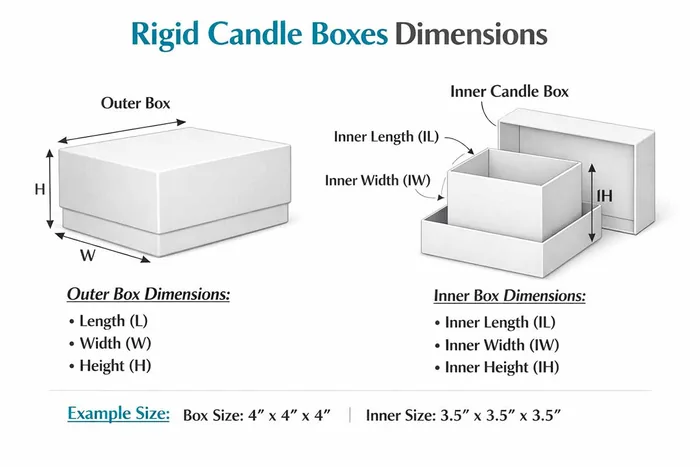
Rigid boxes are cut to size on a straight-line gluer. So any size you need is a custom size at no extra tooling charge. Below are the size ranges we most often build for, with typical uses.
Small rigid boxes
Small rigid boxes (about 2 to 5 inches per side) are used for jewelry, watches, ring boxes, cosmetics samples, and small electronics. Setup-board thickness is usually 1.5 to 2 mm for a firm hand without extra weight.
Medium rigid boxes
Medium sizes (about 5 to 9 inches) cover most retail products. That means candles, skincare kits, spirits singles, subscription unboxing, and gift sets. This is the most common size range we quote. It pairs well with a two-piece lid-and-base or a magnetic-closure build.
Large rigid boxes
Large rigid boxes (10 inches and up) are used for apparel, high-end unboxing kits, corporate gifting, and multi-piece product sets. At this size a 2.5 to 3 mm setup board is our pick for edge stability. Inserts (EVA foam, corrugated, or molded pulp) keep contents from shifting through the carrier network.
Not sure what size you need? Use our box-size calculator to work out inside sizes from your product size. Or send us your product spec and we will dieline it for you.
How much do custom rigid boxes cost?
Custom rigid boxes typically run $2 to $5 per box at a 500-unit order and drop as volume rises. That is roughly 3–6x the per-unit cost of a folding carton at the same footprint, because a rigid box uses heavier board, printed wrap paper, and manual assembly on every unit.
There are no die, plate, or setup fees on any run, so a first-run 100-box order carries the same tooling cost as a 5,000-box run.
What drives rigid-box price, in order of impact:
- Quantity — per-box cost drops sharply from 100 to 500 to 1,000+ as hand-assembly amortizes.
- Style — two-piece is the most efficient build; magnetic-closure and drawer-and-shell add 20–40% for the magnet, hinge liner, and closure alignment.
- Size — a small jewelry box uses less chipboard than a large apparel presentation box.
- Board weight — 25–30 pt grayboard is the standard; 3 mm builds cost more for large sizes.
- Finishes — each stacked finish (soft-touch + foil + emboss) adds a small step.
- Inserts — EVA foam and molded pulp inserts add per-unit material and cavity die cost.
Send your size, style, and quantity on the quote form for exact per-box pricing.
How long do custom rigid boxes take to make?
Standard production is 8 to 10 business days after proof approval. Rush production runs in 4 to 6 business days on most orders at no additional charge, including single-finish builds. Because rigid boxes are hand-assembled, stacked finishes (foil + soft-touch + embossing) can add 1–2 days to the standard window; we confirm the exact schedule before locking the press slot.
Tell us your must-have delivery date on the quote form.
Pricing, minimums, and turnaround
Rigid boxes are largely hand-built. So price depends on size, style (magnetic and drawer cost more than a plain two-piece), finishes, and count. Our complete guide to premium rigid packaging breaks down each factor. Per-box cost drops as volume rises.
There are no die, plate, or setup fees. The minimum is 100 boxes. Standard production runs 8 to 10 business days after proof approval, with rush on offer. Every order includes a free dieline, 3D mockup, and free US shipping. Weighing US vs. overseas? See why brands pick a US rigid box maker. Request a free quote with your size and count for exact pricing.
Rigid boxes vs folding cartons: which should you choose?
Choose a rigid box when the unboxing is part of the product experience — luxury cosmetics, jewelry, watches, spirits, corporate gifts, and premium subscription reveals. Choose a folding carton when the box is a retail-shelf presenter that ships flat, folds up at pack-out, and needs to keep per-unit cost low — food, supplements, personal care, and everyday CPG.
| Rigid box (setup box) | Folding carton | |
|---|---|---|
| Board | 25–36+ pt chipboard/grayboard, wrapped | 14–24 pt SBS or kraft, single-piece |
| Ships | Assembled (does not fold flat) | Flat, folded at pack-out |
| Feel | Solid, heavy, square-cornered | Light, creased, retail-shelf |
| Typical cost per box (500-run) | $2–$5 | $0.35–$0.90 |
| Best for | Luxury unboxing, gifting, premium reveal | Retail shelf, mass CPG, low unit cost |
| Freight | Higher (ships assembled) | Lower (ships flat) |
Rigid runs roughly 3–6x the per-unit cost of a folding carton at the same footprint. The premium buys the two-piece build, heavier board, wrap-paper printing and application, and manual assembly. If the unboxing story matters more than the shelf price point, rigid is worth it; if the box is a shelf presenter and unit cost is the deciding factor, a folding carton wins.
Two-piece rigid, magnetic-closure, and drawer-and-shell: what each solves
Three rigid formats cover most premium packaging jobs. A two-piece rigid box (lift-off lid over a base) is the classic gift and luxury format, ideal when the unboxing reveal is a hero moment: watches, jewelry, fragrance, high-end skincare. A magnetic-closure box (a hinged lid held shut by a hidden magnet) is now the standard for premium subscription boxes and tech accessories because it opens and closes hundreds of times without wearing out.
A drawer-and-shell (also called slide-and-shell) rigid box hides the product until the drawer pulls out, which works well for jewelry sets, watch strap collections, and high-end pens.
Rigid format also shapes cost. Two-piece boxes are the most efficient rigid build; magnetic-closure boxes cost 20-40 percent more per unit because the magnet, hinge liner, and closure alignment all add labor; drawer-and-shell boxes are similar to two-piece cost with a slightly longer assembly time.
If unboxing is central to the product story, magnetic closure is worth the premium; if the product is a gift item that opens once and displays, two-piece is the better economics.
Rigid box hand-feel, weight, and shelf theater
Shoppers pick up a rigid box before they buy it, and the box's weight in the hand shapes the perceived value more than the print does. A heavier rigid box (25-30 point grayboard, wrapped in printed paper) feels premium; a lighter chipboard build feels cheaper regardless of the print quality on the outside.
On a shelf next to a folding carton competitor, a rigid box telegraphs quality just by how it looks stacked: sharper corners, square edges, and no scoreline creases.
The wrap paper choice matters too. Textured wraps (uncoated, linen, felt) read as artisan and premium; glossy wraps read as accessible luxury; matte wraps sit in between. Foil, embossing, and spot UV all work well on rigid because the substrate is thick enough to hold detail crisply.
Combine one accent finish (a single foil block or a spot-UV logo) with a restrained background; multiple finishes on the same panel can read cluttered rather than luxurious.
Are custom rigid boxes worth it for a small business?
Yes, when the box carries part of the brand story. Rigid packaging lifts perceived value the moment a shopper picks the product up, and it drives the unboxing social share that direct-to-consumer brands rely on. At a 100-box minimum with no plate or setup fees, a rigid run is affordable at the smallest scale — many first-time customers order 100 or 250 magnetic-closure boxes for a launch, then reorder as the SKU sells through.
The cheaper alternative for cost-sensitive launches is a folding carton or a plain cardboard box with a printed sticker, but neither carries the same shelf or unboxing weight.
Are rigid boxes recyclable?
Yes, rigid boxes are recyclable in most curbside programs once separated. The chipboard core is grayboard fiber, the wrap paper is standard printed board, and both are paper-based. What reduces recyclability is the finish stack: heavy laminates, foil stamping, and plastic ribbons are mixed materials that some municipal programs reject or require pulled.
For a fully recyclable rigid box, we recommend aqueous or soft-touch coating instead of heavy laminate, spot UV instead of foil where the accent works, and paper or cotton pull-tabs instead of plastic. Tell us on the quote if recyclability is a priority and we specify the wrap paper, glue, and finishes accordingly — see also our eco-friendly boxes line.
Frequently Asked Questions
What exactly is a rigid box and why does it feel more premium?
A rigid (setup) box is built from thick chipboard, usually 28-36 pt or heavier, wrapped with a printed paper. So it does not fold flat like a folding carton. That solid, non-folding build gives it the plush, luxury feel you see on high-end electronics, jewelry, and cosmetics packaging.
Magnetic closure or two-piece - which rigid box should I choose?
Choose a magnetic closure box for a modern, playful unbox and a lid that shuts cleanly – a great fit for cosmetics, electronics, and gifting. Choose a two-piece lid-and-base box for a timeless, cost-smart, retail-friendly look. Magnetic styles cost a bit more. Two-piece is simpler to make and easy to stack on a shelf.
Can you add custom inserts to hold and protect my product?
Yes. We design custom inserts in foam, paperboard, or molded fiber that cradle your product and keep it from shifting inside the box. The insert is built into your dieline and 3D mockup. So you can sign off on the fit before we print.
What finishes work well to make a rigid box look high-end?
Rigid boxes pair well with soft-touch lamination, foil stamping, embossing or debossing, and spot UV to add contrast on the wrap. You can mix, say, a soft-touch matte wrap with a gold foil logo and a deboss for a layered, tactile premium look.
How much do custom rigid boxes cost?
Cost depends on the box size, style, finishes, and order count. It falls as volume rises. Because every job is custom, we quote per project rather than list a flat price. But there are never die, plate, or setup fees, and the minimum is just 100 boxes. Send your sizes and count for an exact, no-obligation quote.
What sizes and dimensions can I get?
Any size – rigid boxes are made to your product's sizes, given as length x width x depth. If you are unsure, send a sample or product specs. We will size the box and supply a free dieline and 3D mockup to sign off the fit before we print.
What's the lead time and minimum order on rigid boxes?
Rigid boxes are largely hand-built. So we keep the minimum at 100 units with no die or setup fees. Plan for the standard 8-10 business-day turnaround after proof approval. Rush production is on offer if your launch date is tight.
Do you make rigid boxes wholesale or in bulk?
Yes. We make custom rigid boxes wholesale at per-unit pricing that drops as volume rises, from a low 100-box minimum with no die or setup fees. You get wholesale rates without a thousand-unit commit that many suppliers need.
Can I get affordable rigid boxes for a small brand or short run?
Yes. Because the minimum is just 100 boxes with no setup fees, a custom rigid box is within reach for small brands, subscription launches, and limited editions. You can order a premium box without a big wholesale commit, then scale up as you grow.
What board weight do you use for rigid boxes: grayboard vs chipboard?
Our default rigid stock is 25-30 point grayboard, which gives the crisp corners and hand-feel shoppers associate with premium packaging. Chipboard (a lighter, less dense board) is available for budget rigid builds but reads as thinner in the hand. Tell us the price point and unboxing story and we pick the right board.
How does rigid box pricing scale compared to folding cartons?
Rigid boxes typically cost 3-6x more per unit than a folding carton of the same footprint. The extra cost buys the two-piece build, the heavier board, the wrap-paper printing and application, and the manual assembly. On a 500-unit run at a common jewelry-box size, expect $2-5 per rigid box vs $0.35-0.90 for a folding carton alternative.
Volume closes some of that gap but rigid stays a premium format.
Can I get rigid boxes shipped flat to save on freight?
Rigid boxes ship assembled by default because assembling them requires precise glue application that is done on our line. A few rigid formats (specifically some magnetic-closure builds) can ship flat with a partial fold and finish at your pack-out, but this trades assembly time for freight savings.
For most orders, assembled ship works out to lower total-landed cost because the boxes stack efficiently on a pallet.
What is a rigid box (setup box)?
A rigid box — also called a setup box — is a premium packaging style built from thick, non-folding chipboard wrapped in printed paper. It does not fold flat and ships assembled. The solid, square-cornered feel is why rigid is the standard format for luxury cosmetics, jewelry, watches, high-end electronics, spirits, and premium gifting.
Rigid box vs folding carton — which should I choose?
Choose a rigid box when the unboxing is part of the product experience (luxury, gifting, premium reveal). Choose a folding carton when the box ships flat, is a retail-shelf presenter, and unit cost is the deciding factor. Rigid runs 3–6x the per-unit cost of a folding carton at the same footprint, so the premium is worth it when the box carries brand story.
How is a rigid box made, step by step?
Six steps: (1) share your size, style, and artwork, (2) we build a free dieline, 3D mockup, and structural sample, (3) you approve the printed proof and Pantone target, (4) we print and finish the wrap paper, (5) we cut chipboard, wrap it, and hand-assemble (magnets, hinges, and inserts included), (6) we QA and ship free across the US.
Are rigid boxes recyclable?
Yes, in most curbside programs once separated. The chipboard core and wrap paper are both paper-based. Heavy laminates, foil stamping, and plastic ribbons are mixed materials that reduce recyclability — some programs require them pulled. For a fully recyclable rigid box, request aqueous or soft-touch coating instead of heavy laminate, spot UV instead of foil, and paper or cotton pull-tabs.
Tell us on the quote if recyclability is a priority.
Are custom rigid boxes worth it for a small business?
Usually yes when the box carries part of the brand story. Rigid lifts perceived value and drives unboxing social shares. At a 100-box minimum with no plate or setup fees, a first rigid run is affordable at the smallest scale. Many small brands launch with 100 or 250 magnetic-closure boxes and reorder as the SKU sells through.
What is the difference between chipboard and grayboard?
Grayboard is a specific type of chipboard used as the structural core of a rigid box. It is denser and stiffer than generic chipboard, giving the crisp corners and heavy hand-feel shoppers associate with premium packaging. Our default rigid stock is 25–30 pt grayboard; lighter generic chipboard is available for budget builds but reads as thinner in the hand.
Can rigid boxes be printed on kraft?
Yes. The wrap paper on a rigid box can be printed kraft, uncoated art paper, linen-textured stock, or coated SBS. Kraft-wrapped rigid gives an artisan, natural look popular with small-batch beauty and food-gift brands. Colors read muted on kraft compared to white stock, so we sometimes lay down a white ink base before your brand color to keep the print bright.
Tell us the wrap look you want on the quote.
Who orders custom rigid boxes?
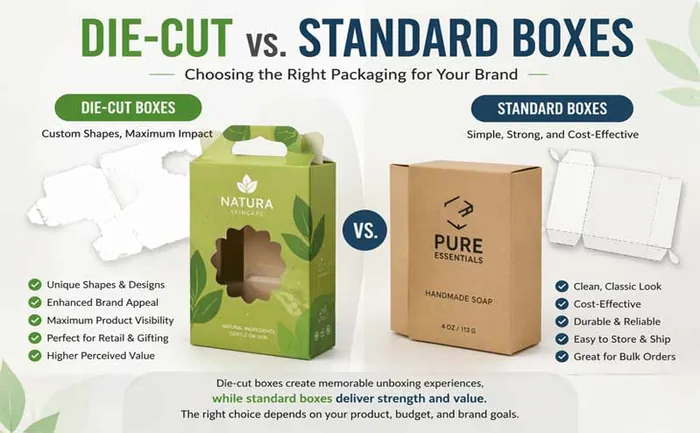
Custom-structured boxes are ordered by brands and operators who need a specific box shape or format built to their product — not a stock size.
- E-commerce and DTC brands — mailer boxes and custom shippers sized to the product so freight is billed on actual volume, not dead air.
- Product designers and startups — die-cut prototypes with free custom dielines so a launch box can be tested before it goes to press at volume.
- Premium and gift brands — rigid, magnetic-closure, and pillow-box formats that carry a giftable feel with foil, embossing, and inserts.
- Retail merchandisers — counter-display and window-box structures built to sit on a shelf and pull the shopper's eye at eye level.
- Print buyers and packaging engineers — any material and finish with no die, plate, or setup fees so a spec sheet becomes a firm quote in one business day.
How to order custom rigid boxes
Five steps from quote to delivery. Every order includes free design support, a free custom dieline, and a digital mockup for approval before anything hits the press.
- Share your specs. Send box dimensions (or a photo of the product), quantity, material preference, and any artwork or logo files. If you're unsure of the size, our design team can advise from a product photo.
- Get a quote and mockup. Within one business day we return a firm quote, a printable dieline, and a 3D digital mockup of your rigid boxes. No die, plate, or setup fees are added.
- Approve the proof. Review the mockup, request color, layout, or dieline changes, and give final approval. Revisions are unlimited before press.
- Production (8–10 business days). Your order runs on offset or digital press, then moves through finishing — lamination, spot UV, foil stamping, embossing, die-cutting, and assembly if needed.
- Free US shipping. Orders ship flat-packed with tracking. Assembled bundles or master-carton packing are available on request at no charge.
Resources & tools
Free tools and trusted references to help you size, spec, and choose the right rigid boxes before you order.
Free tools & guides
- Packaging materials – compare SBS, kraft, corrugated, and rigid stocks.
- Our capabilities – printing, finishing, QA, and what we can make.
- Custom boxes hub – every box style we print, in one place.
Trusted references
- How2Recycle – the standardized on-pack recycling label for paperboard and kraft packaging.
- Forest Stewardship Council (FSC) – certification for responsibly sourced paper and board.
- FEFCO — International Fibreboard Case Code – the standard code (0201, 0427, etc.) that defines every box style.
- ISTA — International Safe Transit Association – the industry-standard packaging performance test protocols.