Custom Cardboard Boxes
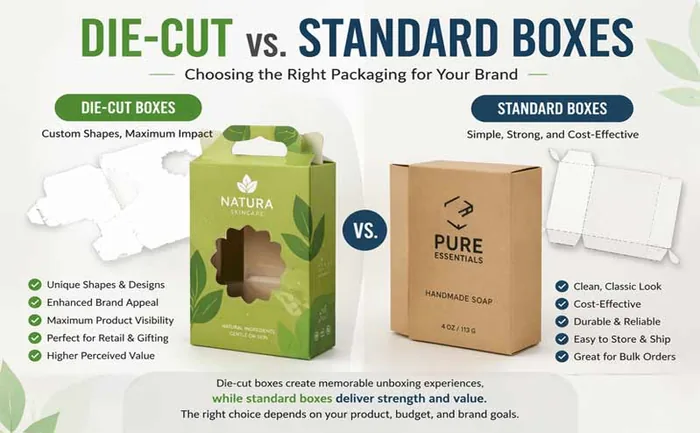
Custom cardboard boxes, also called paperboard or folding cartons, are lightweight, single-layer cartons. They fold flat, print cleanly, and snap up for retail, food, and product packaging.
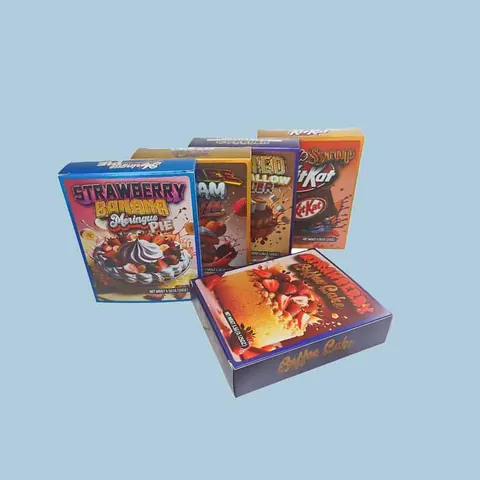
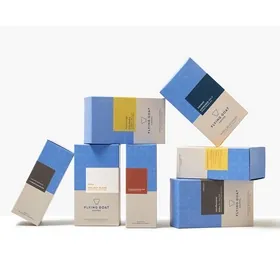
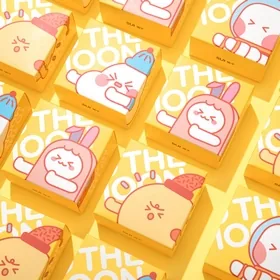
Packaging Vista prints cardboard boxes with your logo on smooth SBS cardstock or natural kraft. Print in full CMYK and Pantone-matched color. Styles range from straight and reverse tuck end to auto-lock bottom, sleeve, and window cartons.
Order from just 100 boxes with no die, plate, or setup fees. Get free design, dieline, and 3D mockup. Your boxes ship in 8 to 10 business days with free US delivery. Prefer them unbranded? See our plain cardboard boxes.
Key takeaways
- Paperboard, not corrugated: cardboard boxes use a single solid layer of board that folds flat and prints with crisp, retail-quality color.
- Every style: straight and reverse tuck end, auto-lock (1-2-3) bottom, sleeve, folding carton, mailer, and window cartons.
- Low barrier: 100-box minimum, no die, plate, or setup fees, free dieline & 3D mockup, 8-10 day turnaround, free US shipping.
- Go deeper: explore folding cartons, tuck-end boxes, and kraft boxes, then request a free quote.
What is a cardboard box?
A cardboard box — also called a paperboard box or folding carton — is a lightweight retail packaging carton made from a single solid layer of paperboard, then die-cut, creased, and folded into shape. Cardboard is the industry name for solid paperboard around 14–24 pt thick (SBS cardstock, kraft, or chipboard), used for cosmetic cartons, cereal boxes, supplement bottles, apparel packaging, and countless other retail products.
"Cardboard" is often used loosely in conversation to describe any brown paper-based box, but in packaging the term specifically means single-layer paperboard used for retail folding cartons — not the fluted, multi-layer corrugated board used for shipping.
If your box needs to sit on a retail shelf, present product cleanly, and print with photo-quality color, you want cardboard (paperboard). If it needs to survive palletizing, stacking, and long-transit shipping, you want corrugated.
Cardboard box styles
The structure sets how the box folds, locks, and presents on the shelf. These are the cardboard box styles we make most often:
Straight and reverse tuck end boxes
The everyday paperboard carton. On a straight tuck end the top and bottom flaps tuck the same way for a clean printable front. On a reverse tuck end they tuck opposite ways for a sturdier hold. Both fold flat. They are the go-to for cosmetics, supplements, and retail goods. See our tuck-end boxes.
Auto-lock bottom boxes
Also called a 1-2-3 or snap-lock bottom. The pre-glued base snaps into shape when you square the box. That saves assembly time and holds heavier products safely. A strong fit for bottled goods, jars, and heavier retail items.
Sleeve and tuck sleeve boxes
A printed band that slides over an inner tray or product. It adds branding without the bulk of a full six-sided box. Popular for soap, chocolate, and subscription kits.
Folding cartons and mailers
Folding cartons are the broad family of flat-folding paperboard boxes for shelf-ready retail packaging. Paperboard mailers add a self-locking flap for DTC shipping. See our folding carton boxes.
Window cartons
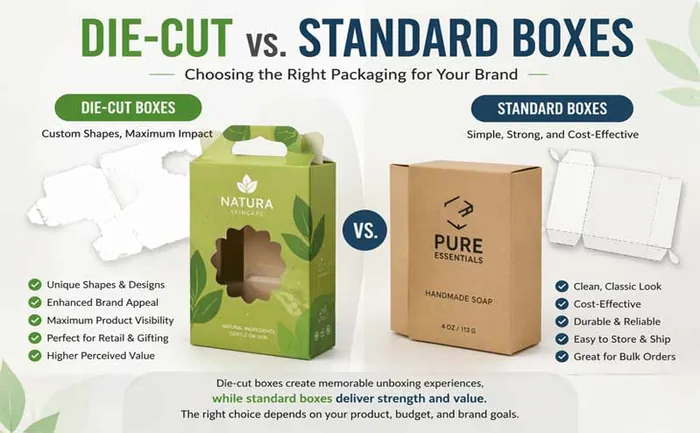
A die-cut opening, often patched with clear film, lets shoppers see the product inside. Window cartons lift sales for food, gifts, and beauty. See window boxes.
Materials: SBS, kraft, and chipboard
Paperboard is measured by caliper in points (pt), where one point equals one-thousandth of an inch. We commonly run roughly 14 pt to 24 pt depending on the product:
- SBS (solid bleached sulfate) - a bright white, clay-coated board that delivers the smoothest, most vivid print surface for premium retail cartons.
- Natural kraft - an uncoated brown board with a recycled, earthy look that suits eco and artisan brands - see kraft boxes.
- Chipboard - a dense, economical recycled board used where stiffness matters more than a printed surface.
Lighter caliper suits small or light items. Heavier caliper adds rigidity for bigger or heavier products.
Custom cardboard boxes with your logo
We print cardboard boxes to your exact artwork in full CMYK and Pantone-matched color. Every order comes with a free custom dieline and 3D mockup. You approve the fit and print before we go to press.
Add gloss, matte, or soft-touch lamination. Layer on foil stamp, emboss or deboss, spot UV, and window patching to match your brand. No die, plate, or setup fees. Your brand, your sizes, from the first 100 boxes.
Cardboard boxes by industry
The same paperboard structures adapt across product categories:
| Industry | Recommended cardboard box |
|---|---|
| Retail & consumer goods | Tuck-end or sleeve cartons - see retail boxes. |
| Food & bakery | Auto-lock bottom or window cartons - see window boxes. |
| Cosmetics & supplements | Straight tuck end folding cartons - see product boxes. |
| Eco & artisan brands | Natural kraft cartons - see kraft boxes. |
| Heavier or bottled products | Snap-lock (1-2-3) bottom cartons sized to your product. |
| Shipping & stacking | Step up to corrugated boxes for fluted shipping strength. |
How much do custom cardboard boxes cost?
Custom cardboard boxes are among the most economical custom box formats we make. Typical pricing at a 500-unit run: $0.35 to $0.90 per box on 14–18pt SBS or kraft for cosmetics, small food, supplement, and retail cartons; $0.60 to $1.20 per box on 24pt board for bottle boxes, heavier products, or premium retail.
Kraft and chipboard recycled options are slightly cheaper than SBS. Per-box cost drops 30–40% when you move from 500 to 5,000 units on the same SKU. There are no die, plate, or setup fees on any run.
What drives cardboard box price:
- Quantity — the biggest lever. Per-box cost drops sharply from 100 to 500 to 1,000+.
- Board caliper — 14pt is cheapest; 18pt is the standard retail spec; 24pt costs more for heavier products.
- Board type — kraft and chipboard are cheaper than SBS; FSC-certified board carries a small premium.
- Print coverage — a targeted logo is cheaper than a full-panel photo flood.
- Closure — straight/reverse tuck is the cheapest; auto-lock (1-2-3 bottom) adds a glue-and-fold step; sleeve is simple; window patching adds one off-press step.
- Finishes — each stacked finish (soft-touch, foil, spot UV, emboss) adds a small off-press step.
Send your specs on the quote form for exact per-box pricing.
How long do custom cardboard boxes take to make?
Standard production is 8 to 10 business days after proof approval. Rush production runs in 4 to 6 business days on most orders at no additional charge, including single-finish and auto-lock builds. Stacked finishes (soft-touch + foil + emboss) can add 1 to 2 days.
Ground freight from Cheshire, Connecticut adds 2 to 5 days to reach the West Coast — expect a full quote-to-dock timeline of about 2 to 3 weeks for a first order with artwork ready.
Cardboard vs corrugated boxes: which should you choose?
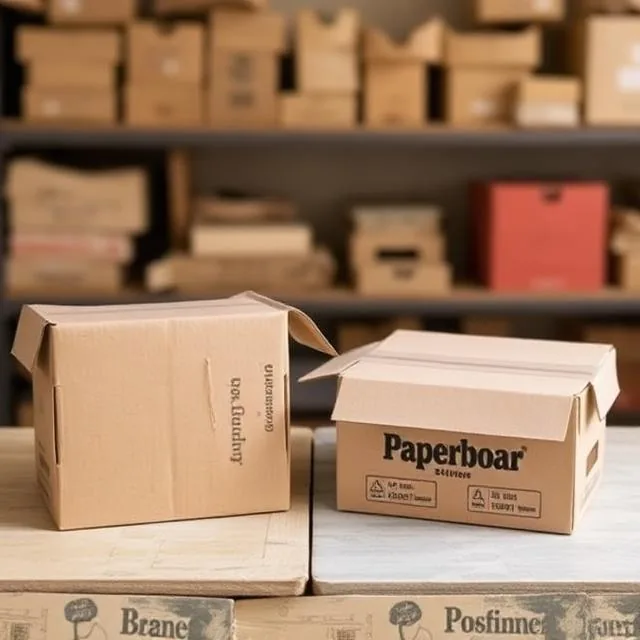
The two formats look similar but solve different jobs. Cardboard (paperboard) is a single solid layer of board built for retail shelf presentation — light, smooth, and prints with photo-quality color. Corrugated is a fluted multi-layer board built for shipping strength — the fluted middle gives it stacking, crush resistance, and cushioning that paperboard cannot match.
| Cardboard (paperboard) | Corrugated | |
|---|---|---|
| Board structure | Single solid layer, 14–24 pt | Fluted middle + 2 flat liners |
| Strength | Low (retail shelf only) | High (stacking + crush) |
| Print quality | Photo-quality edge to edge | Good on E-flute, coarse on larger flutes |
| Typical cost (500-run) | $0.35–$1.20 | $0.30–$2.50 |
| Best for | Retail shelf cartons, cosmetics, food | Shipping, palletizing, master cartons |
| Ships product | No (needs outer shipper) | Yes (is the shipper) |
A common pattern for retail brands: a printed cardboard folding carton for the shelf SKU nested inside a corrugated master shipper for bulk transit. If you sell direct-to-consumer, the middle ground is a mailer box — a printed corrugated wrap-around that combines shipping strength with a branded unboxing. See our US mailer box guide for a deeper walk-through of ordering from a US-based supplier.
Pricing, minimums, and turnaround
Cardboard box price depends on size, board (SBS or kraft and its caliper), finishes, and quantity. The per-box cost drops as volume rises.
There are no die, plate, or setup fees. The minimum is 100 boxes. Standard runs take 8 to 10 business days after proof approval, with rush on hand. Every order comes with a free dieline, 3D mockup, and free US shipping. Sourcing stateside? See why brands choose a US cardboard box manufacturer. Request a free quote with your size and quantity for exact pricing.
Are custom cardboard boxes worth it for a small business?
Yes, and cardboard is usually the first custom box format a retail-facing small brand should try. It is the lowest-cost custom option ($0.35–$1.20/box at 500), prints with photo-quality color across every face, and ships flat so warehouse storage is minimal.
At a 100-box minimum with no plate or setup fees, a first cardboard run is affordable at the smallest scale — many first-time customers order 100 or 250 cartons for a launch SKU and reorder as sell-through builds. The cheaper alternative is a plain cardboard box with an applied label, but it does not carry brand story on the shelf the way a printed carton does.
For DTC unboxing or premium tiers, see mailer boxes and rigid boxes.
Are cardboard boxes recyclable?
Yes. Paperboard is one of the most recyclable packaging formats — the American Forest & Paper Association reports paper-based packaging recovery rates above 90% in the US, one of the highest recovery rates of any packaging category. SBS, kraft, and chipboard paperboard are all curbside-recyclable in nearly every US municipal program; FSC-certified board carries chain-of-custody assurance that fiber is sustainably sourced.
Soy-based and water-based inks keep the box recyclable; aqueous coatings stay in most streams. Heavy laminates, foil stamping, and PET window patches are mixed materials that reduce recyclability — some programs require them pulled. For a fully recyclable cardboard box, request kraft or FSC SBS, soy inks, aqueous coating instead of laminate, and spot UV instead of foil where the accent works.
See our eco-friendly boxes and kraft boxes ranges.
Frequently Asked Questions
What's the difference between cardboard and corrugated boxes?
Cardboard (paperboard) boxes are made from a single solid layer of board, like SBS cardstock or kraft. It folds flat and prints cleanly for retail and product packaging. Corrugated has a fluted middle layer for shipping strength. So cardboard is the better fit for a lighter, smooth, foldable carton. Corrugated is better for stacking and shipping.
What thickness or caliper of cardboard do you offer?
Paperboard is measured by caliper in points (pt). One point equals one-thousandth of an inch. We run roughly 14 pt to 24 pt based on the product. Lighter caliper suits small or light items. Heavier caliper adds rigidity for bigger or heavier products.
Which cardboard box style should I choose?
For most retail and product packaging a straight or reverse tuck end folding carton works well. Choose an auto-lock (1-2-3) bottom for heavier products. Pick a sleeve for a slim branded band over a tray. Go with a window carton when you want shoppers to see the product. We design the dieline around your exact item.
Can I get SBS or kraft cardboard with my logo printed in full color?
Yes. We print on bright white SBS for vivid retail color, or on natural kraft for an earthy, eco look. Both use full CMYK and Pantone-matched color. Add lamination, foil, emboss, spot UV, and window patching to match your brand.
What sizes and dimensions can I get?
Any size. Cardboard boxes are made to your product's sizes, given as length x width x depth. If you're unsure, send a sample or product specs. We'll size the box and supply a free dieline and 3D mockup to confirm the fit before we print.
How much do custom cardboard boxes cost?
Cost depends on the box size, board and caliper, finishes, and order quantity. It drops as volume rises. Every job is custom, so we quote per project rather than list a flat price. There are never die, plate, or setup fees. The minimum is just 100 boxes. Send your sizes and quantity for an exact, no-obligation quote.
What's the lead time and minimum order on cardboard boxes?
You can order from 100 boxes with no die, plate, or setup fees. That makes it affordable to test a custom paperboard carton. Standard turnaround is 8 to 10 business days after proof approval. Free design, dieline, and 3D mockup are included. Rush production is on hand.
What is a cardboard box?
A cardboard box — also called a paperboard box or folding carton — is a lightweight retail packaging carton made from a single solid layer of paperboard (14–24 pt SBS, kraft, or chipboard), die-cut, creased, and folded into shape. In packaging, "cardboard" specifically means single-layer paperboard for retail folding cartons — not the fluted multi-layer corrugated board used for shipping.
How are custom cardboard boxes made, step by step?
Six steps: (1) share product dimensions, closure, board type, and caliper, (2) we build a free dieline and 3D mockup, (3) you approve the digital proof (physical sample optional for color-critical brands), (4) we print flat paperboard sheets in CMYK plus Pantone on offset (ISO 12647-2 + G7 GRACoL) with FDA-compliant soy or water-based inks, (5) we die-cut, crease, glue, and apply finishes (soft-touch, foil, spot UV, window patching) off-press, (6) cartons ship flat-packed and free across the US.
Are custom cardboard boxes worth it for a small business?
Usually yes because cardboard is the lowest-cost custom box format ($0.35 to $1.20 per box at 500) and prints with photo-quality color across every face. At a 100-box MOQ with no plate or setup fees, custom cardboard is affordable at the smallest scale. Cheaper alternatives: plain cardboard with a sticker (no printed exterior) or stock cartons off the shelf.
Are cardboard boxes recyclable?
Yes. Paperboard is one of the most recyclable packaging formats — paper-based packaging recovery rates in the US are above 90% (American Forest & Paper Association). SBS, kraft, and chipboard are all curbside-recyclable; soy inks and aqueous coatings stay recyclable; heavy laminates, foil, and PET window patches are mixed materials that reduce recyclability.
For a fully recyclable carton: kraft or FSC SBS, soy inks, aqueous coating, spot UV instead of foil.
Cardboard vs corrugated — which should I choose?
Choose cardboard (single-layer paperboard) when the box will sit on a retail shelf and print quality matters — cosmetics, food, supplement, apparel cartons. Choose corrugated (fluted multi-layer board) when the box has to survive shipping, palletizing, or stacking — shipping cartons, master shippers.
Many brands use both: cardboard folding carton for the retail SKU nested inside a corrugated master shipper for bulk transit.
Who orders custom cardboard boxes?
Custom-structured boxes are ordered by brands and operators who need a specific box shape or format built to their product — not a stock size.
- E-commerce and DTC brands — mailer boxes and custom shippers sized to the product so freight is billed on actual volume, not dead air.
- Product designers and startups — die-cut prototypes with free custom dielines so a launch box can be tested before it goes to press at volume.
- Premium and gift brands — rigid, magnetic-closure, and pillow-box formats that carry a giftable feel with foil, embossing, and inserts.
- Retail merchandisers — counter-display and window-box structures built to sit on a shelf and pull the shopper's eye at eye level.
- Print buyers and packaging engineers — any material and finish with no die, plate, or setup fees so a spec sheet becomes a firm quote in one business day.
How to order custom cardboard boxes
Five steps from quote to delivery. Every order includes free design support, a free custom dieline, and a digital mockup for approval before anything hits the press.
- Share your specs. Send box dimensions (or a photo of the product), quantity, material preference, and any artwork or logo files. If you're unsure of the size, our design team can advise from a product photo.
- Get a quote and mockup. Within one business day we return a firm quote, a printable dieline, and a 3D digital mockup of your cardboard boxes. No die, plate, or setup fees are added.
- Approve the proof. Review the mockup, request color, layout, or dieline changes, and give final approval. Revisions are unlimited before press.
- Production (8–10 business days). Your order runs on offset or digital press, then moves through finishing — lamination, spot UV, foil stamping, embossing, die-cutting, and assembly if needed.
- Free US shipping. Orders ship flat-packed with tracking. Assembled bundles or master-carton packing are available on request at no charge.
Resources & tools
Free tools and trusted references to help you size, spec, and choose the right cardboard boxes before you order.
Free tools & guides
- Box Size & Dimensional Weight Calculator – size your box and see the billable weight UPS, FedEx, and USPS charge.
- Plain cardboard boxes guide – sizes, uses, and buying blank boxes in bulk.
- Paperboard vs corrugated – which board fits your product and shipping.
Trusted references
- How2Recycle – the standardized on-pack recycling label for paperboard and kraft packaging.
- Forest Stewardship Council (FSC) – certification for responsibly sourced paper and board.
- FEFCO — International Fibreboard Case Code – the standard code (0201, 0427, etc.) that defines every box style.
- ISTA — International Safe Transit Association – the industry-standard packaging performance test protocols.