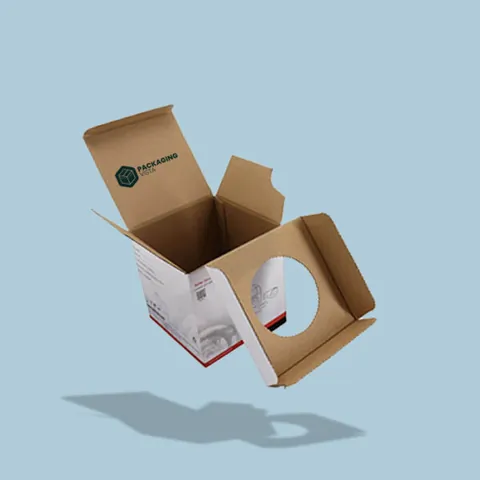
Packaging Materials
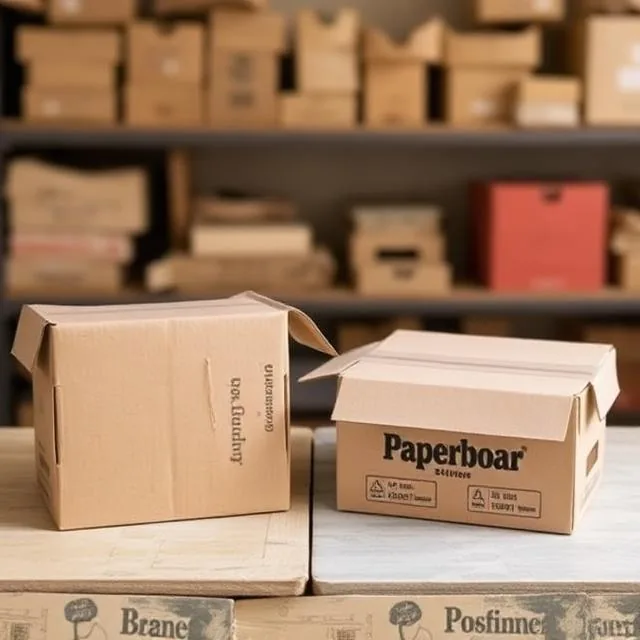
The material is what your box is made of, and it sets how strong it is, how it prints, how premium it feels, how sustainable it is, and what it costs. Packaging Vista prints custom boxes in every common stock – bright SBS cardstock, natural and recycled kraft, fluted corrugated, rigid chipboard, and food-grade and FSC-certified options – with no die, plate, or setup fees, a 100-box minimum, free design and dieline, and free US shipping.
Pick the stock below, then order the box style you need from our custom boxes.
Key takeaways
- SBS cardstock – bright and printable; the retail-carton standard.
- Kraft – natural, recyclable, and economical.
- Corrugated – strong and protective; made for shipping.
- Rigid – thick and luxurious; for premium and gift products.
The materials we print on
- SBS cardstock – smooth, bright-white paperboard for crisp retail cartons. Order folding cartons or cosmetic boxes.
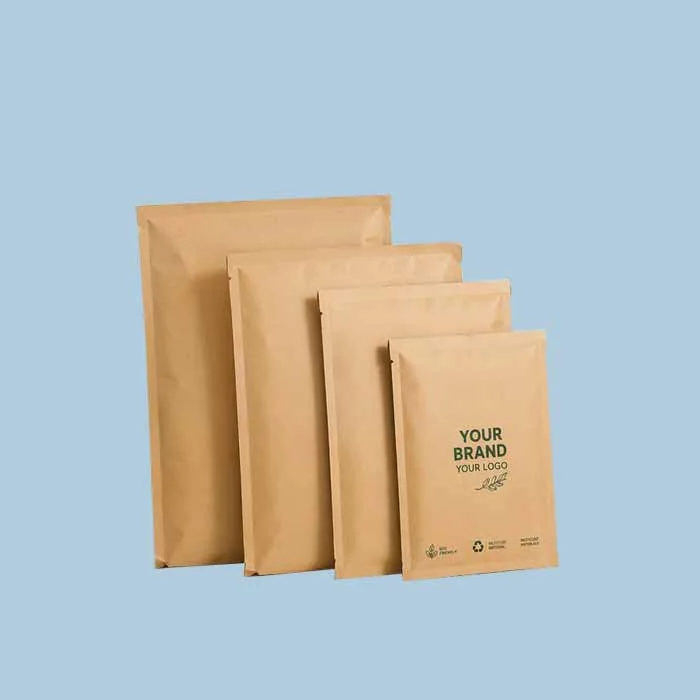
- Kraft – natural, recyclable board for an eco, handcrafted look. Order kraft boxes.
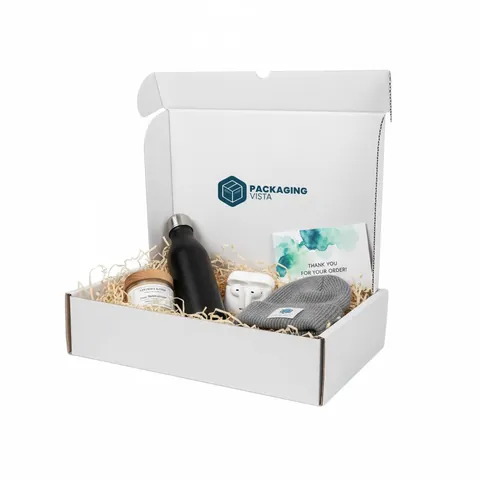
- Corrugated – fluted board for shipping strength and protection. Order corrugated boxes or mailer boxes.
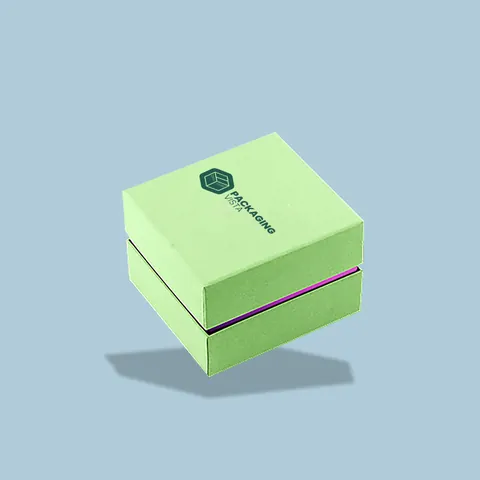
- Rigid chipboard – thick, wrapped board for a luxury, non-collapsible feel. Order rigid boxes.
- Recycled, FSC & food-grade – sustainable and direct-food-contact stocks. See eco-friendly boxes.
Quick comparison
| Material | Strength | Feel | Best for |
|---|---|---|---|
| SBS cardstock | Light–medium | Smooth, bright | Retail cartons |
| Kraft | Medium | Natural, textured | Eco & artisan brands |
| Corrugated | High | Sturdy, utilitarian | Shipping & heavy goods |
| Rigid chipboard | high | Solid, luxurious | Premium & gifting |
Not sure which to pick? Our complete packaging materials guide compares weight, sustainability, cost, and which stock fits your product.
Weight, finishes, and sustainability
Each material comes in a range of weights (measured in points, caliper, or GSM), and heavier board feels more substantial. We print full CMYK plus Pantone on every stock and add finishes like soft-touch lamination, foil, and spot UV. For an eco program, kraft, recycled, and FSC stocks keep the box recyclable – see our sustainable packaging guide.
Corrugated flute types and ECT ratings
Corrugated board is spec'd by flute size (the wave in the middle layer) and ECT (Edge Crush Test, in lb/in) or BCT (Box Compression Test, in lb). Higher ECT means more stacking strength. The common flutes:
| Flute | Thickness | Typical ECT | Best for |
|---|---|---|---|
| E-flute | ~1/16 in (1.6 mm) | 26-32 lb/in | Retail-ready mailers, cosmetics, printed shippers |
| B-flute | ~1/8 in (3.2 mm) | 32-44 lb/in | Everyday shipping cartons, general purpose |
| C-flute | ~5/32 in (4 mm) | 32-44 lb/in | Standard RSC shippers, groceries |
| BC double-wall | ~1/4 in (6.5 mm) | 48-71 lb/in | Heavy or fragile goods, long transit |
| Triple-wall | ~3/8 in+ (10 mm+) | 80-140+ lb/in | Industrial, appliance, bulk shippers |
For most DTC and ecommerce use, E-flute or B-flute is the sweet spot - protective enough for the carrier network without over-engineering weight or cost.
Board weight explained: points, caliper, and GSM
Board is specified by thickness or weight, and the numbers are simpler than they look. Points (pt) and caliper both measure thickness in thousandths of an inch – a 16pt board is 0.016 inches thick. GSM (grams per square meter) measures weight and is more common for lighter papers.
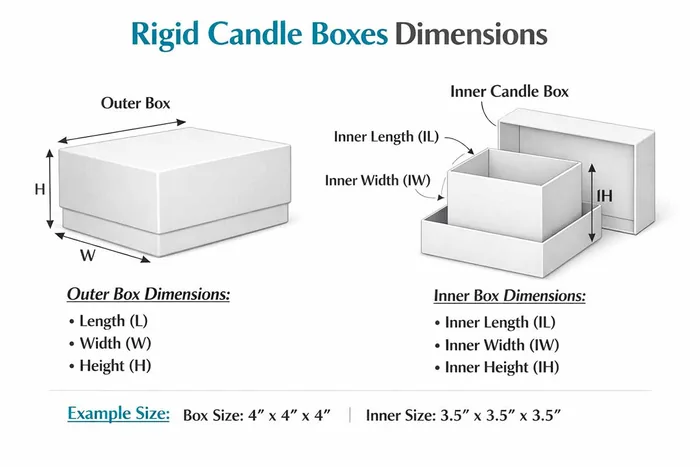
For folding cartons, SBS typically runs 14pt to 24pt: 14–18pt suits light retail cartons (cosmetics, small food), while 20–24pt gives a sturdier feel for heavier products. Corrugated is specified by flute and wall – single-wall E or B flute for retail shippers, double-wall for heavy or fragile goods – and rigid chipboard is measured in millimeters, usually 1.5–3mm for a solid, non-collapsible box.
Heavier is not always better; the right weight is the lightest one that protects and presents your product.
How to match a material to your product
Start from the job the box has to do. If it ships on its own through the carrier network, lead with corrugated for crush resistance. If it sits on a retail shelf, SBS cardstock prints brightest and holds a crisp fold. If the product is premium or a gift, rigid chipboard delivers the weight and rigidity that signal value.
For an eco-forward brand, kraft, recycled, and FSC stocks keep the natural look and recyclability. And for anything that touches food, choose a food-grade stock and low-migration inks. Most products fit one of these cleanly; when they straddle two, we recommend the stock that covers the harder requirement and note the trade-off on your quote.
Coatings and barrier options
The coating on a stock changes how it prints, how it feels, and what it can hold. Aqueous and UV coatings add scuff resistance and a matte or gloss look while staying recyclable; laminates (matte, gloss, soft-touch) add durability and a premium hand-feel but are a mixed material.
For food and oily products we offer grease- and moisture-barrier stocks compliant with FDA 21 CFR 176.170, and poly-free/PFAS-free barrier options where a plain board would soak through. Tell us the contents and shelf environment and we will match the coating to it – browse the finish options on our box finishes guide.
Pricing, minimums, and turnaround
Kraft and SBS are the most economical and ship flat; corrugated costs a little more; rigid is the most premium. There are no die, plate, or setup fees, the minimum is 100 boxes, and standard production runs 8 to 10 business days after proof approval, with rush available.
Every order includes a free dieline, 3D mockup, and free US shipping. Request a free quote with your box and material for exact pricing.
Frequently Asked Questions
What packaging materials do you offer?
SBS cardstock, natural and recycled kraft, single- and double-wall corrugated, rigid chipboard, and food-grade and FSC-certified stocks. We recommend the right one for your product, budget, and sustainability goals.
Which material is most eco-friendly?
Uncoated kraft and recycled paperboard are popular green choices, and corrugated is highly recyclable. Keep coatings minimal and choose soy-based inks to keep the box recyclable.
Which packaging material is cheapest?
Kraft and SBS cardstock are the most economical per unit and ship flat. Corrugated costs a little more, and rigid chipboard is the most expensive because it is thick and hand-assembled.
Can you print on all of these materials?
Yes. We print full color on SBS, kraft, corrugated, and rigid board, with Pantone matching and finishes available on each.
How thick should my box be?
It depends on the product and use. Light retail cartons work well in 14 to 18pt SBS, heavier products in 20 to 24pt; shipping boxes use single- or double-wall corrugated by weight and fragility; and premium rigid boxes use 1.5 to 3mm chipboard. We recommend the lightest board that still protects and presents your product.
Do you offer food-safe or barrier stocks?
Yes. We offer food-grade stocks with low-migration inks for direct food contact, plus grease- and moisture-barrier options (including poly-free choices) for oily or damp products. Tell us the contents and we will match the stock and coating.
Who orders custom packaging materials?
Custom-structured boxes are ordered by brands and operators who need a specific box shape or format built to their product — not a stock size.
- E-commerce and DTC brands — mailer boxes and custom shippers sized to the product so freight is billed on actual volume, not dead air.
- Product designers and startups — die-cut prototypes with free custom dielines so a launch box can be tested before it goes to press at volume.
- Premium and gift brands — rigid, magnetic-closure, and pillow-box formats that carry a giftable feel with foil, embossing, and inserts.
- Retail merchandisers — counter-display and window-box structures built to sit on a shelf and pull the shopper's eye at eye level.
- Print buyers and packaging engineers — any material and finish with no die, plate, or setup fees so a spec sheet becomes a firm quote in one business day.
Custom-printed vs plain: which should you order?
Custom-printed boxes carry your logo, brand colors, and legal copy directly on the box; plain boxes are unprinted brown kraft or white board with no branding. Both have a legitimate use — the right one depends on how the box is seen by the end customer.
| Factor | Option A | Option B |
|---|---|---|
| Brand visibility | Full-color logo, artwork, and messaging on every panel. | None — the box is treated as a shipper, not a marketing surface. |
| Unit cost | Higher: printing plates, ink, and finishing add cost per unit. | Lower: no print step, so you pay only for the board and cut. |
| Best for | Retail shelf, unboxing, gifting, DTC subscription, PR mailers. | Bulk shipping, warehouse fulfillment, moving, internal transfer. |
| Turnaround | 8–10 business days including printing and finishing. | 5–7 business days for cut and score only. |
Which should you order? Choose custom-printed when the box is part of the customer experience. Choose plain when the box is a container the customer will never see — for example, master shippers that hold your printed retail boxes.
How to order custom packaging materials
Five steps from quote to delivery. Every order includes free design support, a free custom dieline, and a digital mockup for approval before anything hits the press.
- Share your specs. Send box dimensions (or a photo of the product), quantity, material preference, and any artwork or logo files. If you're unsure of the size, our design team can advise from a product photo.
- Get a quote and mockup. Within one business day we return a firm quote, a printable dieline, and a 3D digital mockup of your packaging materials. No die, plate, or setup fees are added.
- Approve the proof. Review the mockup, request color, layout, or dieline changes, and give final approval. Revisions are unlimited before press.
- Production (8–10 business days). Your order runs on offset or digital press, then moves through finishing — lamination, spot UV, foil stamping, embossing, die-cutting, and assembly if needed.
- Free US shipping. Orders ship flat-packed with tracking. Assembled bundles or master-carton packing are available on request at no charge.
Resources & tools
Free tools and trusted references to help you size, spec, and choose the right packaging materials before you order.
Free tools & guides
- Our capabilities – printing, finishing, QA, and what we can make.
- Custom boxes hub – every box style we print, in one place.
- Box Size & Dimensional Weight Calculator – size your box and see the billable weight UPS, FedEx, and USPS charge.
Trusted references
- How2Recycle – the standardized on-pack recycling label for paperboard and kraft packaging.
- Forest Stewardship Council (FSC) – certification for responsibly sourced paper and board.
- FEFCO — International Fibreboard Case Code – the standard code (0201, 0427, etc.) that defines every box style.
- ISTA — International Safe Transit Association – the industry-standard packaging performance test protocols.