Custom Folding Cartons
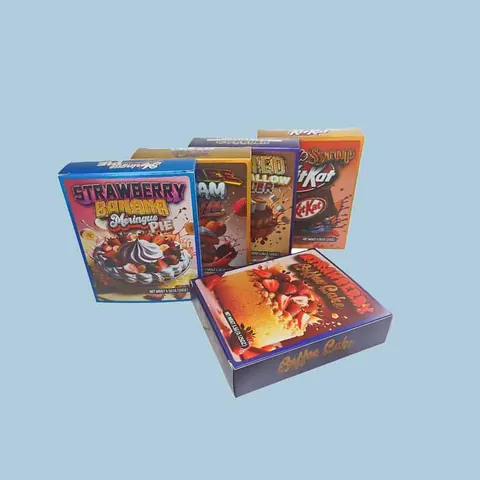
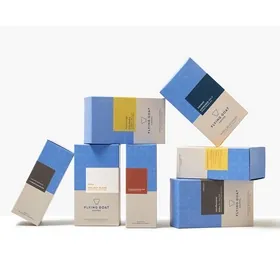
A folding carton is a retail box die-cut and creased from a single flat sheet of paperboard, then shipped flat and folded (or glued) into shape at packing. It is the workhorse of shelf packaging – the printed paperboard box you see holding cosmetics, cereal, supplements, and cannabis pre-rolls.
Lightweight, brilliantly printable, and recyclable, it stays economical whether you order 100 units or 100,000. This page is the umbrella for the whole family; when you already know the closure you want, jump to a specific sub-style like tuck-end boxes.
Key takeaways
- One sheet, folded: die-cut and scored from flat paperboard, so it ships flat and assembles fast – the lowest-freight, most shelf-ready box format.
- Closure is the choice: tuck-end, auto-lock/1-2-3 bottom, seal-end, tuck-top, and hanger panels each suit a different product weight and speed.
- Print-first surface: smooth SBS or kraft board takes full CMYK, Pantone matching, and finishes like soft-touch, foil, emboss, and spot UV.
- Fair to start: 100-box minimum, no die or plate fees, free dieline and 3D mockup, and 8–10 business-day turnaround with free US shipping.
What a folding carton is
Every folding carton begins as one flat blank of paperboard. A steel cutting die trims the outline and, in the same pass, presses crease (score) lines where the box will bend. Those creases are what let a rigid-feeling board fold cleanly into a square-cornered box without cracking the print.
Glued side seams or interlocking tabs hold the walls together, while the top and bottom flaps handle loading and closing. Because the whole structure is defined by the flat dieline, you can tune every panel – wall height, flap depth, hang holes, thumb notches – before a single sheet is cut.
The result is a lightweight retail carton (as opposed to a heavier shipping box). For products that need corrugated protection in transit, a folding carton often nests inside a corrugated shipper; on the shelf, the carton is the face the customer sees.
How it is made and how it folds together
The workflow is short and repeatable: design and dieline, then print the flat sheets, then die-cut and crease, then fold and glue, then ship flat. Printing happens while the board is flat, which is exactly why folding cartons carry photographic-quality art edge to edge. After cutting, an auto-gluer folds the seam and lays down the side glue; the carton leaves the plant collapsed and stackable.
At your end, assembly depends on the bottom you chose. A straight tuck folds flat and tucks in – ideal for hand-packing light goods. An auto-lock (also called snap-lock or 1-2-3 bottom) pops open and the base locks itself with a press, so it holds heavier contents without extra tape.
A seal-end carton has factory-glued end flaps that a filling line closes with hot-melt at speed. Shipping flat is the quiet superpower here: you pay freight and store shelf space for air-free stacks, not for assembled boxes.
What folding cartons are best for
If it sits on a retail shelf, a folding carton probably fits. Common homes include cosmetics and skincare, supplements and OTC pharma, food and beverage, confectionery, personal care, small electronics accessories, and cannabis/CBD retail cartons. The format scales from a slim lip-balm sleeve to a wide cereal-style carton, and it accepts inserts, dividers, and hang tabs for peg display.
Buyers who want a heavier, unboxing-driven presentation often compare cartons against a premium alternative – see rigid boxes for that step-up. For most everyday retail SKUs, though, the printed carton wins on cost, weight, and speed.
Folding carton style comparison
| Style | Closure | Weight | Best for |
|---|---|---|---|
| Straight Tuck End (STE) | Both flaps tuck back | Light | Clean-front retail (cosmetics) |
| Reverse Tuck End (RTE) | Opposite tucks (nests economically) | Light | Everyday retail (most economical) |
| Auto-lock / 1-2-3 bottom | Self-locking base | Medium-heavy | Bottles, jars, denser products |
| Seal-end (glued) | Glued top & bottom flaps | Medium | Tamper-evident, high-speed lines |
| Tuck-top / seal-bottom | Tuck top, glued base | Medium | Powders, granules, granola |
| Five-panel hanger | Extended back panel with hang hole | Light | Peg-wall retail (hardware, electronics) |
| Sleeve + tray | Sliding wrap | Light-medium | Premium unboxing, gift sets |
Standard caliper: 14 pt (~350 gsm) for light cosmetics, 18 pt (~450 gsm) for standard retail, 24 pt (~600 gsm) for bottles and heavier goods.
Board stocks and finishes
The board sets the feel and the print. SBS (solid bleached sulphate) folding boxboard gives the cleanest white printing surface and is standard for cosmetics and food. CCNB (clay-coated news back) is a value recycled option, kraft delivers a natural uncoated look, and FSC-certified or recycled boards satisfy sustainability specs.
Caliper typically runs 14–24pt; lighter calipers suit slim, light SKUs, and you step up toward 24pt when the product is heavier or the box is large enough to feel flimsy otherwise.
On the print side you get full CMYK plus Pantone (PMS) matching for exact brand colors, then any finish the design calls for: matte or gloss lamination, soft-touch coating, foil stamping, embossing or debossing, and spot UV. Browse the full menu on our packaging materials page.
Sizing and how to measure
Folding cartons are specified by their inner dimensions – length x width x height – because those govern how your product fits, not the outside of the board. Measure the product itself at its widest points and add a small clearance (roughly 1–2mm per side for a snug retail fit, more if you are adding an insert).
Length is the longest face, width the shorter face, and height the vertical wall. Send us those numbers, or send the product, and we build a free custom dieline and a 3D mockup so you can confirm fit before production.
How much do custom folding cartons cost?
Custom folding cartons are the most economical custom box format we make. Typical pricing at a 500-unit run: $0.35 to $0.90 per box on 14–18pt SBS for cosmetics, small food, and retail cartons; $0.60 to $1.20 per box on 24pt SBS for bottle boxes and heavier contents; kraft and CCNB recycled are slightly cheaper than SBS.
Per-box cost drops sharply as quantity rises — a 5,000-unit run typically costs 30–40% less per box than 500 units. There are no die, plate, or setup fees on any run.
What drives folding carton price:
- Quantity — the biggest lever. Per-box cost drops sharply from 100 to 500 to 1,000+.
- Board caliper — 14pt is cheapest; 18pt is standard; 24pt costs more for heavier contents.
- Board type — kraft and CCNB recycled are cheaper than SBS; FSC-certified board carries a small premium.
- Print coverage — solid floods across every panel use more ink than targeted logo prints.
- Finishes — each stacked finish (soft-touch, foil, spot UV, emboss, window patching) adds a small off-press step.
- Closure — straight/reverse tuck-end is the cheapest; auto-lock and seal-end add a glue-and-fold step.
See our packaging cost guide for a deeper breakdown, or send your specs on the quote form for exact per-box pricing.
How long do custom folding cartons take to make?
Standard production is 8 to 10 business days after proof approval. Rush production runs in 4 to 6 business days on most orders at no additional charge, including single-finish builds and auto-lock closures. Stacked finishes (soft-touch + foil + emboss) can add 1 to 2 days.
Ground freight from Cheshire, Connecticut adds 2 to 5 days to reach the West Coast — expect a full quote-to-dock timeline of about 2 to 3 weeks for a first order with artwork ready.
Folding carton vs rigid box vs mailer box: which should you choose?
The three formats cover different jobs. A folding carton is the retail-shelf presenter that ships flat and folds at pack-out. A rigid box is the luxury-unboxing format that ships assembled and costs 3–6x more per unit. A mailer box is the corrugated shipping-and-unboxing hybrid for direct-to-consumer — our US mailer box guide covers how brands pick a US-based maker.
| Folding carton | Rigid box | Mailer box | |
|---|---|---|---|
| Board | 14–24pt SBS or kraft | 25–36+ pt grayboard, wrapped | E-flute or B-flute corrugated |
| Ships to you | Flat, folds at pack-out | Assembled (does not fold flat) | Flat, self-locks at pack-out |
| Typical cost (500-run) | $0.35–$1.20 | $2–$5 | $0.40–$1.50 |
| Best for | Retail shelf, mass CPG | Luxury unboxing, gifting | DTC e-commerce, subscription |
| Ships product | No (needs outer shipper) | No (needs outer shipper) | Yes (is the shipper) |
Choose a folding carton when unit cost is the deciding factor and the box will sit on a retail shelf. Choose a rigid box when unboxing is part of the product experience. Choose a mailer box when the same box has to protect and present in a DTC shipment. Many brands run all three: folding carton for retail SKUs, rigid for gift sets, mailer for DTC — same brand story across all three.
Pricing, minimums, and turnaround
Pricing scales with board caliper, size, print coverage, and finishes – not with hidden setup charges. There are no die, plate, or setup fees, the minimum order is 100 boxes, and design help, the dieline, a 3D mockup, and a digital proof are all free.
Standard production runs 8–10 business days after proof approval, with free shipping within the US on every custom order. Ready to price your box? Get a quote and we will turn your specs into a real number.
Are folding cartons worth it for a small business?
Yes, and folding cartons are usually the first custom box format a small brand should try. They are the lowest-cost custom option ($0.35–$1.20/box at 500), print in full CMYK plus Pantone for exact brand color, and ship flat so warehouse storage is minimal.
At a 100-box minimum with no plate or setup fees, a first folding carton run is affordable at the smallest scale — many first-time customers order 100 or 250 cartons for a launch SKU and reorder as sell-through builds. The cheaper alternative is a plain cardboard box with an applied label, but it does not carry brand story on the shelf the way a printed carton does.
For premium tiers or DTC unboxing, see rigid boxes and mailer boxes.
Are folding cartons recyclable?
Yes. Folding cartons are one of the most recyclable packaging formats — the American Forest & Paper Association reports paper-based packaging recovery rates above 90% in the US. SBS, kraft, and CCNB paperboard are all curbside-recyclable in nearly every municipal program; FSC-certified board carries chain-of-custody assurance that fiber is sustainably sourced.
Soy-based and water-based inks keep the box recyclable; aqueous coatings stay in most streams. Heavy laminates, foil stamping, and PET window patches are mixed materials that reduce recyclability — some programs require them pulled. For a fully recyclable carton, request kraft or FSC SBS, soy inks, aqueous coating instead of laminate, spot UV instead of foil, and consider skipping the window patch or using a bio-based film.
See our eco-friendly boxes and kraft boxes ranges.
Frequently asked questions
What is the difference between a folding carton and a corrugated box?
A folding carton is made from a single flat sheet of paperboard for lightweight retail packaging, while a corrugated box uses a fluted, multi-layer board built for shipping strength. Cartons show your product on the shelf; corrugated protects it in transit, and the two are often used together.
Which bottom closure should I choose?
For light products a straight or reverse tuck-end is simplest and cheapest. For heavier or denser items choose an auto-lock (snap-lock/1-2-3) bottom that locks with a press, or a glued seal-end for tamper-evidence and high-speed filling lines.
What board thickness do folding cartons use?
Caliper typically ranges from 14 to 24pt. Lighter calipers suit slim, light SKUs; step toward 24pt when the product is heavier or the box is large enough that a thinner board would feel flimsy. We will recommend a caliper for your size and weight.
Can I add a window or special finishes?
Yes. Window cut-outs (with or without a PET film patch) reveal the product, and you can add matte or gloss lamination, soft-touch, foil stamping, embossing, and spot UV. Full CMYK plus Pantone matching is standard.
What is the minimum order and how fast is it?
The minimum is 100 boxes with no die, plate, or setup fees. Standard turnaround is 8 to 10 business days after you approve the digital proof, with free US shipping on every custom order.
Do you help with the design and dieline?
Yes. We provide free design assistance, a free custom dieline, a free 3D mockup, and a digital proof so you can confirm structure, fit, and artwork before anything goes to print.
How much do custom folding cartons cost?
Rough ranges at a 500-unit run: 14–18pt SBS cartons $0.35 to $0.90 per box; 24pt SBS bottle boxes $0.60 to $1.20; kraft and CCNB recycled are slightly cheaper than SBS. Per-box cost drops 30 to 40 percent when you move from 500 to 5,000 units. No die, plate, or setup fees on any run.
How long do custom folding cartons take to make?
Standard production is 8 to 10 business days after proof approval. Rush production runs in 4 to 6 business days on most orders at no additional charge, including single-finish builds and auto-lock closures. Ground freight from Cheshire, Connecticut adds 2 to 5 days; full quote-to-dock is about 2 to 3 weeks for a first order.
How are folding cartons made, step by step?
Six steps: (1) share product dimensions, closure, board, and finishes, (2) we build a free dieline and 3D mockup, (3) you approve the digital proof, (4) we print flat paperboard sheets in CMYK plus Pantone on offset (ISO 12647-2 + G7), (5) we die-cut, crease, and glue (auto-gluer for seal-end and auto-lock builds), (6) cartons ship flat-packed and free across the US.
Are folding cartons worth it for a small business?
Usually yes because they are the lowest-cost custom box format ($0.35 to $1.20 per box at 500). At a 100-box MOQ with no plate or setup fees, custom folding cartons are affordable at the smallest scale. Many small brands launch with 100 or 250 cartons and reorder as sell-through builds. Cheaper alternatives are plain cardboard with a sticker (no printed exterior) or stock cartons.
Are folding cartons recyclable?
Yes. Folding cartons are one of the most recyclable packaging formats — paper-based packaging recovery rates in the US are above 90% (American Forest & Paper Association). SBS, kraft, and CCNB are all curbside-recyclable; soy inks and aqueous coatings stay recyclable; heavy laminates, foil, and PET window patches are mixed materials that reduce recyclability.
For a fully recyclable carton: kraft or FSC SBS, soy inks, aqueous coating, spot UV instead of foil.
Folding carton vs rigid box: which should I choose?
Choose a folding carton when unit cost is the deciding factor and the box will sit on a retail shelf — $0.35 to $1.20 per box at 500. Choose a rigid box when unboxing is part of the product experience (luxury cosmetics, jewelry, gifting) — $2 to $5 per box at 500 for the hand-assembled premium feel.
Folding carton is 3 to 6x cheaper per unit at the same footprint; rigid carries more brand story. Many brands run both: folding carton for retail SKUs, rigid for gift sets.
Who orders custom folding carton boxes?
Custom-structured boxes are ordered by brands and operators who need a specific box shape or format built to their product — not a stock size.
- E-commerce and DTC brands — mailer boxes and custom shippers sized to the product so freight is billed on actual volume, not dead air.
- Product designers and startups — die-cut prototypes with free custom dielines so a launch box can be tested before it goes to press at volume.
- Premium and gift brands — rigid, magnetic-closure, and pillow-box formats that carry a giftable feel with foil, embossing, and inserts.
- Retail merchandisers — counter-display and window-box structures built to sit on a shelf and pull the shopper's eye at eye level.
- Print buyers and packaging engineers — any material and finish with no die, plate, or setup fees so a spec sheet becomes a firm quote in one business day.
How to order custom folding carton boxes
Five steps from quote to delivery. Every order includes free design support, a free custom dieline, and a digital mockup for approval before anything hits the press.
- Share your specs. Send box dimensions (or a photo of the product), quantity, material preference, and any artwork or logo files. If you're unsure of the size, our design team can advise from a product photo.
- Get a quote and mockup. Within one business day we return a firm quote, a printable dieline, and a 3D digital mockup of your folding carton boxes. No die, plate, or setup fees are added.
- Approve the proof. Review the mockup, request color, layout, or dieline changes, and give final approval. Revisions are unlimited before press.
- Production (8–10 business days). Your order runs on offset or digital press, then moves through finishing — lamination, spot UV, foil stamping, embossing, die-cutting, and assembly if needed.
- Free US shipping. Orders ship flat-packed with tracking. Assembled bundles or master-carton packing are available on request at no charge.
Resources & tools
Free tools and trusted references to help you size, spec, and choose the right folding carton boxes before you order.
Free tools & guides
- Packaging materials – compare SBS, kraft, corrugated, and rigid stocks.
- Box Size & Dimensional Weight Calculator – size your box and see the billable weight UPS, FedEx, and USPS charge.
- Custom boxes hub – every box style we print, in one place.
Trusted references
- How2Recycle – the standardized on-pack recycling label for paperboard and kraft packaging.
- Forest Stewardship Council (FSC) – certification for responsibly sourced paper and board.
- FEFCO — International Fibreboard Case Code – the standard code (0201, 0427, etc.) that defines every box style.
- ISTA — International Safe Transit Association – the industry-standard packaging performance test protocols.