Blog · By The Packaging Vista Team · June 20, 2026
How Much Does Custom Packaging Cost? A Plain Guide to Pricing
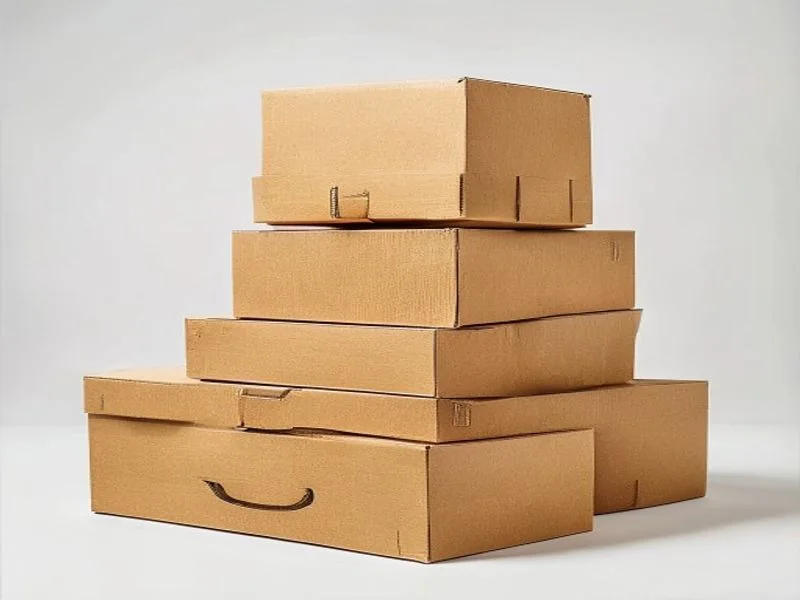
Custom packaging is priced by quote. The cost depends on a few choices. The box’s size and stock. How many you order. How it is printed. And the finish.
There is no single sticker price. But the drivers are easy to grasp. Once you know them, you can shape your packaging to your budget. Packaging Vista also removes the fees that usually inflate a first order. No die, plate, or setup charges. Plus free design and a free dieline.
Get a free quote in about a day. If your main question is how much does packaging cost, this plain guide to custom box pricing walks through every lever.
Key takeaways
- Five main drivers: size, material, quantity, printing, and finish.
- Volume lowers unit cost: the more you order, the less each box costs.
- No hidden setup fees here: no die, plate, or setup charges, and free design.
- Best way to know: request a quote with your size, quantity, and finish.
Why is custom packaging quoted, not fixed-priced?
A custom box is built to your product. So two orders are rarely the same. A small kraft carton and a foil-stamped rigid box can differ in price many times over.
Rather than a misleading “starting at” figure, packaging is quoted on your real specs. You only pay for the choices you make.
It helps to think of a quote as the sum of a few moving parts, not one mystery number. Every custom order carries a bit of stock cost, a bit of print cost, and a bit of labor to fold, glue, and finish each box. Each of those parts responds to the choices you make.
When a quote looks higher than you expected, the reason is almost always tied to one specific choice. A heavier board. A larger footprint. An extra color. Or a special finish. The drivers are clear. So you are never locked into a single price. You can ask for the same box in two or three setups and watch the number move.
That is far more useful than a headline figure that hides what you are paying for.
Custom printing coverage is a good example of a lever people miss. A box with a small logo on plain stock uses little ink and sits at the low end. A design that floods every panel with solid color — especially an exact Pantone match — asks more of the press and the stock.
Neither is right or wrong. They cost differently, and the right split usually depends on how load-bearing that panel is for your product branding. Knowing this lets you spend where it counts.
Steps to estimate custom-packaging cost:
- Confirm quantity (100, 500, 1000…) – larger runs cut unit cost.
- Pick a structure: tuck-end, mailer, rigid, sleeve, window – each has a base cost.
- Choose the stock: SBS, kraft, corrugated, greyboard.
- Set the print: number of ink colors and any Pantone spots.
- Add finishes: lam, soft-touch, foil, spot UV, emboss.
- Add optional inserts or dividers if the product moves.
- Request a quote – unit + total, no die or plate fees.
What affects the cost of custom packaging?
Five factors do most of the work. Adjusting any one of them moves your price.
| Factor | How it affects price |
|---|---|
| Size & material | Bigger boxes and heavier stocks use more material. Rigid board costs more than folding carton; kraft is economical. |
| Quantity | The biggest lever. Per-unit cost drops as volume rises. |
| Printing | Full-coverage and Pantone color cost more than light or single-color print. |
| Finish | Foil, spot UV, soft-touch, and embossing add cost (and shelf appeal). |
| Structure & add-ons | Complex styles, windows, and custom inserts add to the build. |
Want to see how build changes the math? Our box styles guide compares mailer, rigid, folding carton, and more.
How does quantity change your per-unit price?
Quantity is the lever you can use most. Print and setup work is spread across the whole run. So ordering more lowers the cost of each box. That said, you do not have to order thousands to start. Our minimum is just 100 boxes. That lets you launch or test a design cheaply and scale up once it sells.
The reason volume works so strongly comes down to fixed versus variable costs. Some of the work behind a run happens only once no matter how many boxes you make. Prepping the art. Setting up the press. Dialing in color.
When that one-time work is split across a hundred boxes, each box carries a larger share of it. Split the same work across a much larger run and each box carries only a sliver. That is why the jump from a small trial order to a larger reorder often lowers the per-box price a lot. Even though nothing about the design has changed.
For a new brand, the smart play is usually to start at or near the minimum. Prove the packaging in the real world. Then commit to a bigger run once you know the design sells and the size is right.
Ordering ahead for a season or bundling several similar SKUs into one run are two easy ways to reach a friendlier per-unit price without gambling on demand you cannot yet see. If you are weighing a small safe order against a larger cheaper one, ask for both quantities on the same quote. That way the trade-off is in front of you in plain numbers.
How does material choice move the number?
Material is the second-largest lever after quantity. And it is where many brands overspend. Heavier and more rigid stocks cost more per box. So the goal is to match the stock to the job. Do not reach for the most premium option by default. A few common patterns:
- Folding carton (SBS or kraft paperboard) – the workhorse for retail cartons, light products, and most printed boxes. Economical and prints beautifully.
- Kraft – an affordable, natural-looking option that doubles as an eco signal. Browse affordable natural kraft boxes.
- Corrugated – for shipping and heavier items; strong without the cost of rigid board. See sturdy corrugated shipping boxes.
- Rigid board – the premium, gift-grade feel for premium gift-grade rigid boxes; the highest material cost, used where the unboxing justifies it.
Picking the lightest stock that still guards and shows the product well is one of the simplest ways to keep a quote in budget.
One thing worth remembering. The cheapest stock on paper is not always the cheapest pick overall. A box that is too flimsy for its contents can crush in transit. Replacing damaged product plus reshipping costs far more than the few cents you saved per box.
The goal is the lightest stock that still guards and shows the product well. Not the lightest stock full stop. If your item is fragile or heavy, a sturdier corrugated or rigid build can be the smarter choice once returns and breakage are counted. When you describe your product on a quote request, tell us its weight and how it ships.
Our team can steer you to the stock that balances guard against price rather than defaulting to the top-tier option.
What fees do we not charge?
On many quotes, the surprise is not the boxes – it is the setup fees. We remove the common ones:
- No die or plate fees on your custom shape or print.
- No setup charges to start a job.
- Free design support and a free dieline instead of a design bill.
- Free US shipping on qualifying orders.
For a new brand, those removed fees often make the difference on a first run. See why brands choose us.
How do you compare quotes fairly?
When you gather quotes from more than one supplier, the trap is comparing prices that are not talking about the same box. One quote might assume a lighter board, fewer print colors, or no finish. Another might include a die charge, a plate fee, or a design bill buried in the total.
A lower headline number can easily hide costs that appear later. A higher one can already include everything you need. To compare like with like, make sure every quote is built on the same spec. The same sizes. The same stock and thickness. The same number of print colors. The same finishes. And the same quantity. Then read what each price does and does not include.
Ask each supplier three questions:
- Are setup, die, and plate fees included or added later?
- Is design and a dieline part of the price or billed apart?
- What is the turnaround? A rushed job can carry a premium.
Our quotes fold design, the dieline, and setup into the price with no separate die or plate fees. So the number you see is close to the number you pay. That makes it a clean baseline to measure other offers against.
How do you lower your packaging cost?
A few practical moves bring the price down without cheapening the result:
- Right-size the box. A box built to the product uses less material and ships cheaper.
- Order in volume. Combine SKUs or buy ahead to reach a better per-unit price.
- Pick the right material. Affordable kraft paperboard stock and recycled eco-friendly box stocks are economical and on-trend.
- Use finishes with intent. Let one finish carry the impact instead of stacking several.
How to get an accurate quote
The fastest way to a real number is to send a few details:
- Your product and its dimensions (or the box size you need).
- The quantity, or a range you are considering.
- Material, print, and any finishes you want.
- Your deadline, if you have one.
If you are not sure on some of these, that is fine. Describe the product and our team will suggest options and price them. Not sure how to measure? Our guide to measuring a custom box walks you through length, width, and height.
How do you budget and plan your order?
If you are building a budget before you have a firm quote, start by pinning down the two drivers that move the number most. Quantity. And stock.
Decide roughly how many boxes you need for a launch or a season. Decide whether the product calls for a cheap folding carton, a natural kraft, a sturdy corrugated, or a premium rigid feel. Those two choices frame most of the cost. Everything else — print, finishes, inserts — adjusts the total from there. Treat finishes as the place you dial spend up or down last, once the build basics are set.
Timing matters too. Custom boxes are made to order. So plan around a print window of roughly eight to ten business days once your proof is approved. Plus shipping time.
Building that lead time into your calendar means you are never forced into a rushed reorder. It also gives you room to review the free digital proof and 3D mockup with care before anything goes to press. A little planning up front — a clear quantity, the right stock, and a real deadline — is the surest way to keep both your budget and your timeline under control.
Dig deeper: cost & pricing guides
For a closer look at a cost topic, see our focused articles:
- How to reduce packaging costs – seven practical ways.
- Low-MOQ packaging – custom boxes for small businesses.
- Die, plate & setup fees – explained, and how to avoid them.
- Wholesale custom boxes – volume pricing and when to order in bulk.
Frequently asked questions
Do you charge die or setup fees?
No. There are no die, plate, or setup fees, and design support and your dieline are free. You pay for the boxes, not the startup costs.
What is the minimum order?
Just 100 boxes. That low minimum keeps a first run affordable and lets you test a design before scaling up.
Does ordering more lower the price?
Yes. Per-unit cost drops as quantity rises, because setup and print work is spread across the run. We can quote a few quantities so you can compare.
What is the cheapest way to do custom packaging?
Right-size the box, choose an economical stock like kraft, keep finishes simple, and order in volume. We will help you balance cost against the look you want.
How do I choose a packaging quantity that balances cost and cash flow?
Look at three numbers: sales velocity (how fast do you sell through 100 units?), per-unit price at 100, 500, and 1,000, and warehouse space. If a 500-unit run drops per-unit cost 25% and you sell through in three months, order 500. If it drops 5% and takes a year to sell through, stick at 100 and reorder.
Do not order beyond a six-month supply for a new SKU – designs get revised, stock ages, and cash tied up in boxes is cash you cannot deploy elsewhere.
What are the benefits of a quote-based custom packaging price over fixed catalog pricing?
Quote-based means you only pay for the specs you actually need – stock, size, print colors, finishes, and quantity all move independently. Catalog pricing forces you into pre-set bundles that often over-include (paying for foil you did not need) or under-include (base price omits the finish, added later).
A quote lets you dial each variable to your product and budget. It also flexes for future runs – you can change one variable without renegotiating the whole spec.
Which packaging cost lever gives the biggest single saving?
Right-sizing the box – it moves both material cost and shipping (dimensional-weight) cost, often 15-25% together. Second biggest: cutting die and plate fees by choosing a supplier who does not charge them (we do not). Third: trimming to one hero finish instead of stacking three.
Volume discounts help but only after you have addressed the first three – ordering more of the wrong box is not a saving.
Is spending more on custom packaging worth it for a small brand?
Yes when the packaging is part of the customer experience – retail shelf, DTC unboxing, gifting, social content. Even a modest spend on a right-sized branded carton pays back through fewer damage returns, higher perceived value, better unboxing photos, and repeat orders.
At our 100-box minimum with no die or plate fees, entry cost is well within a bootstrap budget. Skip only for pure warehouse-to-warehouse B2B moves where the box is opened once and discarded.
Get your custom packaging quote
Related reading from OLX Packaging: how to choose the best packaging for your product.
The honest answer to “how much?” is “it depends” – but you can get a real number quickly. Send us your product, size, quantity, and finish, and we reply with a quote (usually within one business day) with no die or plate fees. Not sure where to start? See our packaging by industry and box styles guides, or browse our full custom box range. Then request your free quote or contact our team.