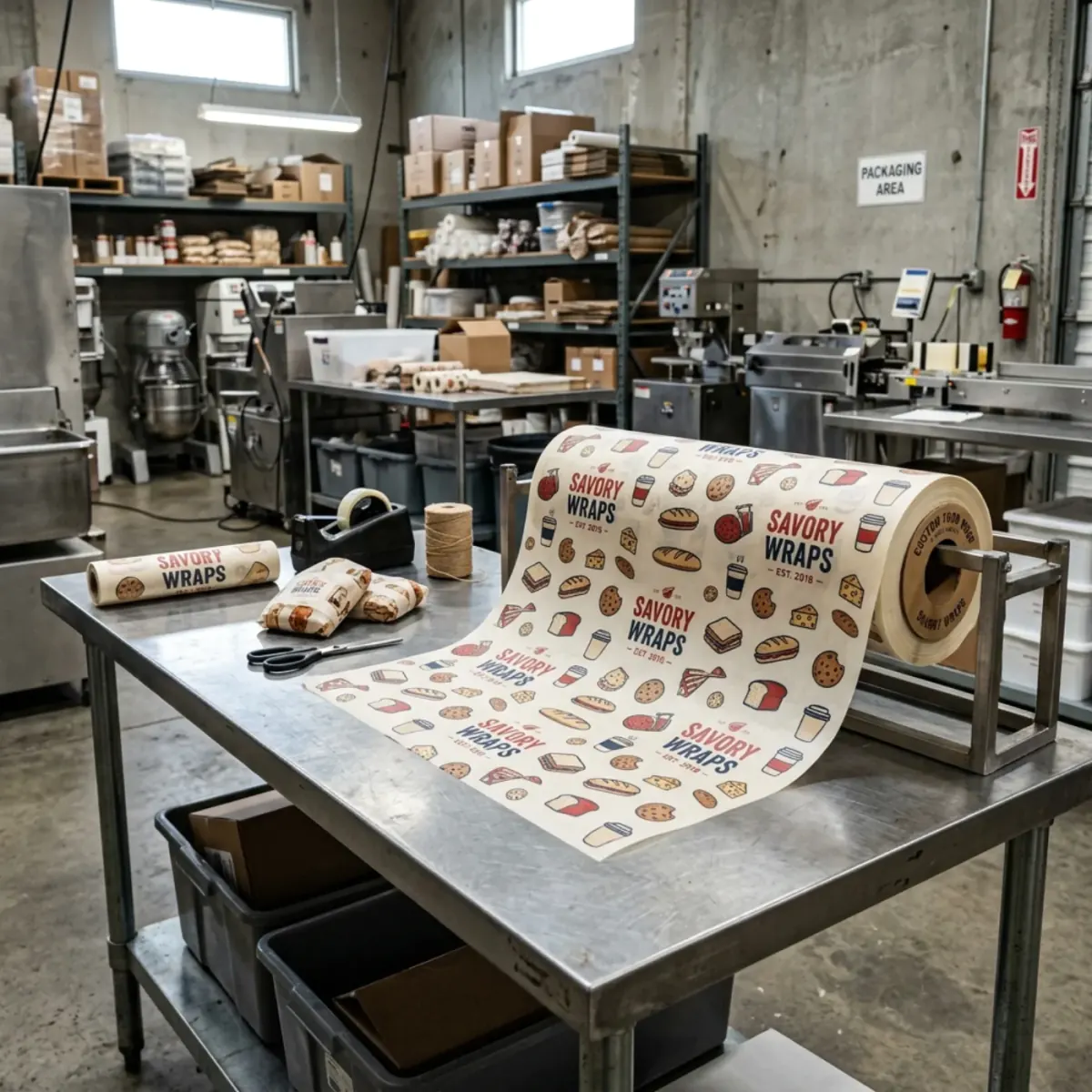
Custom Greaseproof Paper
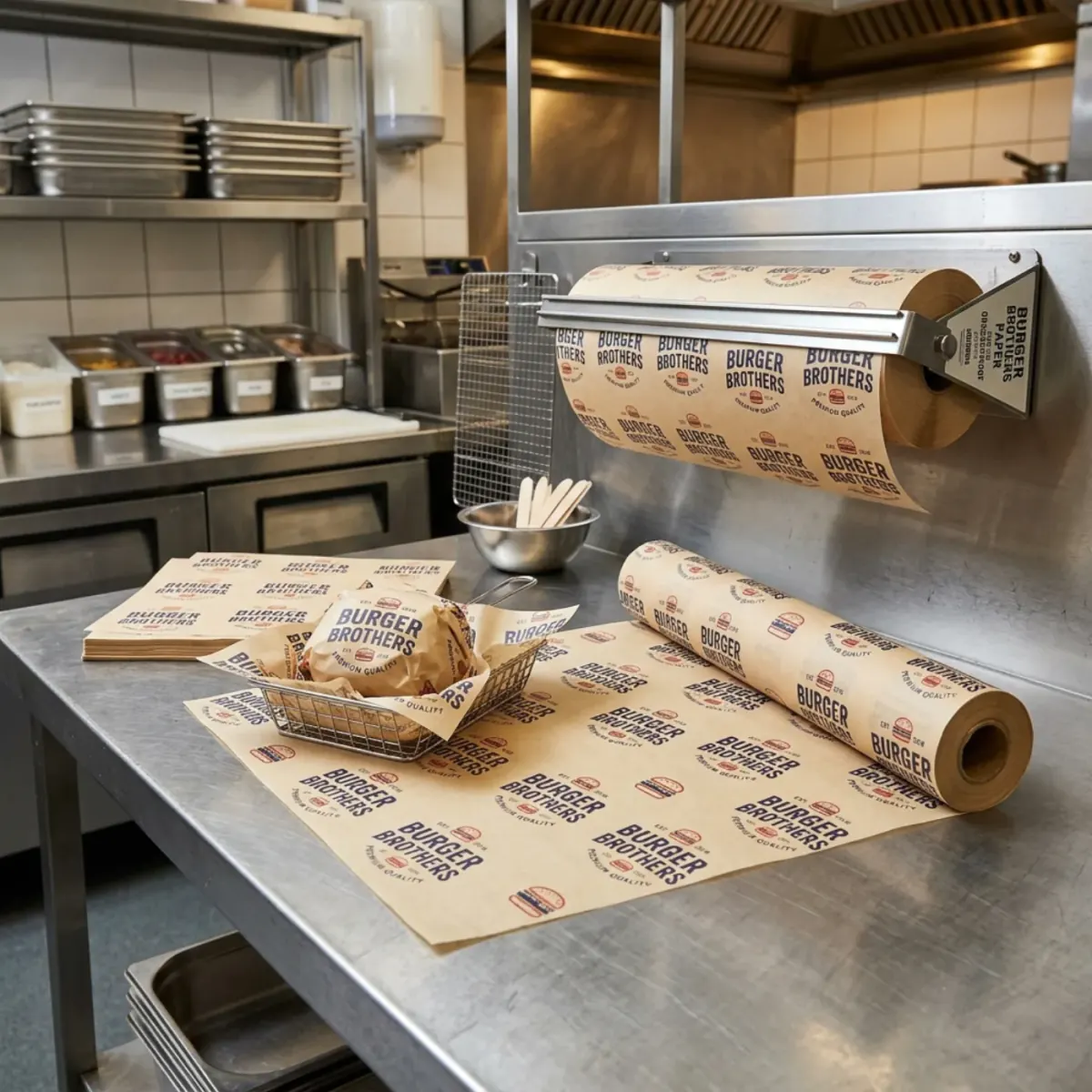
Custom greaseproof paper is a dense, food-grade sheet. Its tight, packed fibers block oil and grease from soaking through - no wax or plastic coating needed.
That uncoated barrier makes it the top liner for fried and oily foods. Think fish and chips, doughnuts, and more. A plain sheet would turn see-through and fall apart in minutes.
At Packaging Vista we print it in full color. So the paper that touches your food also carries your brand. Choosing between paper types? Our greaseproof vs wax vs parchment guide breaks down which one fits which job.
Key takeaways
- Coating-free oil resistance: tight, calendered fibers stop grease without wax or silicone, so the paper stays clean-edged and food-safe.
- PFAS-free grades available: modern greaseproof stocks reach their barrier without fluorochemicals – a real compliance and sustainability advantage.
- Built for oily food: ideal for fried chicken, chips, pastries, burgers and doughnuts as basket liners, tray liners and wraps.
- Branded and low-MOQ: full CMYK or Pantone print, food-grade inks, 100-unit minimum, no die or plate fees, 8–10 day turnaround.
What greaseproof paper is
Greaseproof paper gets its barrier from physics, not chemistry. During the make, the pulp is heavily refined and then super-calendered - pressed between polished rollers. That flattens and packs the fibers so tight that liquid fat cannot pass through the sheet.
The result is a smooth, slightly see-through paper that blocks oil and grease on its own. This is the key gap from wax paper, which uses a wax film for its moisture barrier. It also differs from parchment paper, which is treated for oven and heat use. Greaseproof is uncoated oil resistance, plain and simple.
Specs and stock weights
Most food-service greaseproof runs in the light, flex range of 35 to 45 gsm. It drapes into baskets and folds around hot food without cracking. Lighter stocks suit soft tray and basket liners. Heavier grades give wraps and cones a bit more shape.
We print with food-grade, low-migration inks. So nothing unwanted moves to the food. The sheet holds up even against hot, oily items. Since greaseproof is uncoated, it stays recyclable and repulpable in a way wax-coated papers often do not.
Why oil resistance without a coating matters
For a fried-food shop, a soaked-through liner is a bad first look. Grease bleeds onto the basket, the tray, and the buyer's hands. Greaseproof keeps oil where it belongs. It holds a crisp printed face even under fries straight from the fryer. Just as key, the barrier comes from the fiber itself, not a plastic or wax layer. So there is no coating to flake, melt, or block disposal.
In the past, many grease-safe papers used PFAS ("forever chemical") treatments to boost that barrier. Since 2023-2024, states like California (AB 1200), New York, Washington, and Maine have banned added PFAS in food packaging. The US FDA phased out grease-proofing PFAS agents at the end of 2023.
We source PFAS-free greaseproof grades that get their oil resistance from the paper structure alone. That is a rising compliance win for food-service brands nationwide.
Printing and branding
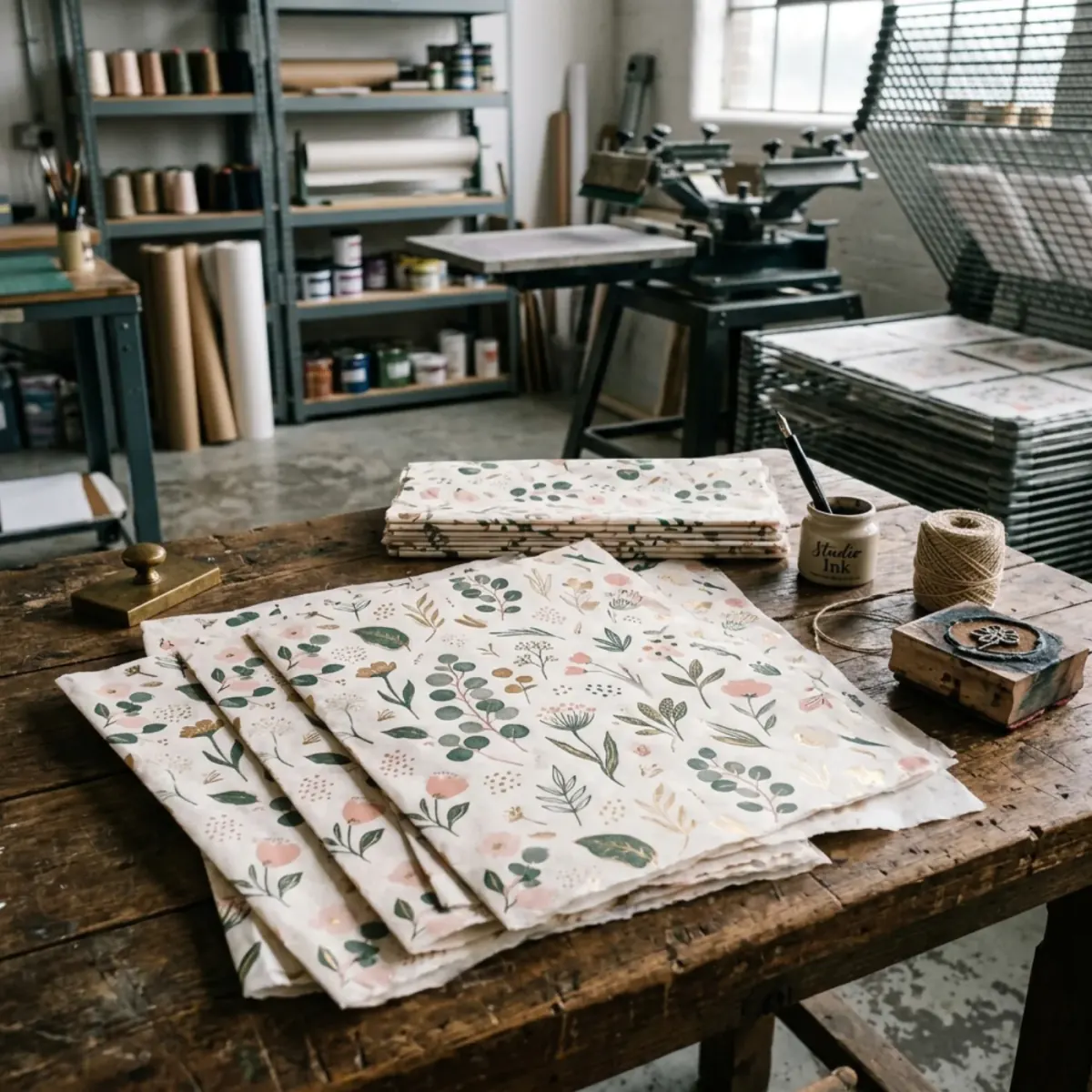
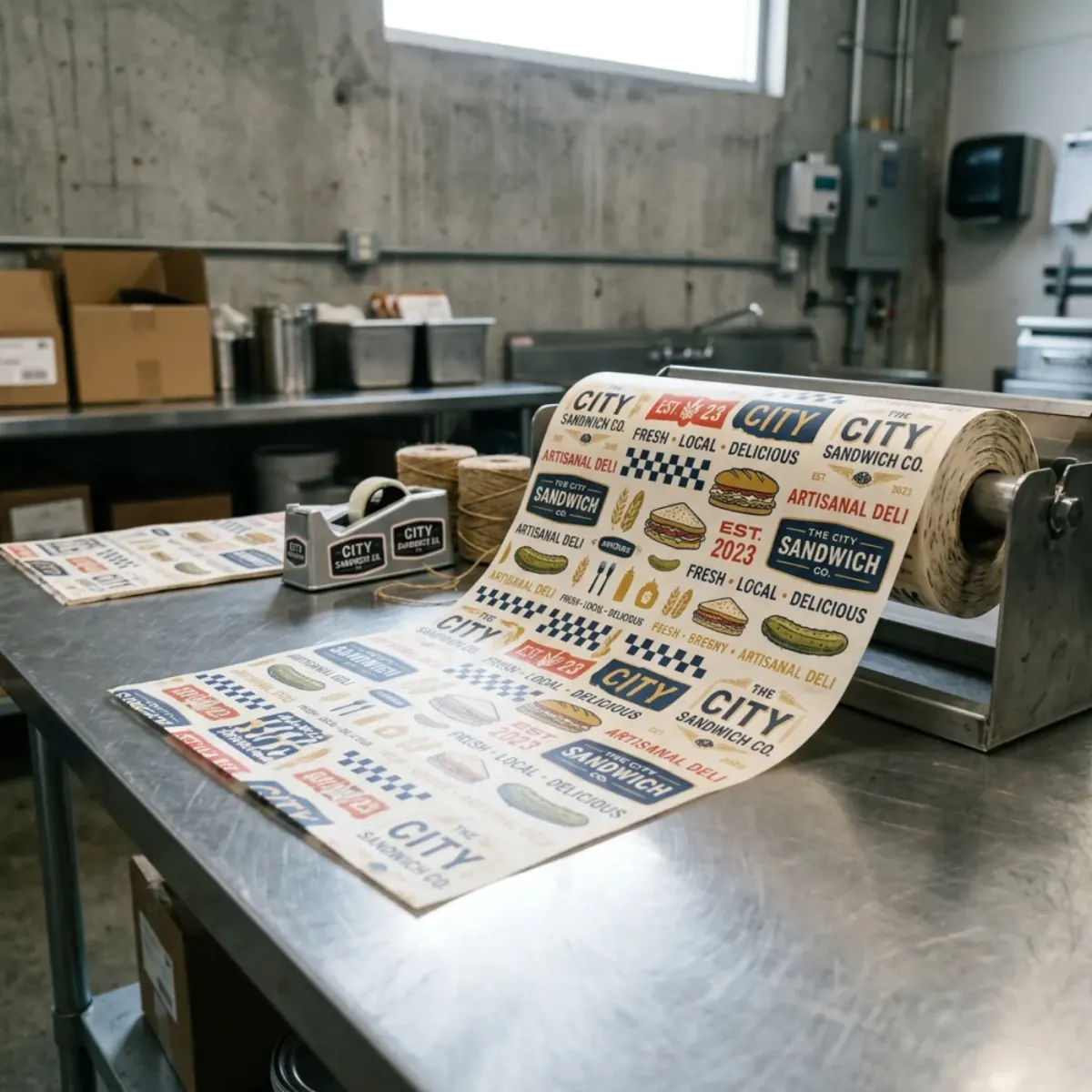
Greaseproof takes ink well. Its liner-and-wrap role makes it one of the most-seen touchpoints in a takeaway order. We print full CMYK for photo and multi-color art, or match exact brand colors with Pantone (PMS) inks. Logos, patterns, slogans, even a repeating brand tile across the whole sheet.
Every order includes free design help and a digital proof before we run it. So you see how the printed liner will look wrapped around the food. There are no die, plate, or setup fees. That keeps custom print in reach even at low volumes.
Formats: sheets, basket liners and rolls
Greaseproof comes in three real formats. Most kitchens use more than one:
- Pre-cut sheets - ready-to-grab flat sheets for wrapping burgers, pastries, and sandwiches or lining trays.
- Basket liners - sized to drop right into fry and serving baskets for a branded, grease-blocking base.
- Rolls - a continuous stock for high-volume prep, tear-to-length wrapping, and dispenser use.
We cut sheets and liners to the size that fits your baskets, boxes, and trays. So you are not forced into a stock size that wastes paper or leaves food bare.
Who uses it
Greaseproof is a workhorse across food service. Fish-and-chip shops, fried chicken and burger joints, fry and taco stands, bakeries, doughnut shops, delis, and food trucks all use it. It also lines and splits items in retail bakery cases and gift boxes.
Many shops pair it with a printed outer box - branded food and beverage boxes or bakery boxes. So the liner and the box carry one look. For non-fried, drier items you might reach for deli paper. But anything truly oily belongs on greaseproof.
Sustainability and food safety
The barrier is built into the fiber. So greaseproof skips the plastic and wax layers that make some food papers hard to recycle. PFAS-free grades wipe out the "forever chemical" worry too. It is food-contact grade and printed with low-migration inks. For brands trying to tighten a green story, an uncoated, PFAS-free, repulpable liner is an easy win to share with buyers.
Minimums, pricing and turnaround
Custom printed greaseproof starts at a 100-unit minimum with no die, plate, or setup fees. So a small shop can order real custom liners without paying big-brand tooling costs. Price is quote-based. It depends on size, format (sheets, liners, or rolls), stock weight, and ink coverage.
Standard turnaround is about 8 to 10 business days after proof approval. US shipping is free. Send your sizes and art through our quote form and we will spec it out for you.
Frequently asked questions
Is greaseproof paper the same as wax paper?
No. Greaseproof blocks oil through its dense, packed fiber. It has no coating. Wax paper uses a wax film for a moisture barrier. Greaseproof is better for hot, oily food. There is no wax to soften or melt.
Does greaseproof paper contain PFAS?
Not the grades we use. We source PFAS-free greaseproof that gets its oil resistance from the paper structure alone. That helps with both PFAS laws and green goals.
Can I get greaseproof paper printed with my logo?
Yes. We print full CMYK or exact Pantone colors with food-grade, low-migration inks. You get a free digital proof before printing. There are no die, plate, or setup fees.
What weight of greaseproof paper should I choose?
Most food-service greaseproof is around 35 to 45 gsm. Lighter stocks suit soft basket and tray liners. Heavier grades give wraps and cones more shape. We can suggest a weight based on your food and format.
Is it oven-safe like parchment?
No. Greaseproof is made for cold and hot serving and grease resistance, not baking. For oven and high-heat use, pick parchment paper instead.
What sizes and formats do you offer?
Pre-cut sheets, basket liners, and continuous rolls. All cut to your size, so they fit your baskets, trays, and boxes without waste.
What is the minimum order and how long does it take?
The minimum is 100 units. Standard turnaround is about 8 to 10 business days after you approve the proof. US shipping is free.
Who orders custom greaseproof paper?
Custom food-service paper is ordered by operators whose paper is customer-facing at the counter, in the bag, or in the delivery photo.
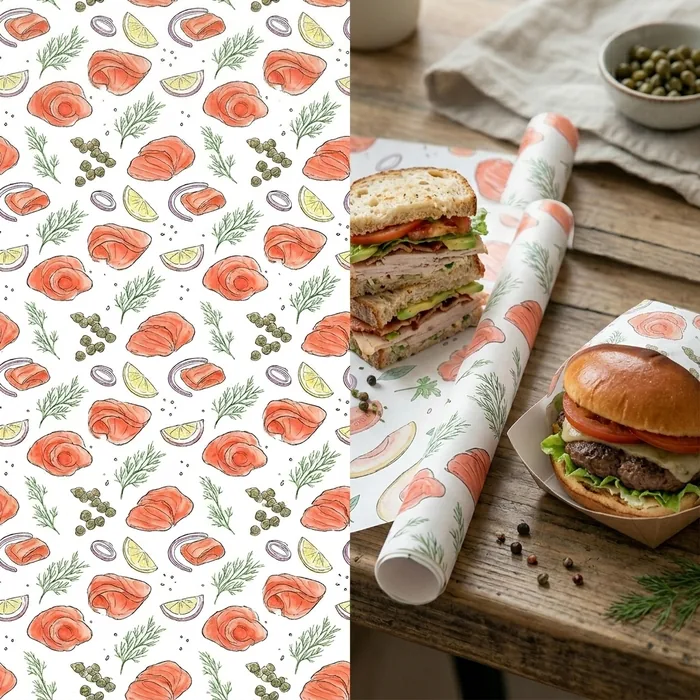
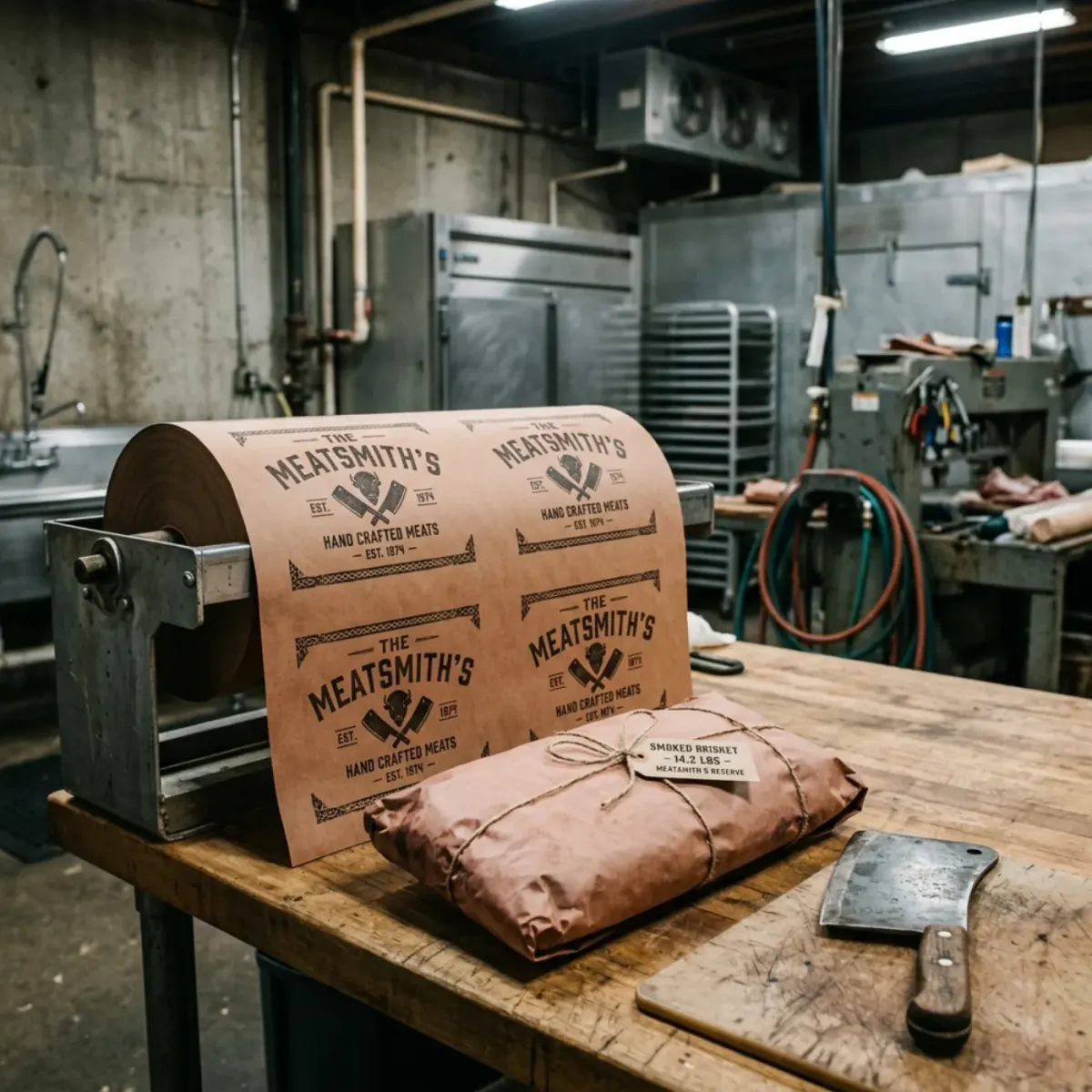
- Delis, sandwich shops, and butcher counters — printed deli paper, sandwich wraps, and butcher paper with brand marks on every sheet.
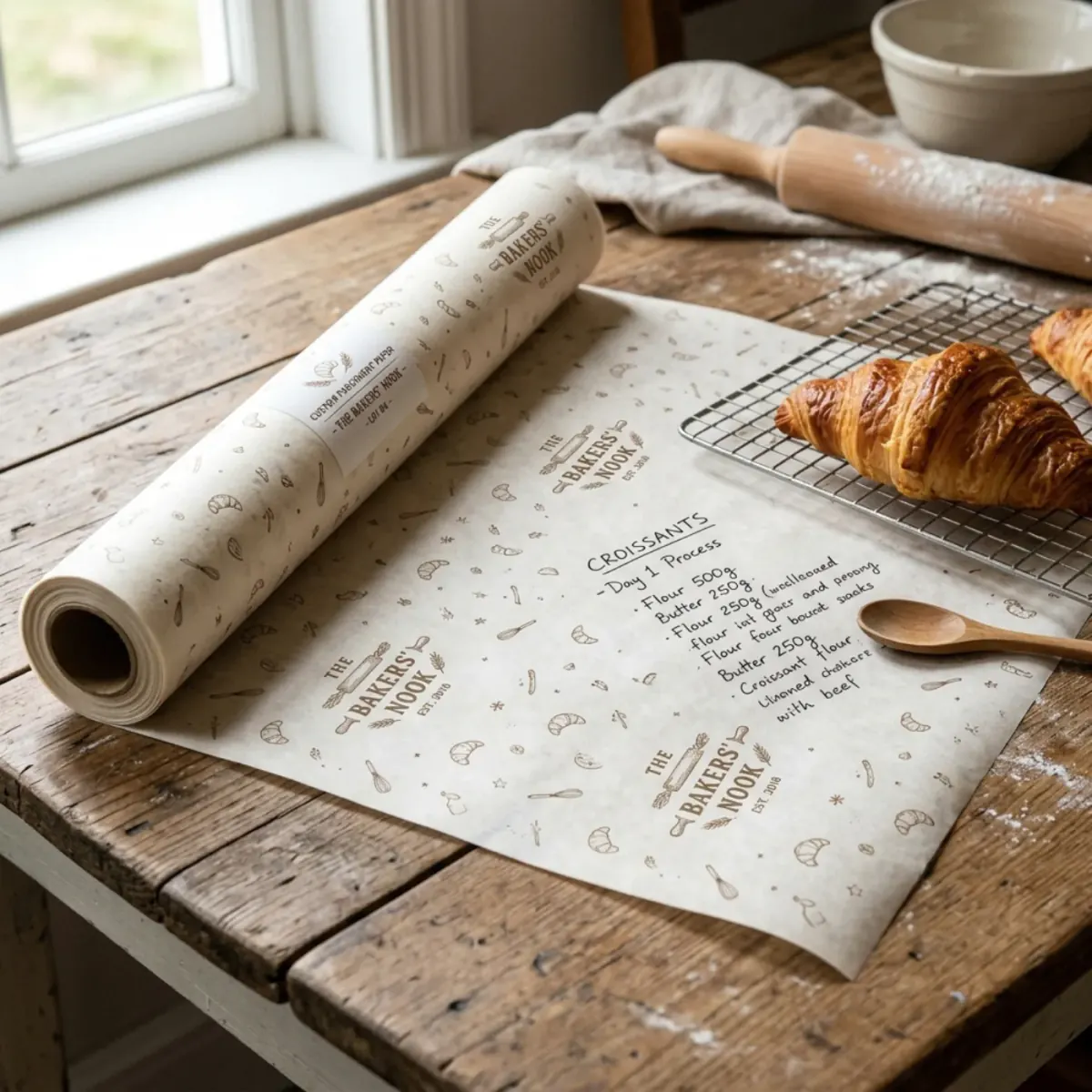
- Bakeries and cafés — greaseproof, parchment, and wax paper printed with a repeating logo for pastry counters and takeout bags.
- Restaurants and food trucks — burger wraps, taco liners, and basket liners food-safe printed to survive fryer heat and grease.
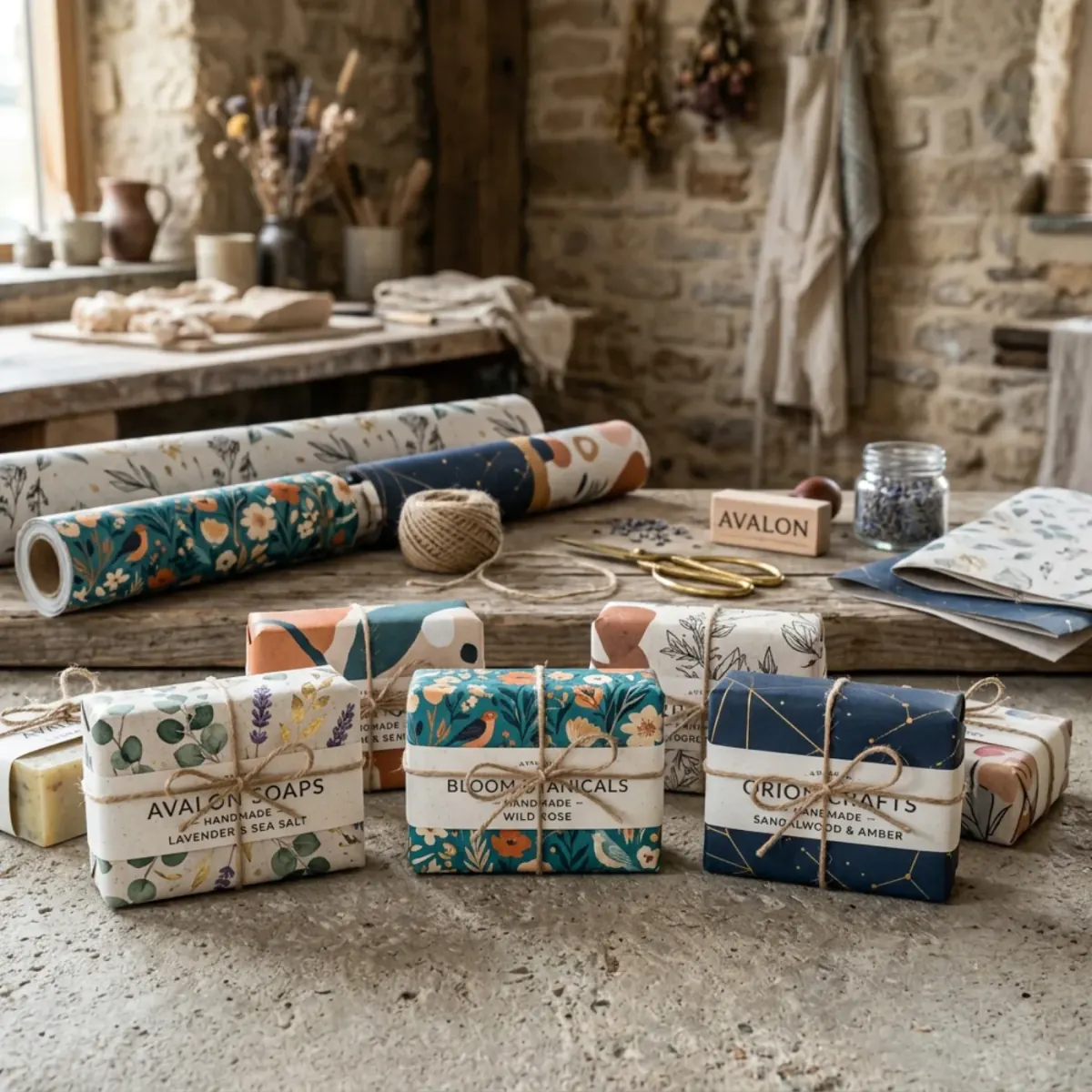
- Craft soap and candle makers — soap-wrapping paper and tissue liners with kraft or bleached-white stocks and 1–4 color printing.
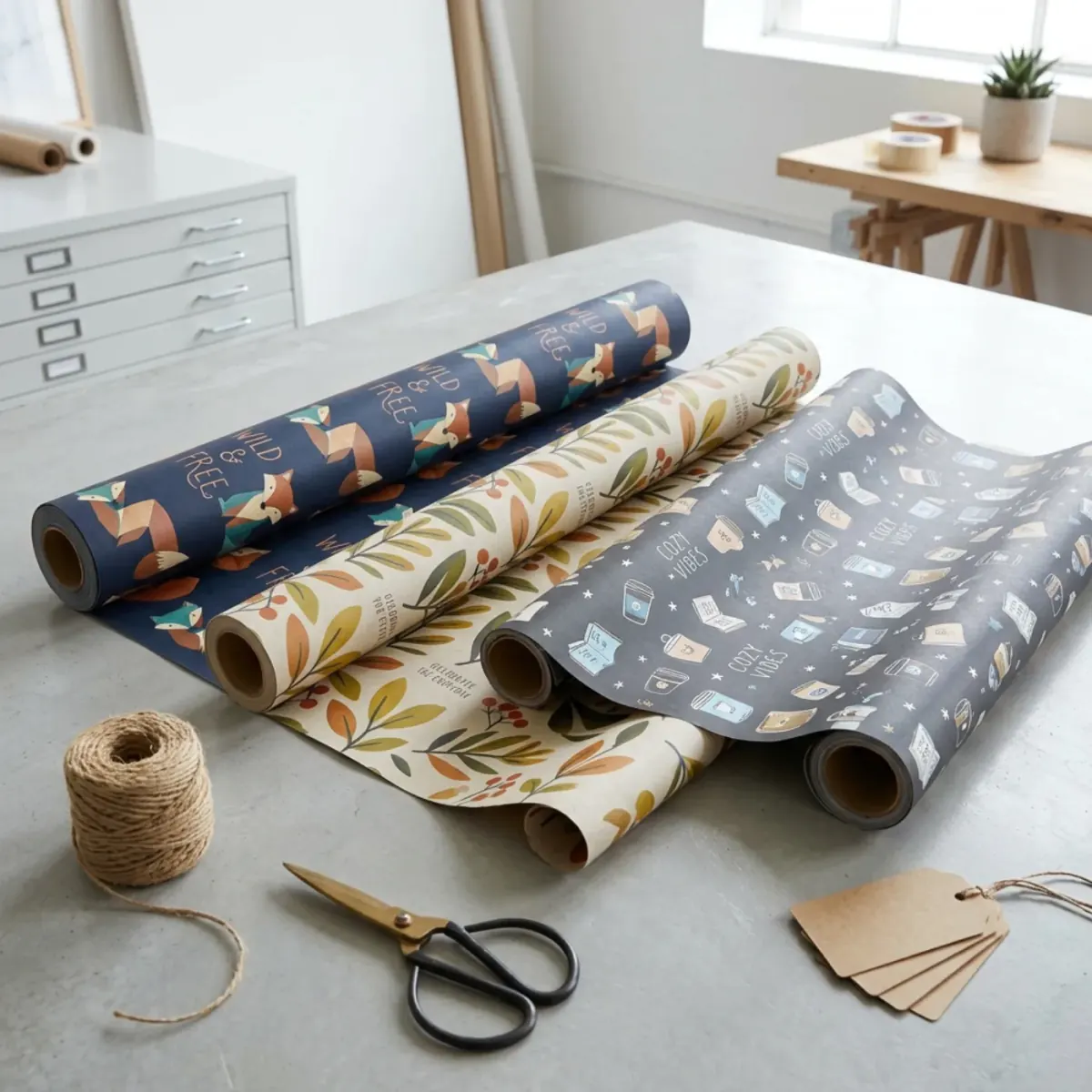
- Retailers and gift shops — tissue and wrapping paper printed with seasonal artwork or brand patterns for in-store gift wrap.
Custom-printed vs plain paper: which one should you buy?
Custom-printed food-service paper carries your logo, brand pattern, or compliance copy directly on every sheet. Plain paper is unprinted natural, white, or bleached stock. Food safety, grease resistance, and stock weight are identical — the difference is entirely about brand.
| Factor | Option A | Option B |
|---|---|---|
| Brand touchpoint | Every sheet reinforces the brand — used at the counter, in delivery bags, and photographed by customers. | None — treated as a functional consumable. |
| Unit cost | Higher: printing plates and food-safe inks add cost. | Lower: paper stock only. |
| MOQ | 10,000 sheets typical for printed food-service paper. | Available in small case quantities. |
| Best for | Restaurants, food trucks, cafés, ghost kitchens, catering. | High-volume operations where paper is not customer-facing. |
Which should you order? Choose printed when the paper is visible in a customer moment — a takeout bag, a deli counter, a bakery box liner. Choose plain when the paper is purely functional.
How to order custom greaseproof paper
Five steps from quote to delivery. Every order includes free design support, a free custom dieline, and a digital mockup for approval before anything hits the press.
- Share your specs. Send box dimensions (or a photo of the product), quantity, material preference, and any artwork or logo files. If you're unsure of the size, our design team can advise from a product photo.
- Get a quote and mockup. Within one business day we return a firm quote, a printable dieline, and a 3D digital mockup of your greaseproof paper. No die, plate, or setup fees are added.
- Approve the proof. Review the mockup, request color, layout, or dieline changes, and give final approval. Revisions are unlimited before press.
- Production (8–10 business days). Your order runs on offset or digital press, then moves through finishing — lamination, spot UV, foil stamping, embossing, die-cutting, and assembly if needed.
- Free US shipping. Orders ship flat-packed with tracking. Assembled bundles or master-carton packing are available on request at no charge.
Resources & tools
Free tools and trusted references to help you size, spec, and choose the right custom greaseproof paper before you order.
Free tools & guides
- Food packaging by product – match the right food-safe box to what you sell.
- Custom papers hub – food-grade and retail printed papers, sheets or rolls.
- Packaging materials – compare SBS, kraft, corrugated, and rigid stocks.
Trusted references
- FDA — Packaging & Food Contact Substances – the federal rules on materials that touch food.
- FDA — Food Labeling & Nutrition – the federal rules for food product labels and nutrition facts.
- USDA — Food Safety & Inspection Service – federal food-safety guidance for meat, poultry, and processed foods.
- How2Recycle – the standardized on-pack recycling label for paperboard and kraft packaging.