Blog · By The Packaging Vista Team · June 20, 2026
Greaseproof vs. Wax vs. Parchment Paper: Which Do You Need?
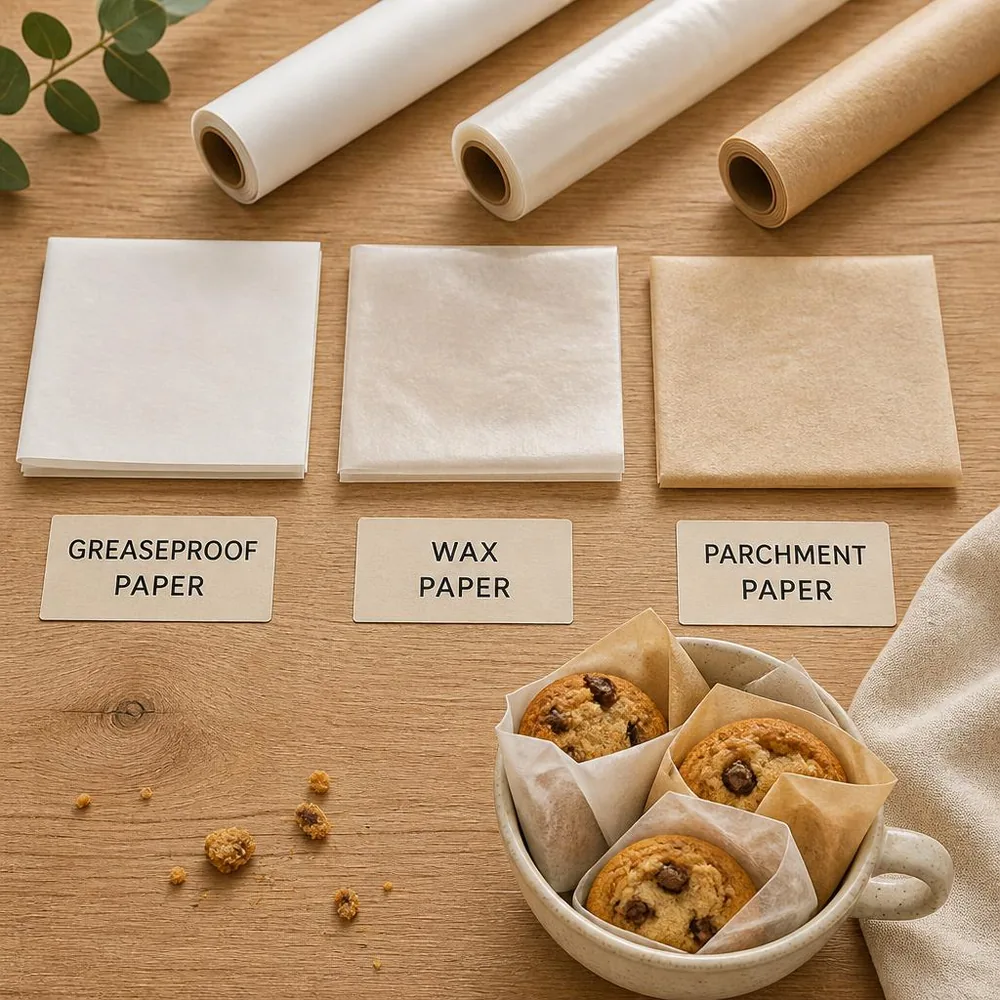
Greaseproof, wax, and parchment paper look alike but are not the same. Each one resists a different thing. Pick the wrong one and your wrap fails or your bake sticks. The same care applies to choosing your food & beverage boxes. This food paper compare is part of our custom printed papers guide.
Quick comparison
| Paper | Resists | Oven-safe? | Best for |
|---|---|---|---|
| Greaseproof food wrapping paper | Grease & oil | No | Fried and oily foods |
| Wax paper for cold wrapping | Moisture | No (wax melts) | Wrapping, separating cold foods |
| Parchment baking paper sheets | Heat & sticking | Yes | Baking and oven prep |
What is greaseproof paper?
Greaseproof is a dense paper that blocks grease and oil. So it keeps fried foods, pastries, and burgers from soaking through the wrap or box. It is not heat-resistant. See greaseproof paper for oily foods.
The grease guard comes from how tightly the fibers are packed. Not from a heavy coating. So it stays light and printable. It is the right liner when oil is the enemy. Baskets of fries. Fried chicken. Doughnuts. Or a buttery pastry that would otherwise leave a stain on the box.
What is wax paper?
Wax paper resists moisture thanks to its wax coating. That makes it good for wrapping and layering foods. But the wax melts in an oven. So keep it out of heat. See wax paper for wrapping foods.
The wax forms a moisture barrier. It stops things from drying out or sticking together at room or cold temperatures. That is why it is a favorite for separating patties, cookies, and candies. The one hard rule: never bake on it. The melted wax can transfer to the food. And the paper loses all its shape.
What is parchment paper?
Parchment is silicone-coated for heat guard and non-stick use. That is why it is the baking paper. If the paper goes in the oven, you want parchment. See parchment paper for oven baking.
The silicone coat is what makes it both heat-safe and non-stick. Baked goods release clean. And the paper can be reused across a few bakes. It is the most flexible of the three near heat. But it is also the most special. So there is no reason to pay for it when you only need a cold wrap.
Why do they get confused?
All three are thin, off-white, and about the same texture. So it is easy to grab the wrong roll. The gap is unseen until you use them. Greaseproof handles oil but warps in heat. Wax handles moisture but melts in heat. Parchment handles heat but is too much for a cold sandwich. They solve three separate problems — grease, moisture, and heat — that happen to look the same on the shelf.
How do you choose?
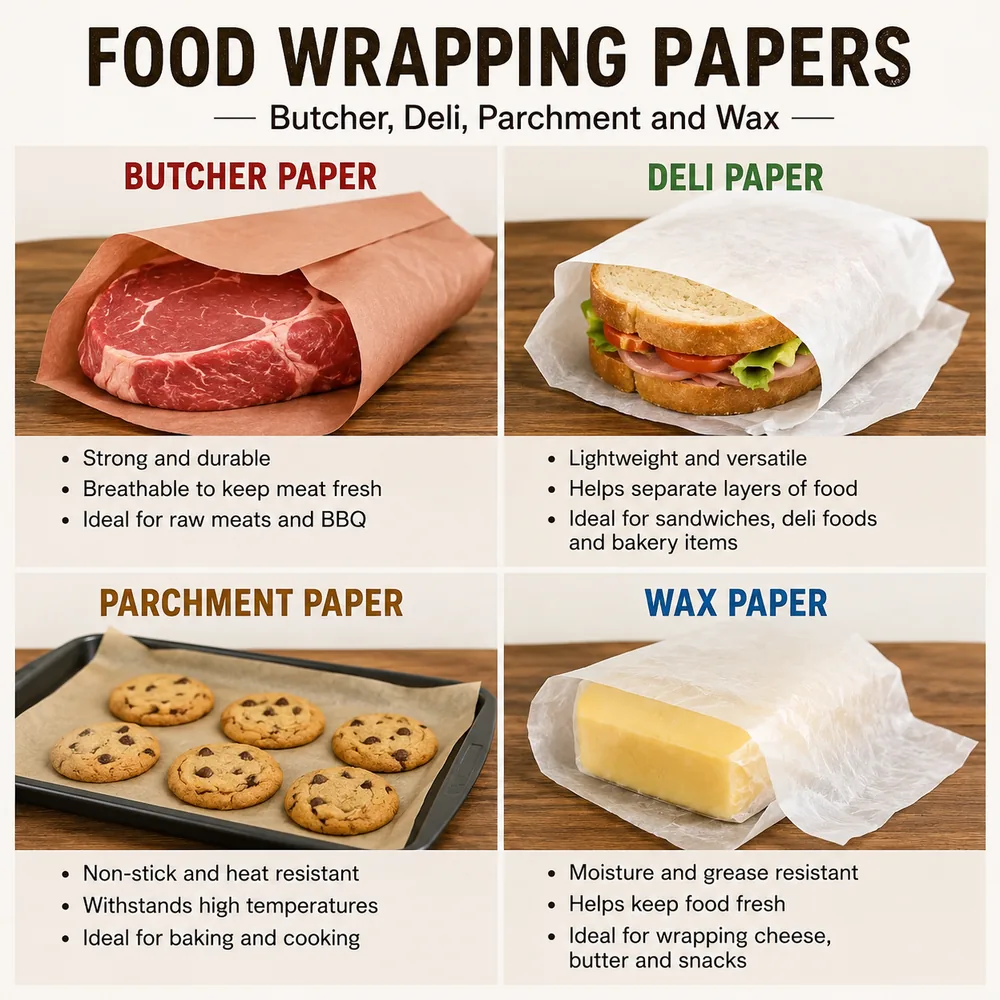
Ask one question first: does it get hot? If yes, parchment. If not, choose greaseproof for oily foods or wax for moisture. For meats and deli, see our food wrapping papers guide. A simple decision path:
- Goes in the oven? Parchment, every time.
- Oily or fried, no heat? Greaseproof, to stop soak-through.
- Cold and you need a moisture barrier or a separator? Wax.
- Wrapping meat or fish? Step up to butcher paper from our food papers guide.
What are the common mistakes to avoid?
Most food-paper problems come from using the wrong sheet for the setting. Baking on wax paper melts the coat onto the food. Wrapping greasy fries in plain paper instead of greaseproof leaves a stained, soggy box.
Using parchment for a cold sandwich is harmless but wasteful. You are paying for heat guard you never use. Another common error is assuming one roll covers everything. A busy kitchen usually needs at least two rolls. Parchment for heat. A greaseproof or wax sheet for everything cold. Stocking the right pair prevents the failures and keeps food and packs looking their best.
How does the wrap affect temperature and shelf life?
Each paper also shifts how food holds up after it is wrapped. A moisture barrier like wax slows drying so cold items stay fresh longer. Greaseproof keeps oil from spreading and staining. Parchment lets baked goods cool without sticking.
None of these is a substitute for proper storage or a sealed container. But picking the right wrap buys you a cleaner display and a bit longer before food looks tired. For products that need a fuller barrier and shape, the wrap pairs with the right food & beverage box. Our food packaging by product guide matches each food to its ideal box.
Can you brand any of them?
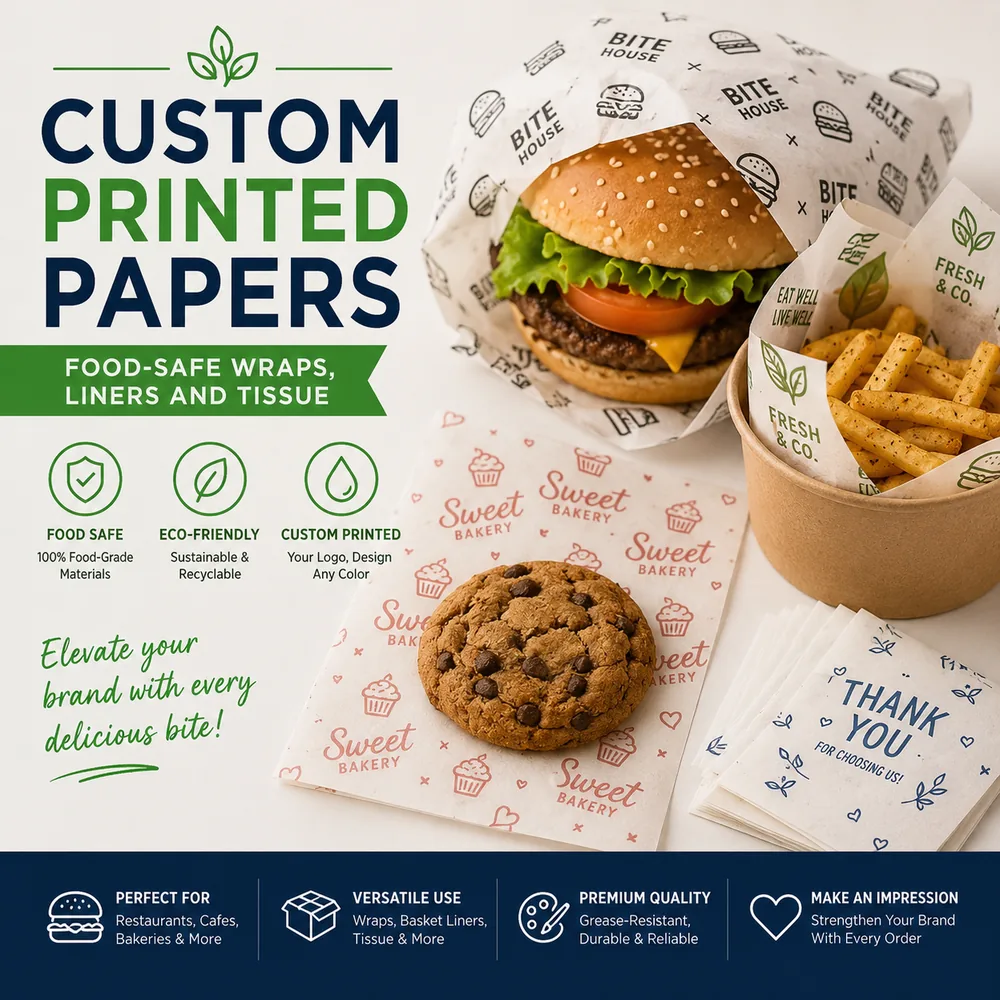
Once you have chosen the right barrier, all three can be custom printed with food-safe inks. So the wrap carries your brand. A printed liner is one of the cheapest ways to make takeout and counter service feel planned. It ties the wrap back to your food & beverage boxes. Our food-safe packaging guide covers the inks and stocks that keep printed food paper in line with the rules.
Frequently asked questions
What is the difference between greaseproof and parchment paper?
Greaseproof paper resists grease and oil and is used for fried and oily foods, but it is not heat-resistant. Parchment paper is silicone-coated for heat resistance and non-stick baking, so it is the one you use in the oven.
Can I use wax paper in the oven?
No. Wax paper has a wax coating that melts at oven temperatures, which can transfer to food and ruin the paper. Use parchment paper for any oven or high-heat application.
Which paper should I use for fried food?
Greaseproof paper is best for fried and oily food because it blocks grease from soaking through the wrap or box. It keeps baskets, boxes, and wraps clean without adding heat resistance you do not need.
Can these food papers be custom printed?
Yes. Greaseproof, wax, and parchment can all be printed with food-contact-safe inks, with a low minimum, no plate fees, and an 8–10 day turnaround, so the wrap carries your branding.
What temperature can parchment paper safely handle?
Standard silicone-coated parchment is rated to about 425°F. Above that it can brown or darken but usually does not burn. Never use it in a broiler or open-flame setting where the paper touches direct heat.
Is silicone-coated parchment paper reusable?
Yes, often two to three uses for a light bake. Wipe crumbs, let it cool, and reuse for the next batch of the same food. Toss it when the paper darkens, cracks, or holds strong flavor from a previous bake.
Which paper is best for wrapping raw seafood?
Butcher paper or a poly-coated food wrap. Both hold moisture back and stop odors from spreading. Deli paper is too thin for wet cuts. Parchment can work for cooked-and-cooled seafood but not for raw fillets.
Can I compost used parchment or greaseproof paper?
It depends on the coating. Uncoated greaseproof composts in most municipal systems. Silicone-coated parchment breaks down slower and is often not accepted, though some brands now sell certified-compostable versions. Check your city’s program.
How long does food-safe paper stock last in storage?
Two to three years if stored dry, sealed, and out of sunlight. Wax and parchment coatings can weaken with heat or humidity, so keep pallets off concrete floors and away from steam lines. Ink itself stays stable much longer.
How do I choose between greaseproof, wax, and parchment?
Answer one question: what does the paper need to resist? For oil and grease at room or warm temperatures – fries, burgers, fried chicken – use greaseproof. For moisture and stickiness at room or cold temperatures – layering cookies, patties, candies – use wax.
For direct oven heat – baking sheets, pastries, cookies – use parchment (silicone-coated). Grabbing the wrong one is a common bakery and takeout mistake because all three look alike.
What are the benefits of using the right paper instead of a generic wrap?
The food arrives looking better and holds longer. Greaseproof keeps a burger box from a brown oil ring; wax stops cookies from fusing into a single mass; parchment lets a pastry release from the pan clean without sticking or burning. Each paper is engineered for one job – using it correctly means less waste, fewer complaints, and a cleaner presentation the customer photographs and shares.
How much do custom printed greaseproof, wax, or parchment papers cost?
Per-sheet cost is low – typically pennies each – because these are thin lightweight stocks. Greaseproof is usually the cheapest (no coating), wax mid-range, parchment slightly more (silicone coat costs more). At Packaging Vista the minimum is 100 units with no die, plate, or setup fees, and design, dieline, and US shipping are free. Rolls and sheet formats price the same at the paper level.
Is it worth investing in three different papers instead of one all-purpose stock?
Yes if you serve varied food. There’s no true all-purpose stock – each paper fails at what the other handles. A burger shop can get by mostly on greaseproof; a bakery needs parchment on the tray and often wax or greaseproof on the pickup wrap. Assuming one roll covers everything is a common error that leads to greasy sandwich bags, stuck cookies, or burned parchment used cold as a sandwich wrap.
Get the right custom food paper
You can also see custom bakery bags at OLX Packaging for more layout ideas.
Tell us your food and how it is served, and we will recommend a paper and print it with your brand. Start with our custom papers guide, then request your free quote or contact our team.