Blog · By The Packaging Vista Team · June 20, 2026
Custom Printed Papers: Food-Safe Wraps, Liners and Tissue
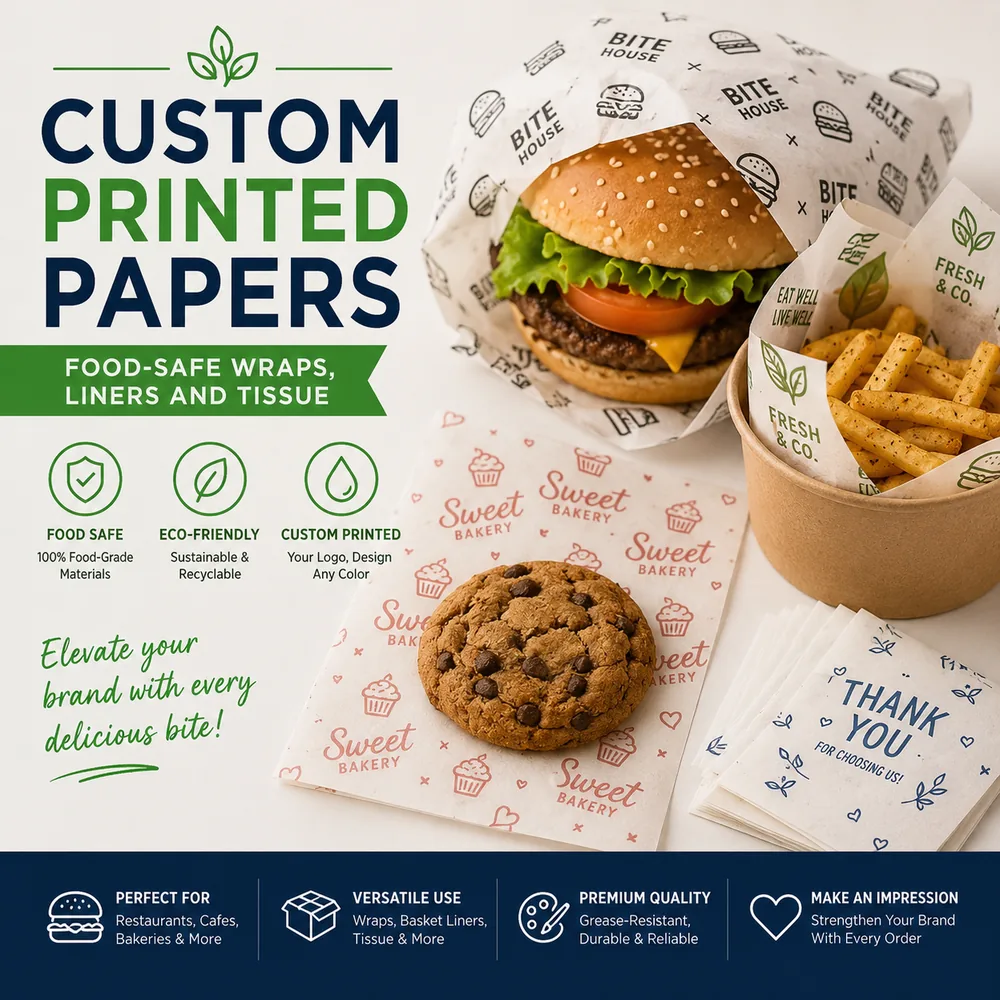
Custom printed papers extend your brand beyond the box. They are the liners, wraps, and tissue that touch the product and finish the unboxing. From food-safe wrapping paper to retail gift tissue, they are a cheap way to look polished. They also pair well with our food & beverage boxes.
Packaging Vista prints custom papers in sheets or rolls with food-safe inks. See our custom kraft paper for food wraps and the full range below.
What are custom printed papers?
Custom printed papers are flat papers — not boxes — printed with your brand for wrapping, lining, layering, and finishing.
They are cheap for the punch they pack. A branded wrap or tissue makes even a plain box feel thought out. For a food shop, they do double duty. They guard and show off the food. At the same time, they carry your logo into the buyer’s hands at the table.
Why is branded paper the best value in packaging?
Paper is the top-value item in most packaging programs. A printed box is the obvious upgrade. But a simple box lined with branded tissue or wrapped in a logo-printed sheet often looks just as premium for a fraction of the cost.
Paper is light and prints fast. So it is an easy place to start branding before you spend on full custom cartons. It also scales. The same wrap works across every product you sell. For online brands, it is also the part of the pack buyers are most likely to snap and share.
What types of custom papers are there?
| Paper | Best for |
|---|---|
| Kraft paper for liners and wraps | Liners, wraps, void fill, and a natural look. |
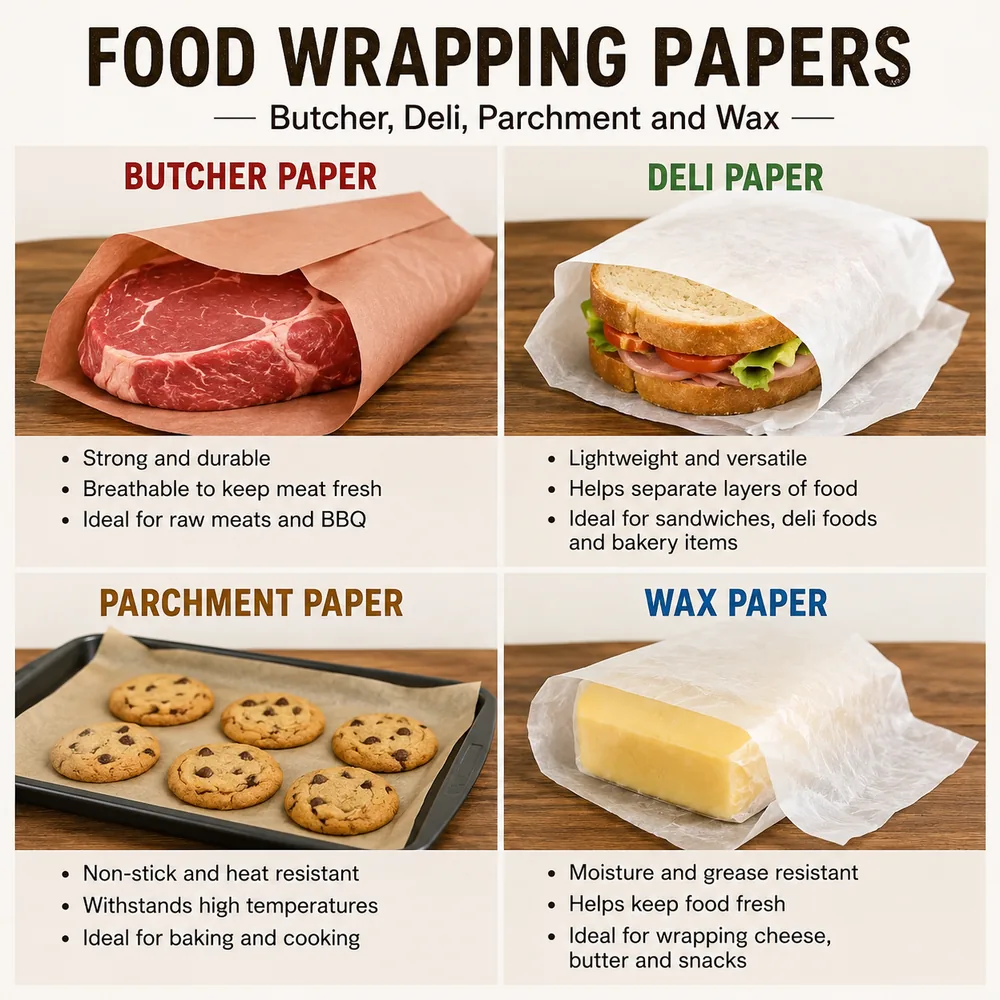
| Butcher paper for meat and deli | Meat counters, deli, and freezer wrap. |
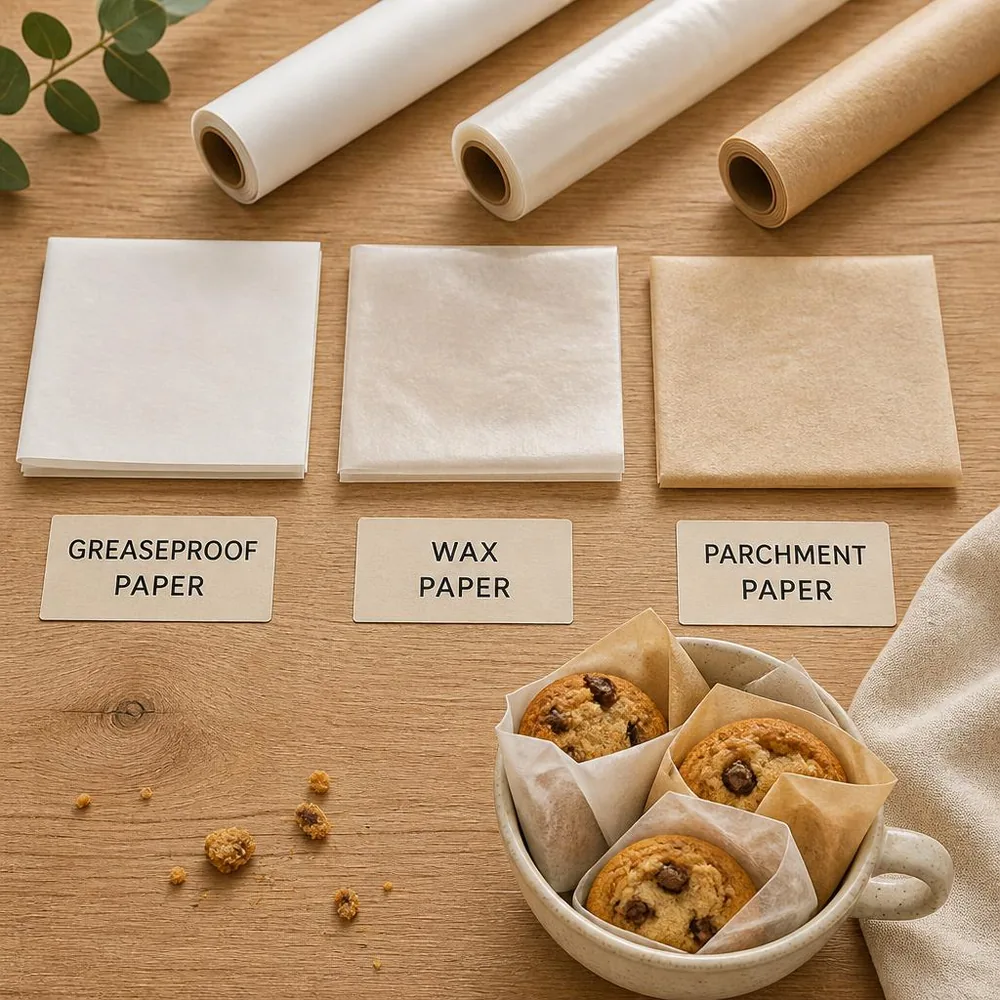
| Parchment paper for baking and prep | Baking and heat-resistant, non-stick food prep. |
| Deli paper for sandwiches and baskets | Sandwiches, baskets, and grab-and-go. |
| Wax paper for food wrapping | Moisture-resistant food wrapping. |
| Greaseproof paper for fried foods | Oily and fried foods that need a grease barrier. |
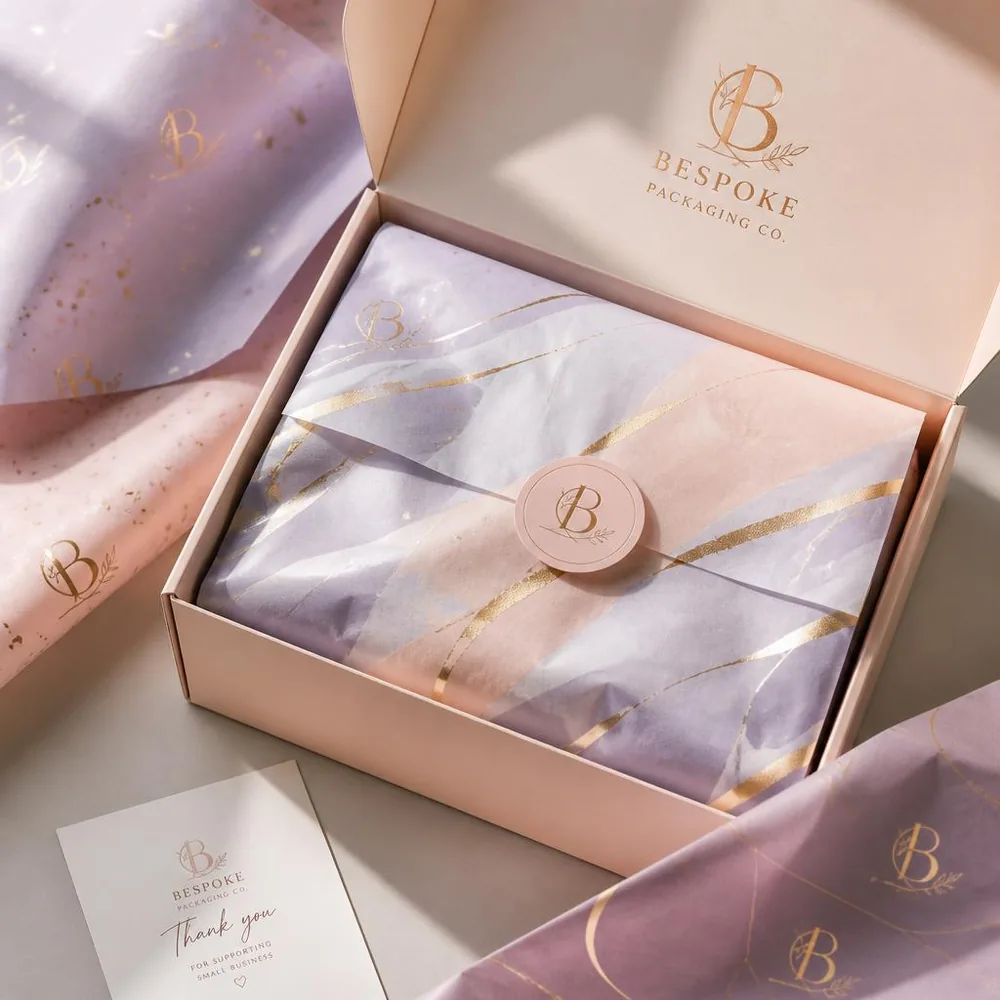
| Tissue paper for gift unboxing | Retail and gift wrap that elevates the unboxing. |
| Branded gift and product wrapping paper | Branded gift and product wrap. |
| Sandwich wrap paper for foodservice | Foodservice sandwich and wrap packaging. |
| Soap wrapping paper for artisan bars | Artisan soap and bath product wraps. |
Which papers are food-safe?
Many of these papers touch food. So they must use food-grade stock and food-safe inks. Greaseproof and parchment add real barriers — grease guard and heat guard.
Our food-safe packaging guide covers stocks and inks in detail. If you are not sure which barrier paper your product needs, our greaseproof vs. wax vs. parchment comparison lays out the choices side by side.
What about retail and gift papers?
Not every paper is about food. Tissue and wrapping paper are the staples of retail and subscription unboxing. There, the goal is presentation, not guard.
Printed tissue nests a product and adds a soft, premium reveal. Wrapping paper gives you a flat, eye-catching surface for seasonal and campaign art. Together they let a modest box punch well above its weight. Our custom tissue and wrapping paper guide goes deeper on using them to brand the open.
Sheets or rolls: which format do you need?
Custom papers come as pre-cut sheets or long rolls. They come in the weight your line needs — from light wrapping tissue up to heavier liner kraft. We cut to your size. So the paper fits your baskets, trays, or wrap station.
Rolls suit high-volume packing stations and dispensers. Pre-cut sheets are faster to grab for one-off orders. Tell us how you pack and we will suggest the format.
What prints well on paper?
Paper prints in a different way from board. Light tissue and kraft take a clean one- or two-color logo well. That is why most branded paper uses a simple repeating logo or pattern, not dense full-color art.
Heavier stocks like wrapping paper and liner kraft handle richer, full-color art. Natural kraft mutes color the same way kraft board does. So if you want bright art on a brown stock, plan for a bolder palette or a bright ink. Our team will advise on what will print well at your chosen weight.
How do custom papers fit a food service brand?
For a restaurant, bakery, or deli, paper is everywhere the buyer looks once the box is open. Think of the sheet under the pastry, the wrap around the sandwich, and the liner in the basket.
Each is a chance to put your logo in front of someone the exact moment they are eating your product. A branded deli sheet or sandwich wrap costs a little more than a blank one. But it turns plain service into brand presence. And it photographs well when buyers share their meal.
Pair printed papers with your food & beverage boxes and bakery boxes for a matched look from counter to table.
How do you choose the right paper weight?
Weight (measured in basis weight or GSM) decides how a paper acts. Light stocks like tissue drape softly. They suit nesting and gift reveals but tear with ease. So they are for show, not guard.
Mid-weight wraps and deli papers balance bend and grip for daily food service. Heavier kraft works as a sturdy liner, void fill, or wrap that needs to hold its shape.
There is no single “best” weight. It depends on the job. Tell us how the paper will be used and we will match the stock to it.
Dig deeper: custom paper guides
For a closer look at a paper type, see our focused articles:
- Food wrapping papers – butcher, deli, parchment, and wax.
- Greaseproof vs. wax vs. parchment – which do you need?
- Custom tissue & wrapping paper – brand the unboxing.
Frequently asked questions
Can custom papers touch food directly?
Yes, where you use food-grade stocks and food-contact-safe inks. Greaseproof and parchment add grease and heat resistance for the foods that need them.
Do you print papers in rolls or sheets?
Both – continuous rolls or pre-cut sheets, sized to your equipment and products.
What is the minimum order for printed paper?
Just 100 units, with no die, plate, or setup fees.
Which paper should I choose for greasy food?
Greaseproof paper for a true grease barrier on fried or oily foods, deli paper for sandwiches and grab-and-go, and parchment where you also need heat resistance for baking.
What FDA rules apply to food-contact printed paper?
The FDA regulates any material touching food under 21 CFR. That covers the paper stock, the coating, and the inks. Ask your supplier for a food-contact letter of guarantee. For direct-contact use, ink stays outside the food zone or uses food-safe formulations.
Which inks are safe for direct food contact?
Low-migration and water-based inks made for food packaging. Standard offset inks are fine on the outside of a wrapper. Direct-food-contact print needs FDA-compliant formulations that limit chemical migration into the food.
Can I get compostable or recycled printed paper?
Yes. Kraft, unbleached parchment, and many wrapping papers already come in recycled or compostable grades. Ask for BPI or TUV-Austria certified stock if you claim compostable on-pack, so the claim holds up.
What is the difference between deli paper and butcher paper?
Deli paper is a light, dry-waxed sheet used for sandwiches, wraps, and pastry service. Butcher paper is a thicker, heavier stock built for wrapping raw meat and cured cuts. Deli is for grab-and-go; butcher is for cases and counters.
Do I need FSC-certified paper for shelf appeal?
Not required, but it helps. FSC (Forest Stewardship Council) certification lets you print the FSC mark on-pack, a small trust signal for eco-conscious buyers. Whole Foods and many EU retailers now expect it on paper packaging.
How do I choose the right printed paper for my brand?
Match paper to job first, then add print. Tissue for a soft nest and layered reveal inside a box. Wrapping paper for a bold flat surface for seasonal or gift art. Butcher, deli, parchment, or wax for food service (each suited to a specific food type – see our dedicated guide).
Kraft rolls or sheets for retail wrapping and void fill. Then pick a one-color logo repeat for the cheapest lane, or full-color for hero pieces.
What are the benefits of adding branded printed paper to my packaging?
Four main ones. It’s the cheapest premium-feel-per-dollar in packaging – branded tissue inside a plain mailer often reads better than a fancier box with nothing inside. It carries the brand deep into the unboxing where buyers photograph and share. It doubles as protection for fragile items. And it scales easily across every product size in your line without new tooling per SKU.
How much does custom printed paper cost?
Per-sheet cost is low – typically pennies each – because these are thin lightweight stocks. Cost depends on paper type (deli or tissue is cheapest, parchment and coated kraft cost more), print colors, sheet size, and quantity. At Packaging Vista the minimum is 100 units with no die, plate, or setup fees, and design, dieline, and US shipping are free.
Rolls and sheet formats price the same at the paper level.
Is custom printed paper worth it for a small food or retail brand?
Yes for almost every brand. For a food shop, printed wraps and liners are a low-cost way to make every order look like a brand while doing the actual serving work. For a retail or DTC brand, branded tissue inside the mailer is the single highest-impact upgrade you can make short of a full custom carton. At a 100-unit minimum with no tooling fees, the entry cost is genuinely low.
Related reading from OLX Packaging: food and bakery packaging guide.
Tell us the paper type, size, and format you need, and we will print it with your brand – food-safe where needed, in sheets or rolls. Start with our custom printed kraft paper rolls, then request your free quote or contact our team.
Part of our food and beverage packaging guide — the pillar reference for every food and beverage topic on this blog.
Related guides in this topic cluster
- Foam vs. Paperboard Inserts: Which Protects Better?
- Kraft Paperboard: Natural, Recyclable Packaging Material
- Paperboard vs. Corrugated: Which Box Material Do You Need?
- Paperboard Weight & Thickness: GSM, Points and Caliper Explained
- Plastic-Free Packaging: Paper Alternatives That Work
- The Packaging Face-Off: Blister Pack vs. Kraft Paper – No Hype, Just Facts
- Paper Mailer Bags vs Poly Mailer Bags
- Is Parchment Paper Oven Safe? Max Temps, Microwave Use, and Common Myths
- MG Tissue Paper: GSM, Finishes, Printing & Luxury Unboxing Guide