Blog · By The Packaging Vista Team · June 20, 2026
Food Wrapping Papers: Butcher, Deli, Parchment and Wax
“Food paper” is not one thing. Butcher, deli, parchment, and wax papers each do a set job. The right food wrapping paper keeps food fresh. It holds up to grease and heat. And it lets you carry your brand food-safely from kitchen to buyer.
This guide to butcher paper, deli paper, parchment paper, and wax paper — and how to print custom food paper — is part of our custom printed papers guide.
What is butcher paper?
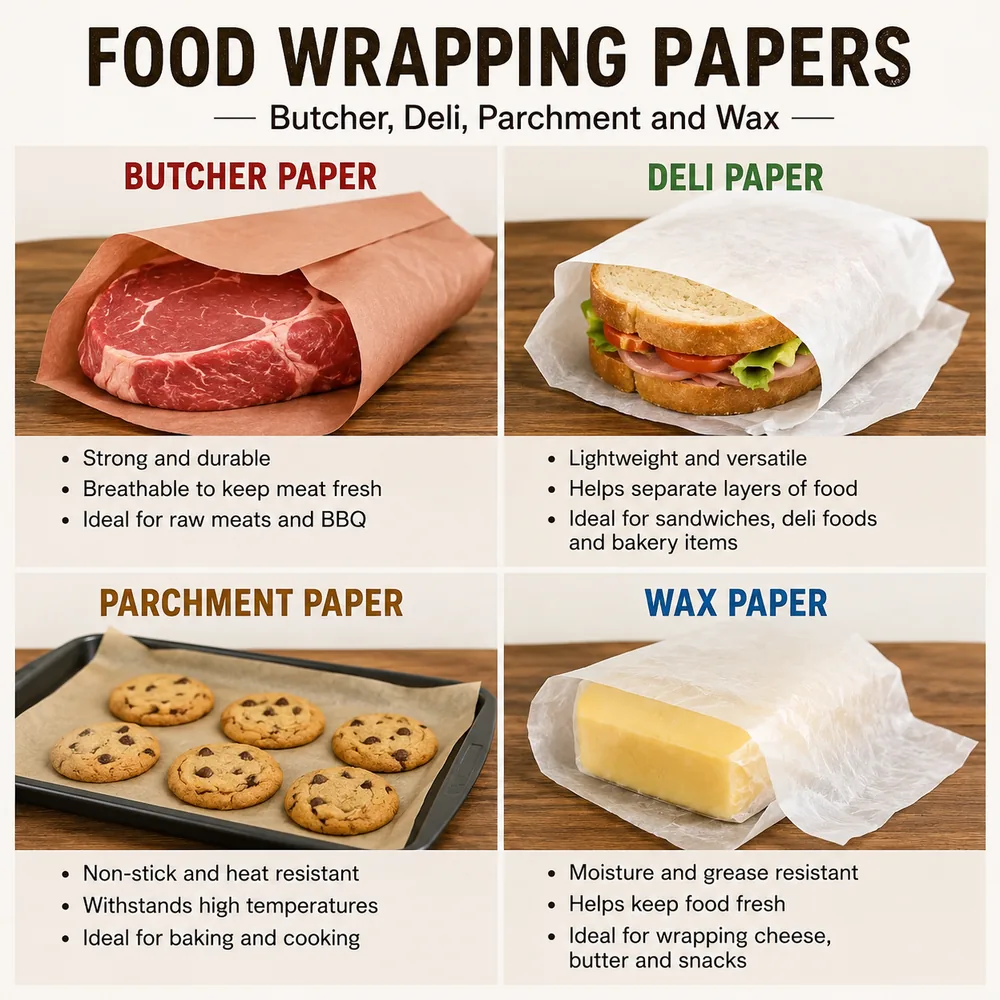
Butcher paper is a strong kraft paper. It wraps meat, fish, and deli items. Some versions are poly-coated for extra moisture guard. It is tough and prints with a natural look. See strong kraft butcher paper for meat.
The uncoated version breathes. That helps meat rest without sweating. The poly-coated version holds back moisture for wetter goods. Its strength and wide sheets also make it a favorite for lining baskets and trays in BBQ and deli service. There, the paper itself becomes part of the plate.
What is deli paper?
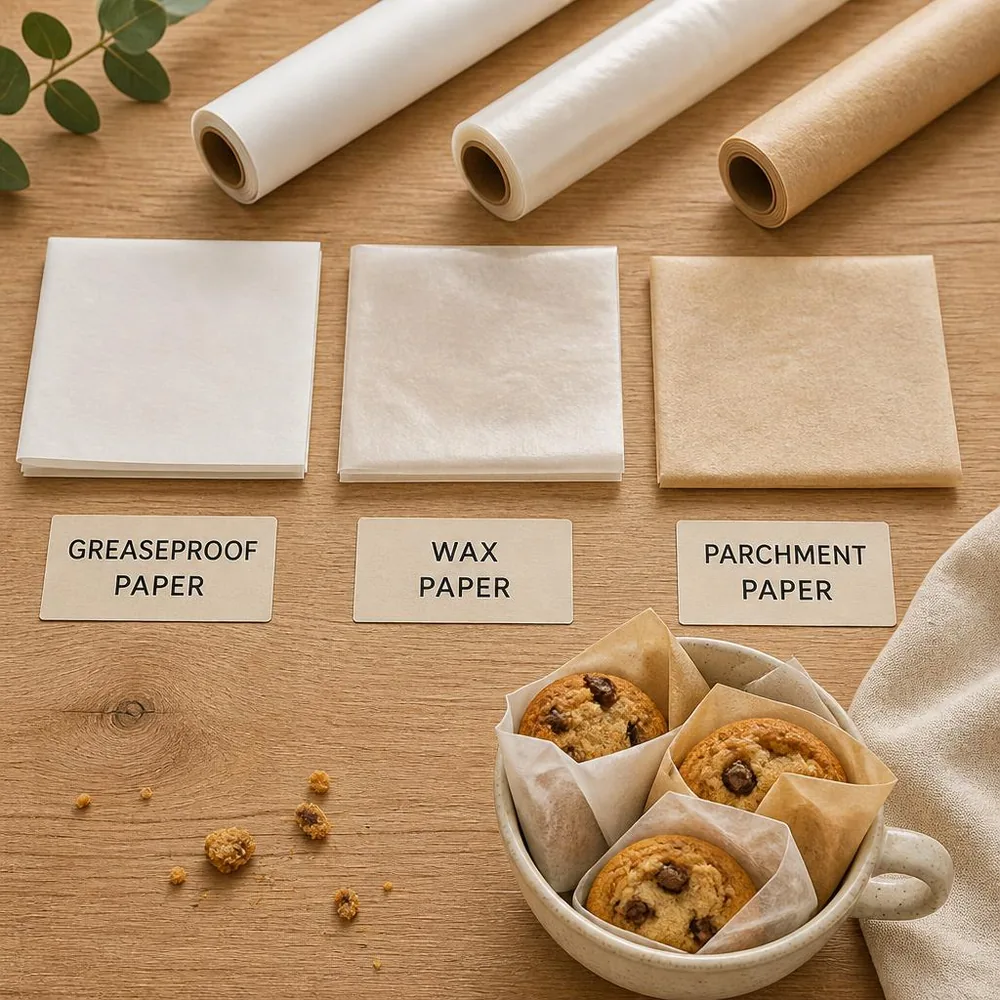
Deli paper is a lighter, often greaseproof sheet. It is used for sandwiches, baskets, and grab-and-go items. It is the cheap, brandable liner you see in delis and cafes. See greaseproof deli paper for sandwiches and custom printed sandwich wrap paper.
It is thin and low-cost. So it is the easiest food paper to print across. A full-coverage logo pattern turns a plain wrap into a branded touchpoint at almost no added cost. It is the workhorse for fast, high-volume counter service.
What is parchment paper?
Parchment is silicone-treated for heat guard and a non-stick surface. That makes it the pick for baking and oven use. It handles heat in a way wax paper cannot. See heat-resistant parchment paper for baking.
The silicone coating lets food release clean and survive oven heat. So parchment doubles as a bake surface and a wrap. If a paper needs to go near heat, parchment is the only one of these four built for it.
What is wax paper?
Wax paper is coated with wax for moisture guard. It is great for wrapping and layering food at room or cold temperature. But not for the oven — the wax melts. See moisture-resistant wax paper for wrapping.
It shines for layering. Think burger patties, cookies, or candies. It also works for short-term wrap where a moisture barrier matters more than heat guard. Keep it away from the oven and it is a cheap, steady sheet for wrapping and separating.
How do these papers compare?
| Paper | Main strength | Oven-safe? | Typical use |
|---|---|---|---|
| Butcher | Strength & durability | No | Meat, fish, deli wrapping |
| Deli | Light, brandable, greaseproof | No | Sandwiches, baskets, grab-and-go |
| Parchment | Heat & non-stick | Yes | Baking and oven prep |
| Wax | Moisture resistance | No | Wrapping & separating cold foods |
For a closer look at the grease, heat, and moisture trade-offs between three of these, see our greaseproof vs. wax vs. parchment comparison.
How do you brand them food-safely?
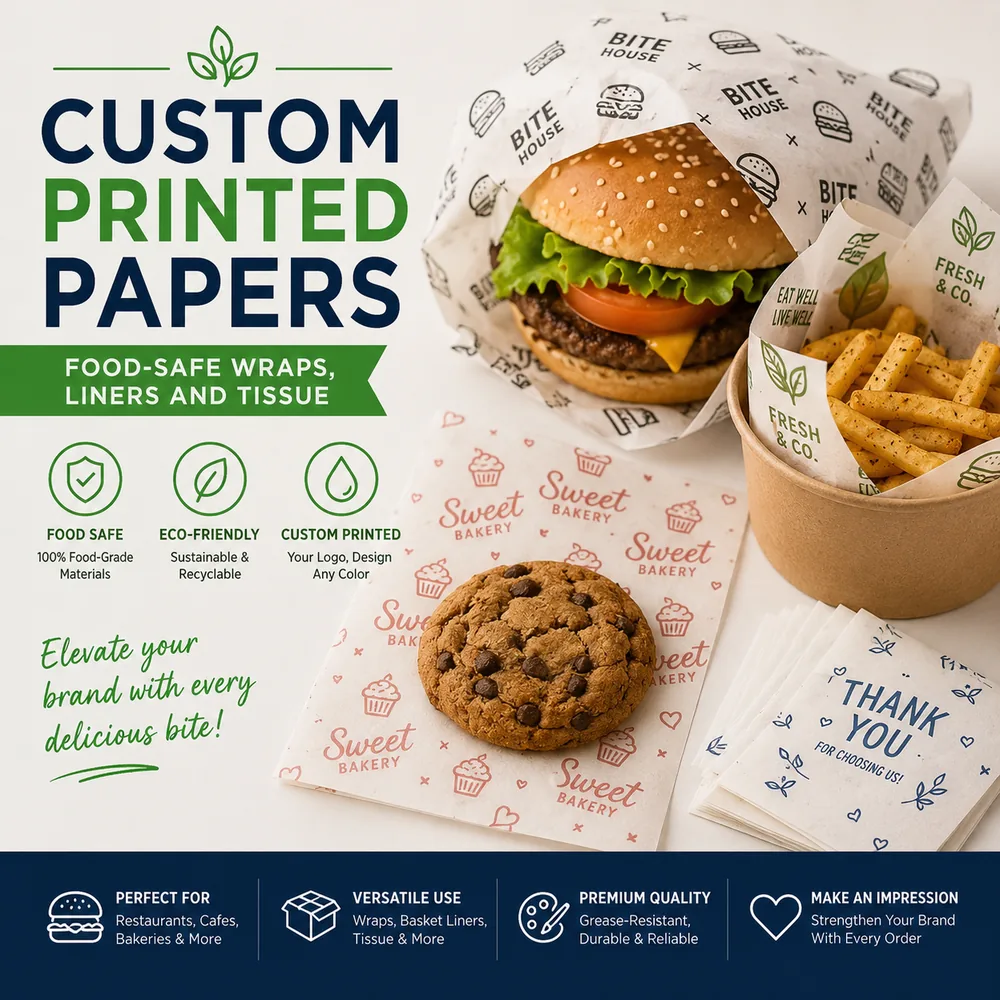
All of these can be custom printed with food-safe inks. Our food-safe packaging guide covers inks and materials. The greaseproof vs. wax vs. parchment post helps you pick a barrier.
Custom food paper is one of the highest-impact, lowest-cost brand moves a food shop can make. Every order leaves the counter wrapped in your logo. Printed wraps and liners also tie a takeout order back to your retail look when they match your food & beverage boxes.
Which coatings and barriers should you use?
The same base paper can be finished in different ways to shift what it resists. Butcher paper, for one, comes uncoated for airflow. Or poly-coated for moisture guard. Deli paper is often given a light greaseproof treatment.
Match the coating to the food and the wrap will not fail. Use a moisture barrier for wet items. Use a grease barrier for oily ones. Use no barrier at all where you want the paper to breathe.
As with food boxes, grease-guard chemistry is moving away from PFAS. So ask for PFAS-free options when you need an oil barrier. Our food-safe packaging guide covers how barriers and inks work together to stay in line with the rules.
What sizes and formats are there?
Food papers come as flat pre-cut sheets, rolls, and basket liners. The right format depends on your service style. Pre-cut sheets are fast for a busy sandwich counter. Rolls suit a station where staff tear to length. Printed liners dress up baskets and trays for dine-in and photos.
Pick the format alongside the paper. That keeps service quick and the brand look even. It also ties the wrap to the rest of your packaging program. The same logo on the wrap, the bag, and the matching food and beverage boxes builds a single, easy-to-spot look.
How do you choose the right paper?
Start with how the food is handled. Match the paper to the job first, then add your print. The branding works on any of them.
- Oven or high heat? Parchment is the only pick.
- Wet or fatty meat? Butcher paper — add a poly coat for a moisture barrier.
- Sandwich or grab-and-go? Deli paper is the cheap, brandable default.
- Cold wrap or layering? Wax paper for its moisture barrier.
- Fried or oily food, no heat? Greaseproof to stop soak-through.
- Basket or tray liner? Butcher or printed deli for a branded dine-in look.
- PFAS concern? Ask for a fluorine-free grease-resistant grade.
Frequently asked questions
What is the difference between butcher paper and deli paper?
Butcher paper is a strong kraft paper for wrapping meat, fish, and deli items, sometimes poly-coated for moisture resistance. Deli paper is a lighter, often greaseproof sheet for sandwiches and grab-and-go items, and it is the most economical to print across.
Which food paper is oven-safe?
Parchment paper is the oven-safe choice, because its silicone coating resists heat and prevents sticking. Wax paper should never go in the oven, since the wax melts, and butcher and deli paper are not made for oven use.
Can food wrapping paper be custom printed?
Yes. Butcher, deli, parchment, and wax papers can all be custom printed with food-contact-safe inks, so every order carries your branding. It is one of the most cost-effective ways to brand a food business.
What is the minimum order for custom food paper?
We produce custom-printed food papers with a low minimum, no plate fees, free design support, and an 8–10 day turnaround. Tell us the format and we will recommend the right paper.
Is wax paper microwave-safe?
Wax paper is not microwave-safe on high heat. The paraffin coating can soften or scorch above 200°F. Use parchment paper for microwave heating or oven use, and reserve wax paper for cold or room-temperature service.
How do I keep grease from soaking through my burger box?
Line the box with greaseproof or dry-waxed paper, or switch to a fluorine-free greaseproof board. That keeps grease from bleeding through without adding a plastic liner. Many burger and taco brands do this today for a cleaner, recyclable pack.
What GSM should I pick for food wrapping paper?
Common weights run about 30 gsm for light deli and interleaves, 40–50 gsm for greaseproof and wax wraps, and 60–90 gsm for butcher paper. Heavier stock feels premium at the counter but costs more per sheet. Match the weight to the food’s size and grease load.
Can I get PFAS-free food wrap?
Yes. PFAS-free greaseproof paper is now the default at most US mills after several state bans. Ask for a “fluorine-free grease-resistant” grade. It matches the performance of legacy stocks without the forever-chemical concern.
What is the shelf life of printed food paper stock?
Sealed and stored dry, most food-safe printed paper stays usable for two to three years. Ink is stable, but coatings can weaken with heat or humidity. Keep stock off concrete floors and out of direct sun to protect grease and moisture barriers.
Why is choosing the right food wrapping paper so important?
Because each paper is engineered for a specific job. Butcher paper breathes so raw meat rests without sweating. Deli paper is thin and prints cheaply for sandwiches and pastries. Parchment survives oven heat because of its silicone coat. Wax paper layers cookies and candies but melts under heat.
Grab the wrong one and your burger soaks through, your bake sticks, or your raw meat sweats and spoils faster than it should.
What are the benefits of using custom-printed food wrapping paper?
It’s one of the highest-impact, lowest-cost brand moves a food shop can make – every order leaves the counter wrapped in your logo, and the paper is often photographed as part of the meal. Printed wraps also do real service work: they signal freshness, keep grease and moisture contained, and tie your wraps to the same logo on your boxes, bags, and cups for a consistent brand set at very low added cost.
How much does custom-printed food wrapping paper cost?
Per-sheet cost is low – typically pennies each – because these papers are thin lightweight stocks. Cost depends on paper type (deli is cheapest, parchment costs more), print colors (one-color logo is the cheapest lane), and sheet or roll size. At Packaging Vista the floor is 100 units with no die, plate, or setup fees, and dieline, design help, and US shipping are free.
Which food paper is best for takeout burgers and sandwiches?
Greaseproof deli paper with a PFAS-free grease-resistant coating. It’s thin enough for full-coverage logo printing at low cost, holds grease and juice long enough for the trip home, and reads clean when the buyer unwraps. Skip wax paper (fine for cold layering, poor under a hot burger) and parchment (better for baking than wrapping). Ask specifically for "fluorine-free grease-resistant" grade.
Get custom food papers
You can also see kraft deli boxes at OLX Packaging for more layout ideas.
Tell us the food and how you serve it, and we will recommend a paper and print it with your brand to match your food & beverage boxes. Start with our custom papers guide, then request your free quote or contact our team.
Part of our food and beverage packaging guide — the pillar reference for every food and beverage topic on this blog.