Blog · By The Packaging Vista Team · June 20, 2026
Foam vs. Paperboard Inserts: Which Protects Better?
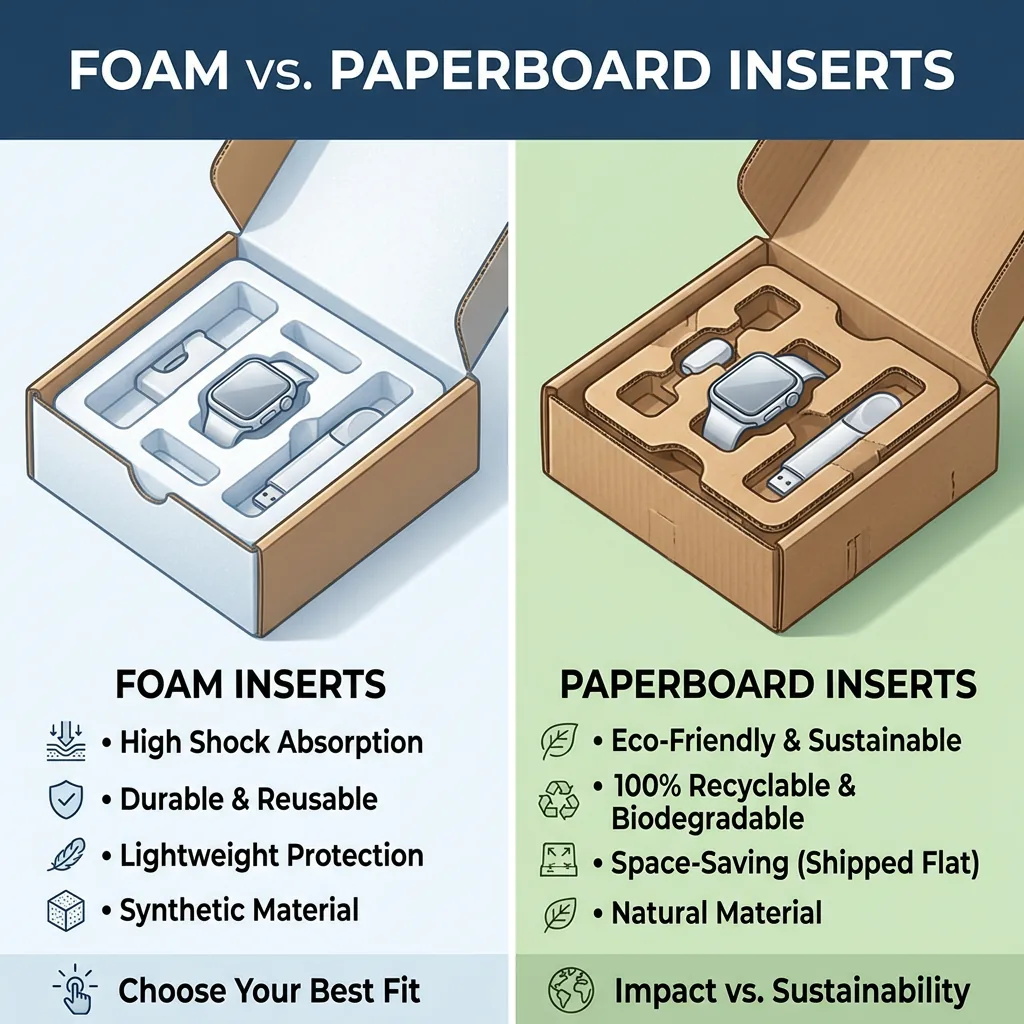
Foam and paperboard inserts both stop a product from moving. But they protect, present, and recycle in different ways. Insert choice is where product protection and product branding meet inside the same box.
Picking between them is one of the top custom-insert questions. The right answer turns on how fragile your product is, how it should look on opening, and how much green matters to your brand. This foam vs. paperboard insert guide is part of our inserts and unboxing guide.
Quick comparison
| Foam | Paperboard | |
|---|---|---|
| Protection | Highest, cushioned | Good, structured |
| Look | Technical, snug | Clean, printable |
| Recyclable | Usually not | Yes |
| Best for | Fragile, precision items | Light–medium products, retail |
How does each insert work?
Foam inserts are cut or molded with a pocket shaped to your product. The item drops into a snug pocket that soaks up shock from every side. The give in the foam is the protection.
Paperboard inserts work in another way. They are die-cut and folded into trays, platforms, and dividers that seat the product against rigid walls. Foam protects by cushion. Paperboard protects by structure and fit. Both stop the product from sliding, which is the top cause of transit damage.
When does foam win?
Foam holds fragile and precision items – electronics, glass, instruments – with the tightest, most cushioned grip. If the product is delicate or costly, foam is the safe pick.
It shines when a product has an odd shape, a heavy or off-center weight, or parts that must not touch each other. The cushion also damps vibration on long shipping routes. See our protective packaging guide for fragile goods that warrant foam.
- High-value items where one break wipes out the margin on many sales.
- Products with delicate finishes that scuff on a hard surface.
- Kits where many pieces need their own pockets.
When does paperboard win?
Paperboard inserts are recyclable, printable, and clean-looking. They suit light-to-medium products and a premium unboxing.
They present the product face-up and keep the whole pack recyclable. For most retail and DTC goods that are not truly fragile, paperboard is the better all-rounder. It costs less, looks more planned, and can be printed with brand color or steps.
A fitted paperboard tray also builds the paced reveal that makes an unboxing feel crafted. See how it fits the wider moment in our e-commerce packaging guide.
How does each affect presentation and unboxing?
The two materials send different signals. Foam reads as technical and protective. That is right for tools, devices, and lab-grade products where toughness is the point.
Paperboard reads as clean, branded, and retail-ready. That is right for cosmetics, gifts, and consumer goods where the open is part of the marketing. Paperboard accepts the same custom printing as the outer carton, so it carries the brand right to the product. Foam is usually plain.
What is the eco angle?
If green matters, paperboard or molded pulp can stand in for foam without much loss in protection. See our sustainable packaging guide.
Most foams are not curbside recyclable and end up in landfill. That is a growing issue for brands that pitch as eco-friendly.
Molded pulp is a strong middle path. It cushions like foam but is made from recycled fiber and is recyclable and compostable. Our recyclable vs. compostable guide explains the end-of-life split.
How do cost and reorders compare?
The two inserts also behave differently on cost over time. Paperboard inserts are die-cut flat and folded. So they ship and store flat and are easy to reorder at the same low minimum as your box.
Foam is bulkier to store and ship. A complex molded pocket is a bigger tooling step. For a brand with regular reorders, a flat-packing paperboard tray keeps freight and warehouse space down.
When foam is truly needed for protection, the cost is paid back by the damage and returns it stops. The real question is if the product needs it. Our guide to reducing packaging costs shows where insert choice moves the budget.
How do you match the insert to the box?
An insert only works if it is cut to both the product and the box. So the two are built together.
A fitted paperboard tray seats the product inside a custom-printed e-commerce mailer box or fully custom printed carton. It uses the box walls as part of the structure.
A foam pocket is sized to the product and the box cavity so there is no slack. We build the box and the insert from one dieline. So the fit is exact – no gaps and no forcing it in.
For richer unboxing layouts that mix trays and dividers, see our inserts and unboxing guide and box dividers and partitions article.
How do you decide?
Start with one question. Can the product survive a drop test seated in a rigid paperboard tray?
If yes, paperboard gives you a cheaper, cleaner, recyclable insert. If the product is fragile, heavy, odd-shaped, or high-value enough that a break would hurt, pick foam. Or pick molded pulp if you want cushion plus recyclable.
For mixed orders, many brands use paperboard as the default and save foam for the truly delicate line items.
Frequently asked questions
Which insert protects better, foam or paperboard?
Foam protects best for fragile and precision items. It cushions shock from every side. Paperboard protects through a rigid, fitted structure. That is plenty for light-to-medium products that are not truly breakable.
Are paperboard inserts recyclable?
Yes. Paperboard inserts recycle with the box, which keeps the whole pack curbside-recyclable. Most foam is not recyclable. So paperboard or molded pulp is the better pick for eco-focused brands.
Is there a sustainable option instead of foam?
Yes. Molded pulp inserts cushion much like foam. They are made from recycled fiber and are recyclable and compostable. They are the usual pick when a product needs cushion but the brand wants to skip plastic foam.
Can you make a custom insert for my product?
Yes. We design fitted inserts to your product with a free dieline, no die or plate fees, from a low 100-unit minimum, and an 8–10 day turnaround.
Why is insert choice one of the biggest packaging decisions?
The insert determines whether the product arrives intact, how the box opens, and whether the whole pack is recyclable. A foam pocket ships fragile electronics safely but lands in landfill and reads technical. A paperboard tray recycles curbside, prints in your brand color, and sets up a paced unboxing reveal – but only if the product can survive rigid-tray protection.
The wrong insert either breaks the product or dulls the brand moment.
How much does a custom insert add to the box cost?
Paperboard inserts add the least because they are die-cut flat from the same board family as the carton and share tooling steps – and we charge no die or plate fees. Molded pulp adds a small tooling step for the mold. Foam adds the most because complex pockets need a bigger tooling investment and bulkier storage.
On a 100-box pilot, expect paperboard to add the least per unit, molded pulp mid-range, foam the most.
Which insert is best for a subscription-box unboxing?
A printed paperboard tray usually wins. It presents each item face-up, keeps the whole pack curbside-recyclable, prints in your brand color, and sets up a paced reveal that films well for subscriber unboxings. Save foam for the rare fragile item in the box, and use molded pulp when the brand story is eco-forward and the products need light cushion.
A mixed-material insert – paperboard tray with a pulp cradle for one fragile SKU – often reads best.
Is a custom insert worth the added cost over loose padding?
Yes when transit damage is a real risk or when unboxing drives reviews. Loose padding lets products shift, which is the top cause of return-inducing damage. A fitted insert sized to the product eliminates that motion and turns the open into a designed moment buyers photograph.
Because our 100-box MOQ covers both carton and insert with no die or plate fees, the pilot cost stays low relative to the damage and returns it prevents.
You can also see cardboard insert options at OLX Packaging for more layout ideas.
Tell us your product and how fragile it is. We will suggest an insert for your custom boxes with fitted inserts and build a free dieline. Start with our inserts guide, then request your free quote or contact our team.
Part of our custom printed papers guide — the pillar reference for every custom printed papers topic on this blog.