Blog · By The Packaging Vista Team · June 20, 2026
Molded Pulp Packaging: The Eco Insert Alternative
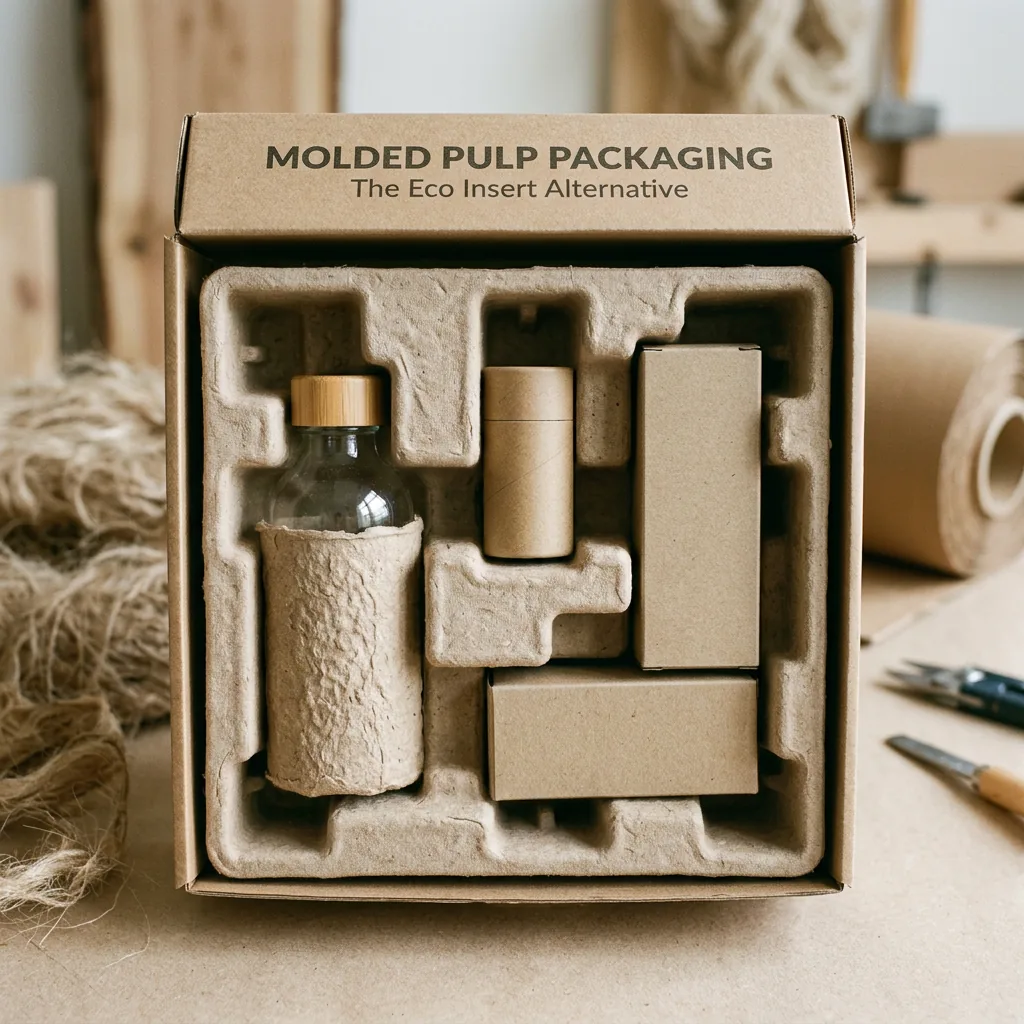
Molded pulp is a recyclable, often compostable insert made from recycled paper fiber. It is the eco answer to plastic foam.
Also called molded fiber, it gives you foam-like cradling and shock absorption without the plastic. That makes it a top pick for brands moving off EPS foam. This piece goes deeper than our main inserts and unboxing guide.
What is molded pulp?
Molded pulp is made by shaping recycled paper fiber into a tray or cradle. The fiber is mixed into a slurry, formed over a custom mold, and dried into a rigid shape. You have seen it as egg cartons, drink trays, and electronics packs.
It cushions the product in a custom-fit shape, much like foam – but from paper. That is why it is the go-to foam swap for eco-minded brands.
What does molded pulp protect well?
Molded pulp suits items that need a cradled fit – bottles, jars, electronics, and beauty goods. It holds the shape and takes some shock. That locks the item so it cannot slide or rattle.
The cradle is molded to the product shape, so it spreads pressure across contact points instead of one corner. For curved or odd shapes that would rattle in a square box, a molded cradle beats flat dividers.
Why do brands choose it?
- Recyclable and often compostable – unlike most foam, it goes in the paper recycling stream and frequently breaks down in compost.
- Made from recycled content – a lower-footprint material that often diverts waste paper.
- On-brand for eco products – the natural, fibrous look reinforces a sustainability story at the unboxing moment.
- Curbside-friendly disposal – customers can recycle it without separating mixed materials.
See our sustainable packaging guide and eco-friendly recyclable packaging boxes.
What types of molded pulp exist?
Not all molded fiber looks the same. Thick-wall and transfer-molded pulp make the rough, fibrous trays you see in electronics and produce packs. They are sturdy and cheap, with a visible texture.
Thermoformed (precision) molded pulp is smoother and more refined. It has cleaner edges and tighter tolerances. That is a better fit for premium beauty and consumer goods where the insert is part of the reveal. The pick is a trade-off between cost, finish, and how visible the insert is when the box opens.
How does it compare to foam and paperboard?
Each protective material has a sweet spot, so match it to the job:
| Insert | Strength | Look | Sustainability |
|---|---|---|---|
| Molded pulp | Good cradling, moderate shock | Natural, fibrous | Recyclable, often compostable |
| Foam | High shock absorption | Clean, technical | Usually not recyclable |
| Paperboard | Light, structural support | Printable, premium | Recyclable |
Pick molded pulp when you want foam-like cradling without the plastic. Pick foam or paperboard when peak protection or print is the goal.
When is molded pulp the right call?
Molded pulp is at its best in three cases. Eco is a stated brand value. The product has a set shape worth cradling. And you want the buyer to feel the eco story in hand.
It fits less well when you need a printed, glossy inside, or when the item is very fragile and needs peak cushion. It also fits less well when the run is too small to justify tooling. In those cases a fitted paperboard insert may serve you better. Many brands pair molded pulp inside a sturdy corrugated shipping box to mix cradle with outer guard.
How do you pair it with the outer box?
An insert is only half the pack. It sits inside an outer box that handles the shape and the custom printing. For retail items, a molded cradle inside a printed carton or mailer box keeps the outside on-brand for product branding while the inside handles product protection.
We build the dieline for the outer box and spec the cradle to match your product. So the two work as one system, not an add-on.
How does it help your eco story?
For an eco brand, molded pulp does marketing work as well as guard work. The moment a buyer lifts the lid and sees a natural fiber cradle, not glossy foam, the eco claim stops being a claim. It becomes something they can see and feel.
That tactile honesty is hard to fake and easy to recall. It is the kind of detail buyers photograph and mention in reviews. If cutting plastic is part of your brand promise, the insert is one of the most visible places to deliver. Our sustainable packaging guide covers how the rest of the pack can back up the same story.
What should you know before you commit?
A few things are worth knowing up front. Molded pulp is formed over a mold shaped to your product. So it works best when the shape is the same from unit to unit.
It is cheaper at volume, since the forming step favors repeat runs. Our low 100-box minimum keeps it open for testing. The surface is matte and slightly rough. That suits an organic look but is not right if you want a glossy, printed inside.
Like any fiber product, keep it dry in storage, since damp air can soften it. Weighing these points against your product and brand is just the kind of thing we help you think through when you ask for a quote.
Frequently asked questions
Is molded pulp recyclable?
Yes. Because it is made from paper fiber, molded pulp goes in the paper bin. Many grades are also compostable – a key edge over most plastic foam.
Does molded pulp protect as well as foam?
For cradling and mild shock, it does well. For items that need peak cushion, foam still soaks up more impact. So the pick depends on how fragile your product is.
Can molded pulp be printed?
Its fibrous surface is not built for sharp graphics. So most molded pulp is left natural. If you need a printed inside, a paperboard insert is the better pick.
What products suit molded pulp best?
Bottles, jars, beauty items, and electronics. Any shape worth cradling, and any brand telling an eco story.
Why is molded pulp a better fit than foam for eco-forward brands?
Because it delivers foam-like cradling from recycled paper fiber, so the whole pack stays curbside-recyclable and often compostable. EPS foam almost always ends up in landfill and undermines any sustainability claim printed on the outer carton. When a buyer lifts the lid and sees natural fiber instead of glossy plastic, the eco story becomes something they can touch, not just read – which is exactly the moment buyers photograph and mention in reviews.
How do I choose between thick-wall pulp and thermoformed precision pulp?
Choose thick-wall (transfer-molded) when cost per unit matters most and the insert will not be a hero moment – produce trays, electronics packaging, industrial goods. The surface is visibly fibrous and rough. Choose thermoformed precision pulp when the insert is part of the unboxing reveal – premium beauty, wellness kits, subscription boxes – because it has smoother edges and tighter tolerances.
Precision costs more but reads more premium.
How much does molded pulp cost compared to foam or paperboard?
Pricing is quote-based and moves with tooling complexity, quantity, and pulp type (thick-wall vs. precision). Molded pulp usually sits between paperboard (cheapest) and foam (most expensive) at moderate volumes, because forming requires a mold but the material itself is inexpensive recycled fiber.
It gets more competitive at higher volumes where the mold cost spreads. Our 100-box MOQ lets you pilot before committing to production volume.
Is molded pulp worth it over cheaper paperboard trays for a small brand?
Yes when your product is bottle- or jar-shaped and needs curved-surface cradling that flat paperboard trays cannot deliver – and when your brand promises eco. For flat retail items that a paperboard platform holds fine, paperboard stays the smarter pick.
Molded pulp earns its premium on rounded goods (beauty jars, wellness bottles, electronics) and on brands where the eco visual signal drives repeat purchase.
Related reading from OLX Packaging: eco-friendly packaging materials explained.
Tell us your product. We will pick a recyclable insert for your custom printed boxes and cartons with a free dieline and free design help – no die or plate fees and a 100-box minimum. Start with our inserts guide, then request your free quote or contact our team.
Part of our box styles guide — the pillar reference for every box styles topic on this blog.