Blog · By The Packaging Vista Team · June 20, 2026
Box Dividers & Partitions: Packaging Multi-Packs
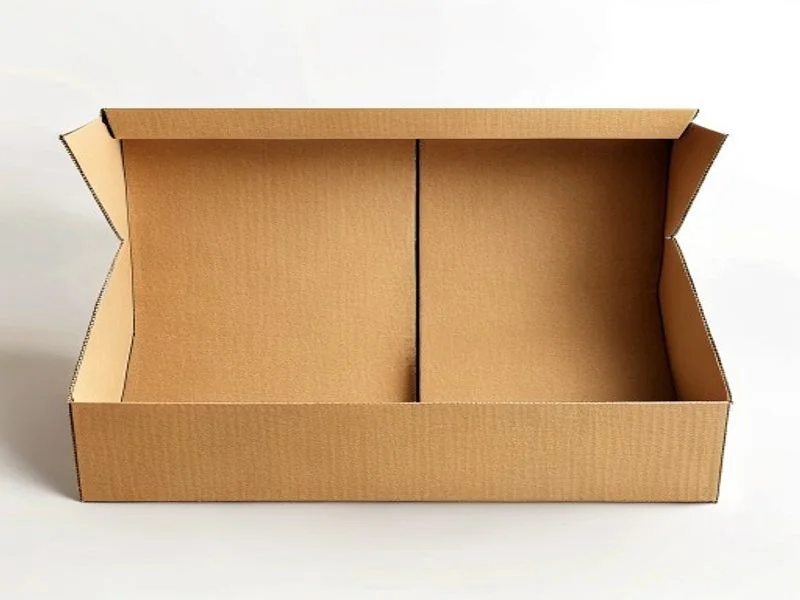
When one box holds several items, dividers and partitions keep them apart. They stop clinking, scratching, and breakage in transit. They are the insert you reach for any time a carton ships more than one unit – a three-bottle gift set, a twelve-jar wholesale case, or any multi-pack where product protection and clean display have to work together.
This guide covers when to use dividers, the materials and layouts on offer, how they are made, and how to order a set built for your product. It is part of our inserts and unboxing guide.
When do you need dividers and partitions?
Any time a box holds multiple breakable or scratchable units, partitions stop them from knocking together. The most common cases we build for include:
- Bottles and jars – beverages, sauces, candles, cosmetics, and supplements, where glass-on-glass contact means chips and cracks.
- Curated sets and gift packs – a skincare routine, a spice collection, or a holiday bundle that should arrive looking arranged, not jumbled.
- Wholesale and retail multi-packs – cases of 6, 12, or 24 units that need to survive palletized shipping and repeated handling.
- Mixed-item kits – products of different shapes that each need their own cell so nothing shifts.
If your units are individually fragile, pair dividers with cushioning – see protective packaging for fragile products.
Dividers vs. partitions: is there a difference?
The two terms mean the same thing: strips of board slotted together into a grid of cells inside a box. “Partitions” is what you see on a spec sheet. “Dividers” is the everyday word.
Both name the inside cell structure. That is not the same as a solid foam or paperboard insert, which is a shaped tray, not a slotted grid.
Which material: corrugated or paperboard?
Dividers are most often made from one of two stocks, chosen by the weight and value of what they hold:
- Corrugated – the fluted board used in shipping cartons. It is strong and absorbs shock, which suits heavier items like bottled drinks and beverage bottles and anything shipped in volume. See our strong corrugated boxes for shipping.
- Paperboard (chipboard) – a smoother, thinner board that suits lighter sets and a cleaner retail look, especially inside premium rigid gift boxes where the partitions are visible at opening.
For a deeper comparison of box stocks, see packaging materials explained.
What are the common divider setups?
Partition grids are described by the number of cells – usually rows by columns. A few typical layouts:
| Layout | Cells | Typical use |
|---|---|---|
| 2 × 2 | 4 | Small bottle or candle gift sets |
| 2 × 3 | 6 | Six-pack beverages, sauces, jars |
| 3 × 4 | 12 | Wholesale cases, twelve-unit retail packs |
| Custom | Any | Mixed-size kits with cells sized per item |
Cell size, not just count, is what protects the product. Each cell is built to your unit’s exact footprint. So there is no room to rattle.
How are partition inserts made?
Slotted partitions start as flat strips of board. Each strip has notches cut halfway through at every intersection. The strips lock at those notches to form a rigid grid that drops into the box. No glue needed, and they ship flat to save space.
For sets where the cells must be sealed or the look must be seamless, we die-cut a one-piece tray with scored, folded cell walls. Either way, the grid is built into a free dieline so the fit is exact. (More on files in our artwork & dieline guide.)
How do they guard in transit?
A divided box beats the two forces that break multi-packs. Those are impact (a drop) and vibration (hours on a truck). Each unit sits in its own cell and away from the box wall. So units cannot hit each other. And they stay off the corners, where most drop damage lands.
For heavy or high-value glass, pair a corrugated grid with an outer corrugated shipper box for shipping. Size it to leave a cushioning gap. To pick the right outer size, see standard box sizes and how to measure for a custom box.
How do they help guard and display?
Beyond protection, a divided box shows a set neatly. Each item sits in its own cell. That is ideal for gift sets and custom subscription boxes for monthly sets.
The first thing a buyer sees on opening is a clean, planned layout, not loose products. That lifts the value of the whole pack. Printed or colored partitions extend your product branding into the interior of the box for a stronger unboxing moment.
How do sizing and custom fit work?
Dividers are sized to your exact units, so the fit is snug and the cells are right. Send the height, width, and depth of a single unit, plus how many go in the box. We build the grid into a free dieline. There is no separate charge for the divider tooling. See how to measure for the sizes we need.
Is it a more sustainable insert?
Paperboard and corrugated partitions are a plastic-free way to separate and protect multi-packs. Both are widely recyclable. Unlike molded plastic or foam, they need no special disposal. If sustainability matters across the whole pack, compare options in molded pulp packaging and foam vs. paperboard inserts.
How do you order custom dividers and partitions?
Tell us how many units per box and their size. We will design dividers for your custom printed boxes and packaging with a free dieline. No die or plate fees. A 100-box minimum. And an 8–10 day turnaround. Start with our inserts and unboxing guide. Then request your free quote or contact our team.
You can also see custom insert boxes at OLX Packaging for more layout ideas.
Frequently asked questions
Do dividers add much cost?
They add a small amount of board and assembly. But we charge no separate die or tooling fee. So a custom grid is cheap next to the breakage it stops.
Can partitions be printed?
Yes. Paperboard dividers can be printed or color-matched to your brand. This is common for premium gift and subscription boxes.
Will they ship flat?
Slotted partitions ship flat and go together in seconds. So they store and freight well. One-piece die-cut trays also fold flat.
What is the minimum order?
Our standard minimum is 100 boxes, dividers included, with no setup fees.
What are box dividers and partitions?
Dividers and partitions are die-cut inserts that split the inside of a box into cells or compartments. Each cell holds one product so units cannot knock against each other in transit. They are usually cut from paperboard or corrugated in a slotted egg-crate style, or as one-piece die-cut trays. Common on multi-packs: bottles, jars, candles, wine, chocolates, and gift sets.
Why is a divider important for multi-pack shipping?
Because loose products in a single carton knock against each other and the box walls every time the parcel is moved. That causes chipped bottles, dinged jars, scuffed labels, and sometimes full breakage. A divider separates each unit into its own cell so no product touches another. That cuts damage returns, negative reviews, and replacement cost – often paying for itself many times over.
How do I choose between paperboard and corrugated dividers?
Match the material to the product weight. Paperboard suits lighter or premium items where the divider will be visible on unbox – jars, cosmetics, small gifts. It prints cleanly for a branded interior. Corrugated is stronger and cushions heavier or fragile loads – wine, glass bottles, candles in jars. Both are recyclable. Both ship flat and go together in seconds.
Is a custom divider worth it vs void fill like paper or bubble?
For fixed multi-packs – yes. Void fill stops products moving inside a box, but only a fitted divider stops each product from touching its neighbors. Dividers also read premium on unbox and speed up your pack line since each unit has a defined slot. Void fill still works for mixed-item fulfillment. But for a 6-pack or gift set, a printed divider is the smarter spend.