Blog · By The Packaging Vista Team · June 20, 2026
Protective Packaging for Fragile Products: A Practical Guide
Shipping fragile goods is a design problem. The pack has to soak up drops, buzz, and crushing before they reach the product.
Good product protection is less about wrapping things tight and more about building a system. A snug insert, targeted cushion, and a strong outer box that work as one. That is how glass, ceramics, and delicate goods arrive whole. This guide goes deeper than our main inserts and unboxing guide.
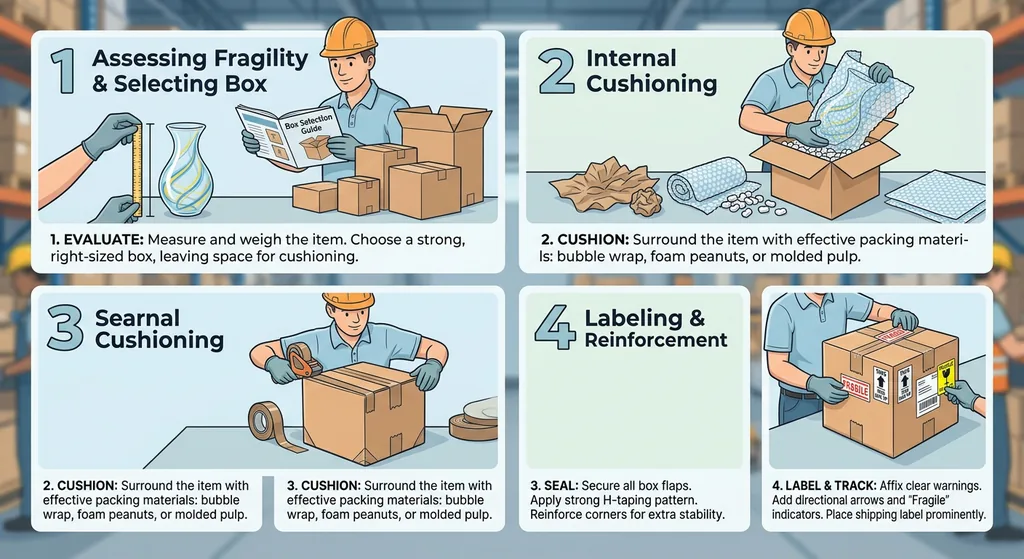
How to pack a fragile item, step by step:
- Choose double-wall corrugated as the outer shipper.
- Wrap the product in bubble or foam at least 2″ on every side.
- Cradle it with fitted inserts (foam, molded pulp, or paperboard) so it cannot move.
- Leave 2″ of void space between product and box wall on every axis.
- Fill remaining void with air pillows, paper, or foam – no bare space.
- Seal with H-tape across the seam and both edge flaps.
- Mark FRAGILE / THIS SIDE UP on two adjacent faces.
Understand the forces in transit
Before you pick materials, know what a parcel goes through. In transit a box gets dropped on corners and edges. It shakes for hours on belts and truck beds. It gets stacked under the weight of other parcels.
Each is a different stress. Drops make sudden shock. Buzz loosens anything that can move. Stacking puts steady pressure. Good guard packs answer all three, not just pad the flat sides. When you build against real failure modes, damage rates fall sharp.
Start with a snug, fitted insert
Movement is what breaks things. So the first line of defense is an insert that holds the product still – foam for delicate items, paperboard for lighter ones. See foam vs. paperboard inserts.
A fitted insert does two jobs at once. It locks the product so it cannot build speed. And it holds the weak points away from the box walls. For glass in particular, an insert that grips the base and shoulders of a vessel stops the rocking that causes hairline cracks.
Add cushioning where it counts
Cushioning soaks up shock at weak points – corners, edges, and jutting parts. The goal is to keep the product off the box wall during a drop.
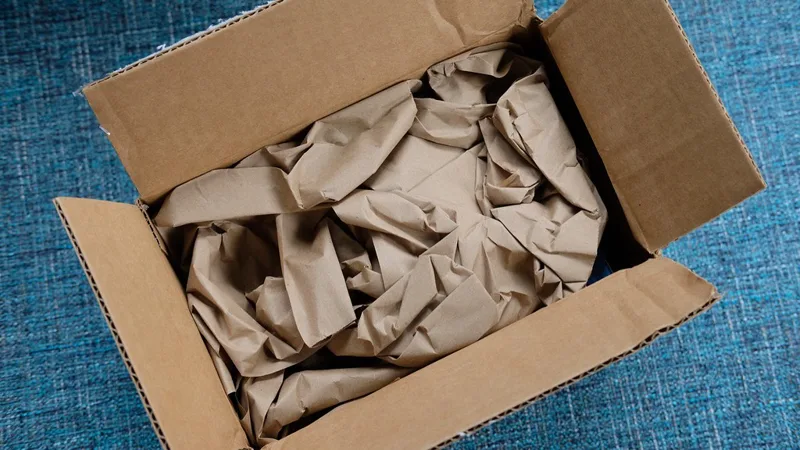
Do not bury everything in fill. Put the cushion where impact lands: the corners that hit first and any thin or jutting bit like a spout, handle, or lid. Paper cushioning like crumpled kraft or molded fiber works well for most goods and keeps the pack recyclable.
Common cushioning choices, and where each shines:
- Crumpled kraft paper – recyclable, cheap void fill for light items.
- Molded pulp cradles – fitted cushion for bottles, jars, and electronics.
- Foam inserts – peak shock absorption for delicate or high-value goods.
- Paperboard inserts – printable, structural support for lighter products.
- Corner protectors – guard the first point of impact on drops.
- Air pillows – light void fill that stops shift without adding weight.
Choose a strong outer box
For weight and impact guard, use sturdy corrugated shipping boxes, not thin paperboard. The fluted board resists crushing. See our corrugated boxes guide. The flute and wall build of corrugated is what gives it stacking and puncture strength. Heavier or more fragile loads gain from a thicker board or double-wall build.
A retail carton looks nice, but it is the corrugated shipper around it that lives through the trip. Many fragile products use a two-layer setup: a printed retail box inside a sturdier corrugated mailer. That split lets you optimise the outer for shipping packaging strength and the inner for product branding – the printed carton the buyer actually sees stays crisp because it never touches the carrier belt.
| Fragility level | Recommended outer | Recommended inner protection |
|---|---|---|
| Low (books, apparel) | Single-wall corrugated mailer | Tissue or light void fill |
| Medium (small electronics, cosmetics) | Single-wall corrugated shipper | Fitted paperboard or molded pulp insert |
| High (glass, ceramics) | Double-wall corrugated shipper | Foam or molded pulp cradle, corner cushion |
| Very high or high-value | Double-box (retail carton inside corrugated) | Fitted insert plus a cushion gap on all sides |
Consider double-boxing for high-risk items
For very delicate or high-value goods, double-boxing is the most reliable upgrade. The inner box holds the product in its insert. An outer corrugated box wraps it with a cushion gap on all sides.
That gap is the key. It gives the inner pack room to slow down during a drop, not send the full shock straight to the product. Double-boxing adds a bit of paper and weight. But for items that cannot arrive broken, it is far cheaper than refunds and the brand hit of damaged deliveries.
Right-size to stop shifting
An oversized box lets the product slide and build speed. A box built to the product, with snug inserts, kills that risk – see how to measure.
Right-sizing also keeps weight and size down. That helps you skip dimensional weight fees. We are a US-based supplier with no die or plate fees, so building a box and insert to your exact size is easy even at low volume.
Test before you scale
For truly delicate products, ship a few test units and see how they arrive first – our 100-box minimum makes that easy. Send samples to a few different addresses, including one with a long carrier route.
Check them on arrival for any movement, scuffing, or stress on the product. If something shifts, tweak the insert or cushion and test again. This small step is the cheapest cover against a wave of damage claims once you ship at volume.
Match the insert to the product
The right insert is rarely one-size-fits-all. Picking it well is what splits packs that live through shipping from packs that just look safe.
Heavy or sharp-cornered items push on whatever wraps them. They gain from a denser, fitted cushion that spreads the load. Light but fragile items – thin glass, ceramics, small electronics – need an insert that grips them firm without crushing. It should hold them clear of every wall.
Multi-piece products do best with a divided insert. The pieces cannot knock into each other in transit, which is a top cause of damage in sets. We design the insert and outer box together with a free dieline, so the fit is built for your product, not guessed with loose fill.
Label and prepare the parcel
Even great packaging gains from clear handling cues. A “fragile” label will not replace good design, but it hints at care and sets a tone.
Seal the outer box well along its seams so it does not pop open under pressure. Keep the heaviest items low and centered so the parcel is stable. If you use a printed retail carton inside a corrugated shipper, lock the inner box too so it cannot slide as a unit. These small steps cost nothing and cut the odds of a broken delivery, mainly over long routes with many hand-offs.
Frequently asked questions
What is the most important factor in protecting fragile items?
Stopping movement. A snug, fitted insert that locks the product and keeps it off the box walls stops most transit damage before cushion even comes in.
Should I use foam or paper-based cushioning?
It depends on the product. Foam inserts cradle delicate or heavy items. Paperboard inserts and paper cushion suit lighter goods and keep the pack recyclable. Our foam vs. paperboard inserts guide compares them.
Is corrugated necessary, or will a printed carton do?
For shipping fragile items, use corrugated for the outer box. Thin retail paperboard does not resist crushing or puncture. Many brands put a printed carton inside a corrugated shipper.
Can I order a small test run before a full order?
Yes. Our minimum is 100 boxes with no die or plate fees. You can test how your pack holds up in real shipping before you scale.
Why is protective packaging important for fragile items?
A parcel is dropped on corners, shaken on belts for hours, and stacked under other weight. Each is a different stress. Without a fitted insert, targeted cushion, and a strong corrugated outer, the product hits the box wall at speed and breaks. Damage rates, refund cost, and the brand hit of arriving-broken deliveries all fall sharp when the pack answers all three transit forces.
How do you choose the right cushion for your product?
Start with the product’s weight and weak points. Heavy or sharp-cornered items need a denser, fitted cushion that spreads load. Thin glass, ceramics, and small electronics need an insert that grips them clear of every wall. Multi-piece products need a divided insert so parts cannot knock together. We design the insert and outer box on one free dieline so the fit is built, not guessed.
What is the difference between an insert and cushioning?
An insert is a shaped, fitted piece – foam, paperboard, or molded pulp – that holds the product in a set position. Cushioning is loose or wrapped fill that soaks up shock at weak points. Inserts stop movement. Cushioning stops impact. Well-built fragile packs use both: an insert to lock the product still, cushion at the corners and jutting parts where drops land.
Is double-boxing worth the extra material?
For high-value or very delicate goods, yes. The gap between inner and outer box gives the pack room to slow during a drop instead of sending full shock to the product. It adds a bit of paper and weight but is far cheaper than refunds, replacement stock, and the brand hit of broken deliveries. For sub-$50 items in sturdy inserts, a single well-sized corrugated shipper is usually enough.
For more on this topic, see guide to protective packaging from OLX Packaging.
Shipping something fragile? Tell us your product and how it ships. We will design guard packaging with a free dieline. Start with our inserts guide, then request your free quote or contact our team.