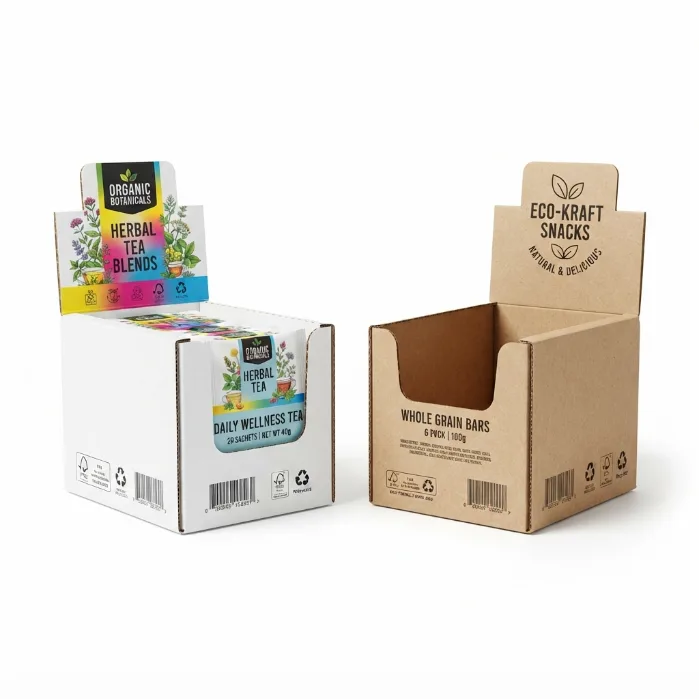
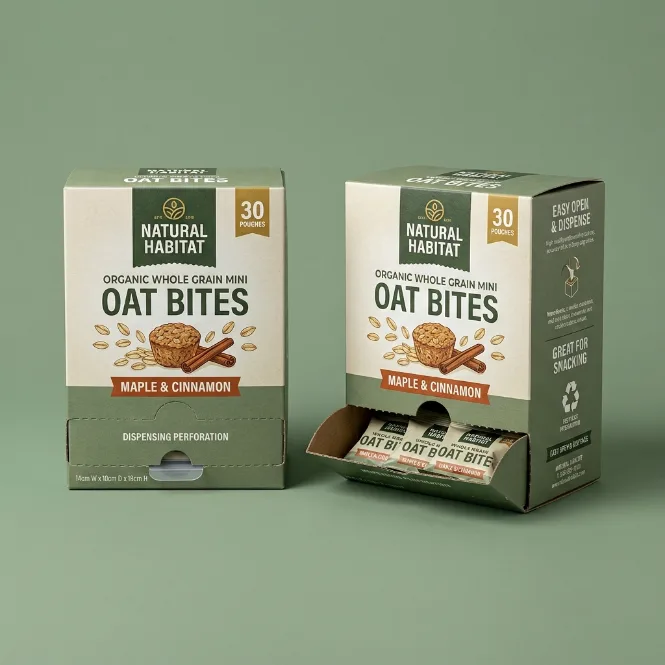
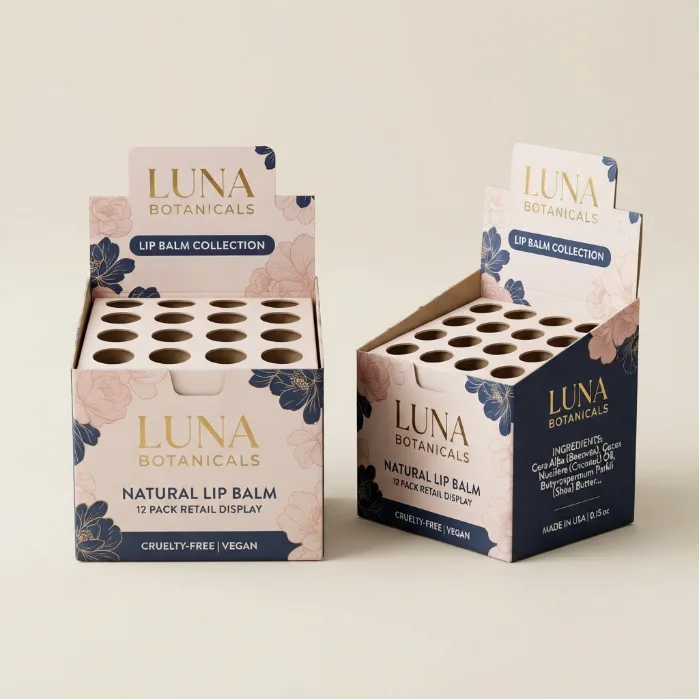
Custom Cardboard Display Boxes
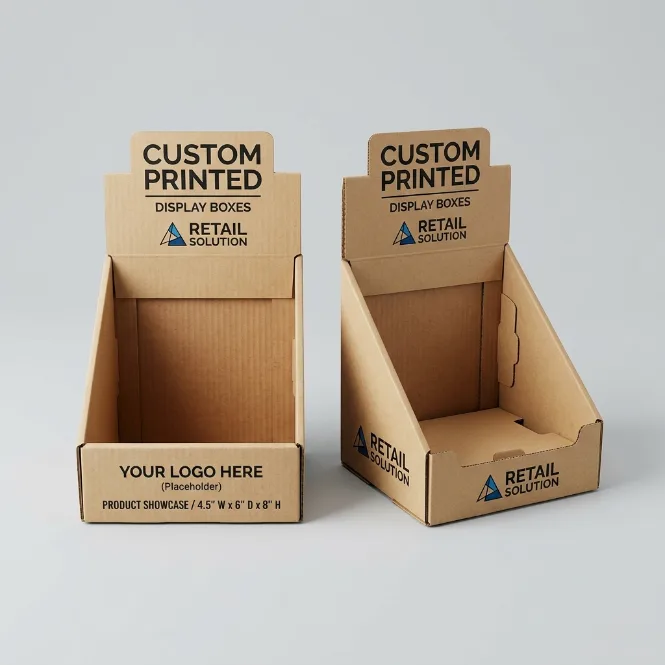
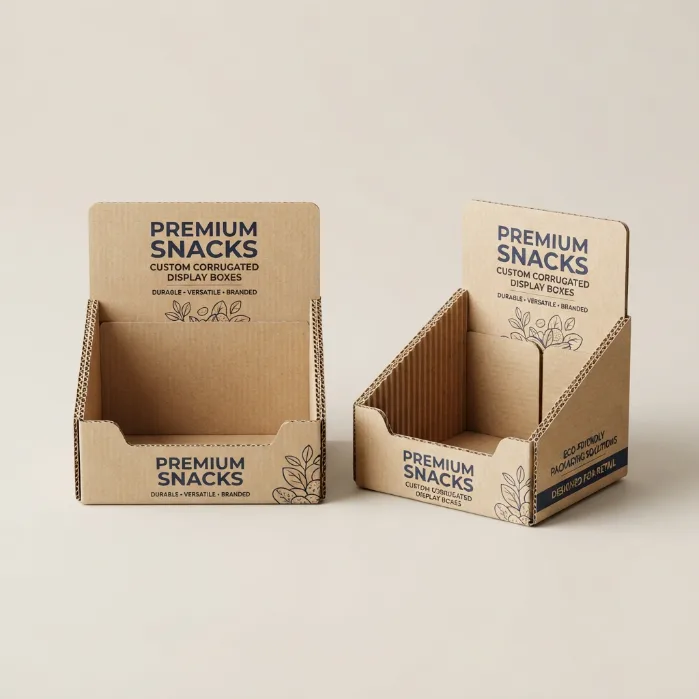
Cardboard display boxes are printed, temporary point-of-purchase displays made from paperboard or corrugated cardboard that stand on a counter, sit on a shelf, or stand alone on the store floor to promote a product for a set period. They cost a fraction of acrylic, wood, or metal fixtures, ship flat, and can be redesigned for every season.
Packaging Vista prints cardboard displays from 100 units with no die, plate, or setup fees. Every order includes a free dieline and 3D mockup. Standard production is 8 to 10 business days after proof approval, with free US shipping.
Key takeaways
- Temporary on purpose: built for 4- to 12-week promotions, launches, and seasonal resets, then recycled.
- Every size of store space: counter trays, shelf units, sidekicks, and floor displays in one material family.
- Far cheaper than fixtures: a printed cardboard floor unit costs a small fraction of a comparable acrylic or metal fixture.
- Low barrier: 100-unit minimum, no die, plate, or setup fees. Browse the counter display boxes hub, cardboard boxes, or request a free quote.
What is a cardboard display box?
A cardboard display box is a retail display built from paper-based board instead of plastic, wood, or metal. In everyday use, "cardboard" covers two materials: thin solid paperboard, used for small counter trays, and fluted corrugated board, used for anything that carries real weight.
Both fold from flat die-cut sheets, both print in full color, and both go into the store's cardboard recycling when the promotion ends.
The defining trait of a cardboard display is that it is temporary. Brands use it to push a launch, a holiday, a new flavor, or a price promotion, then replace it with new artwork next season. That short life is why the economics work: you are not paying for a fixture built to last five years when you only need it for six weeks.
Cardboard display formats
Countertop trays
Small trays with a printed header that sit by the register, holding 12 to 48 impulse items. Light products can use paperboard; see counter display cardboard boxes for that build.
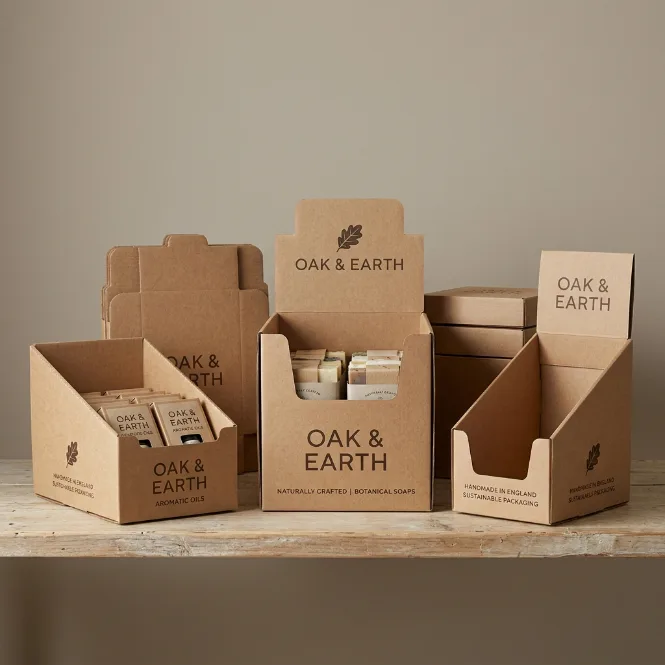
Shelf units and shelf trays
Trays that sit inside an existing store shelf, often with a tear-away front so the shipping case becomes the display. Great for grocery, pharmacy, and specialty retail.
Sidekick and hanging units
Slim displays that hang off the side of an endcap or a gondola, adding selling space where there is no free floor or shelf.
Floor-standing displays
Freestanding towers with shelves, bins, or pegs. These use heavier corrugated; the load engineering is covered on our corrugated display boxes page.
Dump bins
Open-top bins filled with loose product, used for high-volume single-SKU promotions on the floor or on a counter.
Cardboard display sizes and typical lifespans
| Format | Typical size | Board | Typical in-store life |
|---|---|---|---|
| Countertop tray | 10 × 8 × 4 in + 6 in header | Paperboard or E-flute | 4 to 12 weeks |
| Shelf tray | 14 × 10 × 5 in | E-flute | Until sold through |
| Sidekick | 12 × 6 × 42 in | E- or B-flute | 4 to 8 weeks |
| Floor display, 4 shelves | 22 × 14 × 60 in | B-flute or double-wall | 6 to 12 weeks |
| Floor dump bin | 24 × 20 × 30 in | Double-wall | 4 to 8 weeks |
Materials and printing
- White paperboard: sharpest print for small, light counter units.
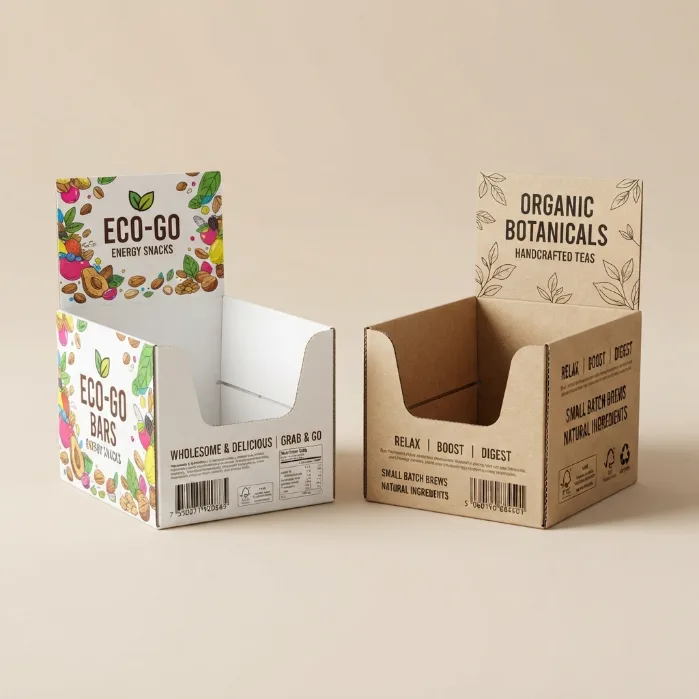
- White-top corrugated: a bright printed face on fluted board, the most common display material.
- Kraft corrugated: brown, unbleached look for natural and eco brands.
- Print: full CMYK plus Pantone spot colors, with gloss or matte lamination on high-touch panels and aqueous coating elsewhere.
Temporary cardboard vs permanent display fixtures
The biggest decision is not which cardboard style to use but whether cardboard is right at all. Use it when these are true:
- The promotion has an end date. Seasonal, launch, and price-promotion programs fit cardboard perfectly.
- Artwork will change. Reprinting a cardboard display for a new season costs far less than refitting a fixture.
- You ship to many stores. Flat-packed cardboard ships cheaply by parcel or inside product cases.
- The store controls the space. Many retailers accept temporary cardboard displays more readily than permanent fixtures.
Permanent acrylic, wood, or metal fixtures make more sense when the display will stand for years in your own store or a flagship account. Many brands use both: a permanent fixture in their best accounts and cardboard everywhere else.
How much do cardboard display boxes cost?
Typical ranges at a 500-unit run: $1.10 to $4.50 for a countertop tray, $1.20 to $3.20 for a shelf tray, $9 to $20 for a sidekick, and $22 to $55 for a four-shelf floor display. Size, board, print coverage, and quantity drive the price. There are no die, plate, or setup fees. Send your product details on the quote form for exact pricing.
How long do cardboard display boxes take to make?
Standard production is 8 to 10 business days after proof approval, and rush runs are available. For floor units, many brands start with a non-printed structural sample in the final board, which costs USD 75 and is credited to your first order.
Cardboard vs acrylic vs wood and metal displays
| Cardboard | Acrylic | Wood or metal | |
|---|---|---|---|
| Lifespan | Weeks to months | Years | Years |
| Branding | Full-color print on every face | Decals or inserts | Signage add-ons |
| Shipping | Flat, light | Bulky, fragile | Heavy, freight |
| End of life | Store cardboard recycling | Usually landfill | Reuse or scrap |
Are cardboard displays worth it for a small brand?
Yes, especially when you are trying to get into new stores. A small brand can put a printed floor unit or counter tray into a local chain for a season at a cost that would not buy one permanent fixture. If the display sells through, you reorder with updated artwork. If it does not, you have learned that cheaply and nothing is left standing in the store.
Are cardboard display boxes recyclable?
Most stores already bale cardboard, and paperboard and corrugated displays finished with aqueous coating or varnish go straight into that stream. Plastic lamination, plastic hooks, and heavy foil can reduce acceptance, so remove or limit them if recyclability is part of your message.
Under the FTC Green Guides, qualify any recyclability claim unless recycling is available to a substantial majority of the people who will dispose of the display.
Frequently Asked Questions
What is the difference between cardboard and corrugated displays?
Cardboard is the everyday word for both. Thin solid paperboard is used for small counter trays, and fluted corrugated board is used for shelf, sidekick, and floor displays that carry more weight.
How long does a cardboard display last in a store?
Most are built for 4 to 12 weeks of use. A well-built corrugated unit with lamination on high-touch panels can stay out for several months.
Can a cardboard floor display hold heavy products?
Yes, with the right board. We use B-flute or double-wall corrugated and add shelf supports for heavier loads. Tell us the weight per shelf and we will engineer the structure.
Do cardboard displays come assembled?
They ship flat to save freight and fold up with lock tabs, usually in a minute or two for counter units and a few minutes for floor units, with no tape needed.
How much does a cardboard display cost?
At 500 units, countertop trays typically run $1.10 to $4.50, shelf trays $1.20 to $3.20, and four-shelf floor displays $22 to $55 each. There are no die, plate, or setup fees.
What is the minimum order and turnaround?
The minimum is 100 units. Standard production is 8 to 10 business days after proof approval, with rush available and free US shipping.
Can I test the structure before a full run?
Yes. A non-printed sample in your exact size and board costs USD 75 and is credited to your first order. A free 3D mockup is included with every order.
Are cardboard displays recyclable?
Paperboard and corrugated displays with aqueous coating or varnish are accepted by most US store and curbside cardboard recycling. Plastic parts and heavy lamination can reduce acceptance.
Who orders custom cardboard display boxes?
Custom display boxes are ordered by brands that sell at the counter, the checkout lane, or the shelf edge, where the box itself has to stop a shopper and hold the product upright.
- Consumer brands entering retail — PDQ trays and counter displays that ship packed, open in seconds, and meet a buyer's planogram.
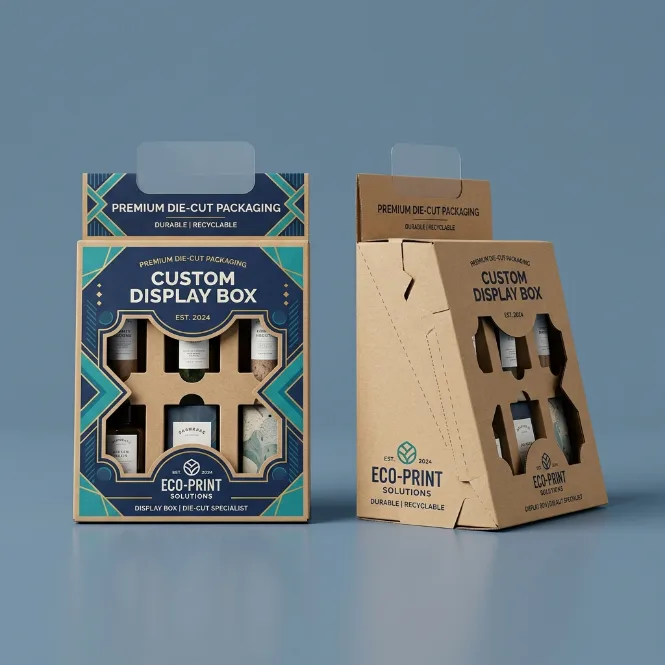
- Beauty and personal-care makers — lip balm, bath bomb, soap, and cosmetic display trays with cavities sized to each unit.
- Candy, snack, and convenience brands — checkout-lane display boxes with tall printed headers built for impulse buys.
- CBD, hemp, and smoke-shop suppliers — countertop display boxes with room for the compliance copy each product line needs.
- Wholesale reps and trade-show teams — display mailers and pop-up displays that ship to the store and turn into a merchandiser on arrival.
How to order custom cardboard display boxes
Five steps from quote to delivery. Every order includes free design support, a free custom dieline, and a digital mockup for approval before anything hits the press.
- Share your specs. Send box dimensions (or a photo of the product), quantity, material preference, and any artwork or logo files. If you're unsure of the size, our design team can advise from a product photo.
- Get a quote and mockup. Within one business day we return a firm quote, a printable dieline, and a 3D digital mockup of your cardboard display boxes. No die, plate, or setup fees are added.
- Approve the proof. Review the mockup, request color, layout, or dieline changes, and give final approval. Revisions are unlimited before press.
- Production (8–10 business days). Your order runs on offset or digital press, then moves through finishing — lamination, spot UV, foil stamping, embossing, die-cutting, and assembly if needed.
- Free US shipping. Orders ship flat-packed with tracking. Assembled bundles or master-carton packing are available on request at no charge.
Resources & tools
Free tools and trusted references to help you size, spec, and choose the right cardboard display boxes before you order.
Free tools & guides
- Paperboard vs corrugated – which board fits your product and shipping.
- Packaging materials – compare SBS, kraft, corrugated, and rigid stocks.
- Custom boxes hub – every box style we print, in one place.
Trusted references
- How2Recycle – the standardized on-pack recycling label for paperboard and kraft packaging.
- Forest Stewardship Council (FSC) – certification for responsibly sourced paper and board.
- FEFCO — International Fibreboard Case Code – the standard code (0201, 0427, etc.) that defines every box style.
- ISTA — International Safe Transit Association – the industry-standard packaging performance test protocols.