Blog · By The Packaging Vista Team · June 23, 2026
Custom Food Boxes in the USA: How to Source From a US-Based Packaging Partner
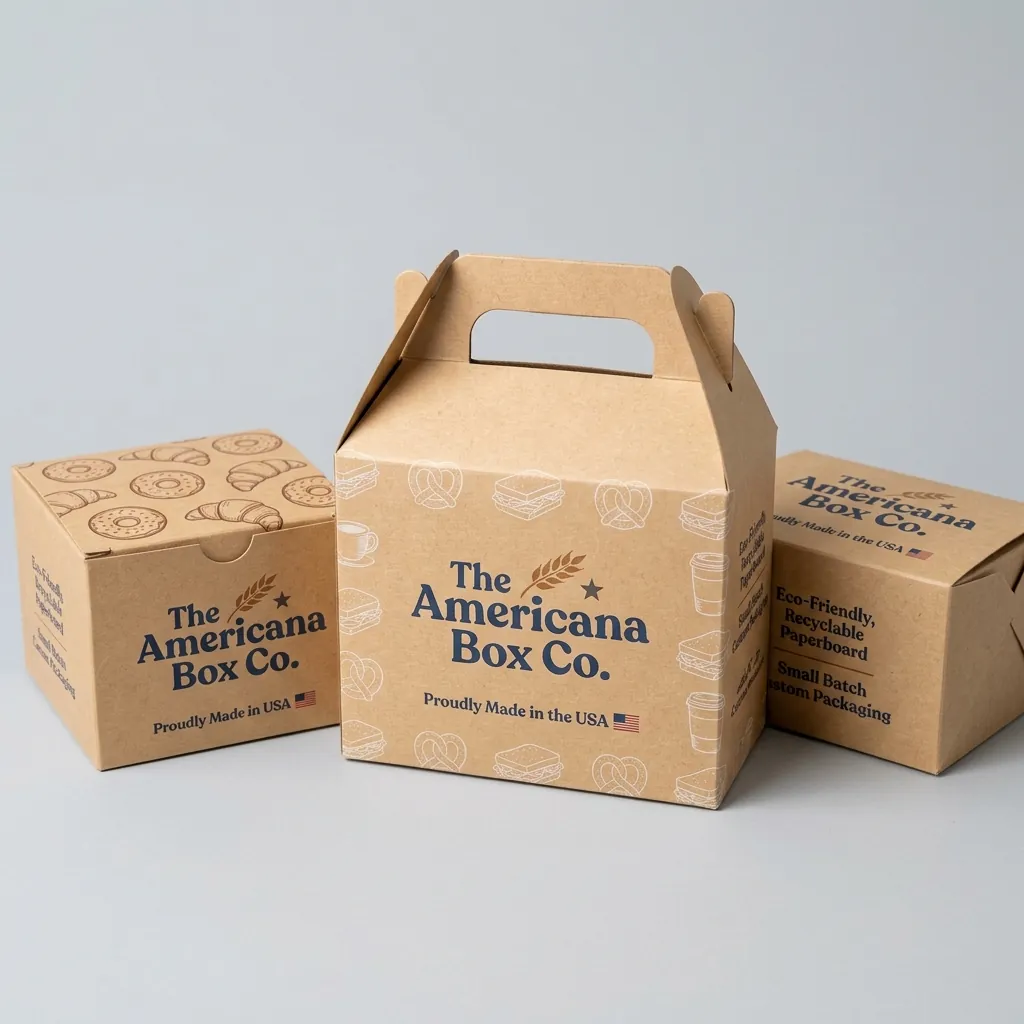
The fastest-moving SKU in most kitchens is the box itself. A bakery can plate two hundred pastries on a Saturday. A ghost kitchen can cycle through a week of clamshells in two days. And a packaged-snack brand can sell out a flavor before the next box order has even shipped.
Food packaging is a consumable, not a one-time buy – and it doubles as retail packaging on every to-go counter, so product branding gets a repeated impression instead of a one-shot shelf moment. That single fact is why so many US food businesses look for a responsive US-based packaging partner.
This guide walks through what makes a food box truly food-safe, which stocks suit which products, and how we build custom food boxes for brands across the country. For the underlying material science, our food-safe packaging guide goes deeper.
What "food-grade" means on your box
Food-grade is not a marketing word. It describes paperboard and coatings fit for direct contact with the product they hold. We print on food-grade SBS, natural kraft, and clay-coated paperboard that meet US food-safe packaging norms. And we match the barrier to the food.
Dry goods like cookies, granola, or chocolate need little more than a clean stock. Greasy and fried items need a grease-resistant board so oil does not wick through and stain the print. Moist or frozen items need moisture tolerance. The right answer depends on your specific product.
So you confirm the contact rules. We build the box to suit. Brands leading with sustainability can move to recyclable or compostable stocks. Our sustainable food packaging guide covers the trade-offs.
Matching the structure to the food
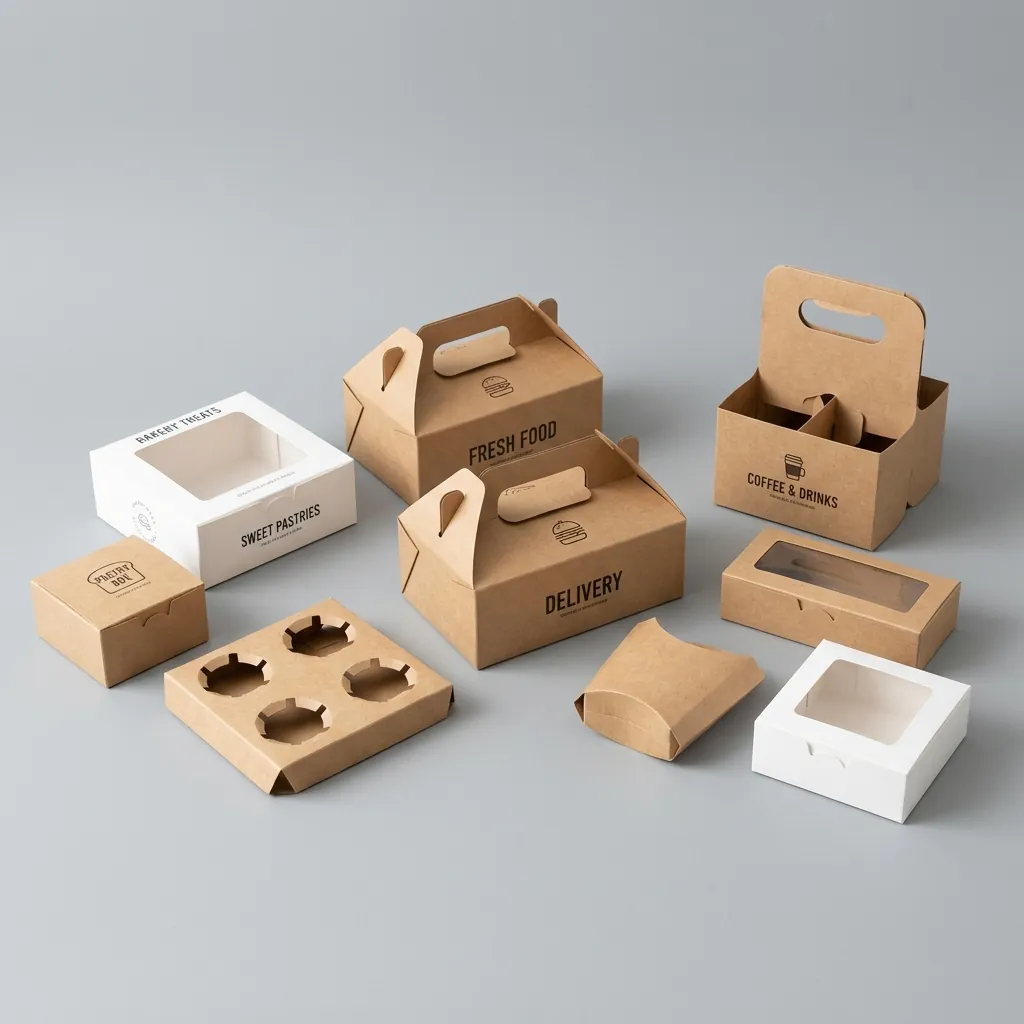
Different foods fail in different ways. So the box style matters as much as the stock. A few of the formats we print most often for US food brands:
- Bakery and pastry boxes – auto-bottom or tuck cartons with optional clear windows so customers see the product without opening the lid.
- Snack and dry-good cartons – straight or reverse tuck-end boxes for cereal, crackers, candy, and shelf-stable goods that need a flat panel for nutrition facts.
- Meal and takeout cartons – sturdy folding boxes for prepped meals, sides, and grab-and-go counters.
- Sleeves and wraps – printed bands for bars, bottles, and ready-to-eat items that pair with an inner wrap.
For a wider tour of formats, see our food packaging by product overview. For cakes and pastries, see the bakery packaging guide.
| Food type | Recommended stock | Barrier / coating |
|---|---|---|
| Cookies & dry snacks | Food-grade SBS or kraft | None needed |
| Fried / greasy items | Clay-coated paperboard | Grease-resistant liner |
| Bakery & pastries | SBS with window PET | Water-based coating |
| Chocolate & candy | SBS folding carton | Aqueous overprint |
| Frozen & refrigerated | Moisture-tolerant paperboard | Poly or wax coating |
| Meal & takeout | Kraft or SBS auto-bottom | Grease/moisture barrier |
The restock math behind a fast, reliable supplier
The strongest case for a responsive food-box supplier is timing. A slow or unpredictable reorder can leave a hot flavor sold out and staying out.
We run standard production in about 8 to 10 business days after you approve the proof. Rush is on offer when a launch or a holiday rush calls for it. That short loop lets you keep less safety stock on the shelf. And less cash tied up in cartons that might sit for months. Our low-MOQ packaging guide shows how that changes the math for a small line.
Print that makes food look worth buying
People buy food with their eyes before their mouths. So the print has to carry appetite appeal. We run full-process CMYK with Pantone spot matching for the brand colors that have to stay exact across every reorder. Plus finishes like soft-touch lamination, spot gloss, and foil for premium lines.
Photography, flavor callouts, and bold color print cleanly on food-grade stock. If all you have is a logo, our design team builds the art and a free dieline around your product at no extra cost. You see a 3D mockup before we print. To see how the quote comes together, our packaging cost guide breaks down what drives the number.
Who we print food boxes for
We supply bakeries, cafes, restaurants, ghost kitchens, meal-kit services, and packaged-food brands from coast to coast. That covers cupcakes and croissants, snacks and granola, candy and specialty groceries. Food and beverage is one of the highest-volume categories among the boxes we supply.
That is why a fast, responsive supplier earns its keep. Cold-chain and frozen brands have their own needs. Our custom frozen food boxes guide covers those.
Getting your first run started
Send us the product, its size, the stock and finish you have in mind, and a quantity. We return a free food-safe dieline and a 3D mockup. Sign off on both fit and look before a single sheet runs. Then we print and ship to your door anywhere in the lower 48 and beyond. Start on the food and beverage boxes page. Then request a quote or reach the team with your specs.
You can also see custom food box styles at OLX Packaging for more layout ideas.
Frequently Asked Questions
How do I know which stock is right for my food product?
It comes down to how the food behaves. Dry, shelf-stable items run well on standard food-grade SBS or kraft. Greasy and fried foods need a grease-resistant board so oil does not bleed through. Moist or frozen items need moisture tolerance. Tell us the product and we will suggest the stock and any barrier it needs.
Can I see the nutrition panel and dieline before printing?
Yes. Every order includes a free flat dieline and a 3D mockup. So you can place the nutrition facts, ingredients, and branding where you want. Approve the layout before production begins.
How fast can I reorder a flavor that sells out?
Once your dieline and art are on file, a reorder is fast and predictable. Standard runs are about 8 to 10 business days after proof approval, and US shipping is free. Rush is on offer when a launch can't wait.
What is the smallest order I can place?
The minimum is 100 boxes. There are no die, plate, or setup charges. So you can launch a single menu item or a seasonal SKU. You do not have to commit to thousands of boxes.
Do you offer eco-friendly food boxes?
Yes. We stock recyclable and compostable food-grade options and water-based coatings for brands that want to lead with sustainability. We will help you weigh them against cost and shelf life.
What is a food-grade custom box?
A food-grade custom box uses paperboard and coatings fit for direct contact with the product inside – SBS, natural kraft, or clay-coated stock that meets US food-safe norms. Inks, glues, and finishes are also selected for food touch. Barrier layers (grease-resistant, moisture-tolerant) match the food type.
That combo is what lets a bakery, snack, or takeout brand print custom art without risking safety.
How do I choose the right food box style for my product?
Match the structure to how the food fails. Bakery and pastry – auto-bottom or tuck cartons, often with a clear window. Snacks and cereal – straight or reverse tuck-end for a flat nutrition panel. Meals and takeout – sturdy folding cartons or clamshells. Bars and bottles – printed sleeves over an inner wrap. Send the product size and category and we suggest the format on the free dieline.
How much does a custom food box cost from a US-based supplier?
Pricing is quote-based on size, stock, barrier, print, finish, and quantity. There are no die, plate, or setup fees. The minimum is 100 boxes and US shipping is free. Grease-resistant or compostable boards run higher than standard SBS. Rush pricing is available before a launch or holiday. Send product specs and target volume for a same-day quote.
What should I look for in a US-based food packaging supplier?
Look for food-grade stocks matched to your product, clear barrier advice for greasy or moist foods, and a proof you can check before printing. Fast, predictable reorders matter too. Our 8–10 business day turnaround lets you reorder before a shelf goes empty and keep less safety stock. You also get a single US point of contact and free shipping to all 50 states.
Part of our food and beverage packaging guide — the pillar reference for every food and beverage topic on this blog.