
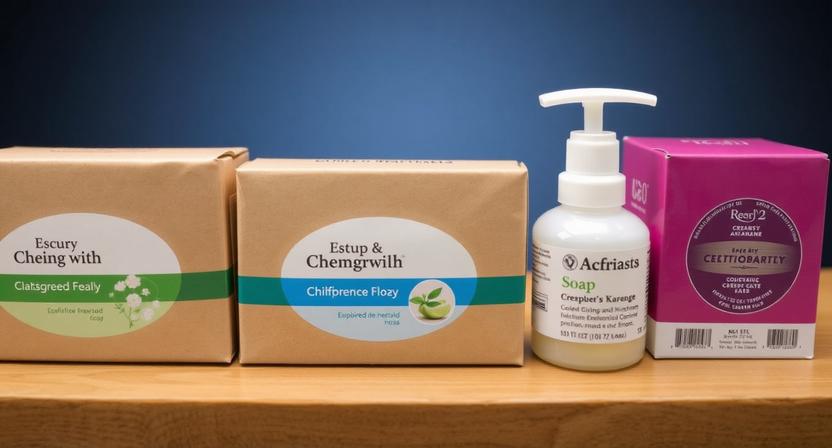
Proper packaging is essential for protecting your soap products, preserving its quality, and creating an appealing presentation. Requirements vary depending on the soap type and whether you are selling commercially or gifting personally.
| Requirement | Details |
|---|---|
| Curing First | Cold process and hot process soap must cure for 4–6 weeks before packaging to allow excess moisture to evaporate. Packaging uncured soap traps moisture, leading to rancidity (DOS) and soft bars. |
| Breathable Wrapping | During curing, soap should be stored on curing racks with airflow. Do not seal in plastic until fully cured. |
| Final Wrapping | Once cured, wrap in wax paper, glassine paper, or shrink wrap to protect from dust, humidity, and essential oil evaporation. |
| Requirement | Details |
|---|---|
| Seal Immediately | Melt and pour soap is glycerin-rich and attracts moisture from the air (sweating). Wrap tightly in shrink wrap or plastic wrap immediately after unmolding. |
| Avoid Humidity | Store in a cool, dry place. If sweating occurs, wipe dry and re-wrap. |
| Requirement | Details |
|---|---|
| Bottles & Pumps | Use PET or HDPE plastic bottles for liquid soap. Glass is also suitable but may be slippery in wet environments. |
| Seals | Foil seals or shrink bands provide tamper-evident protection for commercial sales. |
| Labeling | Waterproof labels are essential as liquid soap is used near water. |
If selling soap, most regions require the following on the label:
| Requirement | Description |
|---|---|
| Product Identity | “Soap” or specific type (e.g., “Goat Milk Soap”) |
| Net Weight | In ounces and grams |
| Ingredients | Listed in descending order of predominance (INCI names recommended) |
| Business Information | Name and address of the manufacturer or distributor |
| Warning | “For external use only” is common practice |
| Option | Description |
|---|---|
| Naked Soap | No packaging; sold as unwrapped bars with a paper band label |
| Cardboard Boxes | Biodegradable and recyclable; ideal for retail display |
| Glassine Bags | Grease-resistant and compostable; great for farmers markets |
| Shrink Wrap Bands | Bands made from recyclable LDPE or biolefin alternatives |
| Soap Type | Packaging Need | Best Option |
|---|---|---|
| Cold Process | Cured bar protection | Glassine paper + paper band or shrink wrap |
| Hot Process | Moisture barrier | Shrink wrap or wax paper + labeled box |
| Melt & Pour | Sweat prevention | Immediate shrink wrap or plastic wrap |
| Liquid Soap | Leak-proof dispensing | PET bottle with pump + waterproof label |
| Gift / Retail | Presentation | Custom printed boxes or kraft paper boxes |
Selecting the right packaging supplier ensures your soap arrives safely and presents professionally. Quality packaging options—ranging from shrink wrap bands and glassine bags to custom printed boxes and waterproof labels—are essential for protecting your product and enhancing its appeal.
For a wide selection of soap packaging solutions, including eco-friendly materials, custom labeling, and retail-ready boxes. PackagingVista offers a comprehensive range of supplies suitable for both small-batch artisans and commercial soap makers. Whether you need breathable curing racks, tamper-evident seals, or branded gift boxes, PackagingVista provides packaging options that protect your product while maintaining its presentation quality.
| Type | Lye Type | Difficulty | Cure Time | Best For |
|---|---|---|---|---|
| Cold Process | NaOH | Intermediate | 4–6 Weeks | Customization, swirls, natural ingredients |
| Hot Process | NaOH | Intermediate | 1–3 Days (or none) | Rustic look, ready-to-use quickly, hard bars |
| Melt & Pour | None | Beginner | 1–2 Hours | Crafting, kids, gifts, intricate embeds |
| Tallow/Lard Soap | NaOH | Intermediate | 4–6 Weeks | Traditional, sensitive skin, hard bars |
| Liquid Soap | KOH | Advanced | 2–4 Weeks | Hand soap, shampoo, bulk dispensers |
| Coconut Oil Soap | NaOH | Intermediate | 4–6 Weeks | Oily skin, kitchen/laundry bars |
If you are making cold process, hot process, liquid soap, or any soap that requires handling lye (sodium hydroxide or potassium hydroxide), always run your recipe through a lye calculator (such as SoapCalc.net or Bramble Berry’s calculator) to ensure the exact ratio of lye to water to oils is correct based on the specific brands and weights of oils you are using. Lye is caustic and requires proper safety equipment including gloves, goggles, and adequate ventilation.