
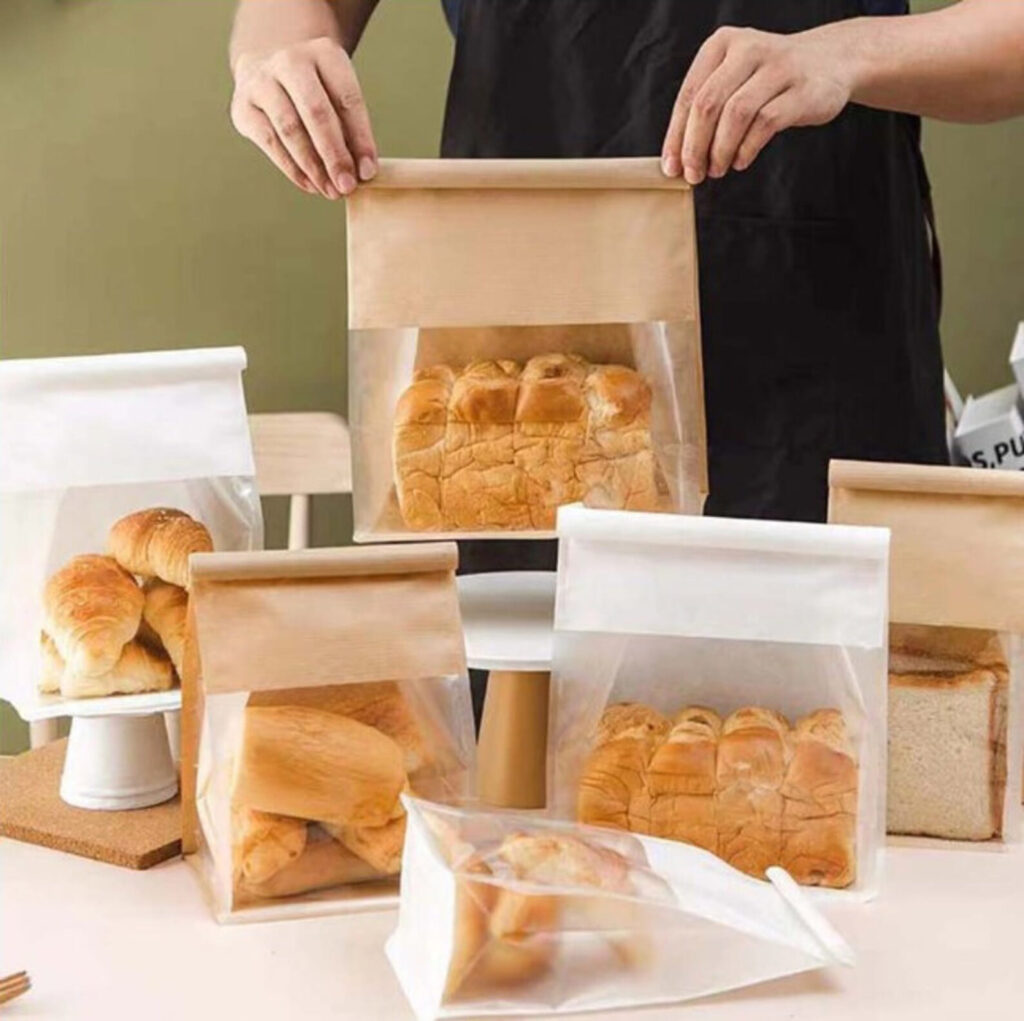
If you run a bakery, you know packaging matters. You spend hours on your product. The croissants, the cookies, the granola. You want them to stay fresh. You also want them to look good. Customers notice the bag before they taste the food.
These are not just any bags. They are paper bags with a little metal strip at the top. You fold the top over the strip, and it closes tight. To open, you pull it apart. No tape. No twist ties that get lost. No plastic clips.
For a bakery selling its own products, this is a simple tool that does a lot of work.
The bag itself is made from paper. Usually, kraft paper, which is the brown material you see at coffee shops. But you can get white paper too. The inside often has a lining. That lining is what keeps the food fresh. It locks out air and moisture.
The “tin tie” is the thin metal strip sewn into the top edge of the bag. It is flexible. You bend it to seal the bag. You bend it again to open. It lasts for many uses. A customer can open the bag at home, take out a cookie, and close it back up. The product stays fresh until the last piece is gone.
These bags come in different sizes. Small ones for biscotti or cookies. Medium for a loaf of bread or a bag of bagels. Large for coffee beans or multiple pastries.
You sell your own product. That means your name is on everything. The bag is part of your brand. It is the last thing the customer touches before they leave your shop. It is the first thing they see when they reach for a snack at home.
A plain brown bag does the job. But a custom bag does more. It tells people who you are. It reminds them where they bought it. It makes them want to come back.
Baked goods go stale fast. A croissant from yesterday is not the same as one from this morning. Your customers know that. If they buy a bag of cookies and they are soft the next day, they might think the product is bad. But if the cookies stay crisp, they trust your bakery.
Tin tie bags protect your product. The lining inside is a barrier. It keeps humidity out. It keeps the baked good’s texture right. And the tin tie makes sure the seal is tight every time—no half-crimped edges. No air sneaking in.
Customers appreciate that. They can seal the bag properly without any fuss. It is one less thing for them to think about.
This is where you make the bag yours.
You can print your logo on the front. Your bakery name. Your address. Maybe a little illustration of a baguette or a cake. Simple and clean.
You can also add a tagline. Something short like “Baked Fresh Daily” or “Family Recipe Since 1982.” Nothing too wordy. Just enough to connect with the person holding the bag.
The printing goes right on the paper. It does not peel off like a sticker. It becomes part of the bag.
When people walk down the street carrying your custom bag, other people see it. It is free advertising. A person sees your logo, thinks about baked goods, and remembers your shop. They may stop in later that week.
Some bakeries use plastic bags or plastic wrap. Those work, but they have downsides. Plastic does not breathe. It can trap moisture and make bread soggy. Plastic also does not look as nice. A paper bag with a custom print feels more like a gift. It feels like you care about the presentation.
Customers notice that. They take pictures of pretty packaging and post them online. That is free marketing for you.
Tin tie bags are also more sustainable than plastic. Paper breaks down. The metal tie is small but can be reused. Customers can wash it and use it to close other bags at home. Many people keep them. They are useful.
If your customers care about the environment—and many do—this matters. You show them you are making a choice that matches their values.
You can use tin tie bags for almost everything.
You can even use them behind the counter. Scoop product into the bag, fold the top, and hand it to the customer. It is fast. No boxes to fold. No tape guns.
When you order custom tin tie bags, you make a few choices.
Size. Measure your most common product. A cookie bag might be 5 inches wide by 9 inches tall. A bread bag might be 8 inches wide by 14 inches tall. Think about how many items you usually put in one bag. Go a little bigger than you think you need. Too small is frustrating.
Paper color. Kraft brown is classic. It looks rustic and natural. White looks clean and modern. Both work. Choose what fits your brand.
Lining. Most bags come with a lining. Usually wax or a plastic coating inside. That is what keeps the food fresh. If you are selling dry goods like biscotti, this is important. If you are selling bread with a hard crust, you might want a bag that breathes a little. Talk to your supplier about options.
Print area. You can print on the front only. Or all around. One side is usually enough for a logo and basic info. It costs less too.
Minimum order. Most printers have a minimum quantity. Usually, a few hundred bags. That sounds like a lot, but you will go through them faster than you think. Especially if you have a busy shop, order enough to last a few months.
Custom bags cost more than plain ones. But they are not luxury items. You can get them at a reasonable price if you order in quantity.
Think of it as a marketing expense. A plain bag holds food. A custom bag holds food and advertises your business. Every bag that leaves your shop is a small billboard.
If you are on a tight budget, start with one size. Maybe the size you use for your most popular item. See how customers respond. Then add more sizes later.
Tin tie bags work well, but they are not perfect for everything.
If you sell sticky pastries with glaze or icing, the inside of the bag can get messy. The lining helps, but if the product is very wet, consider putting it in a small paper sleeve first.
If you sell hot food, let it cool before bagging. Steam inside the bag can make the lining sweat. That can make the paper soft. Cool product first, then the bag.
Also, train your staff to close the bag properly. Fold the top over the tin tie, then press down. It takes two seconds. But if someone folds it without using the tie, the seal is not tight. A quick lesson for new hires goes a long way.
A small bakery in a busy neighborhood switched from plastic bags to custom tin tie bags. They printed their logo and a simple line drawing of a wheat stalk on kraft paper. They used them for cookies and bread.
Customers started commenting on the bags. They said they liked that they could reseal them. A few regulars said they reused the bags for lunches or for storing other food at home. The bakery saw an increase in repeat business. Not just because of the bags, but the bags helped. They made the experience feel more professional.
Custom tin tie bags are practical. They keep food fresh. They look good. They carry your name out into the world.
For a bakery selling its own product, they are one of the simplest tools you can use. No complicated machinery. No special training. Just a bag that works.
If you want to make a good impression and protect your product at the same time, this is a solid choice. Start with one size. Add your logo. See how it feels.
Your customers will notice. And they will remember your name the next time they want a good loaf of bread or a fresh cookie.