
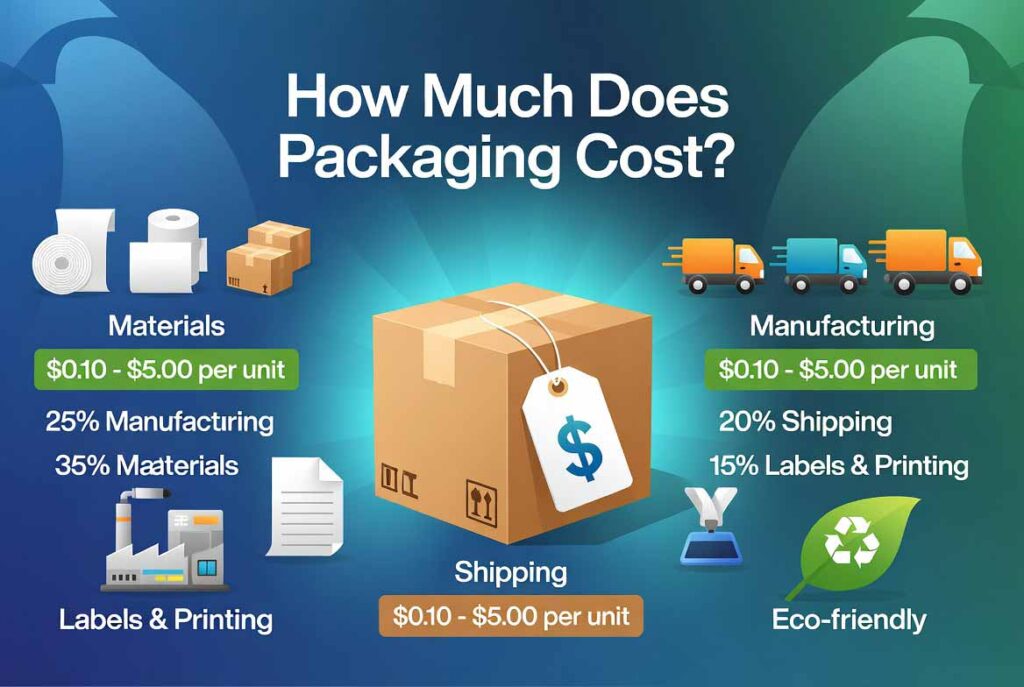
Packaging is no longer a secondary expense. It is a strategic investment that directly impacts product protection, branding, logistics efficiency, and customer experience. We present a comprehensive, data-backed analysis of packaging costs, breaking down every component that influences pricing and offering actionable insights to optimize expenses without compromising quality.
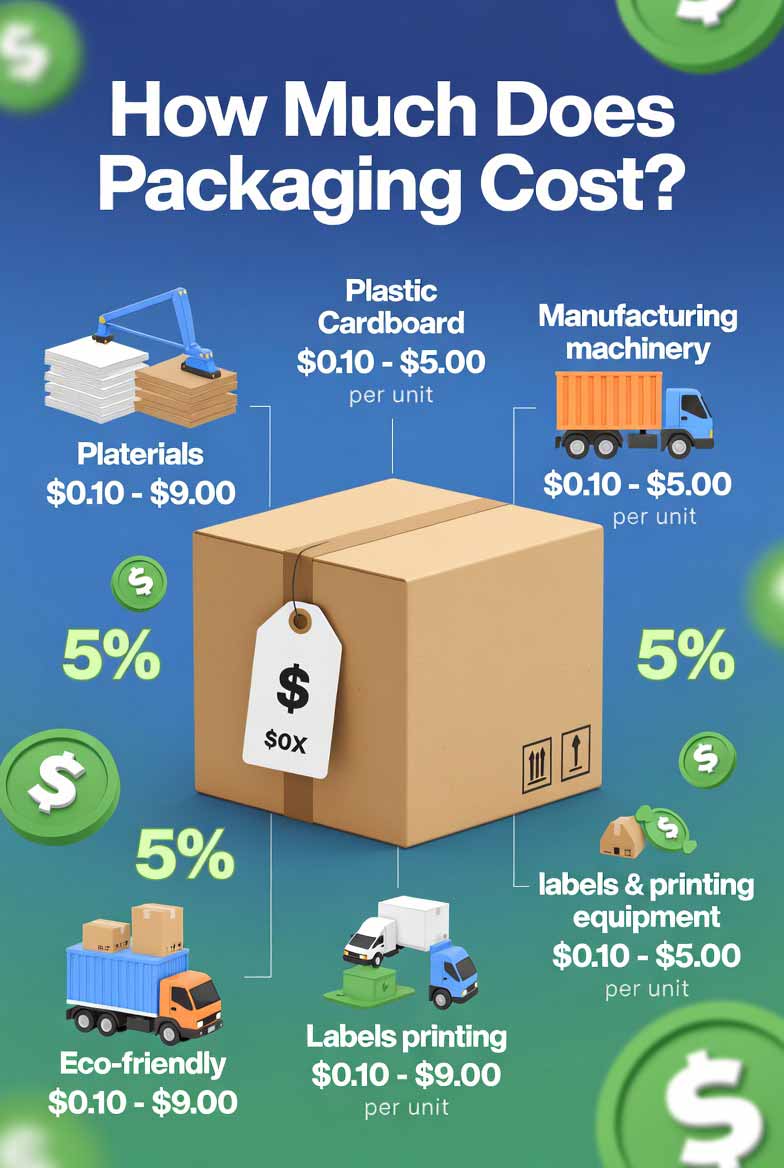
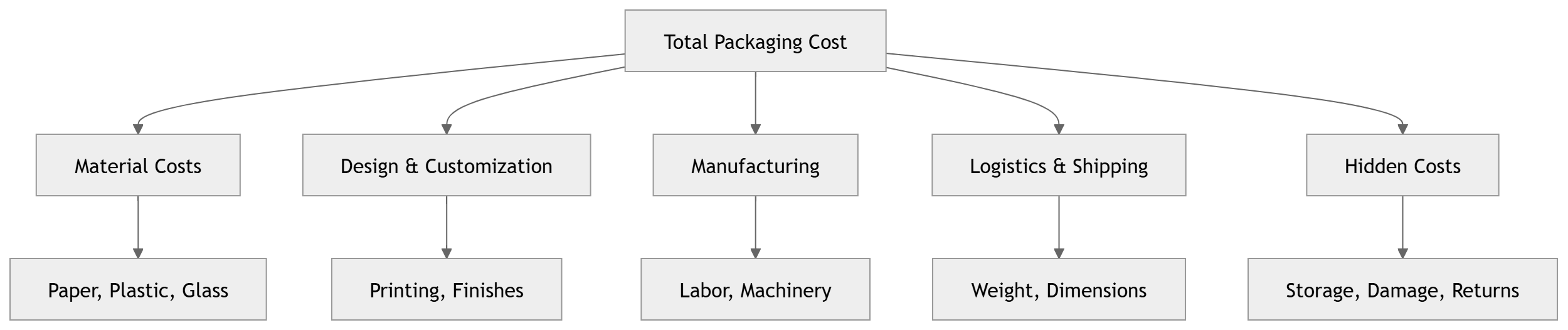
Packaging costs vary significantly depending on materials, design complexity, production scale, and logistics requirements. We categorize these costs into three primary areas:
Each component contributes to the final packaging price and must be analyzed holistically for accurate budgeting.
Material selection is the most influential factor in packaging cost. The type, quality, and sustainability of materials directly affect pricing.
| Material Type | Cost Level | Key Features |
|---|---|---|
| Corrugated Cardboard | Low–Medium | Durable, lightweight, recyclable |
| Kraft Paper | Low | Eco-friendly, cost-effective |
| Rigid Boxes | High | Premium look, strong structure |
| Plastic (PET, PVC) | Medium | Flexible, moisture-resistant |
| Glass | High | Premium feel, fragile |
| Metal (Aluminum, Tin) | High | Durable, long shelf life |
Bulk purchasing significantly reduces material costs, often by 20–40%, depending on supplier agreements.
Custom packaging enhances brand identity but introduces additional costs.
| Design Element | Cost Impact |
|---|---|
| Basic Printing | Low |
| Full-Color Printing | Medium |
| Premium Finishes | High |
| Custom Inserts | Medium–High |
Minimalist designs with strategic branding can reduce costs while maintaining premium appeal.
Manufacturing costs depend on production volume, machinery, and labor.
| Quantity Ordered | Cost Per Unit |
|---|---|
| 500 units | $1.20 |
| 5,000 units | $0.65 |
| 50,000 units | $0.30 |
Scaling production reduces per-unit cost due to economies of scale.
Different packaging formats come with distinct cost structures.
Direct contact with the product (e.g., bottles, jars)
Outer packaging (e.g., boxes, cartons)
Bulk transport packaging (e.g., pallets, shrink wrap)
Packaging directly affects shipping expenses through weight, size, and durability.
Optimized packaging design can reduce shipping costs by up to 25%.
Eco-friendly packaging is increasingly demanded but may carry higher upfront costs.
| Type | Cost Level | Benefit |
|---|---|---|
| Traditional Packaging | Low | Affordable |
| Sustainable Packaging | Medium–High | Brand value, compliance |
Sustainable packaging often reduces long-term costs through regulatory compliance and brand loyalty.
Many businesses overlook indirect costs that impact total expenditure.
Investing in quality packaging reduces hidden costs significantly.
We implement proven strategies to minimize packaging expenses while maintaining quality.
For a mid-sized eCommerce business:
With optimization strategies applied:
We prioritize:
Packaging is not just a cost center—it is a profit lever when managed strategically.
Packaging costs are multifaceted, influenced by materials, design, manufacturing, and logistics. By analyzing each component and implementing optimization strategies, we achieve a balance between cost efficiency and premium quality. Businesses that approach packaging strategically gain a competitive advantage in both cost control and brand perception.