Blog · By The Packaging Vista Team · May 11, 2026
Spot UV vs Foil: Which Premium Print Finish Creates Better Packaging Impact?
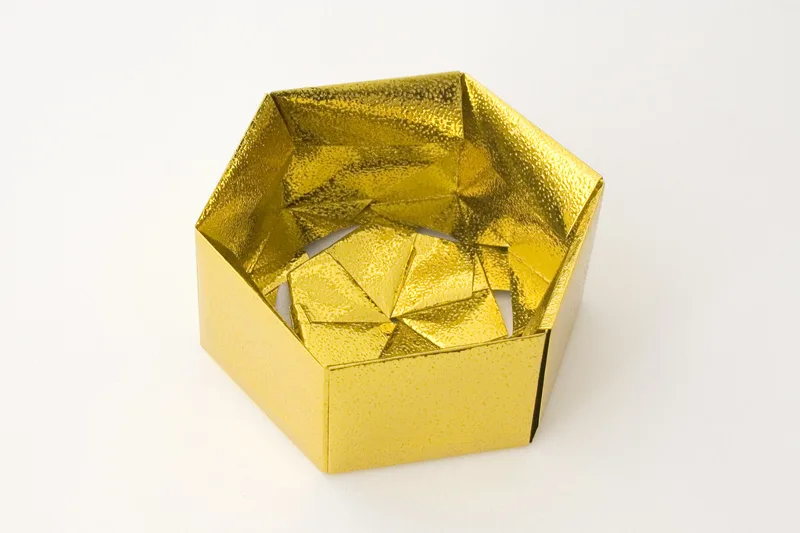
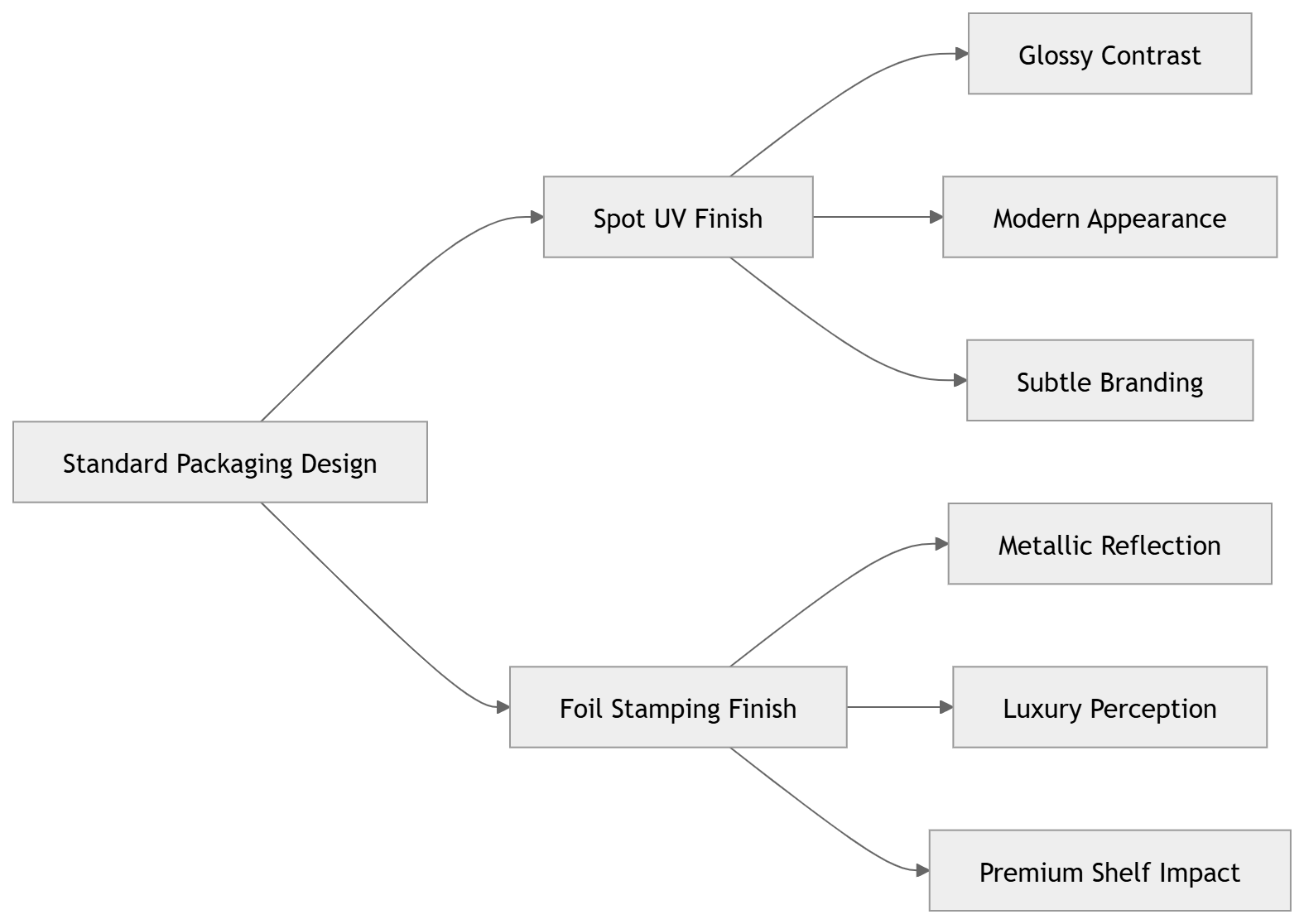
Among the most powerful finishing techniques, Spot UV vs Foil Stamping consistently dominate premium packaging design. Luxury packaging is no longer optional in competitive retail markets. Brands that invest in premium print finishes gain stronger shelf appeal, higher perceived value, and better customer engagement.
Both finishes transform ordinary packaging into visually compelling brand assets, but they deliver dramatically different visual effects, tactile experiences, production costs, and branding outcomes.
What Is Spot UV?
Spot UV is a specialized coating technique where ultraviolet-cured varnish is applied to selected areas of printed packaging. The coating creates a glossy, raised, and reflective effect that contrasts with matte or uncoated surfaces.
Unlike full UV coating, Spot UV highlights specific design elements such as:
- Logos
- Brand names
- Product images
- Typography
- Patterns
- Graphics
The finish creates a sleek and modern appearance while adding tactile depth to packaging.
How Spot UV Works
The process involves:
- Printing the packaging artwork
- Applying a matte or soft-touch lamination
- Using a printing plate or digital mask
- Applying UV varnish to targeted areas
- Curing the coating with ultraviolet light
The result is a glossy finish that catches light and enhances visual contrast.
What Is Foil Stamping?
Foil stamping is a premium printing process that transfers metallic or pigmented foil onto packaging surfaces using heat and pressure.
The process creates reflective, luxurious, and elegant effects that instantly elevate brand perception.
Foil stamping is available in multiple finishes, including:
- Gold foil
- Silver foil
- Rose gold foil
- Holographic foil
- Copper foil
- Matte foil
- Colored metallic foil
Foil is commonly used for high-end retail packaging, cosmetics, jewelry boxes, electronics packaging, invitations, and luxury branding.
How Foil Stamping Works
The foil stamping process includes:
- Creating a custom metal die
- Heating the die
- Positioning metallic foil between the die and packaging material
- Applying pressure and heat
- Bonding the foil to selected areas
The outcome is a reflective metallic design with sharp detail and premium visual appeal.
Spot UV vs Foil: Core Differences
| Feature | Spot UV | Foil Stamping |
|---|---|---|
| Finish Appearance | Glossy and clear | Metallic and reflective |
| Texture | Smooth or raised | Slightly embossed feel |
| Visual Impact | Modern and subtle | Luxurious and bold |
| Material Effect | Transparent shine | Metallic color transfer |
| Best For | Contemporary branding | Premium luxury branding |
| Cost | More affordable | Higher production cost |
| Durability | Good scratch resistance | Excellent durability |
| Color Options | Clear gloss only | Multiple metallic colors |
| Production Speed | Faster | Slower |
| Eco-Friendliness | Moderate | Depends on foil type |
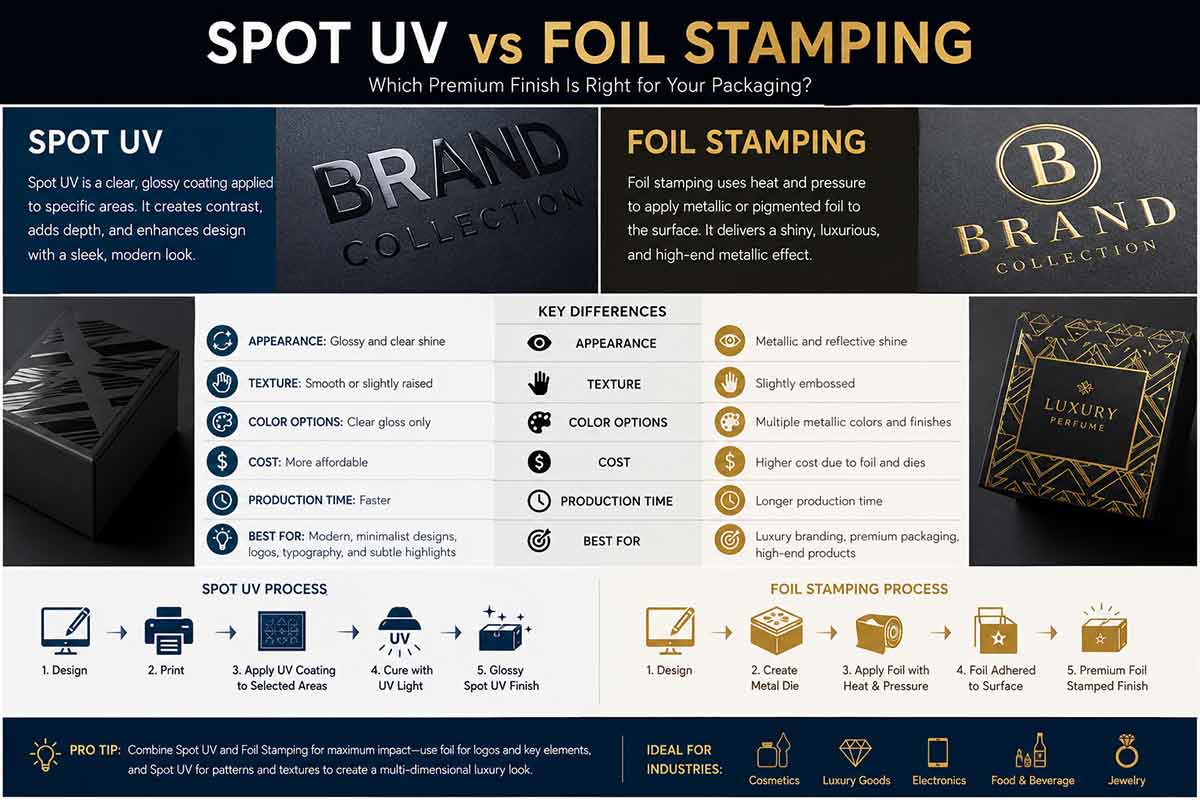
Visual Comparison Between Spot UV vs Foil
 Spot UV vs Foil
Advantages of Spot UV Packaging
Enhanced Contrast
Spot UV creates dramatic contrast on matte or soft-touch surfaces. The glossy coating naturally draws attention to important branding elements.
Modern and Minimalist Appeal
Brands targeting modern aesthetics often choose Spot UV because it looks sophisticated without appearing excessive.
Cost-Effective Premium Finish
Compared to foil stamping, Spot UV offers luxury enhancement at a lower cost, making it suitable for medium-volume packaging projects.
Strong Brand Highlighting
Spot UV effectively emphasizes:
- Product names
- Logos
- Visual icons
- Decorative patterns
Faster Turnaround
Production times are typically shorter because the process does not require metallic foil application.
Advantages of Foil Stamping Packaging
Luxury Brand Positioning
Foil stamping immediately communicates exclusivity and sophistication.
Luxury brands frequently use metallic finishes to enhance:
- Prestige
- Product value
- Customer perception
High Reflectivity
Foil reflects light more intensely than Spot UV, increasing visibility on retail shelves.
Superior Decorative Impact
Foil stamping produces stronger visual emphasis and premium aesthetics.
Extensive Color Variety
Foil finishes include:
- Metallic gold
- Metallic silver
- Holographic effects
- Custom colors
This flexibility supports unique brand identities.
Excellent Durability
Foil adheres firmly to packaging surfaces and maintains appearance over time.
When to Use Spot UV
Spot UV works best when brands want:
- Subtle sophistication
- Contemporary aesthetics
- Minimalist packaging
- Affordable premium enhancement
- Matte and gloss contrast
Ideal Industries for Spot UV
Cosmetics Packaging
Beauty brands often use Spot UV on soft-touch boxes for elegant contrast.
Technology Packaging
Electronics brands prefer sleek finishes that communicate innovation.
CBD Packaging
Modern wellness brands use Spot UV for clean and refined branding.
Corporate Print Materials
Business cards, brochures, and presentation folders frequently feature Spot UV accents.
When to Use Foil Stamping
Foil stamping is ideal for brands focused on luxury positioning and strong visual impact.
Best Industries for Foil Packaging
Jewelry Packaging
Gold and silver foil enhance perceived value and exclusivity.
Perfume Boxes
Luxury fragrance brands rely heavily on foil accents.
Premium Food Packaging
Chocolate, wine, and gourmet products often use metallic finishes.
Wedding Invitations
Foil stamping adds elegance and sophistication to printed invitations.
Spot UV vs Foil Cost Comparison
Pricing depends on:
- Packaging size
- Material
- Quantity
- Finish complexity
- Custom die requirements
Spot UV Costs
Spot UV is generally more economical because:
- No metallic foil materials are required
- Setup is simpler
- Production speed is faster
It is highly cost-effective for medium and large print runs.
Foil Stamping Costs
Foil stamping costs more due to:
- Metal die creation
- Foil materials
- Heat transfer process
- Longer setup times
However, the premium appearance often justifies the investment for luxury brands.
Which Finish Creates Better Shelf Appeal?
Foil stamping usually generates stronger shelf visibility because metallic surfaces reflect light aggressively.
However, Spot UV can outperform foil in minimalist packaging designs where subtle elegance matters more than flashy presentation.
The better choice depends on:
- Brand identity
- Target audience
- Product positioning
- Packaging style
Combining Spot UV and Foil Together
Many premium brands combine both finishes to maximize visual impact.
For example:
- Gold foil logo
- Spot UV decorative patterns
- Matte laminated background
This layered finishing strategy creates multidimensional packaging that feels exceptionally luxurious.
Benefits of Combining Both Finishes
- Increased depth
- Stronger contrast
- Enhanced tactile experience
- Superior brand recognition
- Premium unboxing experience
Spot UV vs Foil for Different Packaging Materials
| Packaging Material | Spot UV Compatibility | Foil Compatibility |
|---|---|---|
| Cardboard | Excellent | Excellent |
| Kraft Paper | Moderate | Very Good |
| Rigid Boxes | Excellent | Excellent |
| Corrugated Packaging | Good | Moderate |
| Soft-Touch Lamination | Outstanding | Outstanding |
Sustainability Considerations
Sustainable packaging continues to influence consumer purchasing behavior.
Spot UV Sustainability
Spot UV coatings can sometimes complicate recycling depending on coating thickness and material composition.
However, modern UV coatings are becoming increasingly eco-friendly.
Foil Sustainability
Foil stamping can affect recyclability if excessive metallic layers are applied.
Some manufacturers now offer recyclable and biodegradable foil solutions.
Brands seeking environmentally responsible packaging should consult suppliers about eco-certified finishing materials.
Common Design Mistakes to Avoid
Overusing Spot UV
Applying Spot UV excessively reduces contrast effectiveness and weakens the premium effect.
Using Foil on Complex Small Details
Very fine details may lose clarity during foil transfer.
Ignoring Packaging Material Compatibility
Certain paper textures and coatings affect finish quality.
Poor Color Coordination
Foil colors should complement the overall packaging palette.
How to Choose Between Spot UV vs Foil
Choose Spot UV If You Want:
- Modern aesthetics
- Subtle luxury
- Budget-friendly enhancement
- Sleek minimalist branding
- Matte and gloss contrast
Choose Foil If You Want:
- Strong luxury perception
- Metallic brilliance
- High-end shelf impact
- Premium customer experience
- Bold branding emphasis
Future Trends in Premium Packaging Finishes
Packaging innovation continues evolving toward:
- Holographic foil
- Raised Spot UV
- Soft-touch combinations
- Sustainable metallic effects
- Digital embellishment printing
- Interactive textured finishes
Brands investing in premium finishing technologies gain stronger market differentiation and higher consumer engagement.
Final Verdict: Spot UV vs Foil
Spot UV vs foil stamping both elevate packaging quality, but they serve different branding objectives.
Spot UV delivers refined sophistication, subtle contrast, and cost-effective premium enhancement. It works exceptionally well for modern, minimalist, and contemporary packaging styles.
Foil stamping creates luxurious brilliance, superior shelf visibility, and high-end brand perception. It remains the preferred choice for luxury retail packaging and premium product presentation.
The most effective packaging strategy often combines both finishes to achieve layered visual depth and unforgettable customer experiences.
Brands that align finishing techniques with their audience, product category, and visual identity consistently create custom printed boxes that stand out in competitive retail environments.
For the complete picture on materials, box styles, and design, see our box finishes guide.