Blog · By The Packaging Vista Team · June 20, 2026
Spot UV: How to Make Your Logo Pop
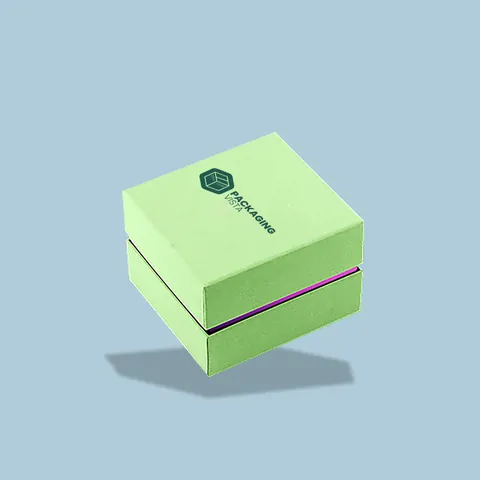
Spot UV is a glossy UV-cured coat put on set parts of a box – a logo, a pattern, a word – not the whole side.
Over a matte or soft-touch base it makes a strong shiny-vs-flat gap that catches the light as the box turns in your hand. It is one of the top-value ways to make a logo pop. That is why spot UV shows up on everything from beauty cartons to luxe retail boxes.
This piece goes deeper than our main box finishes guide. It covers how it works, raised spot UV, how it stacks up to foil, and when to use it.
How to prepare a spot UV file, step by step:
- Duplicate your art on a new layer named “SpotUV”.
- Fill the shapes you want glossy with a solid spot color (100% Magenta is common).
- Set the SpotUV swatch to Overprint so it does not knock out artwork below.
- Keep shapes bold – fine hairlines and small type can blur.
- Register carefully so the UV lines up with the printed art beneath.
- Pick your effect: gloss on matte, or tone-on-tone watermark.
- Request a proof that shows the UV layer before running the full order.
How spot UV works
A clear gloss coat is put only on picked parts of the printed box. It is cured fast under UV light. The coat is lined up to your art. So only the parts you pick – the logo, a pattern, a headline – go glossy. Everything around them stays flat.
Spot UV adds shine and pop but no color. So it is a quiet, sharp touch, not a loud one. It works best on a matte or soft-touch base. The gap between the flat field and the glossy touch shows most there. On an already-glossy box the effect largely fades.
Raised (textured) spot UV
A thicker coat makes raised spot UV. It adds a touch-first, slightly domed feel you can catch with a fingertip as well as see.
It is a budget-friendly way to get a 3D, embossed-style effect with no embossing die – nice for a logo, a border, or a pattern you want people to notice by touch. Raised spot UV works well in luxury beauty and gift packaging. The unboxing is part of the product, and touch cues signal quality.
Spot UV vs. foil
The two finishes are often mixed up because both add shine. But they do different jobs. Spot UV is clear gloss – shine, no color – so it reads as quiet and modern.
Foil is metal. It adds shine and a metal color (gold, silver, rose, copper, or holographic). So it reads more openly luxe and eye-catching.
Spot UV is quieter and often lower cost. Foil is bolder and signals luxe at a glance. Many boxes use both on separate parts – for example, foil on the brand name and clear spot UV on a background pattern – to get pop without clutter.
| Spot UV | Foil stamping | |
|---|---|---|
| Effect | Clear gloss shine, no color | Metallic shine with color |
| Look | Subtle, modern, understated | Bold, overtly luxe |
| Texture option | Raised spot UV available | Flat; can pair with emboss |
| Relative cost | Usually lower | Usually higher |
| Best base | Matte / soft-touch | Any, including dark stocks |
When to use spot UV
Spot UV is a fit for lifting a logo or pattern on a matte box without the cost of foil. It fits almost any luxe carton – cosmetics, supplements, retail, gift, and sub-boxes all gain from a glossy touch that rewards a closer look.
Reach for spot UV when you want a finish that feels planned, not flashy. Or when your brand palette is muted and metal would clash. Or when you want a touch cue (with raised UV) on a budget. See the range of cartons it works on at custom boxes with spot UV and the broader luxe picks at luxury rigid gift boxes.
Designing artwork for spot UV
Spot UV is set as a separate layer in your art. It is usually a solid spot color that tells us which parts get the coat.
A few tips for a clean spot UV layer:
- Keep shapes bold – fine hairlines and tiny type can blur under the coat.
- Register carefully – the print and the UV layer must line up on press.
- Pick your effect – gloss-on-matte (most common) or tone-on-tone for a watermark look.
- Supply UV as a spot color – a solid vector shape marked as a separate layer.
- Leave a small halo – a hair of matte around each UV shape keeps edges crisp.
- Proof before running – we supply a proof so the finish is confirmed before the full run.
Our free design help and free dieline include setting up the spot UV layer right.
Spot UV with other finishes
Spot UV layers cleanly with other finishes. The classic pair is matte or soft-touch as the base with glossy spot UV on the logo.
You can also mix it with embossing for a logo that is both raised and glossy. Or use it next to foil on separate parts. The rule of thumb is restraint. One base finish plus one or two touches looks planned. Stacking every finish onto one panel reads as busy.
Where spot UV works hardest
Spot UV earns its keep on the surfaces buyers look at and handle most.
On a retail carton, gloss the brand name, the logo, or a signature pattern. It catches the light as the box turns on a shelf. On a mailer or sub-box, spot UV on the lid or inside rewards the unboxing moment. It shows up well in photos and video. On business cards and folders, a spot-gloss logo over a matte field reads as polished and planned.
The common thread is pop. Spot UV does its best work where there is a flat, matte field for the gloss to play against. So plan your matte and gloss zones as a pair. Do not gloss-coat busy, detailed areas where the effect gets lost.
Spot UV and your budget
One reason spot UV is so popular is value. It gives a clear luxe cue at a lower cost than foil or embossing. Raised spot UV adds a touch, 3D effect with no embossing die.
That makes it a smart first finish for a brand that wants to look lifted without a big finish budget. We charge no die or plate fees and run from a 100-box minimum. So you can add spot UV to a small run and still keep costs set. Pricing is quote-based on your size, stock, and finish mix. If you later want to step up, spot UV layers cleanly with foil and embossing on the same box.
Frequently asked questions
What is the difference between spot UV and a gloss laminate?
Gloss laminate coats the whole box. Spot UV coats only picked parts. The whole point of spot UV is the gap between the glossy touch and a flat matte or soft-touch base. So it is put on where you want, not all over.
Is raised spot UV the same as embossing?
No. Raised spot UV builds a domed, glossy feel from coat and needs no die. So it costs less. Embossing presses the board into a 3D shape with a metal die. You can mix the two for a raised, glossy effect.
Does spot UV add color to my logo?
No – spot UV is clear. It adds shine and pop only. If you want a metal color, pick foil stamping. Or use both on different parts.
What is spot UV in packaging printing?
Spot UV is a clear, glossy, UV-cured coat applied only to picked parts of a printed box – a logo, a pattern, or a word – not the whole side. Over a matte or soft-touch base it makes a shiny-vs-flat gap that catches the light as the box turns. It adds shine and pop but no color.
How do I choose between spot UV, foil, and embossing?
Pick spot UV for a quiet, modern shine on a matte box – lowest cost, no color. Pick foil for bold metal color that reads luxe at a glance – gold, silver, rose, or holographic. Pick embossing for a pressed 3D shape with no shine. Many premium boxes mix two – foil on the logo plus spot UV on a background pattern. Restraint wins.
How much does spot UV add to the cost of a box?
Spot UV is usually the lowest-cost premium finish and adds less per box than foil or embossing. Exact price depends on box size, stock, coverage area, and run length. At PackagingVista there are no die or plate fees, and the minimum is 100 boxes, so you can trial spot UV on a small run. Send your art and quantity for a same-day quote.
Is spot UV worth it for a small brand?
Yes, for most matte cartons. It is the cheapest way to get a clear luxe cue – the glossy logo on a matte field reads as planned and premium. Raised spot UV even gives a touch, 3D effect with no embossing die. If your palette is muted or you want restraint rather than metal flash, spot UV often beats foil for the money.
What is spot UV on a business card?
Spot UV on a business card is a clear glossy coating applied only to selected elements — the logo, the name, an accent shape — over a matte or soft-touch card base. The glossy highlight catches the light as the card turns in a client’s hand and signals craft without adding another ink color.
Standard formats: 16pt or 32pt matte-laminated card with spot UV on the brand mark; 32pt black suede-touch card with spot UV on the name; triplex card (black-core 32pt) with spot UV on both sides. It’s the most-common premium finish for business cards after soft-touch lamination.
What is a spot UV business card?
A spot UV business card is a business card with a clear glossy spot-UV coating applied only to selected areas (logo, name, pattern) over a matte or soft-touch base. The gloss-on-matte contrast catches light and reads as premium. Common on prestige brand cards, agency decks, high-end real-estate cards, and legal/consulting firm cards — anywhere the first physical touchpoint has to signal quality.
What is a spot UV finish?
A spot UV finish is the result of applying a clear, UV-cured glossy coating to targeted areas of a printed piece (business card, box, folder, brochure) over a matte or soft-touch base, so only those targeted areas appear glossy while everything else stays flat.
The finish adds shine and tactile pop (especially on raised spot UV) without adding color. It’s one of three dominant premium print finishes alongside foil stamping and embossing.
What is spot UV coating in printing?
Spot UV coating in printing is a UV-cured liquid clear coating applied selectively to printed material via a plate or inkjet nozzle, then cured instantly under UV light. The coating sits on top of the ink layer, forming a hard, glossy, scratch-resistant surface precisely where applied.
Standard spot UV coating is ~5–15 microns thick; raised (textured) spot UV builds the layer to 60–150 microns for a tactile 3D feel.
What does spot UV mean?
"Spot UV" means "selective (spot) application of a UV-cured coating" — the "UV" refers to the ultraviolet-cured chemistry of the clear varnish, not to anything on the design or any special color. It’s called "spot" because the coating is applied to spots (specific selected areas) rather than the entire sheet. The alternative is "flood UV," where the UV coating covers the entire printed surface.
How does spot UV work?
Spot UV is a two-pass finishing process. Pass 1: the printed sheet (with CMYK or Pantone artwork) exits the press and is laminated or coated with the base finish (matte, soft-touch). Pass 2: the sheet enters the spot UV station, where a plate or inkjet head applies a thin layer of UV-cured clear varnish only to the areas marked on the SpotUV layer in the artwork file.
The varnish is cured in milliseconds under UV lamps, bonding the coating permanently to the surface. The result: a hard, glossy, perfectly-registered highlight on the elements chosen in the design.
What is UV spot on business cards?
"UV spot" is just a reversed phrasing of "spot UV" and means the same thing — a selectively-applied clear glossy UV coating on specific elements of a business card. The industry-standard phrasing is "spot UV" or "SPOT UV coating."
How do you make spot UV business cards?
Three steps in the artwork, four at the printer. Artwork: (1) design the card in a vector tool (Illustrator, Affinity Designer) at 300 DPI with 1/8-inch bleed; (2) create a new layer named "SpotUV" and draw the elements you want glossy as solid 100% Magenta shapes (the Magenta is a convention — the plate reads the shape, not the color); (3) export a press-ready PDF/X-1a with the SpotUV layer on top as a spot color.
Printer: (1) print the card on 16pt or 32pt card stock; (2) apply the base lamination (matte or soft-touch); (3) run the spot UV coating at the UV station per the SpotUV plate; (4) die-cut and finish. 100 cards at PV: no die or plate fees, 8–10 day turnaround.
How do you design raised spot UV business cards?
Same workflow as flat spot UV but keep elements bolder. Raised (textured) spot UV builds up to 150 microns thick, so fine detail (hairlines under 0.5pt, body text under 10pt) blurs or wicks at the edges. Design rules: (1) use raised spot UV on logo, monogram, name, or an accent shape — not on body copy; (2) keep stroke weights at 0.75pt or heavier; (3) leave 1/16-inch between raised spot UV areas and the trim edge; (4) pair with a matte or soft-touch base so the gloss-on-matte contrast carries the effect; (5) proof with the printer before full run so the raised feel matches expectation.
When should you use spot UV coating on printed materials?
Reach for spot UV when: (1) the piece will be held or handled (business cards, folders, premium cartons, invitations — places where the gloss-on-matte feel is noticed); (2) the base finish is matte or soft-touch so the contrast is strong; (3) the brand palette is muted and foil would clash; (4) you need a tactile cue on a budget (raised spot UV replaces embossing at lower cost); (5) the audience is design-aware (clients, buyers, premium shoppers).
Skip spot UV when the base is already glossy, when the artwork is busy with no quiet space for the gloss to pop, or when foil would be a better fit for the brand (bold, metallic, luxe).
Add spot UV to your box
Related reading from OLX Packaging: what spot UV is.
Tell us what you want to lift. We will set up and proof the spot UV before printing – with free design help, no die or plate fees, and a 100-box minimum. See the full finishes guide or compare with our foil stamping guide. Then request your free quote or contact our team.
Reviewed by Kate Johnson — Packaging Specialist
12+ years in folding carton, corrugated, and rigid-box production at US contract packaging houses; FDA 21 CFR 176.170 (food contact) + 21 CFR 701 (cosmetic) labeling expert; FEFCO code-literate structural reviewer; FSC Chain-of-Custody auditor; G7 GRACoL color-management training. Reviews every structural, material, and compliance spec on this page. Last reviewed: November 2026.