Custom Jewelry Boxes
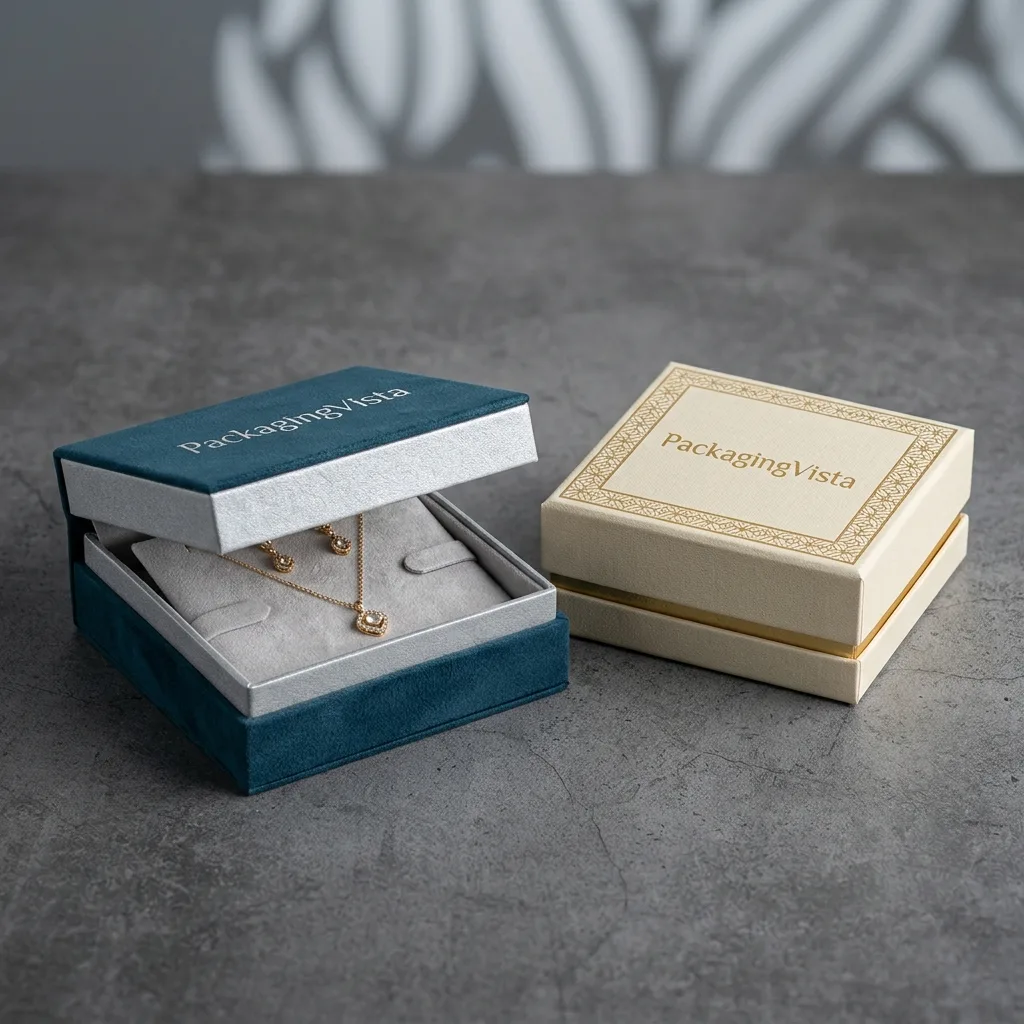
Custom jewelry boxes cradle rings, earrings, necklaces, bracelets, and watches. They also signal the value of the piece inside.
For a fine or fashion jeweler, the box does two jobs at once. It guards a small, easy-to-scratch item in transit and on the shelf. It also becomes the moment a buyer remembers when they lift the lid.
Whether you sell engagement rings at a counter or ship fashion pieces direct to buyers, the right box turns a sale into a keepsake. Many jewelers pair a rigid outer box with a printed sleeve or pouch. Most start from a rigid build. See our rigid boxes for the setup that gives jewelry packaging its heft.
Key takeaways
- The insert is the product: foam pads, flocked trays, ring slots, and satin necklace pads hold the piece in place and set the perceived value.
- Structure follows the piece: lid-and-base, magnetic-closure, hinged, and slide/drawer builds each suit different jewelry types and price points.
- Finish sells luxury: foil-stamped logos, embossing, soft-touch lamination, and spot UV are where fine-jewelry brands invest.
- Low commitment to start: 100-box minimum, no die or plate fees, and 8–10 business-day turnaround with free US shipping.
Packaging built around a small, high-value item
Jewelry is unlike most items a packaging shop handles. The piece is tiny. Margins are high. The buyer expects the box to feel as thoughtful as the piece.
Buyers of custom jewelry boxes range from solo bench jewelers and ring designers to online fashion-jewelry brands and studio makers on marketplaces. What ties them is this: the box must guard a fragile item from scratches, tarnish, and shift. It must also double as a branded retail and gifting shell. That dual role - safety plus display - drives nearly every stock and shape choice below.
Box styles that suit jewelry
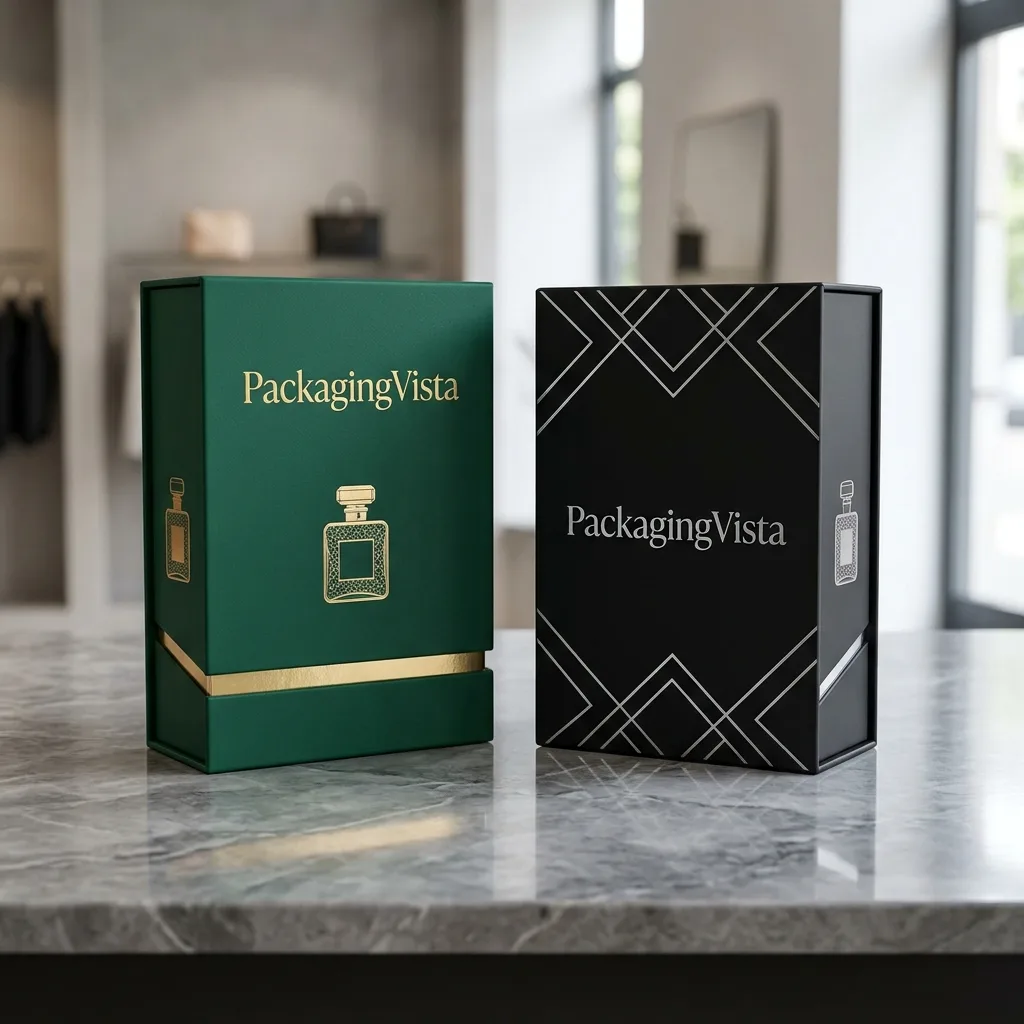
Fine jewelry often calls for a rigid magnetic-closure box. Its soft snap-shut lid reads as premium. It also keeps the piece safe without a clasp.
Lid-and-base (setup) rigid boxes are the classic ring-box and gift-box shape. Hinged rigid boxes mimic the old clamshell jewelry case for rings and earrings. Slide or drawer boxes stage a small reveal that works well for necklaces and bracelets.
For fashion and DTC price points, folding paperboard or kraft cartons keep the branded look at a fraction of the rigid cost. Weighing formats? Our box styles guide compares the trade-offs side by side.
Inserts: the heart of a jewelry box
For jewelry, the insert is not an add-on. It is the heart of the box. A weak or loose insert undercuts even the best lid. So we spec this first. Common picks include:
- Foam pads wrapped in satin or velvet-touch fabric for a soft, cushioned bed.
- Ring slots – a slotted foam or flocked bar that holds a ring upright at the reveal.
- Necklace and bracelet pads that let a chain drape without tangling.
- Flocked trays with molded cavities for earring pairs, cufflinks, or watch heads.
Choosing the right insert is where unboxing is won or lost; our guide to custom inserts and unboxing walks through matching cavity depth and material to the piece.
Branding and finishes that read as luxury
Jewelry brands lean harder on finish than almost any other category. The box must match the craft of the piece. A foil-stamped logo - gold, silver, rose gold, or a custom Pantone metallic - is the signature move. It often pairs with blind emboss or deboss for a tactile mark.
A soft-touch or matte film gives the outside a suede-like feel. Spot UV adds a soft gloss on an otherwise flat face. Do not skip the inside. A printed lid note, brand pattern, or care tip turns the open box into a second branded surface. For a fuller tour, see our custom box finishes guide.
Materials and how they map to price point
Rigid chipboard wrapped in printed or specialty paper is the go-to for fine jewelry and keepsake gifting. It is sturdy, holds shape, and feels heavy in hand. White SBS cardstock suits mid-tier folding cartons and printed sleeves. Natural kraft signals an eco or craft look for fashion and handmade lines.
Each stock takes foil, emboss, and film differently. So pick the material and finish together. Not sure which base fits your brand and budget? Our packaging materials page lays out the trade-offs.
Sizing and how to spec the cavity
Jewelry sizes vary a lot. So measure the piece before the box. Common jewelry box sizes by piece type:
| Piece type | Typical outer size | Insert style | Chipboard thickness |
|---|---|---|---|
| Ring | 2 x 2 x 1.5 in | Slotted foam bar (upright) | 2 mm |
| Earrings | 3 x 3 x 1 in | Flocked tray, twin cavity | 2 mm |
| Pendant / necklace | 4 x 4 x 1 in | Foam pad with cord notch | 2-2.5 mm |
| Bracelet / bangle | 4 x 3.5 x 1.25 in | Long foam pad | 2-2.5 mm |
| Watch | 4.5 x 4.5 x 3 in | Cylindrical pillow / roll | 2.5-3 mm |
| Set (ring + pendant) | 5 x 4 x 1.5 in | Multi-cavity flocked tray | 2.5-3 mm |
A snug cavity keeps the piece from shifting in transit. That is the top cause of scratches. Send us the piece size (length, width, height) plus how it should sit (upright ring, draped chain, flat bangle). We design the insert around it. A free dieline and 3D mockup confirm the outer box and insert fit before we print.
Minimums, turnaround, and shipping
You can order custom jewelry boxes from a 100-box minimum with no die, plate, or setup fees. That keeps small launches and seasonal sets in reach. Standard turnaround is 8 to 10 business days after proof approval, with free shipping across the US.
Rigid boxes can ship fully set up for the top in-store feel. Or as flat, collapsible builds that snap up on your end to cut freight cost - a smart pick for online jewelers moving volume. Every order includes free design, a digital proof, and full CMYK plus Pantone matching. So your brand color stays exact piece to piece. Ready to start? Get a quote with your piece size and finish wish list.
Standard jewelry box sizes to spec around
Jewelry boxes are built around the piece, not the outer footprint. Give us your item and its case (if you have one), and we cut the cavity to fit. Here are the inside dimensions we build most often as a starting reference:
| Piece | Inside L × W × H | Insert type |
|---|---|---|
| Ring | 2 × 2 × 1.5 in | Slotted foam or paperboard with a 3–5 mm slit |
| Earrings (studs or small drops) | 3.5 × 2 × 1 in | Twin-slot foam pad or a die-cut paperboard tray |
| Pendant / short necklace | 4 × 3.5 × 1 in | Foam pad with a hook slot and a chain rest |
| Bracelet or bangle | 4 × 4 × 1.75 in | C-shaped roll pillow or a die-cut curved tray |
| Long necklace | 7 × 7 × 1.25 in | Coiled foam pad with a hook slot |
| Watch | 4.5 × 4.5 × 3.5 in | Curved cushion (pillow) that slides through the strap |
| Gift set / multi-piece | 8 × 6 × 2 in | Die-cut tray with cavities for each piece |
Send your piece dimensions and a photo, or ship us a sample. We cut the cavity to a 0.5–1 mm tolerance so the item sits without rocking, and we size the outer box so the closed lid sits flush.
Presentation formats by sales channel
Where you sell the piece changes what the box needs to do. A jewelry box that lands on a bedroom dresser after a big anniversary is a different object than one that hangs on a boutique display peg. Common formats by channel:
- Retail counter and display cases – a rigid two-piece box with a solid brand color, foil logo, and a soft-touch coat. Reads premium under counter lighting and stacks cleanly on a shelf. Add a magnetic closure only if the piece is a signature item — magnets add cost and are wasted on impulse buys.
- Direct-to-consumer e-commerce – a rigid jewelry box nested inside a printed corrugated mailer. The mailer takes the beating from the carrier network and the inner rigid box arrives in perfect condition for the unboxing. Skip a plain kraft mailer here — a printed one is what earns unboxing videos.
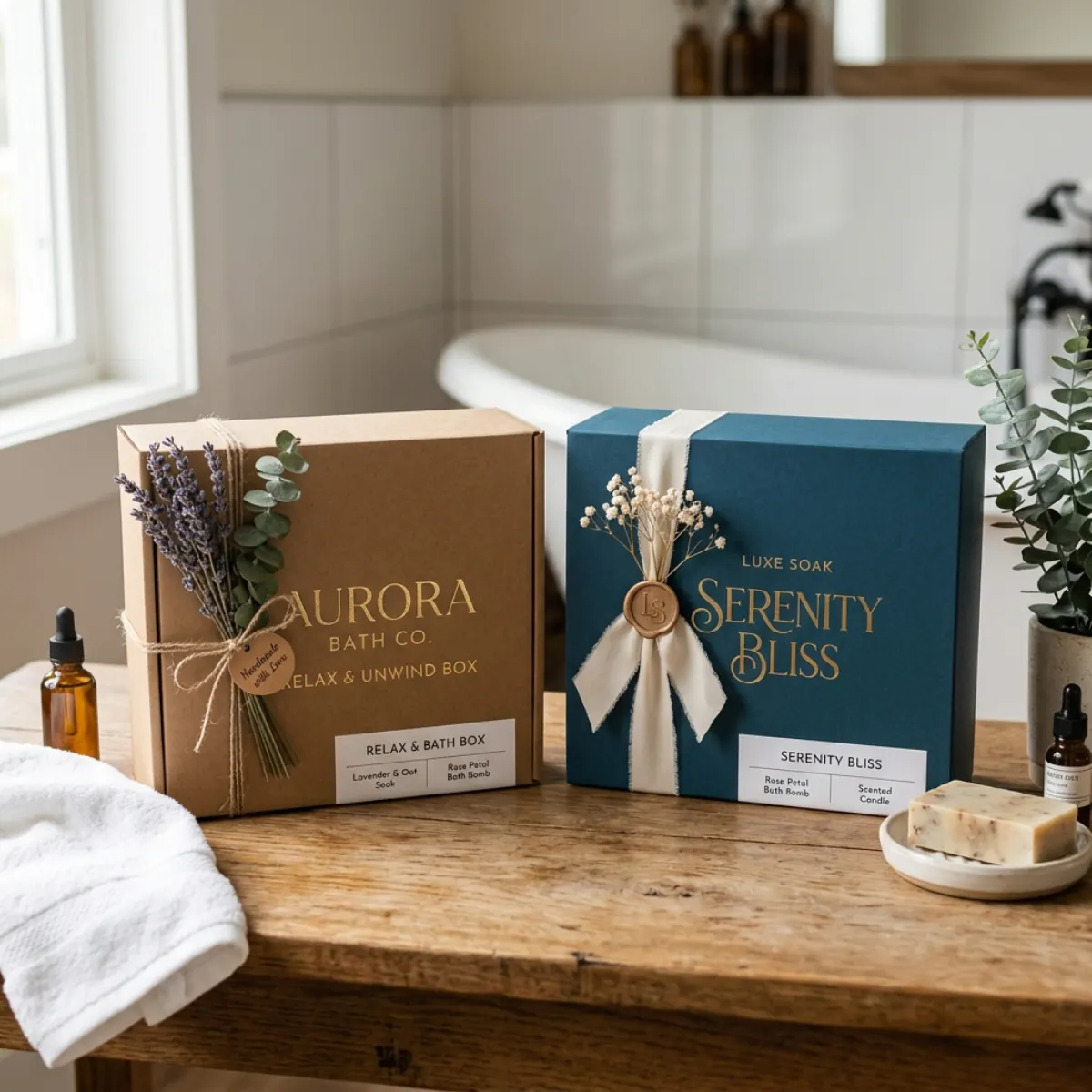
- Gift purchase and gift-with-purchase – a book-style rigid box with a ribbon closure and a printed liner reads as a gift the moment it is picked up. Even a $30 pair of studs feels like an event in the right box.
- Wholesale, tradeshow, and B2B – a plain, sturdy kraft or SBS folding carton with a simple printed logo. The buyer is a retailer or gift shop, not the end consumer, so the box has to protect the piece and stack in a shipper, not stop a shopper.
- Jewelry drops and limited editions – a numbered rigid box (foil-stamped serial number) with a paperboard sleeve. Turns a small run into a collectible object and gives your marketing team a real detail to talk about.
Tell us your channel and the piece's price point on your quote and we recommend a build that matches. All formats above run at the same 100-box minimum with no die or plate fees.
What is a jewelry box?
A jewelry box is a fitted rigid or folding-carton retail package built specifically to cradle a small, high-value item — ring, earring pair, pendant, necklace, bracelet, bangle, watch, or gift-set combination — on a foam / flocked / satin / velvet-touch insert that holds the piece in a specific orientation (upright ring, draped chain, flat bangle, or watch strap through pillow) to prevent scratches and shifting in transit while doubling as a branded retail and gifting shell.
The rigid variant is built from 2–3 mm chipboard wrapped in printed paper (see rigid boxes for the setup that gives jewelry packaging its heft) and often paired with magnetic-closure hardware (see magnetic closure boxes) for signature items where the snap-shut lid is part of the product experience.
Jewelry packaging has three unusual properties that separate it from every other product-category vertical: the insert is the product, not an add-on — a weak or loose cavity undercuts even the best lid because the piece shifts and scratches in transit; jewelry brands spec the insert (foam bar with 3–5 mm slit for rings, twin-cavity flocked tray for earrings, cord-notch foam pad for pendants) first and design the outer box around it, the dual role of transit protection AND branded retail shell drives every material choice — the box must survive parcel-network compression while presenting as a keepsake shoppers photograph and hand across counters, and the price-point cascade drives every material choice — a $50 fashion pair, a $300 gold hoop, a $3,000 engagement ring, and a $15,000 heirloom each need a distinctly different box tier, and mismatched packaging (too plain for the piece or too luxurious for the price) undercuts the sale.
How much do custom jewelry boxes cost?
Jewelry box pricing scales by structure (rigid vs folding), size, chipboard caliper, insert type, finishes, and quantity, with the per-unit price dropping meaningfully as volume rises. Ballpark ranges by piece type and structure (before finishes and volume discounts):
- Folding-carton jewelry box (fashion/DTC, 18–24 pt SBS or kraft, ring or earring size) — $0.55 to $1.60 per box in 500–2,000-unit runs. Fashion jewelry, DTC accessories, gift-with-purchase programs.
- Rigid ring or earring box (2 × 2 × 1.5 in through 3 × 3 × 1 in, 2 mm chipboard, foam or flocked insert) — $2.20 to $4.80 per box. Fine jewelry retail counter, engagement ring boxes.
- Rigid pendant / necklace box (4 × 3.5 × 1 in, 2–2.5 mm chipboard, cord-notch foam pad) — $2.80 to $5.50 per box. Chain jewelry retail and gift-with-purchase.
- Rigid bracelet / bangle box (4 × 4 × 1.75 in, 2–2.5 mm chipboard, C-shaped roll pillow) — $3.20 to $6.20 per box. Bracelet retail, wristwear collections.
- Rigid watch box (4.5 × 4.5 × 3.5 in, 2.5–3 mm chipboard, cylindrical pillow) — $5.50 to $12.00 per box. Watch retail, corporate gifting, luxury timepiece packaging.
- Rigid gift-set or multi-piece box (8 × 6 × 2 in, 2.5–3 mm chipboard, multi-cavity flocked tray) — $6.80 to $14.00 per box. Bridal sets, coordinated jewelry collections, holiday gift programs.
Insert-adder breakdown unique to jewelry structural pillar (per unit): plain die-cut paperboard insert $0.30–$0.80, foam insert (unwrapped) $0.60–$1.50, satin or velvet-wrapped foam $1.20–$2.80, flocked tray with molded cavity $1.50–$3.50, multi-cavity flocked tray for gift sets $2.20–$5.00.
Magnetic-closure hardware adds $0.60–$1.80 per box depending on box size and magnet count (see magnetic closure boxes). Finish adders: foil stamping $0.30–$0.90 per stamped area, embossing $0.40–$1.10, soft-touch or matte lamination $0.30–$0.80, spot UV $0.20–$0.60, inside-lid printing $0.15–$0.40.
How long do custom jewelry boxes take to make?
Standard jewelry box production is 8–10 business days after proof approval, with rush lanes available in 4 to 6 days for launch dates. Add 1–2 days for rigid setup builds versus folding-carton (rigid requires paper-wrap-and-assembly step). Add 3–5 days for magnetic-closure hardware installation. Add 2–4 days for multi-cavity flocked-tray inserts on gift-set boxes.
Jewelry-drop launch back-plans unique to jewelry vertical: Valentine's Day (February 14) is the single biggest jewelry-purchase moment of the year — ring, earring, and pendant boxes need a 90–120 day back-plan with proof approval by early November and delivery by mid-December to allow retail merchandising.
Mother's Day (May) and Christmas (December) each need 90-day back-plans. Engagement season (November through February) drives the majority of ring-box orders — engagement ring brands typically build inventory year-round on the 30–45 day cycle. Bridal/wedding retail peak May through September — bridal-set gift boxes need 75–90 day back-plans.
DTC fashion-jewelry brands operate on 30–45 day reorder cycles once the initial dieline is proofed. Ecommerce jewelry brands should back-plan a printed corrugated mailer (see mailer boxes) to protect the rigid box during parcel-network transit.
Ring vs earring vs necklace vs bracelet vs watch vs gift-set — which structure and insert do I need?
Match piece type to structure and cavity engineering:
| Piece type | Structure | Insert cavity | Chipboard | Cost per box |
|---|---|---|---|---|
| Ring (engagement or fashion) | Rigid lid-and-base or hinged clamshell | Slotted foam bar (3–5 mm slit, upright) | 2 mm | $2.20–$4.80 |
| Earrings (studs or drops) | Rigid lid-and-base | Twin-cavity flocked tray | 2 mm | $2.20–$4.80 |
| Pendant / short necklace | Rigid lid-and-base or slide drawer | Foam pad with cord notch + chain rest | 2–2.5 mm | $2.80–$5.50 |
| Bracelet / bangle | Rigid lid-and-base or slide drawer | C-shaped roll pillow or curved tray | 2–2.5 mm | $3.20–$6.20 |
| Long necklace | Larger rigid lid-and-base | Coiled foam pad with hook slot | 2.5 mm | $3.80–$7.20 |
| Watch | Rigid lid-and-base (deeper) | Cylindrical pillow (strap slides through) | 2.5–3 mm | $5.50–$12.00 |
| Gift set (ring + pendant, bridal set) | Rigid magnetic or hinged large | Multi-cavity flocked tray with molded cavities | 2.5–3 mm | $6.80–$14.00 |
Insert-cavity row unique to jewelry vertical: unlike most product-category verticals where the box is the primary spec, jewelry brands spec the insert cavity first because the piece orientation (upright ring, draped chain, flat bangle, strap-through watch pillow) defines the box depth and width.
A ring in a slotted foam bar needs 1.5 in depth; a watch on a cylindrical pillow needs 3.5 in. Send the piece and the cavity requirement, and we design the outer box around it.
Are custom jewelry boxes worth it for a small jewelry brand, indie bench jeweler, or DTC fashion-jewelry program?
For fine jewelers, bench jewelers, indie ring designers, DTC fashion-jewelry brands, studio makers on marketplaces, and any brand where a small high-value item is the product, custom jewelry boxes are effectively part of the product itself — the box shoppers keep versus the box shoppers throw away is the difference between one brand impression and years of brand impressions.
The typical buyers of custom jewelry boxes at the 100–5,000 box range include: solo bench jewelers and ring designers with engagement ring and wedding band SKUs; boutique fine-jewelry brands with gold, silver, and gemstone piece collections; online fashion-jewelry brands with earring, pendant, and bracelet SKUs; DTC subscription-jewelry programs anchoring monthly reveal moments (see subscription boxes); watch brands with timepiece packaging; corporate gifting programs for milestone recognition and executive gifts; wedding-favor programs featuring jewelry favors; luxury cosmetic and beauty brands with jewelry-adjacent gift-with-purchase programs (see cosmetic boxes); studio makers on Etsy, Amazon Handmade, and boutique retail; and any gift box program where jewelry is the gift.
Three reasons custom jewelry packaging is worth the premium over generic velvet pouches or stock ring boxes: (1) the insert is the product not an add-on — a fitted cavity engineered around the piece prevents transit scratches and shifting, which is the top cause of return complaints and negative reviews on DTC jewelry; a $30 investment in a fitted foam bar protects a $300 ring and saves a $300 return. (2) The dual role of transit protection AND branded retail shell means the box does two jobs at once — a generic velvet pouch handles neither well while a custom rigid box with foam insert, foil-stamped logo, and printed lid interior handles both. (3) The price-point cascade means mismatched packaging undercuts sales — a $3,000 engagement ring in a stock plastic case reads as costume jewelry to the recipient; a custom rigid box with 2 mm chipboard, satin-wrapped foam bar, gold foil logo, and printed lid interior positions the piece at its price point.
Are jewelry boxes recyclable?
Jewelry box recyclability depends heavily on the build. Plain rigid jewelry boxes (chipboard + paper wrap + paperboard insert) are broadly recyclable in most US municipal paper streams once the paperboard components are separated from the outer wrap laminate (see rigid boxes for full rigid recyclability breakdown).
FSC-certified chipboard is available across all standard jewelry-box runs and is the eco-brand baseline. Folding-carton jewelry boxes on SBS or kraft with plain print qualify for the FTC Green Guides unqualified "recyclable" claim.
Where recyclability gets nuanced is with jewelry-specific components: foam inserts (typically EVA foam or polyurethane) do not curbside-recycle and generally end up landfill unless customers keep the box as jewelry storage (which is common — jewelry boxes are among the most reused packaging categories, with 60–80% of premium jewelry boxes retained for months or years past the initial gift moment); satin, velvet, and flocked fabric wraps on foam inserts add mixed-material complexity requiring separation; magnetic-closure hardware requires magnet removal for full recyclability (see magnetic closure boxes for magnet-separation nuance); soft-touch and gloss laminates reduce curbside acceptance of the paper wrap.
For a more-recyclable jewelry-box build: pair FSC-certified chipboard with a die-cut paperboard insert (skip foam) and matte-varnish paper wrap (skip laminate). The reusable-keepsake angle also reduces disposal load — jewelry boxes that customers keep for storage never enter the recycling stream.
FTC Green Guides (16 CFR Part 260) govern "recyclable" claim wording.
Frequently asked questions
What is the minimum order for custom jewelry boxes?
Our minimum is 100 boxes. There are no die, plate, or setup fees. So even a small first run of ring or earring boxes fits the budget. Pricing gets better as quantity grows.
Can you add a custom foam or velvet insert?
Yes. We design inserts around your piece. Foam pads, satin or velvet-touch beds, ring slots, necklace pads, and flocked trays with molded cavities are all on the menu. Send us the item size and we will spec a snug cavity.
Which box style is best for fine jewelry?
Rigid lid-and-base, hinged, and magnetic-closure boxes are the top picks for fine jewelry. They feel heavy and secure. Fashion and DTC lines often use printed paperboard or kraft cartons. That hits a lower price point while keeping a branded look.
Do rigid jewelry boxes ship flat or assembled?
Both are on the menu. Fully set-up rigid boxes give the top in-store look. Collapsible rigid builds ship flat and snap up on your end to cut freight cost. We will suggest the right option for your ship model.
What finishes work best for a luxury jewelry look?
Foil stamping (gold, silver, rose gold, or a custom metallic), emboss or deboss, soft-touch film, and spot UV are the finishes that read as premium. Inside print on the lid adds a second branded surface at the unboxing moment.
How long does production take?
Standard turnaround is 8 to 10 business days after you approve the digital proof. US shipping is free. We will confirm the timeline when you order. Larger runs or added insert tooling may add a day or two.
What size box do I need for a ring vs. a bracelet?
A ring fits in about 2 × 2 × 1.5 inches inside with a slit-cut foam or paperboard cavity. A bracelet or bangle needs about 4 × 4 × 1.75 inches with a C-shaped roll pillow or a curved tray. Send us the piece dimensions and we cut the cavity to your item.
Do you make magnetic closure jewelry boxes?
Yes. Magnetic closures fit rigid jewelry boxes and give a satisfying, silent snap on open and close. They cost a little more than a ribbon or a friction lid, so we usually save them for signature items and higher-priced pieces where the closure feels like part of the product.
Can you print inserts and the inside of the lid?
Yes. Printed inserts (a brand mark on the pillow, a short care note under the tray) and printed lid interiors (a brand color, a message, a monogram) turn the reveal into an unboxing moment. Send interior art with your files or we design it as part of the free dieline.
What is a jewelry box, and why is the insert the most important part?
A jewelry box is a fitted rigid or folding-carton retail package built to cradle a small, high-value item on a foam / flocked / satin / velvet-touch insert that holds the piece in a specific orientation (upright ring, draped chain, flat bangle, watch strap through pillow) to prevent scratches and shifting in transit while doubling as a branded retail and gifting shell.
Three unusual properties: the insert is the product not an add-on (weak or loose cavity undercuts even the best lid because the piece shifts and scratches in transit — brands spec insert first and design outer box around it); the dual role of transit protection AND branded retail shell drives every material choice (box must survive parcel-network compression while presenting as keepsake); the price-point cascade drives every material choice ($50 fashion pair vs $300 gold hoop vs $3,000 engagement ring vs $15,000 heirloom each need distinctly different box tier).
How much do custom jewelry boxes cost by piece type?
Ranges by piece type and structure at 500–2,000-unit runs: folding-carton fashion/DTC jewelry (18–24 pt SBS or kraft) $0.55–$1.60; rigid ring or earring box (2 mm chipboard) $2.20–$4.80; rigid pendant/necklace (2–2.5 mm) $2.80–$5.50; rigid bracelet/bangle $3.20–$6.20; rigid watch box (2.5–3 mm) $5.50–$12.00; rigid gift-set/multi-piece $6.80–$14.00.
Insert adders: paperboard $0.30–$0.80, foam unwrapped $0.60–$1.50, satin/velvet-wrapped foam $1.20–$2.80, flocked tray $1.50–$3.50, multi-cavity flocked $2.20–$5.00. Magnetic-closure hardware adds $0.60–$1.80. Finish adders: foil stamping $0.30–$0.90 per area, embossing $0.40–$1.10, soft-touch/matte $0.30–$0.80, spot UV $0.20–$0.60, inside-lid printing $0.15–$0.40.
Which structure and insert do I need for my piece — ring, earring, necklace, bracelet, watch, or gift set?
Match piece to structure and cavity. Ring: rigid lid-and-base or hinged clamshell with slotted foam bar (3–5 mm slit, upright), 2 mm chipboard. Earrings (studs or drops): rigid lid-and-base with twin-cavity flocked tray, 2 mm. Pendant/short necklace: rigid lid-and-base or slide drawer with foam pad + cord notch + chain rest, 2–2.5 mm.
Bracelet/bangle: rigid lid-and-base or slide drawer with C-shaped roll pillow or curved tray, 2–2.5 mm. Long necklace: larger rigid lid-and-base with coiled foam pad + hook slot, 2.5 mm. Watch: rigid lid-and-base (deeper) with cylindrical pillow (strap slides through), 2.5–3 mm.
Gift set (ring + pendant, bridal set): rigid magnetic or hinged large with multi-cavity flocked tray, 2.5–3 mm. Insert defines box depth (a ring needs 1.5 in, a watch needs 3.5 in).
How do I design a luxury custom jewelry box with the right insert step by step?
Six steps: (1) Measure the piece and record piece type + orientation (upright ring, draped chain, flat bangle, watch strap through pillow) + weight (delicate stud needs 1 mm cavity tolerance; heavy signet ring needs 2 mm). (2) Pick the box structure by piece price point and channel (rigid lid-and-base setup for fine jewelry, magnetic-closure for signature items, hinged clamshell for retail counter open display, slide drawer for necklaces/bracelets, folding carton for fashion/DTC). (3) Spec the insert cavity — foam / flocked / satin / velvet by piece type. (4) Chipboard thickness scales with piece weight (2 mm rings/earrings, 2–2.5 mm necklaces/bracelets, 2.5–3 mm watches and gift sets). (5) Reserve panel space for FTC Jewelry Guides (16 CFR Part 23) metal-content + gemstone-treatment + country-of-origin content on hang tag / box liner / care card (plus CPSIA + ASTM F2923 for children's jewelry). (6) Add finishes on outer paper wrap AND inside lid — foil stamping (gold/silver/rose gold/custom Pantone metallic), blind emboss/deboss, soft-touch or matte film, spot UV, printed lid interior as second branded surface.
Are custom jewelry boxes worth it for a small jewelry brand, indie bench jeweler, or DTC fashion-jewelry program?
Yes, and effectively part of the product itself — the box shoppers keep versus the box shoppers throw away is the difference between one brand impression and years of brand impressions. Three reasons: (1) The insert is the product not an add-on — a fitted cavity engineered around the piece prevents transit scratches and shifting, the top cause of return complaints on DTC jewelry; a $30 investment in a fitted foam bar protects a $300 ring and saves a $300 return. (2) The dual role of transit protection AND branded retail shell means the box does two jobs at once — a generic velvet pouch handles neither well while a custom rigid box with foam insert, foil-stamped logo, and printed lid interior handles both. (3) The price-point cascade means mismatched packaging undercuts sales — a $3,000 engagement ring in a stock plastic case reads as costume jewelry; a custom rigid box with 2 mm chipboard, satin-wrapped foam bar, and gold foil logo positions the piece at its price point.
Fits solo bench jewelers, boutique fine-jewelry, DTC fashion, subscription-jewelry, watch retail, corporate gifting, wedding favors, and any gift-with-purchase program.
Are jewelry boxes recyclable?
Depends heavily on the build. Plain rigid jewelry boxes (chipboard + paper wrap + paperboard insert) are broadly recyclable in US municipal paper streams once components are separated (see rigid-boxes for full breakdown). FSC-certified chipboard available across all standard runs.
Folding-carton jewelry boxes on plain SBS or kraft qualify for FTC Green Guides unqualified 'recyclable' claim. Nuances: foam inserts (EVA or polyurethane) don't curbside-recycle and generally end up landfill unless customers keep box as jewelry storage (60–80% of premium jewelry boxes are retained for months or years past initial gift moment — among the most reused packaging categories); satin/velvet/flocked fabric wraps add mixed-material complexity; magnetic-closure hardware requires magnet removal (see magnetic-closure-boxes); soft-touch and gloss laminates reduce curbside acceptance.
Most-recyclable build: FSC chipboard + die-cut paperboard insert (skip foam) + matte-varnish paper wrap (skip laminate). Reusable-keepsake angle reduces disposal load. FTC Green Guides (16 CFR Part 260) govern claim wording.
Who orders custom jewelry boxes?
Custom cosmetic and beauty packaging is ordered by shelf-facing brands where the box has to sell the product before the customer picks it up.
- Indie beauty and skincare brands — small-batch runs with premium finishes (soft-touch, foil, spot UV) to look shelf-ready alongside legacy prestige brands.
- Cosmetic contract manufacturers — high-volume folding cartons for lipstick, mascara, foundation, and serum SKUs across multiple retailer accounts.
- Direct-to-consumer beauty startups — rigid gift-box unboxings sized for the influencer-PR moment and DTC subscription drops.
- Salon and spa retailers — hair-extension boxes, perfume cartons, and treatment kits printed with clinic branding.
- Amazon and Sephora sellers — boxes sized to the platform's dimensional-weight sweet spot with FNSKU / retailer barcodes on the flap.
How to order custom jewelry boxes
Five steps from quote to delivery. Every order includes free design support, a free custom dieline, and a digital mockup for approval before anything hits the press.
- Share your specs. Send box dimensions (or a photo of the product), quantity, material preference, and any artwork or logo files. If you're unsure of the size, our design team can advise from a product photo.
- Get a quote and mockup. Within one business day we return a firm quote, a printable dieline, and a 3D digital mockup of your jewelry boxes. No die, plate, or setup fees are added.
- Approve the proof. Review the mockup, request color, layout, or dieline changes, and give final approval. Revisions are unlimited before press.
- Production (8–10 business days). Your order runs on offset or digital press, then moves through finishing — lamination, spot UV, foil stamping, embossing, die-cutting, and assembly if needed.
- Free US shipping. Orders ship flat-packed with tracking. Assembled bundles or master-carton packing are available on request at no charge.
Resources & tools
Free tools and trusted references to help you size, spec, and choose the right jewelry boxes before you order.
Free tools & guides
- Rigid boxes – premium board for luxury beauty and gift unboxing.
- Luxury packaging – foil, soft-touch, and rigid finishes that elevate a brand.
- Cosmetic & beauty packaging hub – every beauty box style and finish we print.
Trusted references
- How2Recycle – the standardized on-pack recycling label for paperboard and kraft packaging.
- Forest Stewardship Council (FSC) – certification for responsibly sourced paper and board.
- FEFCO — International Fibreboard Case Code – the standard code (0201, 0427, etc.) that defines every box style.
- ISTA — International Safe Transit Association – the industry-standard packaging performance test protocols.