Blog · By The Packaging Vista Team · October 18, 2026
How Many Cigarettes Are in a Pack? Pack, Carton, and Case Counts Explained
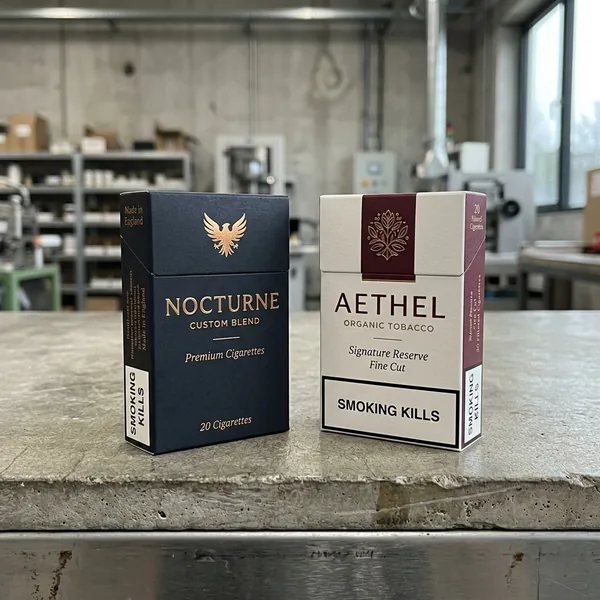
A standard US cigarette pack holds 20 cigarettes. A standard US cigarette carton holds 10 packs — so 200 cigarettes per carton. Those two numbers have been the US retail-distribution standard since the Family Smoking Prevention and Tobacco Control Act of 2009 set a federal minimum of 20 cigarettes per commercial pack.
The 21 CFR 1141 warning-panel layout, state excise-stamp zones, and PACT Act shipping marks were all built around the 20-count pack.
Quick answer
- 1 pack = 20 cigarettes (US federal minimum since 2009)
- 1 carton = 10 packs = 200 cigarettes
- 1 master shipping case = 30 or 60 cartons = 6,000–12,000 cigarettes
- 1 pallet = typically 48–60 master cases
How many cigarettes are in a pack?
In the United States, a standard commercial cigarette pack holds 20 cigarettes. That count is federal law. The Family Smoking Prevention and Tobacco Control Act of 2009 (FSPTCA) set a federal minimum of 20 cigarettes per commercial pack, which killed off the "kiddie packs" of 5, 10, and 15 cigarettes that had circulated in some markets through the 1990s.
Standard tobacco cigarettes under 20 count have been illegal to manufacture, distribute, or sell in the US since that law took effect.
The 20-count applies across every structural pack format on US shelves: flip-top hinge-lid hard pack (the retail standard, 85 × 57 × 22 mm for king-size, 99 × 57 × 22 mm for 100s), slide-and-shell matchbox-style pack, super-slim or slims pack with narrower sticks (85 × 48 × 15 mm), and the soft pack with its compressible paper outer and foil inner liner (85 × 55 × 22 mm).
Pack shape and stick length change — the count does not.
Pack count by format
| Pack format | Cigarettes per pack | Approximate pack size | Where it's used |
|---|---|---|---|
| King-size flip-top hard pack | 20 | 85 × 57 × 22 mm | US retail standard, 84 mm cigarettes |
| 100s flip-top hard pack | 20 | 99 × 57 × 22 mm | Longer 100 mm cigarettes, same 20-count |
| Super slim / slims pack | 20 | 85 × 48 × 15 mm | Narrower sticks, same 20-count |
| Slide-and-shell drawer pack | 20 | Rigid cardstock, matchbox style | Heritage and boutique brands |
| Soft pack (20s) | 20 | 85 × 55 × 22 mm compressible | Value SKUs, cost-driven brands |
| Compact pack (10s) | 10 | 85 × 46 × 22 mm | Legal internationally; US use limited to PMTA novel + herbal |
| 14s (duty-free / specialty) | 14 | Varies by dieline | Duty-free, international, and specialty markets |
| 25s (Canadian retail standard) | 25 | Larger than US 20s | Canadian retail; occasional US cross-border |
How many packs of cigarettes are in a carton?
A standard US cigarette carton holds 10 packs. Multiply the 20-count pack by 10 and you get the universal US distribution math: 200 cigarettes per carton. The retail carton is about 230 × 88 × 55 mm — a long, thin paperboard box with a slide-out tray that holds the packs in two rows of five.
Convenience stores, duty-free outlets, and e-commerce shippers all treat the 10-pack carton as the standard wholesale unit.
Why 10 packs per carton? The carton is sized for shelf merchandising and single-trip retail restocking. Ten packs is enough to top up a counter display without crowding the warehouse pick-pack flow, and 200 cigarettes is the volume most US adult daily smokers consume in roughly a week.
The 10 × 20 math makes state excise-stamp accounting straightforward: a tax stamp per pack means 10 stamps per carton, and most state tobacco wholesaler systems are built around the 10-pack carton as the unit of inventory.
Carton and case math at a glance
- 1 pack = 20 cigarettes
- 1 carton = 10 packs = 200 cigarettes
- 1 master shipping case = 30 or 60 cartons = 6,000–12,000 cigarettes (300–600 packs)
- 1 pallet = typically 48–60 master cases, so 288,000–720,000 cigarettes per pallet depending on case count
At the master-case layer, the box is corrugated rather than cardstock paperboard, and it carries only shipping marks, tobacco identifiers, PACT Act "Adult Signature Required" and "Contains Tobacco Products" callouts, and the case-count — no consumer branding or warning panels appear here.
Pallet-level logistics are what wholesaler distributors see; retail-level 20-count packs are what consumers see.
International pack counts: how US compares
The 20-count is not universal. Globally, cigarette pack sizes vary by country-specific tobacco regulation:
| Market | Standard pack count | Minimum pack count (if regulated) |
|---|---|---|
| United States | 20 | 20 (FSPTCA 2009) |
| European Union (TPD2) | 20 | 20 (TPD2 Article 14, since 2016) |
| United Kingdom | 20 | 20 (post-TPD2 adoption) |
| Canada | 20 or 25 | 20 |
| Australia | 20, 25, 30, 35, 40, 50 | 20 (plain-packaging law since 2012) |
| Japan | 20 | 20 |
| India | 10, 20 | No federal minimum — 10-count packs legal |
| Russia | 20 | 20 |
| Duty-free (international) | 14, 20 | Varies by issuing jurisdiction |
The EU Tobacco Products Directive 2014/40/EU (TPD2) banned pack sizes under 20 cigarettes across all member states in May 2016, mirroring the US 20-count minimum. Australia famously allows 20, 25, 30, 35, 40, and 50-cigarette packs under its plain-packaging law.
Canadian 25-count packs still appear in Canadian retail. India permits 10-cigarette packs. Duty-free retail sometimes offers 14-count or non-standard formats for travel-sized purchases.
Why 20 cigarettes per pack?
The 20-count has been the US retail-standard since the 1920s, when it emerged from a mix of pre-rolled machine production economics and consumer preference. R.J. Reynolds's Camel brand helped lock in the 20-count in the 1910s, and the format propagated through the US industry as cigarette-making machines standardized around that count.
By the mid-20th century, the 20-count was the de facto standard across every major US brand.
The FSPTCA 2009 took that de facto standard and made it federal law. Three policy motivations drove the 20-count minimum:
- Youth-access reduction. Smaller "kiddie packs" of 5, 10, or 15 cigarettes had been marketed in the 1990s with lower price points that put a pack within range of teen allowance money. Setting a 20-pack minimum raised the entry price per transaction.
- Taxation consistency. State excise-stamp systems and federal cigarette taxation are built per-pack. A standardized 20-count pack means per-pack taxes land on a consistent cigarette count, which simplifies audit and enforcement.
- Warning-label real estate. One of the 11 rotating 21 CFR 1141 warnings now occupies 50% of the top of both the front and rear panel of every US cigarette pack (as of October 2021). A 20-count pack has enough surface area to carry the warning plus brand identity; a 5-pack would not.
Compact 10-packs and non-standard counts: are they legal in the US?
For standard commercial tobacco cigarettes: no. The FSPTCA 2009 20-cigarette minimum rules out 5, 10, and 15-count packs for mainstream commercial cigarettes. For novel tobacco products with FDA Premarket Tobacco Application (PMTA) authorization, FDA can authorize alternate pack counts on a case-by-case basis — some heated tobacco products and non-cigarette tobacco formats have 10-count SKUs.
Herbal cigarettes (tobacco-free, non-nicotine) are not regulated under the FSPTCA minimum and can run 10-counts legally.
Canadian 25-count packs sometimes cross the US border through duty-free retail. Military commissary and veteran-affairs retail follow federal 20-count rules. Native American tribal retail follows its own tribal and state compacts; some tribal retailers sell non-standard counts under tribal sovereignty rules, with varying state tax enforcement.
Slim, super-slim, 100s, and king-size: pack count stays 20
Cigarette dimensions vary by stick length and diameter, but pack count stays the same across US formats. The four most common stick formats in US retail:
- King-size — 84 mm length, 7.6–8.0 mm diameter. The US retail standard since the 1950s; 20 cigarettes per pack.
- 100s — 100 mm length, same diameter as king-size. Introduced in the 1960s; 20 cigarettes per pack, taller pack dieline.
- 120s / long — 120 mm length. Niche US retail, mostly women's brands; 20 cigarettes per pack.
- Slim / super-slim — 84–100 mm length, 5.4–6.5 mm diameter. Narrower sticks in a slimmer pack dieline; 20 cigarettes per pack.
What changes with stick length and diameter is the pack dieline — a 100s pack is taller than a king-size, a slim pack is thinner. What stays constant is the 20-count. On the manufacturing side, pack diesets are tooling-neutral at Packaging Vista: we build the dieline to your exact cigarette length, diameter, and count, and the per-pack tooling cost is the same whether you run king-size, 100s, slims, or non-standard counts.
Pack, carton, case, pallet: the full tobacco distribution stack
US cigarette distribution runs on four stacked packaging layers, each printed to a different spec:
- Retail pack (20-count) — the consumer-facing SKU. Flip-top hard pack, slide-and-shell, soft pack, or slim. Carries 21 CFR 1141 warnings (50% front + rear), state tax stamp zone, PMTA/SE authorization reference, and brand identity.
- 10-pack retail carton (200 cigarettes) — the wholesale unit. ~230 × 88 × 55 mm paperboard slide-tray. Carries brand hero on the long side, 21 CFR 1141 warning on short ends, and may carry a secondary tax or jurisdiction mark.
- Master shipping case (30 or 60 cartons, 6,000–12,000 cigarettes) — the distributor logistics unit. Corrugated outer. Carries only PACT Act shipping marks ("Adult Signature Required", "Contains Tobacco Products"), case count, SKU identifier, and warehouse barcodes. No consumer branding.
- Pallet (48–60 master cases) — the freight unit. GS1-128 or SSCC pallet label with master-case count, SKU, and lot number.
Brands that distribute to convenience stores and duty-free retail typically design the retail pack, 10-pack carton, and master shipping case on matched dielines so branding, warning zones, and PACT Act shipping marks stay consistent across every layer.
We print all four layers at a 100-box minimum for the retail pack, with no die, plate, or setup fees. See our custom cigarette boxes for pack and carton specs, or request a free quote for a full retail-to-case system.
FAQ
How many cigarettes are in a pack?
20 cigarettes in a standard US pack. This has been the federal minimum since the Family Smoking Prevention and Tobacco Control Act of 2009. King-size, 100s, slims, soft pack, and slide-and-shell all hold 20 cigarettes — only pack size and stick length change.
How many packs of cigarettes are in a carton?
10 packs per US carton = 200 cigarettes. The ~230 × 88 × 55 mm paperboard carton is the standard retail-distribution unit for convenience stores, duty-free, and e-commerce.
How many cigarettes are in a carton?
200 cigarettes per US carton. That's 10 packs of 20 cigarettes. Master shipping cases hold 30 or 60 cartons, so a case holds 6,000 or 12,000 cigarettes.
Why do US cigarette packs come in 20s?
Three reasons: the 20-count emerged as the de facto US industry standard in the 1920s on machine-production economics; the FSPTCA 2009 locked 20 as the federal minimum to curb "kiddie packs" of 5, 10, or 15 cigarettes; and 20-count packs give enough surface area to carry the 21 CFR 1141 warning (50% of front and rear) plus brand identity.
Are 10-cigarette packs legal in the US?
Not for standard commercial tobacco cigarettes. The FSPTCA 2009 sets a 20-count minimum. 10-count packs are legal for herbal (tobacco-free, non-nicotine) cigarettes and for some FDA PMTA-authorized novel tobacco products on a case-by-case basis.
How many cigarettes in a pack internationally?
Most developed markets run on 20-count packs: US (FSPTCA 2009), EU (TPD2 2016), UK, Canada, Japan, Russia. Australia allows 20, 25, 30, 35, 40, and 50-count packs under plain packaging. Canada runs 25-count packs alongside 20s. India permits 10-count packs.
What's the biggest cigarette pack sold?
In the US, 20-count is the universal retail SKU. In Australia, 50-count packs are legal under plain-packaging regulations. Duty-free retail occasionally sells larger multi-pack bundles.
How many cigarettes in a slim or super-slim pack?
20 cigarettes. Slim and super-slim refer to the stick diameter (5.4–6.5 mm vs the king-size 7.6–8.0 mm standard), not the count. The pack dieline is thinner but the cigarette count stays at 20.
How many cigarettes are in a 100s pack?
20 cigarettes. "100s" refers to stick length (100 mm vs the 84 mm king-size), not count. The pack is taller to accommodate the longer sticks but still holds 20.
How many packs of cigarettes are in a case?
A master shipping case holds either 30 cartons (300 packs, 6,000 cigarettes) or 60 cartons (600 packs, 12,000 cigarettes), depending on the SKU and the distributor spec. The 30-case is more common for convenience-store distribution; 60-case is standard for duty-free and high-volume wholesale.
How many cigarettes in a pack of Marlboro?
20. Marlboro and every other major US cigarette brand (Camel, Newport, Pall Mall, L&M, Winston, American Spirit) run 20-count packs in every retail SKU, which is the federal US minimum under FSPTCA 2009.
Looking at a cigarette or herbal-blend brand launch? Browse custom cigarette boxes, see adjacent-category formats at pre-roll boxes, vape boxes, and e-cigarette boxes, then request a free quote with your cigarette length, count, and target quantity.
Part of our vape and tobacco packaging guide — the pillar reference for every vape and tobacco topic on this blog.