Blog · By The Packaging Vista Team · November 7, 2026
Chinese Take-Out Box Sizes: How to Pick the Right Pail for Your Menu, Service Channel, and Order Volume
Reviewed by Kate Johnson — Food Packaging Specialist
12+ years in food-service folding carton and oyster-pail production. Former QA lead for a US contract packaging house shipping take-out containers into restaurant groups, ghost-kitchen operators, and grocery deli programs. FDA 21 CFR 176.170 food-contact paper expert; reviews every size-to-menu fit, portion spec, and case-pack math on this page against real restaurant operations.
Credentials: ASTM D7611 resin ID training, FSC Chain-of-Custody auditor, 400+ food-service packaging builds overseen. Last reviewed: November 2026.
Picking the wrong Chinese take-out box size is the most expensive silent mistake in a Chinese restaurant’s packaging program. Too small and portions look stingy on the doorstep — delivery-app reviews drop. Too big and the pail arrives half-empty, every order wastes ~15¢ of paperboard, and the walk-in shelf runs out of quarts on Friday night while 400 unused pints sit in dry storage.
The right size mix maps to your menu, your service channel, your order mix, and your weekly volume — not to what the supplier happens to have on the shelf.
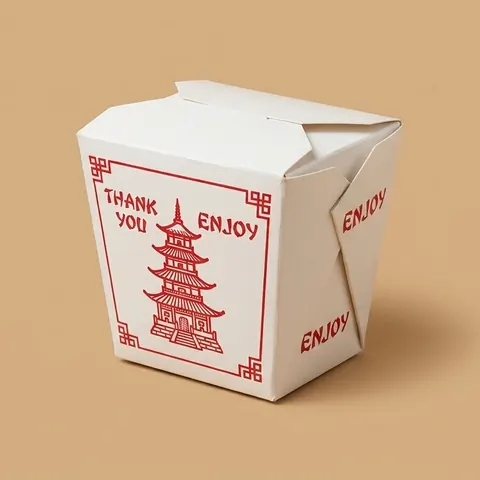
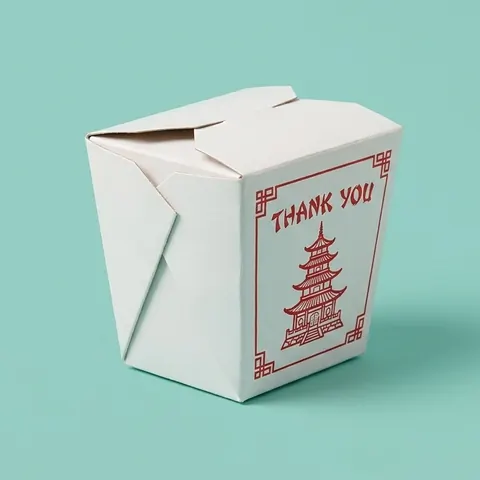
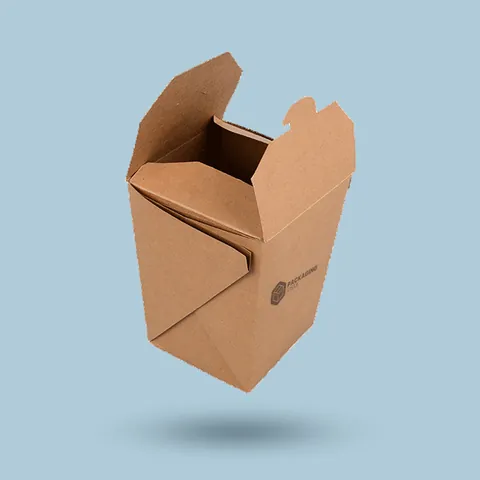
This guide walks the four US-standard size options, maps each to a menu style and service channel, and gives the ordering rules that keep a Chinese kitchen from running out of the right pail on a Friday night. Packaging Vista supplies custom Chinese take-out boxes in all four standard sizes, with Pantone-matched print and FDA-compliant PFAS-free grease coatings for US restaurants, ghost kitchens, and grocery deli programs.
Key takeaways
- Four US-standard sizes: half-pint (8 oz), pint (16 oz), quart (32 oz), half-gallon (64 oz). Pint + quart cover ~80% of restaurant volume.
- Size by menu, not by vibe. Rice sides and single-serve entrées → pint. Family entrées and noodle shares → quart. Dipping sauces and desserts → half-pint. Catering and 4+ meals → half-gallon.
- Service channel shifts the mix. Dine-in and pickup lean pint-heavy. Delivery leans quart-heavy. Catering is half-gallon plus quart.
- Typical US restaurant mix: 10–15% half-pint, 55–65% pint, 25–30% quart, 2–5% half-gallon. Track per-size usage weekly for 4 weeks to dial in your real ratio.
- Stock vs custom-printed: stock pails ship in 7–10 days, no print. Custom-printed 1,000-unit minimum, 8–10 business days, Pantone-matched.
The four standard sizes.
US oyster-pail converters ship four standard sizes. Most restaurants run two or three of them; a few catering-heavy operations run all four.
| Size. | Volume. | Rough dimensions. | Feeds. | Typical use. |
|---|---|---|---|---|
| Half-pint. | 8 fl oz (237 mL). | 2-3/4" × 2-1/8" × 2-1/2" H. | ½ person. | Dipping sauces, dressings, desserts, kid sides. |
| Pint. | 16 fl oz (473 mL). | 3-1/8" × 2-3/8" × 3-1/2" H. | 1 person. | Single-serve entrée, rice side, soup, lunch bowl. |
| Quart. | 32 fl oz (946 mL). | 4-1/8" × 3-1/4" × 4-1/2" H. | 2–3 people. | Family entrée, lo mein share, combo meal, ghost-kitchen family-meal bundle. |
| Half-gallon. | 64 fl oz (1.9 L). | 5-1/4" × 4" × 5-3/4" H. | 4–5 people. | Catering, large-family meal, soup for 4–5. |
For the full dieline + top-opening + flattened-footprint spec per size, see the Chinese take-out box dimensions reference. For the cost and portion-fit deep dive between the two most common sizes, see pint vs quart Chinese take-out boxes.
Size by menu type.
Match the size to the menu item, not the other way around. Field-tested mapping:
Rice and grain sides.
- Single-serve rice side: pint. 10–12 oz of steamed rice fills a pint comfortably with 10% headroom.
- Family rice share: quart. 22–24 oz feeds 3–4.
- Catering rice (10+ guests): switch out of pails entirely. Use a catering tray.
Entrées (General Tso, orange chicken, kung pao, beef and broccoli).
- Single-serve entrée (no rice): pint. 10–12 oz of saucy chicken fills with handle clearance.
- Family entrée share: quart. 22–24 oz, feeds 2–3 with a rice side.
- Catering entrée: half-gallon (feeds 4–5) or multiple quarts.
Noodles (lo mein, chow mein, singapore).
- Single-serve noodle dish: pint, 8–10 oz. Noodles pack tighter than saucy food — the pint holds less by weight.
- Family noodle share: quart, 18–20 oz.
- Catering noodle: half-gallon or multiple quarts.
Soups (hot-and-sour, egg-drop, wonton).
- Single-serve cup: pint holds ~14 oz of soup, leaving the headroom needed for the flap fold-over.
- Family soup: quart holds ~28 oz for 2–3 bowls.
- Catering soup: half-gallon holds ~55–58 oz for 4–5.
Dipping sauces, dumpling sauce, chili oil.
- Sauce portion: half-pint (8 oz) is the smallest oyster pail, but it’s still oversized for most dipping-sauce portions. Use a 2 oz soufflé cup or a 4 oz portion cup for dipping sauces.
- Chili-oil condiment side: half-pint works if you want the pail aesthetic and the customer is paying for ~4 oz.
Desserts (rice pudding, mochi, fried banana).
- Single-serve dessert: half-pint or pint, depending on portion.
- Dessert share (3–4): pint or quart, depending on portion.
Size by service channel.
The channel decides the mix as much as the menu:
Dine-in takeout counter.
Customers walk in, order one dish each, usually solo or paired. Mix leans pint-heavy (65–70%), quart (20–25%), half-pint for sauce sides (5–10%). Half-gallon is rare. Fast-fill speed matters more than portion optics — pints move through the line faster.
Phone-in / app pickup.
Larger average orders (family at home). Mix shifts: pint ~55%, quart ~35%, half-pint ~8%, half-gallon ~2%. Quart becomes the money size — the family entrée share drives check average.
Third-party delivery (DoorDash, Uber Eats, Grubhub).
Perceived value matters most. A quart on the doorstep reads as a meal; a pint reads as a side. Mix shifts quart-heavy: pint ~45%, quart ~45%, half-pint ~5%, half-gallon ~5%. Many restaurants raise quart price and keep pint price steady to make the quart the obvious upsell on the app.
Catering (10+ guests).
Mix flips entirely. Half-gallon ~40–50%, quart ~30–40%, pint ~10–20% (for individual-portion sides), half-pint ~5%. Many catering orders use catering tray boxes for the mains and oyster pails only for portion-separated rice and condiment sides.
Ghost kitchen / delivery-only.
Family-meal bundles drive the mix. Quart ~50–55%, pint ~35%, half-pint ~5% (sauce sides), half-gallon ~5–10%. The combo-meal-in-a-quart build is standard: one quart holds entrée + rice + veg for a single-driver drop.
Size by weekly order volume.
How much to order, by restaurant size:
| Operation. | Weekly pail use. | Suggested order quantity (4-week supply). | Reorder trigger. |
|---|---|---|---|
| SMB takeout (1 location, 150–300 orders/wk). | ~400–700 pails. | 1,000–2,000 pint + 500–1,000 quart + 500 half-pint. | 7–10 days of stock left. |
| Mid-size Chinese restaurant (1 location, 400–800 orders/wk). | ~1,200–2,000 pails. | 5,000 pint + 2,500 quart + 1,000 half-pint + 250 half-gallon. | 10–14 days of stock left. |
| Ghost kitchen (delivery-only, 300–600 orders/wk). | ~1,000–1,500 pails. | 2,000 pint + 2,500 quart + 500 half-pint + 500 half-gallon. | 10–14 days of stock left. |
| Multi-location chain (5+ locations). | 10,000+ pails. | 25,000+ pint + 15,000 quart + 5,000 half-pint + 1,000 half-gallon. | 21-day supply at central warehouse. |
Per-unit cost drops sharply above 5,000 units. A 5,000-pint custom-printed run runs ~25–35% cheaper per unit than a 1,000-unit order. If you have the dry-storage space, order bigger.
Stock sizes vs custom-printed sizes.
Stock (plain white or kraft, no print).
- All four sizes ship from US converters in 7–10 days.
- Minimum order: 250 pieces (half-gallon) to 500 pieces (half-pint, pint, quart).
- Per-unit cost: $0.08–$0.30 depending on size, coating, and handle.
- Best for: new restaurants, pop-ups, limited-time menus, emergency reorders, testing portion sizes before committing to a print run.
Custom-printed.
- All four sizes available for custom print.
- Minimum order: 1,000 pieces per size.
- Pantone-matched brand hero color on the two main panels; 1 to 4 colors flexo or litho.
- Per-unit cost: $0.18–$0.42 at 1,000 units; $0.15–$0.32 at 5,000+.
- Lead time: 8 to 10 business days after dieline approval.
- Best for: established restaurants, ghost kitchens with 1,000+ weekly orders, brands building delivery-app visibility (the pail is the only brand touchpoint a delivery customer sees).
Coating choice by size.
All four sizes ship in three coating stacks — but the size often decides which coating makes sense:
- Half-pint (sauces, desserts, cold sides): PE or water-based barrier. No need for heavyweight.
- Pint (single-serve hot entrées, rice, soup): water-based PFAS-free is the default. PLA if your brand position is “compostable” and your market supports industrial composting.
- Quart (family-size hot saucy entrées): PFAS-free with heavier caliper (20 pt). Hot saucy food stresses the pail.
- Half-gallon (catering, 45–50 oz food loads): PFAS-free with heaviest caliper (22 pt). Any lighter and the pail bows.
PFAS-free is now the US default — California AB 1200, New York, Washington, Maine, Minnesota, and Connecticut restrict PFAS in food-contact paper. Spec PFAS-free on any new order.
How to pick the right mix for your menu.
The 20-minute method:
- List your menu items in a spreadsheet. Column A: item name. Column B: portion weight (oz). Column C: serve size (1 person, 2–3 people, 4+).
- Map each item to a size. < 8 oz → half-pint. 8–14 oz → pint. 14–28 oz → quart. 28–55 oz → half-gallon. > 55 oz → switch to tray box.
- Pull last month’s POS data (or four weeks of handwritten tickets for pre-POS kitchens). Count how often each menu item ships.
- Multiply: (orders per item per week) × (pail size per item) → total pails per size per week.
- Add a 10–15% buffer per size. Rush nights, running out of quarts on Friday, Chinese New Year.
- Order 4 weeks of supply at a time. Dry-storage shelf allowing. 4 weeks balances freight cost against working-capital tie-up.
- Review quarterly. Menu changes, new third-party delivery partner, catering season — the mix drifts.
Common size-selection mistakes.
- Running only pint and quart. You miss the sauce-side revenue (half-pint) and the catering tier (half-gallon). Even a tiny half-pint stock (~5% of mix) pays for itself on dumpling-sauce upcharges.
- Ordering equal counts per size. No restaurant uses a 25%/25%/25%/25% mix. Pint is always the biggest (~55–65%). Half-gallon is always the smallest (~2–10%).
- Not adjusting for delivery channel. Delivery customers see perceived value through the pail size. An all-pint delivery program leaves tip money on the table.
- Over-ordering half-gallon “just in case.” It’s the slowest-moving size. 250 pieces is usually a 2-to-3-month supply for a single location.
- Treating stock pails and custom-printed as interchangeable. Custom-printed pails are 2× the per-unit cost and 8–10-day lead time. Keep a stock backup for emergency reorders.
- Ignoring the delivery-bag fit math. If your delivery bag fits 4 quarts, order quart-heavy; if it fits 6 pints, lean pint. Driver time per order follows the bag count.
- Buying the wrong coating for the size. Half-gallon with PE coating + hot saucy food = warped pail and delivery-bag leak. Match caliper and coating to food density.
Frequently asked questions.
What size Chinese take-out box should I order?
Most US restaurants run a mix: ~55–65% pint (16 oz, single-serve), ~25–30% quart (32 oz, family-size), ~10–15% half-pint (8 oz, sauces and sides), ~2–5% half-gallon (64 oz, catering). Pull a month of POS data and map each menu item to a size before placing a first order.
What’s the most common Chinese take-out box size?
Pint (16 oz). It fits a single-serve entrée, a rice side, a lunch bowl, or a cup of soup. About 55–65% of a typical US Chinese restaurant’s pail volume is pint-sized.
What size is a large Chinese take-out box?
Quart (32 oz) is the family-size standard. Half-gallon (64 oz) is the catering size. “Large” on most takeout menus refers to a quart.
What size do I need for family-style Chinese food?
Quart (32 oz) feeds 2–3 for a single entrée share. Half-gallon (64 oz) feeds 4–5. For family meals of 3–5, many ghost kitchens build a combo of three quarts (entrée + rice + veg) rather than one half-gallon — easier to reheat in portions.
What size take-out box is best for rice?
Pint (16 oz) holds a generous single-serve rice portion (~10–12 oz by weight). Quart (32 oz) holds a family-size rice share (~22–24 oz). Half-gallon is overkill unless you’re catering 4+ guests off the same pail.
What size take-out box is best for soup?
Pint (16 oz) holds ~14 oz of soup, leaving room for the flap fold-over. Quart (32 oz) holds ~28 oz for 2–3 bowls. Half-gallon (64 oz) holds ~55–58 oz for catering. Always leave 10–15% headroom — liquid sloshes in a delivery bag.
Do Chinese take-out boxes come in larger sizes than quart?
Yes. Half-gallon (64 oz, ~5-1/4" × 4" × 5-3/4" H) is the catering size. For orders bigger than that, switch to a catering tray box — oyster pails above half-gallon become impractical to pour-share.
What’s the smallest Chinese take-out box size?
Half-pint (8 oz, 2-3/4" × 2-1/8" × 2-1/2" H). Used for dipping sauces, dressings, dessert portions, and kid-meal sides. Smaller portions (2 oz dipping sauce) use a soufflé cup, not an oyster pail.
Can I order different Chinese take-out box sizes with the same custom print?
Yes, but each size runs on its own dieline and press setup. Minimum order is typically 1,000 units per size for custom print. A mixed order of 1,000 pints + 1,000 quarts + 500 half-pints is a standard new-restaurant launch spec; the three dielines and three press passes drive the cost more than the total unit count.
How do I know if I’m ordering the right size mix?
Track each size’s weekly usage for 4 weeks after you start operations. If quart runs out before Friday and half-pint sits in dry storage for 2 months, shift the ratio on the next order. Most Chinese restaurants settle their mix within 2 reorders and then hold steady for 12–18 months before menu changes shift it again.
The bottom line.
Chinese take-out box sizes are a four-choice menu: half-pint, pint, quart, half-gallon. The right size is the one that matches the specific menu item’s portion weight, the service channel’s perceived-value needs, and the restaurant’s actual weekly order mix — not the one the supplier happens to stock.
Pint is the workhorse (~55–65% of a typical mix), quart is the money upsell on delivery (~25–30%), half-pint anchors sauce and dessert revenue (~10–15%), half-gallon serves catering (~2–10%). Track your real mix for 4 weeks after launch and adjust on the second reorder.
Order 4 weeks of supply at a time, spec PFAS-free as the default coating, and keep a stock backup for emergency reorders alongside your custom-printed hero sizes.
Packaging Vista supplies custom Chinese take-out boxes in all four standard sizes with Pantone-matched print, FDA-compliant PFAS-free grease barriers, and optional wire handles. 1,000-unit minimum per size on custom print. No die or plate fees. Free dieline and design. 8 to 10 business days.
Request a quote with your estimated size mix and weekly order volume — we’ll spec the stack and send a dieline PDF plus a hard-copy printed proof before the run.