Blog · By The Packaging Vista Team · June 23, 2026
Custom Product Boxes in the USA: How to Source From a US-Based Packaging Partner
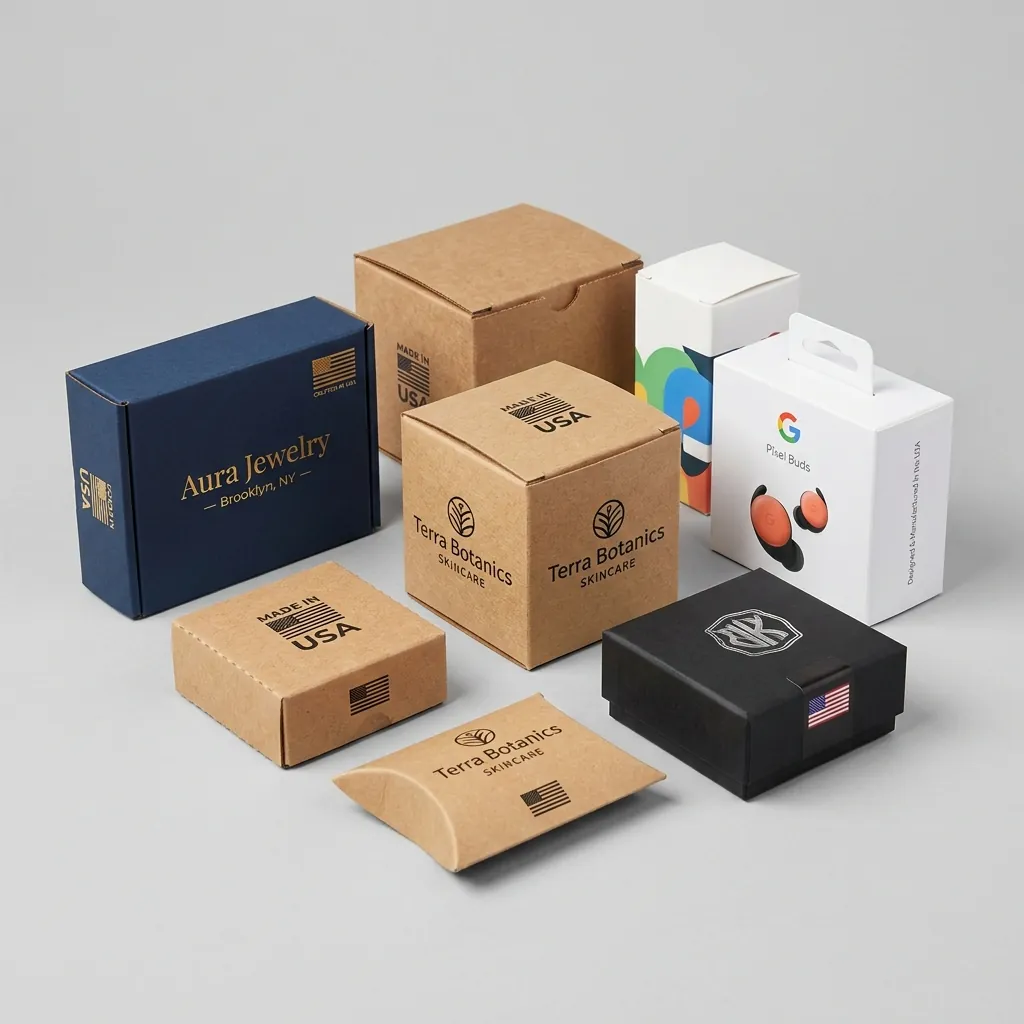
"Product box" is the catch-all term for the printed carton that goes around whatever you sell. It has to fit the item, survive the trip, and carry your product branding on a shelf or a doorstep – retail packaging and DTC packaging pulled into one build.
It is not a single build so much as a starting point. Tell us the product and we figure out the box. That flexibility is the appeal. It is also why a US-based team you can talk through the build with, during US business hours, beats emailing a spec sheet and hoping.
Here is how we turn a product into a box, and where it fits next to the more specialized formats. Start at our product box page or the wider custom boxes hub.
Product-box essentials:
- Fit first: box built to the product avoids void fill and dimensional-weight surcharges.
- Pick the structure to the job: tuck-end for light SKUs, mailer for DTC, rigid for hero pieces.
- Add an insert if the product moves in-hand – a shifting product reads as broken.
- Print in CMYK + one Pantone for cost-controlled exact brand color.
- 100-box MOQ with no die or plate fees – test a design before scaling.
- Lead time: 8–10 business days from proof approval, free US shipping.
Does fit come first, sized to your item?
The most common packaging mistake is a box that is the wrong size. Too big and the product slides around and the parcel feels cheap. Too tight and it crushes going in.
We size the carton to the real length, width, and depth of your product. We leave the right clearance for the item plus any insert or wrap. If you are measuring at home, our guide to measuring a box keeps you from rounding into trouble. The finished sizes land on a free dieline and 3D mockup. So you can confirm the fit before a sheet is printed.
| Attribute | Detail |
|---|---|
| Common structures | Tuck-end, mailer, rigid, window, pillow |
| Board grades | SBS 14–24 pt; corrugated E/B/F flute |
| Insert options | Foam, molded pulp, paperboard tray, dividers |
| Full CMYK + Pantone brand color match | |
| Finishes | Matte, gloss, soft-touch, foil, spot UV, emboss |
| MOQ / lead time | 100 boxes / 8–10 business days |
How do you pick the right structure for the job?
A product box is defined by the product. So the build follows from it. A light cosmetic or supplement usually wants a simple tuck-end carton. Something with weight wants an auto-lock or snap-lock base. A fragile item wants a tray with a lid. A gift-tier product might want a two-piece setup box.
We will steer you to the style that fits rather than forcing everything into one shape. If your item truly needs a non-rectangular outline, that crosses into custom die-cut shapes. If buyers need to see the contents, a clear-window carton is the move. A plain product box is the flexible default when neither special case applies.
How do inserts hold the item still?
A box that fits on the outside still needs the inside handled. We design die-cut inserts — scored paperboard, fluted corrugated, or cut foam — that cradle the product. So it does not rattle, shift, or arrive scuffed.
A single-cavity pad for one item. A multi-cavity tray for a set. A sleeve to keep a lid from sliding. It is built into the same dieline as the box. The foam vs paperboard insert comparison helps you pick the cradle material.
How do you print and finish to match the brand?
We print in full CMYK and match exact brand colors with Pantone. On stock that suits the product. Bright bleached SBS for vivid graphics. Natural kraft for an earthy look. Or sturdier board for heavier goods.
Finishes are where a plain carton earns its shelf presence. Soft-touch lamination, gloss or matte, foil stamping, embossing, and spot UV are all on the table. The minimum does not change whether you keep it clean or go premium. See what each finish does in our box finishes guide.
What products fit this box style?
The reason product boxes are the most-ordered format is that almost any type fits the model. We keep a dedicated line for each: beauty and cosmetics, CBD and hemp goods, food and beverage, and general shelf retail. Wellness, electronics, toys, candles, specialty goods — if it needs a printed carton, this is usually the right entry point.
And with a US-based team, you have one point of contact from dieline to delivery.
What is the turnaround and minimum?
Standard runs finish in about eight to ten working days after proof approval, with rush on offer. Our US-based project team keeps the job on schedule and ships it free to your door. Your dieline and art stay on file. So reorders are quick and match the last run.
The floor is 100 boxes with no die, plate, or setup fee. Shipping is included nationwide. That is low enough to launch or test a product without a warehouse-scale commitment. For where the money goes, read how custom packaging is priced.
How do you get your product boxes made?
Send the product sizes, the style and finish you want, and the quantity. We come back with a free dieline, an insert design, and a 3D mockup. You approve the fit and the look. Then we print and ship. Begin a custom product box order with a free quote or get in touch.
For more on this topic, see guide to packaging boxes from OLX Packaging.
Frequently Asked Questions
What exactly is a “product box”?
It is the general printed carton built around whatever you sell, sized and structured to fit your specific item. Rather than one fixed shape, it is a starting point - we pick the structure, stock, and insert that suit your product.
How do you decide which box structure my product needs?
We base it on the item's weight, fragility, and how it merchandises. Light goods get a simple tuck-end carton, heavier ones get a locking base, fragile ones get a tray or insert, and gift-tier products may get a two-piece setup box. We recommend the fit on your mockup.
When should I choose a die-cut or window box instead?
Choose a die-cut box if your product needs a non-rectangular custom shape, and a window box if buyers should see the contents through a clear panel. A plain product box is the versatile default when neither special case applies.
Can you add a protective insert?
Yes. We design die-cut inserts in paperboard, corrugated, or foam, including multi-cavity trays for sets, so your item stays put in transit. The insert is drawn into the same dieline as the box, and you confirm the fit before production.
What is the smallest order you will run?
One hundred boxes, with no die, plate, or setup fee. That keeps a first run or a product test affordable, and because your dieline stays on file, scaling up later is a simple reorder.
How do I choose the right structure for my product?
Match the structure to product weight, fragility, and merchandising. Light cosmetics or supplements want a straight or reverse tuck-end carton. Heavier goods want a snap-lock or auto-bottom to carry weight. Fragile items want a tray-and-lid or a fitted insert.
Gift-tier products often want a rigid two-piece setup box for the unboxing feel. Tell us the product weight and channel; we recommend on the mockup.
What should I look for in a US-based packaging supplier?
A single US point of contact who answers during US business hours, a free dieline and 3D mockup before you pay for print, and a clear lead time (ours is 8-10 business days after proof approval, with rush available). Look for a low minimum with no die or plate fees and shipping included to all 50 states.
Reorders should be simple: we keep your dieline on file, so you get identical boxes without renegotiating specs. Quick restocks also mean less cash tied up in stock.
What is the difference between a product box and a mailer box?
A product box is the printed retail carton around the item – it sells the product on shelf or reveals it on unboxing. A mailer box is the corrugated outer that ships the product safely through the mail. Some DTC brands use a mailer as the only pack (product goes straight inside). Others use a product box inside a mailer – the product box brands the item, the mailer protects it in transit.
Is a custom product box worth it over stock generic packaging?
Yes when the box is part of the customer experience – retail shelf, DTC unboxing, gifting, or social content. Stock generic boxes force compromise on fit (slack around the product reads cheap), branding (stickers peel), and shelf differentiation.
At our 100-box minimum with no die or plate fees, custom sizing costs the same as stock and fits far better. Skip only if the box is opened once by a warehouse and discarded.