Blog · By The Packaging Vista Team · October 27, 2026
Home Fragrance Packaging Design for User Experience: The 10 UX Decisions That Make or Break a Candle, Diffuser, or Room-Spray Launch
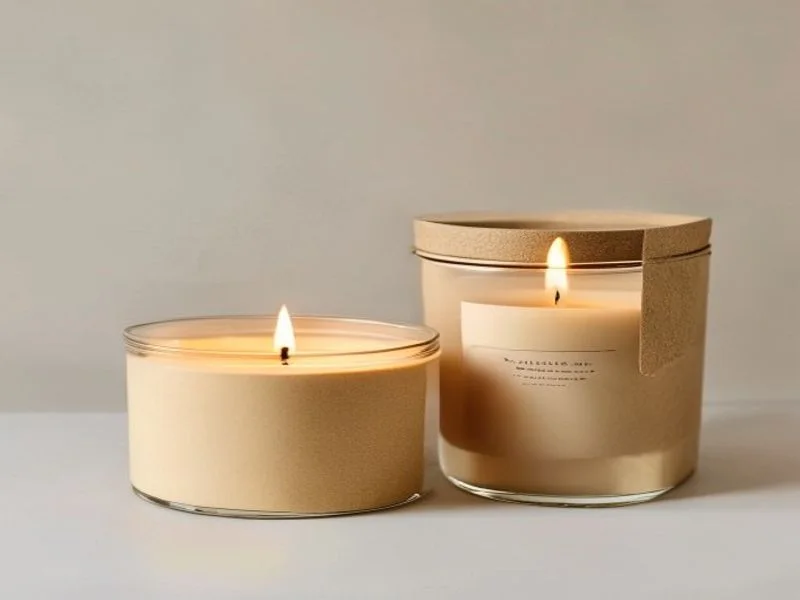
Home fragrance packaging is unlike almost any other category because the box is the first scent moment. A $38 soy candle in a plain kraft mailer feels like a $18 candle; the same wick-and-wax in a soft-touch rigid two-piece box with a magnetic closure, printed insert, and a scented tissue wrap feels like $48.
The product didn’t change — the user experience did. For candles, reed diffusers, room sprays, and wax melts, packaging decides the perceived tier, the shareability of the unboxing, the giftability on which 60%+ of category purchases depend, and the compliance surface where flame-safety and scented-product labeling live.
This guide walks through the 10 UX decisions that make or break a home fragrance launch, with the specific compliance footnotes (ASTM F2417, PCPC, Prop 65, GHS) and structural guidance Packaging Vista ships every day for US candle and home-fragrance brands.
We supply candle boxes, rigid luxury boxes, magnetic closure boxes, window boxes, and subscription boxes — and this is the playbook we talk through with every home-fragrance founder before their first run.
Key takeaways
- Design the scent reveal moment — on-shelf (window carton), post-unboxing (sealed inner wrap), or at use (first light / first pour). Different structural answers for each.
- Protect the vessel. Glass candles, reed-diffuser bottles, and spray pumps crack and leak — spec rigid two-piece, printed insert cavities, or snug tuck-ends with dividers.
- Match the finish to the price anchor. Soft-touch + spot UV + foil = $25–$75 tier; plain kraft + flexo = $8–$20 tier.
- 60%+ of home fragrance is a gift purchase. Make the primary carton gift-ready without additional wrapping.
- Compliance is a UX layer, not a sticker. Candles need ASTM F2417 warnings; scented sprays, diffusers, and melts need PCPC labeling, Prop 65, and GHS pictograms where applicable.
Decision 1: where does the scent first hit the buyer?
Home fragrance is the only category where the primary product attribute (smell) can either be revealed at purchase, at unboxing, or at use — and each option is a packaging decision. Choose deliberately:
- On-shelf scent reveal. A window carton or an open-top caddy lets the buyer smell the candle before they decide. This is the retail-dominant choice at specialty home-fragrance retailers (Anthropologie, specialty gift stores) because scent sampling converts.
- Post-unboxing scent reveal. A sealed outer carton with a scented tissue wrap or scent-release liner inside delivers the fragrance moment as part of the unboxing ritual — strong for DTC and subscription boxes where unboxing is the brand moment.
- At-use scent reveal. A fully opaque gift-grade carton where the fragrance is first encountered at the first light (candle), first pour (diffuser), or first spray (room spray). This preserves the gift-giving element — the recipient discovers the scent, not the gifter.
Decision 2: how do you protect the vessel?
Home fragrance vessels are fragile, heavy for their size, and leak when they fail. The three failure modes are (1) glass cracking in transit, (2) wax chipping or temperature-damage, and (3) liquid leakage from reed diffusers and room sprays. The packaging answers:
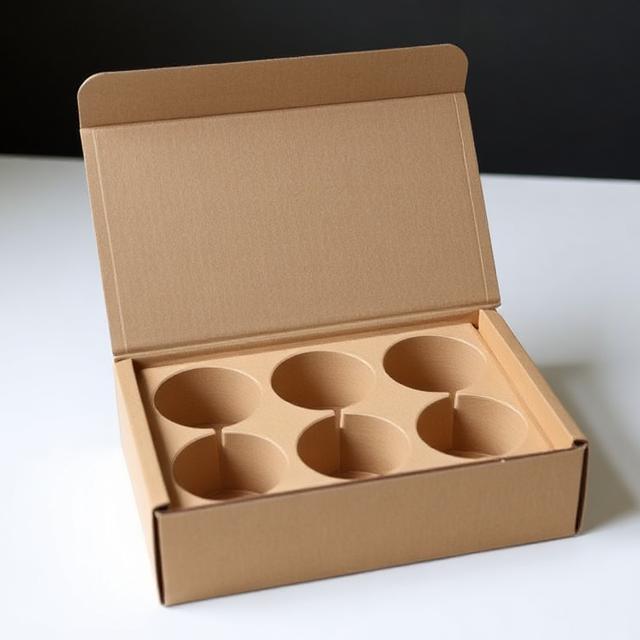
- Candles (glass vessel): rigid two-piece box with a cavity-cut insert (foam or paperboard honeycomb), or a snug tuck-end carton with internal end-flaps that cradle the vessel. Minimum 1/4 inch clearance all around.
- Candles (ceramic or metal vessel): can tolerate slightly less rigid outer; still needs a snug fit to prevent in-box rattle during shipping.
- Reed diffusers: the reeds ship separately in a glassine sleeve; the bottle ships upright with a secondary cap seal. Carton with an upright-only arrow and a two-cell insert prevents tip-over.
- Room sprays: the pump actuator ships with a cap-lock to prevent inadvertent discharge. Carton or wrap holds the bottle upright.
- Wax melts: the least fragile — a simple clamshell or snap-shut folding carton works. The design question is more about scent containment during storage.
Decision 3: match finishes to the price anchor
Home fragrance buyers read packaging as a price-tier signal within three seconds. Mismatched finishes trigger either “over-priced” (plain packaging on $45 candle) or “cheap” (laminated packaging on $12 candle) reactions. The usable mapping:
| Retail price | Structural choice | Finish signal |
|---|---|---|
| $8–$18 | Tuck-end carton or sleeve | Flexo print on kraft or 1-color offset; no finishes |
| $18–$35 | Printed carton with window or sleeve + inner carton | Soft-touch coating or matte lamination; spot UV logo |
| $35–$75 | Rigid two-piece box or magnetic closure | Soft-touch + spot UV + foil accent; debossed logo |
| $75+ | Rigid two-piece with magnetic closure + ribbon | Full foil, letterpress, printed inner, custom tissue |
Decision 4: make it gift-ready by default
Candles and reed diffusers are among the most gifted product categories in US retail — 60–70% of category purchases are gifts (NPD / Circana tracking). The UX implication: the primary carton has to work as a gift package without additional wrapping, because most buyers won’t add any. The gift-ready signals that read correctly at retail:
- Rigid two-piece box with magnetic closure — the single strongest gift signal in the category.
- Ribbon loop or paper band around a tuck-end carton — adds a “dressed” gift cue at low cost.
- Printed inner surface (brand pattern, scent story) — the gift recipient sees it when they open; the gifter doesn’t need to do anything extra.
- Gift message area — a dedicated small panel on the inside lid or a slot for a card.
- Clean exterior — no price sticker residue, no shelf-wobble, no price-point tells that embarrass the gifter.
Decision 5: candle flame-safety compliance (ASTM F2417)
Candles sold in the US are expected to carry warning labels aligned to ASTM F2417 fire-safety standard for candle labeling, which specifies: (1) a fire-safety warning on the bottom panel or product, (2) three required cautions (never leave burning candle unattended, keep away from flammable materials, keep out of reach of children and pets), and (3) wick-trimming and burn-time instructions.
Mass retailers (Target, Walmart, Marshalls) check compliance before accepting SKUs. The implication for packaging:
- The warning text must be legible — typically 8pt minimum, high-contrast against background.
- Place it on the bottom panel of the carton or on the candle vessel label where it’s visible before and during use.
- Don’t let brand design overpower it — retailer buyers walk candles with hard-to-read warnings.
- If the vessel is also sold without a carton, the warning must live on the vessel label, not the carton.
We cover the full ASTM F2417 implementation on our candle boxes and candle label requirements guide.
Decision 6: scented-product labeling (PCPC, Prop 65, GHS)
Reed diffusers, room sprays, and wax melts fall under scented-product labeling conventions managed primarily through PCPC (Personal Care Products Council) guidance plus state-level overlays. The three to engineer around:
- Fragrance allergens: for brands selling into EU-equivalent markets or into state jurisdictions with disclosure rules, 26 named fragrance allergens may need to appear on the label if present above threshold concentrations.
- Prop 65 (California): if the fragrance or carrier contains a listed chemical, the California-specific warning language must appear. Many room sprays and diffusers trigger this.
- GHS pictograms (Globally Harmonized System): flammable room sprays (ethanol-based) carry the flame pictogram and precautionary statements per OSHA / 29 CFR 1910.1200.
Treat these as mandatory panel real estate, not optional stickers.
Decision 7: choreograph the unboxing
Unboxing is a sequence, and in home fragrance it’s often the strongest shareability lever a brand has. Each layer buys 2–5 seconds of attention; brands that choreograph the order deliberately out-perform brands that don’t. A credible premium sequence:
- Outer shipping mailer — printed inside flap, branded tape.
- Inner gift carton — rigid two-piece or magnetic closure, soft-touch, brand mark on lid.
- Opening ritual — magnetic release, ribbon pull, or lift-off.
- Scented tissue wrap — the fragrance moment hits here on sealed-reveal designs.
- Product nestled in insert — the vessel sits in a cavity, visible but not loose.
- Card layer — scent description, burn-time instructions, care guidance.
- Accessory — wick trimmer, matches, reeds, or diffuser-care card.
Seven layers of reveal, under $4 per unit at 500-unit volume for the whole structural+finish set. The equivalent experience without choreography is a plastic mailer with the vessel loose in bubble wrap.
Decision 8: scent containment during shipping and storage
A paradox of home fragrance: the brand wants scent to escape at use, but not during storage or shipping. Scent cross-contamination between SKUs in a warehouse is a real problem for multi-scent brands, and over-release during shipping can trigger carrier complaints (UPS, FedEx, and USPS all have policies on strongly scented shipments). The packaging answers:
- Sealed inner wrap on candles (clear PP or glassine) prevents cold-throw during shipping.
- Reed-separated diffusers ship with reeds in a sealed glassine sleeve.
- Secondary bottle cap seal on room sprays and liquid diffusers prevents evaporation during warehousing.
- Scent-barrier coatings inside premium cartons (water-based aqueous) reduce cross-SKU transfer in multi-SKU shippers.
Decision 9: shelf presence vs. unboxing presence
These are different jobs with different packaging answers, and the launch channel decides which to optimize:
- Retail-shelf-primary: face-panel hierarchy (brand mark large, scent name clear, net weight compliant), shelf-ready counter display, planogram-ready dimensions, side-panel visibility for stacked merchandising.
- DTC/subscription-primary: outer-mailer branding is secondary to inner-carton unboxing moment; invest in the inner where the camera lives.
- Hybrid: a retail-ready case that doubles as a shipping case — printed outer, protective inner, works in both channels. Our subscription boxes are often specced for this hybrid pattern.
Decision 10: design for replenishment and brand loyalty
Home fragrance has a built-in replenishment cycle (candles last 30–60 hours, diffusers 2–3 months, room sprays 1–2 months). Packaging can nudge the next purchase without feeling pushy:
- QR to scent library — on the base or inside lid, linking to the brand’s full scent collection or a “discover your next” quiz.
- Subscription offer — printed inside the lid or on an insert card.
- Scent story panel — builds the brand narrative that keeps the customer in the ecosystem rather than treating the candle as a commodity.
- Reusable vessel cues — for premium candles, printing “Clean & reuse as a vase / planter / organizer” on the care card extends the brand presence in the buyer’s home.
Format-by-format quick reference
| Format | Primary UX lever | Structural choice | Compliance surface |
|---|---|---|---|
| Candle (glass) | Gift + flame safety | Rigid two-piece or magnetic closure | ASTM F2417, Prop 65 |
| Candle (travel tin) | Shelf scent sampling | Window tuck-end or sleeve | ASTM F2417 on vessel |
| Reed diffuser | Upright protection + gift | Tuck-end with two-cell insert | PCPC, Prop 65 |
| Room spray | Pump safety + gift | Tuck-end or sleeve + inner carton | PCPC, Prop 65, GHS flammable |
| Wax melts | Scent containment | Clamshell or snap-shut folding carton | PCPC, allergen disclosure |
| Fragrance gift set | Multi-vessel protection + reveal | Rigid two-piece with multi-cavity insert | All of the above per component |
Frequently asked questions
What is the single biggest UX lever for home fragrance packaging?
The scent-reveal moment — deciding whether the first smell happens on-shelf (window carton), at unboxing (sealed inner), or at use (opaque gift carton). The decision drives the structural answer and the retail-vs-DTC fit. Everything else is layered on top of that one choice.
Does packaging actually justify a higher price for candles?
Yes, demonstrably. US candle buyers read packaging as a price-tier signal in the first three seconds, and the premium-structure delta ($0.80–$3 per unit at 500-unit volume for rigid + soft-touch + spot UV) supports retail price premiums of $5–$20 per candle. The arithmetic favors the premium package on any SKU priced $18+.
What is ASTM F2417 and do I have to follow it?
ASTM F2417 is the US voluntary consensus standard for candle fire-safety labeling. It’s not federal law but is treated as the floor by major US retailers (Target, Walmart, HomeGoods, Marshalls, specialty gift) — non-compliant candles are routinely rejected at buyer meetings. Comply as if it were mandatory; the cost is near-zero and the risk of non-compliance is losing retail doors.
How do I design a reed diffuser carton so it doesn’t tip over in shipping?
A two-cell insert that holds the bottle upright and the reeds separately, with an upright-only orientation arrow on the carton exterior, is the standard answer. The bottle must have a secondary cap seal (not just the pour cap) to prevent leakage if the carton is laid flat anyway during transit.
Should I use a window carton for candles?
Only for shelf-primary channels where scent sampling helps conversion. For DTC and gift channels, a fully opaque carton protects the gift reveal and allows the brand graphics to carry the full visual story. Window cartons also complicate scent containment during warehousing.
What is the cost premium for a rigid two-piece candle box vs. a tuck-end carton?
At 500-unit volume, roughly 2–4x the per-unit cost of a basic tuck-end — call it $0.90–$2.50 vs. $0.30–$0.60. At 2,000-unit volume the gap narrows. The retail-price lift premium structure supports is usually 3–5x the structural cost delta, so the arithmetic favors rigid on SKUs priced $25+.
Can scented tissue inside the box actually smell different from the candle?
Yes, and intentionally so. Some brands scent the inner tissue with a complementary fragrance (brand signature scent) that creates a layered reveal before the candle itself is lit. Others scent it with the same fragrance as the candle for a cold-throw preview. Either works; the design choice is whether to prime the primary fragrance or layer a brand-signature overlay.
What packaging works for a candle subscription box?
A branded outer shipping mailer + inner carton for each candle + themed insert card is the standard. The outer mailer carries subscription branding; the inner carton protects the vessel and delivers the unboxing moment; the insert card tells the scent story for the month. Our subscription boxes page covers the structural options.
Does fragrance packaging need to carry an ingredient list?
Fine fragrance (perfume) does under FDA cosmetic labeling. Home fragrance (candles, diffusers, room sprays, melts) typically doesn’t trigger FDA ingredient-list rules the same way, but Prop 65 (CA), GHS pictograms (flammable sprays), and allergen disclosure (26 named allergens in some jurisdictions) still apply.
When in doubt, consult a cosmetic/consumer-product label compliance resource specific to your formula.
What's the most common packaging mistake in home fragrance?
Three ties: under-protecting glass vessels (cracked candles in transit); omitting ASTM F2417 warnings on candle packaging (retailer rejection); and designing an on-shelf package without a gift-ready alternative (losing the 60%+ gift share of category). All three are structural choices, all three are reversible, and all three cost money every day they persist.
The bottom line
Home fragrance is a sensory, gift-dominant, compliance-sensitive category where packaging is the first fragrance moment and the first price-tier signal. The 10 UX decisions — scent reveal, vessel protection, finish-to-price match, gift readiness, ASTM F2417 compliance, scented-product labeling, unboxing choreography, scent containment, shelf vs. unboxing optimization, and replenishment design — collectively decide whether a $38 candle feels like $38 or $18.
The structural and finish differences are small ($0.80–$3 per unit at reasonable volume); the perceived-tier difference is large.
Packaging Vista supplies the full home-fragrance structural range — candle boxes, rigid luxury boxes, magnetic closure boxes, window boxes, subscription boxes, and multi-cavity gift-set rigid construction — with ASTM F2417-aware design, soft-touch and spot UV finishes, foil and emboss capability, 100-unit minimum, no die or plate fees, and 8–10 business-day production.
Request a quote with your scent, vessel, retail price target, and channel and we’ll spec the structural + finish combination that puts the UX decisions above to work for your launch.