Blog · By The Packaging Vista Team · April 2, 2026
A Smart Choice for 100% Whole Grain Cereal (No Added Sugar)
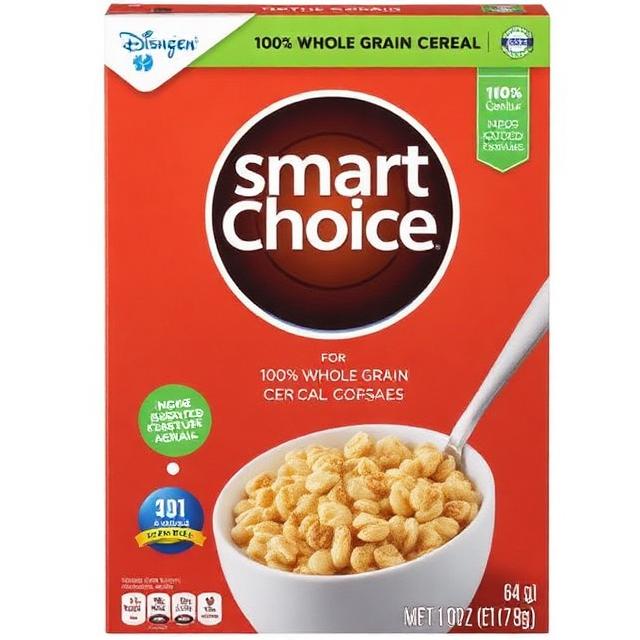
A custom cereal box for a 100% whole-grain, no-added-sugar cereal has to do four things: keep the flakes fresh, tell the truth on the front panel, stand out from sugary rivals, and win the trust of health-first shoppers.
How do you make a healthy cereal stand out? Whole grain. No added sugar. Those are rare on the shelf. The box has to say so, fast and clear. If it looks dull, the shopper walks past. If it looks fresh and honest, they pick it up. Here is how to build a box that sells your cereal on its own.
Who buys no-sugar whole-grain cereal?
Parents buy it for their kids. Health coaches ask for it. Adults with high blood sugar seek it out. All of them read the label before they pay. They want to see three things at once: whole grain, no added sugar, and short ingredient list. Your box must show all three on the front, in big print.
What makes a good cereal box?
A cereal box does two jobs. It keeps the flakes crisp. And it sells the brand. The board must be thick and stiff. Cereal breaks in thin boxes. It also needs a tight seal. Stale cereal is a lost buyer. Bugs and crumbs are worse. Most cereal boxes hold a wax or plastic bag inside to keep the flakes fresh.
How does custom print tell your story?
A plain box says nothing. A custom box says "I am healthy." Put "100% Whole Grain" in big print on the front. Put "No Added Sugar" right below. Show a photo of the cereal in a bowl with milk and fresh fruit. Skip cartoons, dyes, and sugar-coated art. Show real food.
Put the grain name on there too. Wheat. Oats. Brown rice. Corn. Rye. Buyers want to know.
What paper stock fits a natural brand?
Kraft paper for cereal boxes looks earthy and real. It fits an organic or rustic brand. White SBS board gives a bright, clean base for full-color art. A matte finish feels soft in the hand. A gloss finish looks modern. Pick the finish that fits your brand voice.
| Stock / finish | Look | Best for |
|---|---|---|
| Kraft board, uncoated | Earthy, rustic, natural | Organic and clean-label brands |
| White SBS, matte | Bright, soft, modern | Photo-forward front panels |
| White SBS, gloss | Vivid and shiny | Bold, colorful whole-grain lineups |
| Recycled board (food-safe grade) | Natural with recycled cue | Eco-first brands with FSC/SFI claim |
| Kraft + soy-based ink | Muted color on brown | Serious, honest, ingredient-first tone |
Which sizes fit different homes?
- Small (1–6 servings) – sample packs or single buyers.
- Medium (10–12 servings) – family size and your best seller.
- Large (20+ servings) – bulk buyers and big homes.
Order all three if you can. Start with medium if you must pick one.
Which closure should you pick?
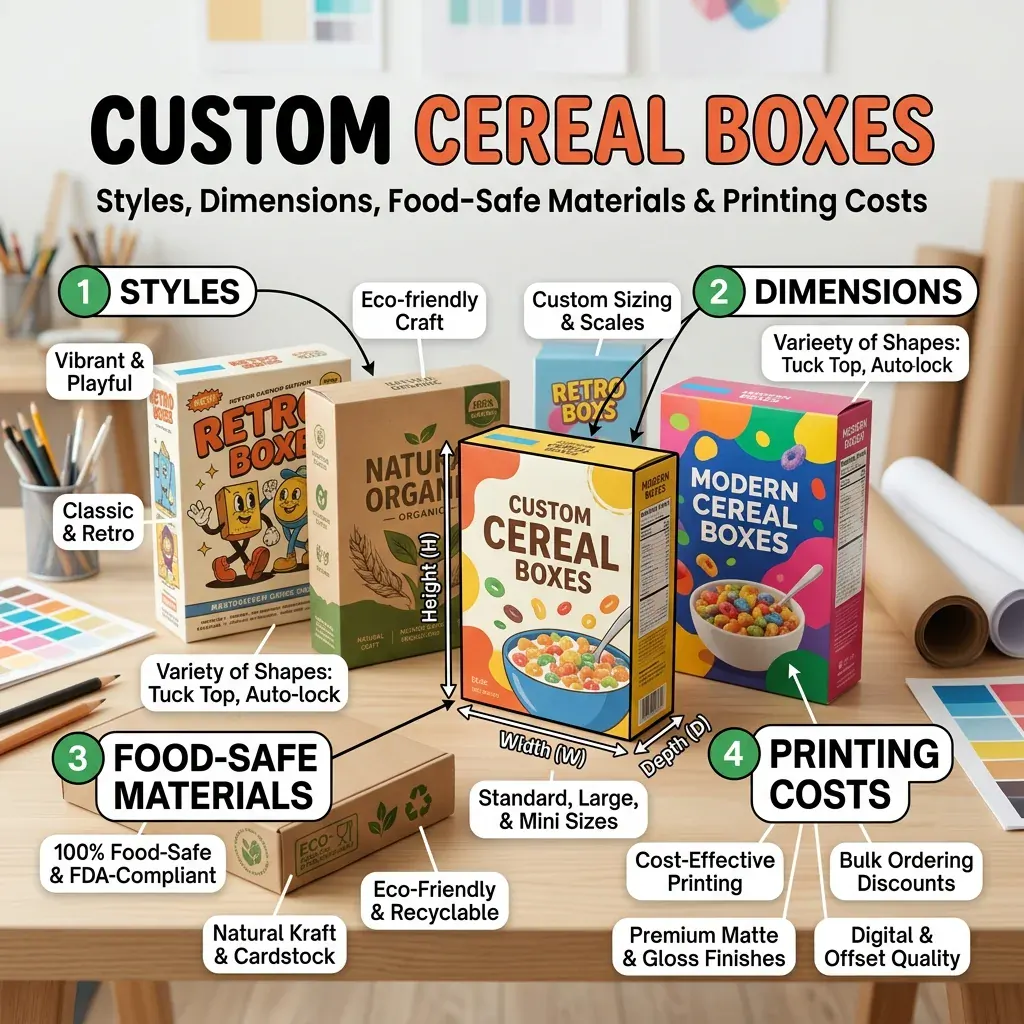
The box has to open and close well. A tuck-top closure is the most common. The flaps fold together and hold the box shut. It is cheap and safe. Most cereal boxes use it.
A resealable box adds a peel-and-seal strip inside. Buyers can shut it tight after each pour. That keeps the cereal crisp longer. It is a good fit for a no-sugar cereal, since it has no added preservatives. But it costs more per box.
Quick tip: pick a resealable seal if your buyers pay for fresh, premium food. Pick a tuck-top if cost is your top goal.
What should go on the Nutrition Facts panel?
Put the panel on the back or one side. Use easy-to-read print, not tiny type. Show:
- Total sugar – zero or close to it.
- Fiber – at least three to five grams per serving.
- Whole grain first in the ingredient list. Not enriched flour.
Be honest. If it has dried fruit, that fruit brings some sugar. Say "no added sugar," not "sugar-free." There is a real gap. Check the current FDA rules for how to use terms like "no added sugar" or "whole grain" before you print.
Why must the ingredient list be short?
A short list builds trust. Whole grain. A pinch of salt. Maybe a natural sweet like monk fruit or stevia. No high-fructose corn syrup. No cane sugar. No honey. No maple syrup. Buyers read the list. They will pick you if it looks clean.
Is eco-friendly packaging expected?
Yes. Cereal boxes are paper, and paper is easy to recycle. Skip the plastic window if you can. A clear plastic circle to show the cereal is not easy to recycle. Use a paper window, or none at all. Recycled board is safe if it meets food-contact rules. Ask your supplier for FSC or SFI stock and food-safe recycled options.
How do you get shelf appeal?
Your box sits next to sugary rivals. Bright colors. Cartoons. Prizes. Your box will look different, and that is fine. Use simple colors: blue and green feel healthy, brown and tan feel natural, black and white feel serious. Use a simple font that is easy to read.
Show the cereal clearly. A photo of flakes or puffs, no sauce or syrup, just the food. Show a bowl with milk and fresh fruit as a serving idea. That shows how to eat your product without added sugar.
How much do custom cereal boxes cost?
Custom printed cereal boxes cost more than plain white ones, but not by much. Order size drives the price. As a rough guide:
- 100–500 boxes – about $0.60 to $1.00 each.
- 1,000 boxes – about $0.40 to $0.60 each.
- 5,000+ boxes – as low as $0.30 each, based on size, stock, and finish.
To trim cost, pick a standard box size, use fewer ink colors, and pick matte over gloss. Think of the box as your sales rep. It sits on the shelf and talks to buyers. See our full food and beverage boxes range for other formats.
Where should you sell no-sugar cereal?
Aim for stores where health-first shoppers already go. Grocery stores in the natural-foods aisle. Health food shops. Co-ops. Farmers markets. Amazon. Your own site. Gym cafes. Hospital shops. Schools.
To land on store shelves, make a simple sell sheet with the cereal's key points, price, and contact info. Find the right buyer at each store. Email or call. Bring samples. Say why your cereal is different. Follow up in a few days if you do not hear back.
How do you describe the taste?
No-sugar cereal can taste less sweet than kids' brands. Do not fight that. Frame it. Call it "lightly toasted grain" or "naturally sweet." Say fruit or a bit of honey pairs well with it. Buyers value the truth. They will buy again if you tell it straight.
What marketing claims are safe to print?
Be careful with front-panel claims. Some are ruled by law:
- "100% whole grain" means every grain is whole. Not most. All.
- "No added sugar" means no sugar added in making the food. Fruit sugar from dried fruit is fine, but list it clearly.
- "Healthy" is a ruled term. The FDA updated the rules in December 2024. Foods must have enough of a key food group and stay under set limits for added sugar, saturated fat, and salt.
- "Good source of fiber" needs a set amount per serving. Check the Nutrition Facts panel first.
Keep it honest. Your buyers read labels. They will spot a stretch.
Final take
A custom box for 100% whole-grain, no-added-sugar cereal does four things at once. It keeps the flakes fresh. It tells the truth about what is in it. It shows the shopper why your cereal is different. And it builds trust for the reorder. Pick the right board and size.
Print your claims in clean, big type. Show a real photo. Then keep the shelf full. Buyers seek this cereal, so make sure they can find yours.
You can also see custom cereal boxes at OLX Packaging for more layout ideas.
Frequently asked questions
Where can I find the rules for terms like "healthy" or "good source of fiber"?
Go to the FDA site. The FDA rules these terms on food labels. For "healthy," the FDA updated the rules in December 2024. Foods must have enough of a food group (like fruit or grain) and stay under limits for added sugar, saturated fat, and salt (FDA "healthy" rule). For "good source of fiber," check the FDA nutrition label guide.
How do I find a supplier for eco-friendly cereal boxes in small runs?
Look for a box maker with a low min order. Packaging Vista makes custom cereal boxes from a 100-box min, in kraft paper or recycled board. Ask for samples before you order. Free design help. Ships in 8–10 days.
What is the price range at different order sizes?
Prices drop as sizes go up. For 500 cereal boxes, expect about $0.60 to $1.00 each. For 1,000 boxes, about $0.40 to $0.60 each. For 5,000+ boxes, as low as $0.30 each. Add-ons like foil stamping or film cost extra. Simpler boxes with fewer ink colors cost less.
Where can I find a designer who knows food packaging?
Look on Fiverr, Behance, or Dribbble for "natural food packaging" or "healthy cereal box design." Ask to see their past work on food packaging before you hire. Some box makers offer free design help, but that is usually basic. For a full brand look, hire a specialist.
How do I get shelf space in natural food stores or co-ops?
Start small. Sell at farmers markets and local shops first. Build a track record. For natural food stores, contact the local buyer. Bring samples and a one-page sell sheet. Be ready for slotting fees and free-fill demos. Work with a natural foods distributor if you want to hit many stores.
Co-ops often favor local brands. Lead with your "no added sugar" and "whole grain" story. That sets you apart.
Why is the box design so critical for a no-added-sugar cereal?
Because the buyer is scanning the shelf for exactly the claims your product delivers – whole grain, no added sugar, short ingredient list – and a dull or generic box gets skipped in favor of louder rivals. The panel has to communicate all three signals within two seconds at arm’s length.
A clean typographic front with the grain named (oats, wheat, brown rice) plus a real-food photo does the selling; cartoons or syrup imagery send the wrong signal.
What is the difference between "no added sugar" and "sugar-free" on the label?
"No added sugar" means no sweetener was added during production, but the food can still contain natural sugars from ingredients like dried fruit or milk. "Sugar-free" is an FDA-regulated term meaning less than 0.5 g of sugar per serving from any source.
Using them interchangeably is a compliance risk and misleads buyers. Print exactly what applies to your formula, and let the ingredient list back it up.
How do I choose between kraft and white SBS for a whole-grain cereal box?
Choose kraft when your brand story is rustic, organic, or artisan – the earthy brown reinforces the whole-grain claim before the copy is even read. Choose white SBS when you want photographic color for a hero bowl shot or bright brand colors that pop against sugary rivals.
Both meet food-contact rules when spec’d with food-safe inks and inner wax or plastic bag. Kraft usually pairs with matte finish; SBS handles gloss or matte equally.
Are custom cereal boxes worth it for a small whole-grain brand?
Yes. Buyers of no-added-sugar cereal read labels obsessively, so the box is your only chance to make the case at shelf. A custom carton at 100 units lets you pilot in local co-ops and farmers markets, prove sell-through, then scale to distributor volume with confidence.
Since there are no die or plate fees, the small first run isn’t penalized on tooling – you only pay per box – and the design work stays reusable across sizes and flavors.
For the complete picture on stocks, box styles, and design, see our food and beverage packaging guide.