Blog · By The Packaging Vista Team · October 27, 2026
Does Packaging Matter to Buyers and Sellers? The Data, the Trade-offs, and What Actually Moves the Needle
Yes, packaging matters to both buyers and sellers, and the effect is measurable. On the buyer side, 72% of US consumers say packaging design directly influences their purchase decision (Ipsos), and 60–70% say they will pay more for recyclable or FSC-certified packaging (NielsenIQ).
On the seller side, redesigns routinely lift unit sales 10–30% on retail shelves, premium structural choices support 20–40% price premiums in cosmetics and CBD, and right-sized boxes cut DIM-weight shipping cost 15–25%. Packaging is not a wrapper around the product — on most SKUs it is the product’s commercial surface.
That answer sounds self-serving coming from a packaging supplier, so this article shows the numbers, the regulatory stakes, and the honest places where packaging stops mattering (commodity B2B, Amazon-choice SKUs with no shelf presence, deep-discount channels).
Packaging Vista supplies custom boxes, retail-ready packaging, mailer boxes, and rigid luxury boxes for US brands — we built this guide from the questions US SMB founders actually ask us before their first run.
Key takeaways
- For buyers: packaging drives first-impression trust (72% say it influences purchase), signals compliance on regulated goods, and carries the sustainability promise 60–70% of US shoppers reward with higher spend.
- For sellers: redesigns lift retail conversion 10–30%, premium structure supports 20–40% price lifts, and wrong-size boxes bleed 15–25% in DIM-weight shipping fees every order.
- Compliance is the hidden lever. Wrong labels on cosmetics, supplements, cannabis, or food can trigger FDA warning letters, FTC fines, or state-level product seizures — packaging is the compliance surface.
- Where it stops mattering: commodity B2B fillers, Amazon-only SKUs that live on the search page not the shelf, and deep-discount channels where price is the only lever.
Why packaging matters to buyers
Buyers encounter the box before they encounter the product. On a retail shelf, in an unboxing video, or inside an e-commerce mailer, the package carries the entire first impression — brand, quality, trustworthiness, ethics — in the three to seven seconds before any product contact happens.
That is why packaging research consistently finds strong effects on purchase intent, perceived value, and willingness to pay.
1. First impression and perceived value
Ipsos research in the US finds 72% of consumers say packaging design influences their purchase decisions, and 81% say they have tried a new product because its packaging caught their eye. McKinsey’s packaging work puts the “visual shelf noticeability” effect at a 20–30% probability lift of being picked up at all — and a product that is never picked up is almost never bought.
For DTC brands, the equivalent is the unboxing moment: Dotcom Distribution found 40% of consumers say premium packaging makes them more likely to buy from the brand again, and 55% have watched an unboxing video of a product they then purchased.
2. Trust and compliance signals
On regulated categories, the buyer reads the package before buying, and the absence of expected signals is itself a signal. A cosmetic without an INCI list, a supplement without a Supplement Facts panel, a cannabis product without the state universal symbol, a food item without an FDA food-contact cue — each gets left on the shelf by a non-trivial fraction of informed buyers.
The implicit question is “if they skipped this, what else did they skip?” We cover the specific label stakes in our cosmetic label requirements guide, candle label requirements guide, and category pillars on supplements and cannabis.
3. Sustainability as a purchase lever
NielsenIQ’s US consumer tracking finds 60–70% of shoppers say they are willing to pay more for sustainable packaging, and the share rises above 80% in Gen Z cohorts. The claim-vs-behavior gap is real — stated willingness-to-pay beats checkout willingness-to-pay — but the directional pull on brand selection is unambiguous.
Specific, verifiable claims (FSC-certified, 100% PCR, recyclable in curbside) outperform vague claims (“eco-friendly,” “green”) and are the only way to stay inside the FTC Green Guides safe harbor. Our eco-friendly boxes page lays out the claim-wording rules.
4. Protection and the damaged-on-arrival penalty
For e-commerce, the under-appreciated buyer-side effect is damage. Amazon’s own data has flagged “damaged on arrival” as a top driver of negative reviews, and ReturnLogic’s e-commerce benchmarks put packaging-related returns at roughly 5–10% of all e-commerce returns.
A dent on a cosmetic jar, a crushed candle vessel, a bent cereal carton — each converts a happy customer into a return, a one-star review, and a lost repurchase. The right mailer box with a snug fit and (where fragility demands it) an insert prevents the problem before it reaches customer service.
5. The post-purchase and sharing effect
Instagram, TikTok, and YouTube unboxing content turns packaging into free top-of-funnel marketing. Pattern-matched aesthetics, custom tissue, printed inserts, and tactile finishes (soft-touch, spot UV, foil) drive the share rate. Dotcom Distribution found roughly 40% of millennials have shared a product image on social media because of its packaging — a user-generated marketing channel that costs the brand only the per-unit uplift of the better box.
Why packaging matters to sellers
The seller-side case is less about perception and more about the P&L. Packaging shows up on four lines simultaneously: revenue (conversion and price), gross margin (COGS vs. positioning), operating cost (ship-ability, pack-out labor, returns), and risk (compliance, recalls, chargebacks). Each one has measurable effects.
1. Conversion lift and price premium
Shelf tests at US mass retailers routinely show 10–30% unit lift from a packaging redesign on an otherwise unchanged SKU — the product itself has not changed, the shelf has not moved, only the box is different. On DTC, the premium-structure effect is even larger on the price side: a cosmetic brand moving from a folding carton to a rigid two-piece box, or adding a magnetic closure on a gift SKU, routinely supports a 20–40% price premium without resistance, because the perceived quality anchor moved.
2. Margin leverage on finishes
The cost delta between a 4/0 flexo kraft mailer and a 4/4 litho + soft-touch + spot UV mailer is a few cents to a few dollars per unit depending on volume. The retail price delta those finishes support is a multiple of that. The arithmetic is why premium finishes are standard in cosmetics, perfume, CBD, cannabis, and gifting — the finish cost is a tiny fraction of the premium it unlocks.
Our spot UV vs foil cost table breaks down the finish-level economics.
3. DIM-weight and shipping cost
UPS, FedEx, and USPS all bill by DIM weight (volumetric weight) for most e-commerce parcels. A box that is one inch too long or two inches too tall in every dimension can push a shipment up a rate class — a 15–25% cost penalty applied to every single order the brand ships for the life of that SKU.
Right-sized mailer boxes and multi-depth corrugated are a pure margin win with no customer-facing downside. We cover the mechanics in our DIM weight guide.
4. Retail shelf performance
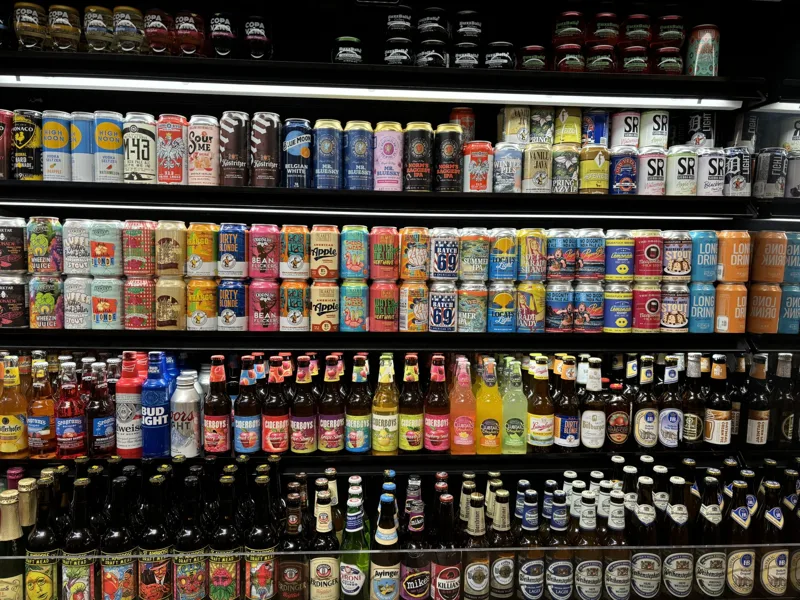
On a retail shelf, packaging is the only salesperson. The buyer is not reading your copy, scrolling your website, or watching your ad — they are walking past a shelf with 12 competing SKUs in two seconds. Shelf-ready retail boxes, counter display boxes, and well-planned face panels do the entire selling job.
Buyers at Target, Walmart, Sephora, and Whole Foods evaluate planogram-ready packaging at the vendor meeting; brands that walk in without it do not walk out with shelf space.
5. Marketing and brand asset
Packaging doubles as a persistent marketing asset. Every box sitting on a kitchen counter, a vanity, or a desk is an impression. Every unboxing video is a user-generated ad. Every social share is distribution the brand did not pay for. The brands that treat packaging as a line item on the COGS sheet miss this; the ones that treat it as a marketing budget line understand why Apple, Glossier, and every DTC that ever broke out of its category spent disproportionately on the box.
6. Compliance and recall risk
The seller-side downside of packaging is asymmetric: get it right and the box does its five jobs; get the label wrong and the box triggers a chargeback, a warning letter, or a seizure. The Modernization of Cosmetics Regulation Act (MoCRA), 21 CFR 101 for food labels, 21 CFR 101.36 for Supplement Facts, state cannabis universal symbols, FTC Green Guides, Prop 65 warnings — each is a packaging surface that regulators read before they read the ingredient list.
Packaging is where compliance is executed, not just documented.
The numbers at a glance
Compiled from Ipsos, McKinsey, NielsenIQ, Dotcom Distribution, and PV’s own US customer base. Figures are indicative US ranges, not single-source point estimates.
| Effect | Side | Typical US range | Source family |
|---|---|---|---|
| Say packaging influences their purchase | Buyers | ~72% of US consumers | Ipsos |
| Have tried a new product because of packaging | Buyers | ~81% | Ipsos |
| Willing to pay more for sustainable packaging | Buyers | 60–70% (80%+ Gen Z) | NielsenIQ |
| Repurchase lift from premium unboxing | Buyers / sellers | ~40% repurchase intent lift | Dotcom Distribution |
| Retail unit lift from redesign | Sellers | 10–30% | McKinsey / mass retail A/B |
| Price premium from structural upgrade | Sellers | 20–40% | PV customer cohort |
| DIM-weight cost penalty from oversized box | Sellers | 15–25% of shipping line | UPS / FedEx rate tables |
| E-commerce returns tied to packaging damage | Sellers | ~5–10% of returns | ReturnLogic benchmarks |
Where packaging stops mattering (and when sellers over-invest)
Packaging is not infinitely leverageable. The honest flipside of this guide is the three cases where the ROI collapses:
- Commodity B2B inputs. If you are shipping fasteners to a factory, a packing-slip-and-strap setup wins. No end consumer sees the box; conversion and brand effects are zero. Spend on inner-protection and labor-cost, not on finishes.
- Amazon-only SKUs with no shelf. If the buyer never sees the physical package before checkout — only a listing image — the box has one job: survive FBA. Over-investing in print and finish on an Amazon-exclusive SKU is a classic founder mistake; prioritize Amazon Frustration-Free Packaging compliance and dim-weight efficiency.
- Deep-discount channels. Dollar stores, warehouse clubs, and liquidation channels compete on price per unit. The box costs come out of the margin that is already razor-thin; buyers in those channels do not pay premiums for aesthetics. Keep structural, keep compliant, skip finishes.
The pattern across all three: when the buyer either does not see the package, or is choosing purely on price, packaging matters less. Everywhere else — retail shelves, DTC, specialty, giftable, regulated, and premium — it still matters a lot.
How to decide how much packaging should matter to your SKU
A practical allocation guide for US SMB brands at launch or redesign:
- Retail-shelf-primary SKU: allocate 7–12% of landed cost to packaging; prioritize face-panel graphics, shelf-ready structure, and compliance.
- DTC-primary SKU with unboxing moment: 5–10% of landed cost; prioritize mailer box with branded interior, custom tissue or printed insert, and tactile finish.
- Luxury / gift SKU: 10–20% of landed cost; rigid construction, magnetic closure, foil, soft-touch, printed insert.
- Regulated SKU (cosmetic, supplement, cannabis, CBD, food): start from the regulatory label requirements, then layer brand on top — the compliance surface is non-negotiable.
- Amazon or deep-discount: 2–5% of landed cost; prioritize right-sizing, FFP compliance, and damage prevention over print.
Frequently asked questions
Does packaging really affect buying decisions?
Yes. Ipsos finds ~72% of US consumers say packaging design directly influences their purchase decisions, and ~81% have tried a new product because its packaging caught their eye. The effect is strongest in cosmetics, food, beverage, and gift categories; it is weakest in deep-commodity B2B.
What percentage of brand perception comes from packaging?
There is no single clean number, but tracking by brand-research firms consistently puts packaging in the top three drivers of first-impression brand perception, alongside pricing and store/channel. For products with no mass-media advertising budget (most US SMBs), packaging is often the largest single driver.
How much should a brand spend on packaging as a percent of landed cost?
Typical US SMB ranges: 2–5% for Amazon-only or deep-discount; 5–10% for DTC with unboxing; 7–12% for retail-shelf-primary; 10–20% for luxury or gift. Regulated SKUs start from compliance cost and add brand on top.
Does sustainable packaging actually drive sales or is it only talk?
Both. Stated willingness-to-pay for sustainable packaging (60–70% of US shoppers) exceeds actual checkout willingness-to-pay by a meaningful gap, but the directional pull on brand selection is real, especially for Gen Z. Specific verifiable claims (FSC, 100% PCR, curbside-recyclable) outperform vague claims and keep the brand inside the FTC Green Guides.
What is the ROI on a packaging redesign?
For retail-shelf SKUs, mass-market A/B tests commonly show 10–30% unit lift from a redesign on an otherwise unchanged product. For DTC premium SKUs, structural upgrades (folding carton to rigid, add magnetic closure, add soft-touch) regularly support 20–40% price lifts. For commodity B2B, ROI is usually near zero.
How much do shipping costs change with the right packaging?
Right-sizing boxes typically cuts DIM-weight shipping cost 15–25% per order with no customer-facing downside. Over the life of a high-volume SKU this often outweighs the entire packaging spend.
Does packaging matter on Amazon?
Less than on a retail shelf, but it still matters in two ways: Frustration-Free Packaging compliance (which affects FBA fees and listing eligibility) and damage prevention (which affects reviews and return rate). Print, finish, and brand graphics have lower ROI on Amazon-only SKUs than on DTC or retail SKUs.
What is the biggest packaging mistake US SMBs make?
Three ties for first place: oversized boxes that pay DIM-weight penalties forever; non-compliant labels on regulated products (cosmetics, supplements, cannabis, CBD, food); and under-investing in packaging on retail-shelf-primary SKUs where the box is the only salesperson. Each is reversible, but all three cost money every day they persist.
Do buyers care about packaging more than they used to?
Yes, and especially among younger US cohorts. Gen Z and younger millennials are the strongest cohorts on both aesthetic (unboxing) and ethical (sustainability) packaging signals, and they are the fastest-growing share of discretionary spending.
Where can I see what good packaging looks like for my category?
Start with the custom packaging buyer’s field guide for the 13 questions every buyer should answer before an RFQ, then browse the category pages that match your product — cosmetics, supplements, food & beverage, cannabis, subscription boxes — each has structural, print, and compliance guidance specific to that vertical.
The bottom line
Does packaging matter to buyers and sellers? For almost every US SMB SKU with a human end-consumer and a channel where the buyer sees the box, the answer is yes, and the effect is large enough to be worth engineering deliberately. The buyer-side effect is first impression + trust + sustainability + protection + shareability.
The seller-side effect is conversion + price + margin + shipping cost + compliance risk. The only places where it stops mattering are commodity B2B, Amazon-only SKUs that live on the listing not the shelf, and deep-discount channels.
If you are shipping a US SMB brand into retail or DTC, Packaging Vista supplies custom boxes, retail-ready packaging, mailer boxes, rigid boxes, and category-specific structures with a 100-unit minimum, no die or plate fees, free design and dieline, and 8–10 business-day production.
Request a quote with your product, channel, and target cost and we will spec the structure that gets the packaging effect working for you instead of against you.