Blog · By The Packaging Vista Team · October 18, 2026
Gold Foil for Packaging: Hot Stamp vs Imitation Gold Leaf vs 24k Gold Leaf
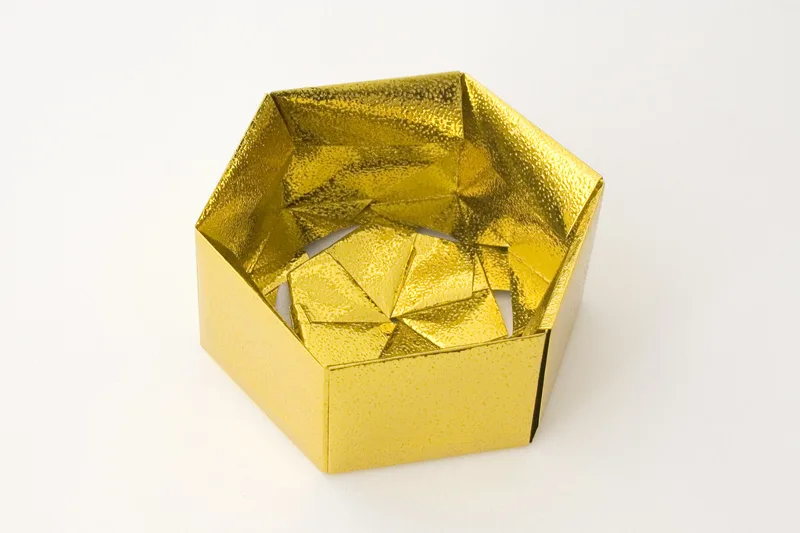
When a brand asks for "gold foil on the box," three very different materials are on the table. Hot-stamp pigment foil (what commercial printers actually use), imitation gold leaf (brass alloy sheets, a craft and gilding material), and real 24k gold leaf (hammered pure gold, used on domes and restoration work).
The three look similar in a photograph. They cost, behave, and age very differently in the real world, and only one of them belongs on a retail carton.
Short answer
- Hot-stamp foil (gold-pigment polyester) — the commercial standard on packaging. Precise, durable, machine-applied; what Packaging Vista and every retail printer actually puts on boxes.
- Imitation gold leaf (brass alloy) — craft and signage gilding material. Cheap, picture-book "gold leaf" look, tarnishes without sealing. Not used in retail packaging.
- Real 24k gold leaf — hammered pure gold at ~0.1 µm thick. Non-tarnishing, extremely expensive, used on domes, icons, and ultra-luxury one-offs. Not practical for scaled retail runs.
The three materials, side by side
| Hot-stamp foil | Imitation gold leaf | 24k gold leaf | |
|---|---|---|---|
| Material | Polyester carrier + metallic pigment + heat-release adhesive | Copper + zinc + aluminum alloy (brass) | 99.9%+ pure gold, hammered to ~0.1 µm |
| Thickness | 12–25 µm carrier (foil layer ~1 µm) | ~0.5–1 µm per leaf | ~0.1 µm per leaf |
| How it's applied | Heated metal die presses foil onto substrate (hot stamp) | Water-size or oil-size adhesive, hand-laid, burnished | Same gilding process as imitation; usually water gilding on gesso |
| Tarnishes? | No — polymer-sealed pigment | Yes — brass oxidizes without a top sealer | No — pure gold is noble metal |
| Typical use | Printed packaging, labels, business cards, book covers | Craft gilding, signage, picture frames, decorative art | Architecture (domes, icons), restoration, fine art, ultra-luxury one-offs |
| Cost on a 500-run folding carton | $0.15–$0.40 added per box | N/A (not a printing process) | N/A (not a printing process) |
| Food contact / skin safe? | Yes when sealed and used indirect-food-contact per 21 CFR 176.170 | Yes for skin contact; not food-safe (brass contains lead/zinc traces) | Yes — 24k gold is edible-grade (E175); fully skin-safe |
What is actually on a "gold foil" box?
Virtually every commercial packaging run specced as "gold foil" is hot-stamp pigment foil. Hot-stamp foil is a multilayer polyester film: a thin polymer carrier, a release layer, a metallic-pigment color layer (gold, copper, rose gold, silver, holographic, etc.), and a heat-activated adhesive on the back.
A heated metal die presses the foil onto the printed stock; the pigment layer and adhesive bond to the paperboard, the carrier peels away, and what's left is a sharp, bright, mirror-smooth gold shape in the exact outline of the die.
Hot stamp is what gives packaging the clean, printed-looking gold logo you see on luxury confectionery, perfume cartons, cosmetic boxes, and jewelry boxes. It is not real gold — it is polyester + metallic pigment — and that is a feature, not a bug.
Pigment foil is precise down to 0.1 mm detail, does not tarnish, survives shipping and shelf life, and costs $0.15–$0.40 per box at a 500-run on a mid-size folding carton. For how it compares against spot UV, see our spot UV vs foil guide.
What is the difference between imitation gold leaf and 24k gold leaf?
Imitation gold leaf is a brass alloy (copper + zinc + aluminum) hammered to a thin sheet that looks like gold. It costs a fraction of real gold, comes in larger loose-leaf or roll formats, and is the standard material for craft gilding, picture frames, decorative signage, and traditional gold-leaf art projects.
The alloy is roughly 85% copper and 15% zinc for a "deep gold" tone, with aluminum sometimes added for a lighter shade. Because it contains brass, it oxidizes and tarnishes when exposed to air, humidity, or skin oils — which is why gilded craft projects require a protective shellac or acrylic sealer immediately after application.
Real 24k gold leaf is 99.9%+ pure gold hammered to approximately 0.1 µm thick. It is heavier than imitation leaf (gold is 19.3 g/cm³ vs brass at 8.5 g/cm³), yet thinner because gold is more malleable. 24k gold is a noble metal, so it does not tarnish, does not require a protective sealer, and is edible-grade (certified food-safe under EU additive code E175 and FDA GRAS).
The trade-off is cost: one 3.375 × 3.375 in sheet of 24k leaf runs $1–$3 depending on supplier and karat purity, versus roughly $0.03–$0.08 for the same-size imitation sheet.
| Property | Imitation gold leaf | 24k gold leaf |
|---|---|---|
| Composition | Brass alloy (Cu + Zn + Al) | 99.9%+ pure gold |
| Thickness | ~0.5–1 µm | ~0.1 µm |
| Cost per 3.375 in sheet | $0.03–$0.08 | $1–$3 |
| Tarnishes | Yes — needs sealer | No — noble metal |
| Edible / food-safe | No (brass has lead/zinc traces) | Yes (E175 / FDA GRAS) |
| Skin-safe | Yes with sealer; raw brass can oxidize on skin | Yes — non-reactive |
| Best for | Craft gilding, signage, DIY framing | Fine art, architectural domes, edible confectionery, ultra-luxury one-offs |
Which "gold" fits your project?
Pick by use case:
- Retail packaging (boxes, cartons, labels, business cards): hot-stamp pigment foil. Not real gold; the right answer because it is precise, durable, scalable, and designed for exactly this job. This is what every commercial printer, including Packaging Vista, actually uses on a box.
- DIY craft gilding (frames, letters, signage, art projects): imitation gold leaf. Cheap, picture-book "gold leaf" look, requires a sealer to prevent tarnish.
- Edible decoration (chocolate, pastries, cocktails): real 24k gold leaf, food-grade only. Imitation leaf is not food-safe.
- Architectural and fine art (domes, icons, restoration): real 24k gold leaf for permanence; non-tarnishing matters over 50-year timescales.
- Ultra-luxury one-off packaging: rarely 24k; usually hot-stamp foil with heavy embossing + soft-touch base to achieve the premium effect at retail-scale economics.
Common questions about gold foil and gold leaf
Is imitation gold leaf non-toxic and skin-safe?
Imitation gold leaf is generally skin-safe for incidental contact — it is brass, which has been used in jewelry findings for centuries. But it is not food-safe: trace amounts of lead and zinc in commercial brass alloys mean it cannot be ingested, and manufacturers label imitation leaf accordingly.
Raw brass can also tarnish on skin and leave a greenish patina from copper oxidation, especially on humid or acidic skin. For jewelry, costume, or body-art applications, apply a protective sealer or use real 24k leaf. Only 24k gold leaf is both skin-safe and food-safe without caveats.
What glue do you use for gold foil leafing?
Gold leafing uses "size" (adhesive specifically formulated for leafing), not standard craft glue. Two main types:
- Water-size (traditional): a thin gelatin and alcohol wash applied over a gesso base. Used for burnished water gilding, the technique on antique frames and icons. Dries fast and leaves the sharpest mirror finish.
- Oil-size (modern craft): an oil-based mordant applied in a thin even coat and left to reach a "tacky" state (12 min to 12 hr open time depending on formulation) before the leaf is laid down. The standard for signage, picture frames, and most DIY gilding. Brands include Rolco, Dux, and Mona Lisa quick-set.
This matters for craft gilding. It does not apply to packaging — hot-stamp foil on a box uses a heat-activated adhesive layer built into the foil itself, not a separate size. The heated die melts the adhesive, bonds the pigment to the paperboard, and peels the carrier away in one pass.
How do you prevent gold foil from flaking on acrylic paint?
This question is specifically about gilding over an acrylic-painted surface in craft and fine-art projects. The flaking usually comes from one of three causes:
- Acrylic was not fully cured. Acrylic paint feels dry in 30 minutes but is not fully cured for 24–72 hours. Applying size to half-cured acrylic traps solvents under the leaf and causes delamination. Wait a full 72 hours after painting before gilding.
- Size was applied too thick or at the wrong tack stage. Oil-size needs to reach a specific tacky state (slight finger-drag, no visible transfer). Too wet, and the leaf wrinkles and lifts; too dry, and the leaf will not bond at all.
- No sealer applied over the leaf. Imitation leaf must be sealed with shellac or clear acrylic within 24 hours of application. The sealer locks the leaf against the surface, stops tarnishing, and prevents the leaf from being lifted by handling.
None of this applies to packaging — hot-stamp foil on a box is machine-pressed, polymer-sealed, and does not flake under normal retail handling. Flaking on packaging is almost always a sign of a bad die temperature or dwell-time setting at press, not a material failure.
Can you print gold foil lettering at home without a laser printer?
Yes, three methods work for low-volume at-home craft projects: (1) toner-reactive foil on a laser-printed sheet, run through a laminator with a transfer foil — this is the standard "foil quill" or "DecoFoil" method, and it does need a laser printer. (2) Adhesive-sheet method — print lettering with a cutting machine (Cricut, Silhouette) onto adhesive vinyl, then burnish gold foil onto the sticky surface.
No laser printer needed. (3) Hand-lettered gilding — brush oil-size in the shape of letters, wait for tack, lay imitation leaf, burnish, and seal. The oldest and most forgiving method.
Again, these are craft techniques for personal projects. Commercial packaging with gold foil lettering uses hot stamp or digital foil, which require industrial dies and heated presses. For a brand launch at any scale over a few hundred boxes, printed hot-stamp foil is lower per-unit cost than hand gilding and far more consistent.
Does gold foil tarnish on packaging?
No — hot-stamp pigment foil used on packaging is a polymer-sealed metallic pigment layer, not metal. There is no copper or brass in the foil to oxidize. A hot-stamp gold foil logo on a cosmetic carton will look the same in 5 years as it did on the day it printed, barring physical scuffing.
Real gold leaf also does not tarnish. Imitation gold leaf on craft projects does tarnish, which is why it requires a shellac or acrylic sealer.
Is hot-stamp gold foil food-safe?
Hot-stamp foils used on food packaging are formulated for indirect food contact under 21 CFR 176.170 when the foil sits on the outer face of the carton and does not contact the food directly. Specialty foils are available for direct-food-contact (candy and chocolate wrappers), but a standard retail hot-stamp foil on the outside of a box is already compliant for indirect contact.
For actual edible gold on confectionery, only real 24k gold leaf qualifies — imitation leaf is not food-safe.
What is the thickness of real 24k gold leaf vs imitation?
Real 24k gold leaf is approximately 0.1 µm (one ten-thousandth of a millimeter) thick — so thin that a single sheet is translucent against bright light. Imitation gold leaf is thicker at roughly 0.5–1 µm because brass is less malleable than gold and cannot be hammered as thin.
The thickness difference is why 24k leaf is sold in "books" of only 25 leaves while imitation leaf comes in packs of 500 or in roll stock.
If you need gold foil on a product box, here's how we do it
At Packaging Vista we hot-stamp gold foil on folding cartons, rigid boxes, mailers, and labels using heated metal dies. The foil is a polyester-pigment composite, not real gold — the industry standard across every retail printer. Added cost at a 500-run on a mid-size folding carton is $0.15–$0.40 per box, with no die, plate, or setup fees on first runs or reorders.
Dieline, 3D mockup, and US shipping are included.
Options we offer:
- Hot-stamp gold foil — the premium standard, mirror finish, sharpest detail.
- Cold foil (inline with offset) — lower unit cost at high volume, softer sheen.
- Gold foil + emboss (sculpted foil) — raised metallic gold, maximum luxury effect.
- Spot UV + gold foil layered — the classic perfume / jewelry / wedding-invite combo.
Compare the finishes side-by-side in our spot UV vs foil guide, see which box styles accept foil best in our box finishes guide, or request a free quote with your box size, quantity, and the gold foil area in your artwork.