Blog · By The Packaging Vista Team · June 20, 2026
Custom Packaging Trends for 2026: What Brands Are Doing Now
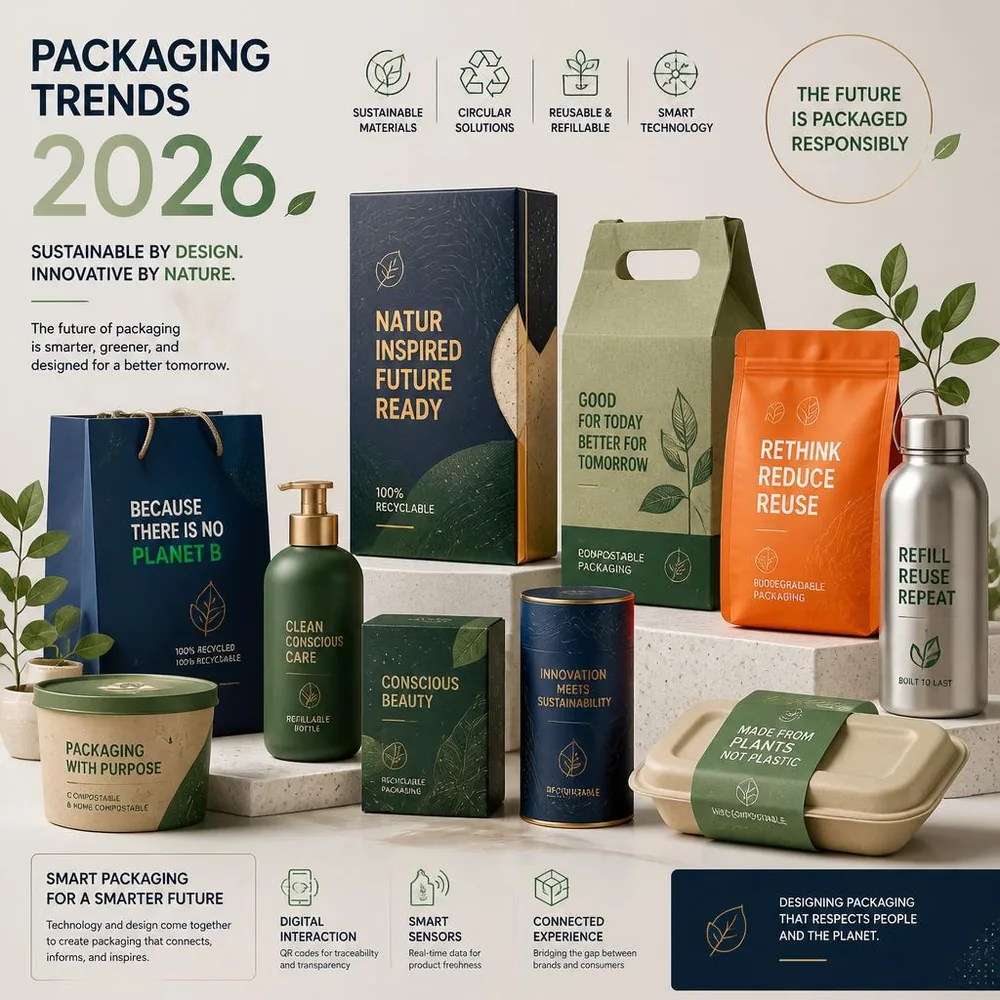
Packaging moves fast in 2026. Shoppers want it green. Brands use it as a marketing tool. The unboxing is now content.
You do not need to chase every trend. But it helps to know where things are heading. Here are the trends shaping 2026, each with one clear way to apply it to your boxes.
1. Sustainability is the default
Eco-friendly packaging is now a baseline, not a selling point. In 2026 that means paper-based stocks, less plastic, and soy-based inks. Right-sized boxes that cut waste also count.
The brands that stand out are honest and clear. They skip vague “green” claims.
How to apply it: pick recyclable kraft or paperboard. Say what is recyclable. See our sustainable packaging guide and recyclable kraft eco-friendly boxes.
2. Minimalist, confident design
Clean layouts, open space, bold type, and one focal point win on shelves and feeds. Less clutter reads as more premium. It also holds up in a small online thumbnail.
How to apply it: keep the front panel to your logo and one line. Let one finish carry the impact.
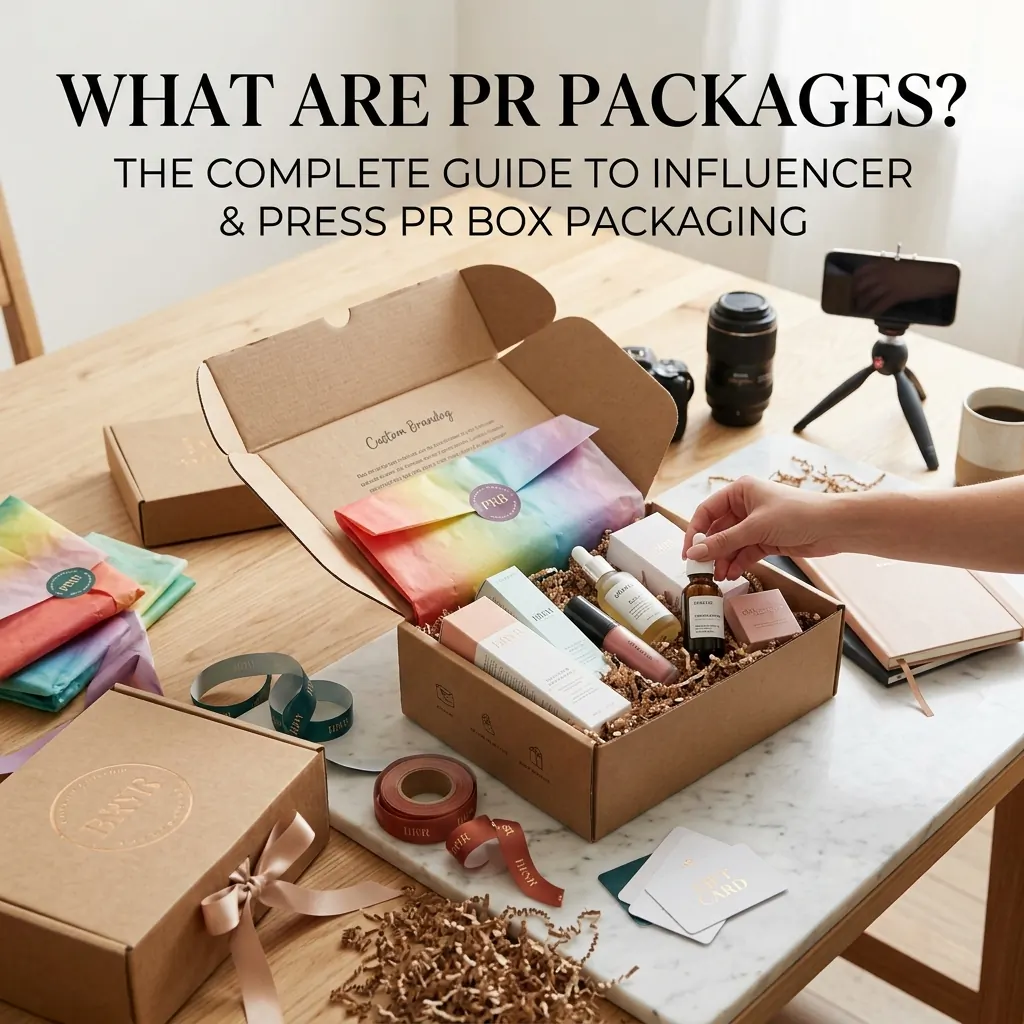
3. The unboxing is marketing
Buyers film and share unboxings. So the inside of the box now matters as much as the outside. Printed interiors, fitted inserts, and a thank-you card turn a delivery into content and repeat sales.
How to apply it: design the open, not just the box. See our inserts & unboxing guide.
4. Tactile, premium finishes
How a box feels is a growing edge. Soft-touch lamination, foil, embossing, and spot UV add a sense of quality flat print cannot match. They also photograph well for social.
How to apply it: pick one hero finish, not several. Our box finishes guide compares the options.
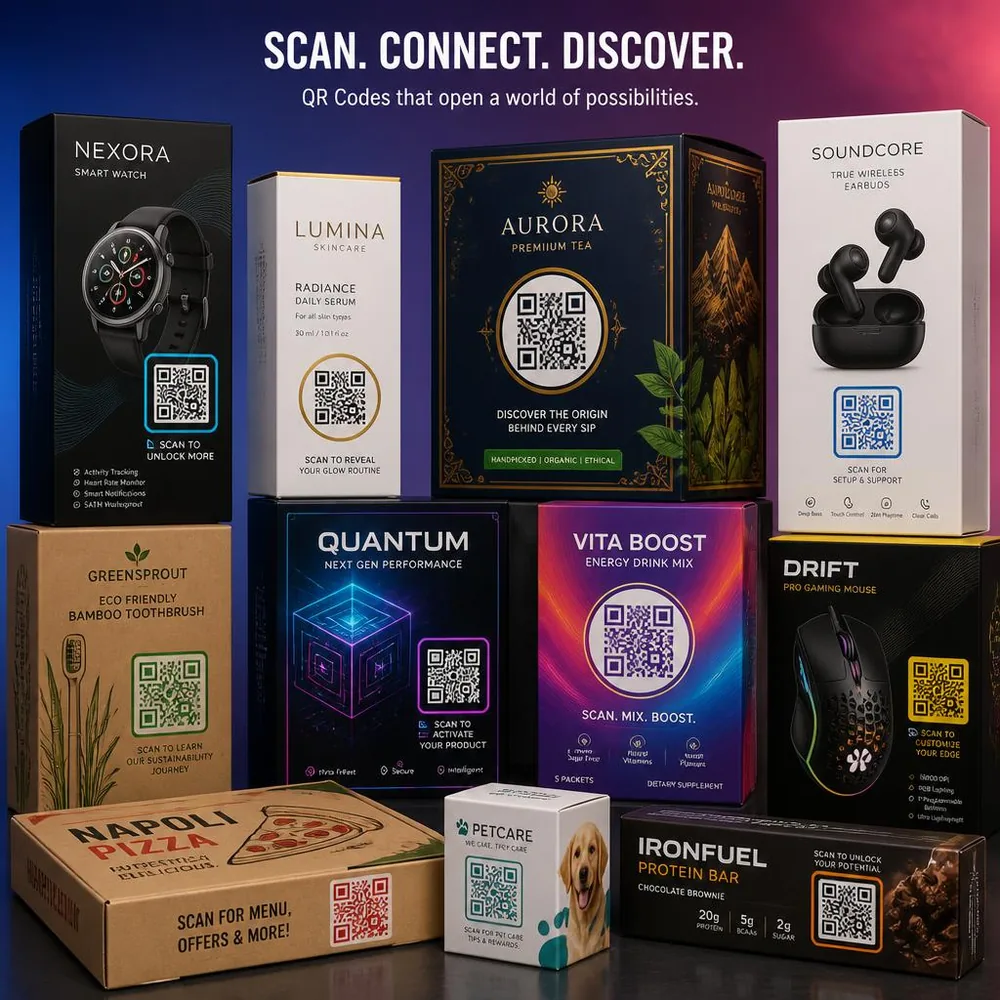
5. Connected packaging (QR codes)
QR codes are now a real channel. Brands use them to link to how-to videos, sourcing details, reorder pages, loyalty programs, and product-check pages. A static box turns into a doorway to content.
How to apply it: add a clean QR to a side or inner panel. Keep it easy to read. Our artwork & dieline guide shows where to place it.
6. Right-sized, e-commerce-ready boxes
Most sales now ship direct. So boxes are made for the mail first: self-locking mailers, less void fill, and sizes tuned to cut shipping cost. Right-sizing is a green win and a cost win.
How to apply it: measure the product and fit the box to it. See how to measure and our right-sized custom mailer boxes.
7. Bold color and expressive typography
Next to the minimalist push, there is a bold push too. Think saturated color and oversized type. The two are not at odds. Both reward simple design.
One bright panel with one strong word beats a busy multi-color print. It also reads on a small screen. To hit true brand color on press, match to Pantone. CMYK is only a guess. Our CMYK vs. Pantone guide shows when each matters.
How to apply it: pick one signature color and use it on every panel. Give a Pantone value so it prints the same run to run.
8. Personalization and limited editions
Short runs build urgency. Think seasonal designs, regional variants, and limited editions. They give loyal buyers something to collect and share.
There are no die or plate fees, and the minimum is only 100 boxes. So small runs work even for a young brand. A limited edition does not need a new box shape. Often it is the same box with fresh print.
How to apply it: keep the box shape and swap the art for each season or drop. See our personalized packaging guide.
How to choose which trends to follow
You do not have to try all of these. Pick the ones that fit your brand and budget. Sustainability and right-sizing pay off for almost everyone. Premium finishes and rich unboxing matter most for gift or high-price items and premium retail display boxes. When in doubt, start simple and add.
Quick reference: trend to action
| Trend | Best for | First step |
|---|---|---|
| Sustainability by default | Almost every brand | Switch to recyclable kraft or paperboard |
| Minimalist design | Crowded categories | Cut the front panel to logo + one line |
| Unboxing as marketing | DTC & subscriptions | Add an interior print or insert |
| Premium finishes | Gift & luxury items | Choose one hero finish |
| QR / connected packaging | Education-heavy products | Place a QR on a side panel |
| Right-sizing | Anyone who ships | Measure and fit the box to the product |
Frequently asked questions
What is the biggest packaging trend in 2026?
Sustainability as a default. That means recyclable, paper-based, right-sized packaging. Brands describe it in honest, specific terms, not vague green claims.
Do I need to follow every trend?
No. Pick the ones that fit your product and budget. Sustainability and right-sizing help nearly everyone. Premium finishes matter most for high-end items.
Can a small brand do trend-forward packaging on a budget?
Yes. There are no die or plate fees, and the minimum is 100 boxes. So a first run can use recyclable stock, a clean design, and one premium finish for less.
Are QR codes worth adding to a box?
They can be, if you have somewhere useful to send people. Think a how-to video, sourcing details, a reorder page, or a loyalty signup. Keep the code clear and give it a reason to be scanned.
Is augmented-reality packaging worth the setup cost?
For most brands, not yet in 2026. AR marker printing is easy, but building the AR experience – and getting buyers to install a viewer – is still a friction wall. A well-placed QR to a mobile web page delivers 80 percent of the value for 10 percent of the cost.
What sustainability claims are legal to print on-pack in 2026?
Any specific, provable claim – “100% recycled paperboard,” “FSC-certified,” “curbside recyclable per How2Recycle.” The FTC Green Guides bar vague terms like “eco-friendly” or “green” without proof. California SB 343 also gates the chasing-arrows symbol.
Are refillable containers taking share from single-use?
In beauty and household cleaners, yes – slowly. The economics work when the outer container is premium enough that buyers keep it. In food and beverage, single-use still dominates because of hygiene and cost. Expect refill to grow in categories where the buyer sees the value.
What is driving the “quiet luxury” packaging trend?
A backlash against loud logos and busy design. Buyers of premium goods now signal taste through restraint – heavy stock, tactile finish, tiny wordmark. Aesop, Le Labo, and The Row set the visual language. It is minimalism turned up on material, not print.
How is AI changing packaging design workflows?
AI tools now handle first-pass moodboards, layout variants, and even dieline art generation from a prompt. That cuts design cycle time from weeks to days. Humans still finalize brand voice, legal claims, and print files. The result is more design options at the same budget.
Why is sustainability now the default trend rather than a differentiator?
Because shoppers, regulators, and retailers all expect it. California SB 343 gates the chasing-arrows symbol, the FTC Green Guides bar vague “eco” claims, and Amazon and Target both reward reduced-plastic packs on placement. A recyclable kraft carton no longer wins on its own; it is table stakes.
What sets brands apart in 2026 is the honesty of the claim – specific, provable, and printed on the actual panel.
How does connected packaging (QR + AR) actually work?
A printed QR code on a side or inner panel links to a mobile web page – how-to video, sourcing story, reorder, loyalty signup, or product-check. No app needed; the phone camera scans it directly. AR adds an animated overlay when the buyer points a viewer at the pack, but adoption is still low because it requires an app install.
Start with QR; save AR for hero SKUs where the payoff clearly beats the setup cost.
How do I choose which packaging trends to actually apply?
Pick trends that match your product category and buyer. Sustainability and right-sizing help almost everyone. Premium finishes (soft-touch, foil, spot UV) matter most for gift and high-price items where unboxing is content. Connected QR pays off when you have education, sourcing, or loyalty content to link to.
Skip minimalist design if your brand voice is bold and playful – a trend against your DNA reads as copying, not leading.
What are the benefits of following trends on a 100-box run?
Trend-forward packaging usually costs less to test than brands assume. Because we charge no die, plate, or setup fees and start at 100 boxes, you can pilot a limited-edition print, a new sustainable stock, or a soft-touch finish without warehousing dead stock.
Free design, dieline, and 3D mockup mean the creative iteration is included, so a small brand can look every bit as current as a larger one.
Dig deeper: trend guides
A few of these trends have a full guide of their own:
- QR codes on packaging – link your box to content.
- Clean, minimal packs design – why less sells more.
- Personalized & limited-edition packaging – small runs, big impact.
Related reading from OLX Packaging: sustainable packaging trends for US brands.
Whatever you want to try, we will help you do it. You get free design, a free dieline, no die or plate fees, a 100-box minimum, and an 8–10 day turnaround. New to packaging? Start with our beginner’s guide. Then request your free quote or contact our team.