Blog · By The Packaging Vista Team · June 23, 2026
Custom Folding Carton Boxes in the USA: A Buyer's Guide to Working With a US-Based Supplier
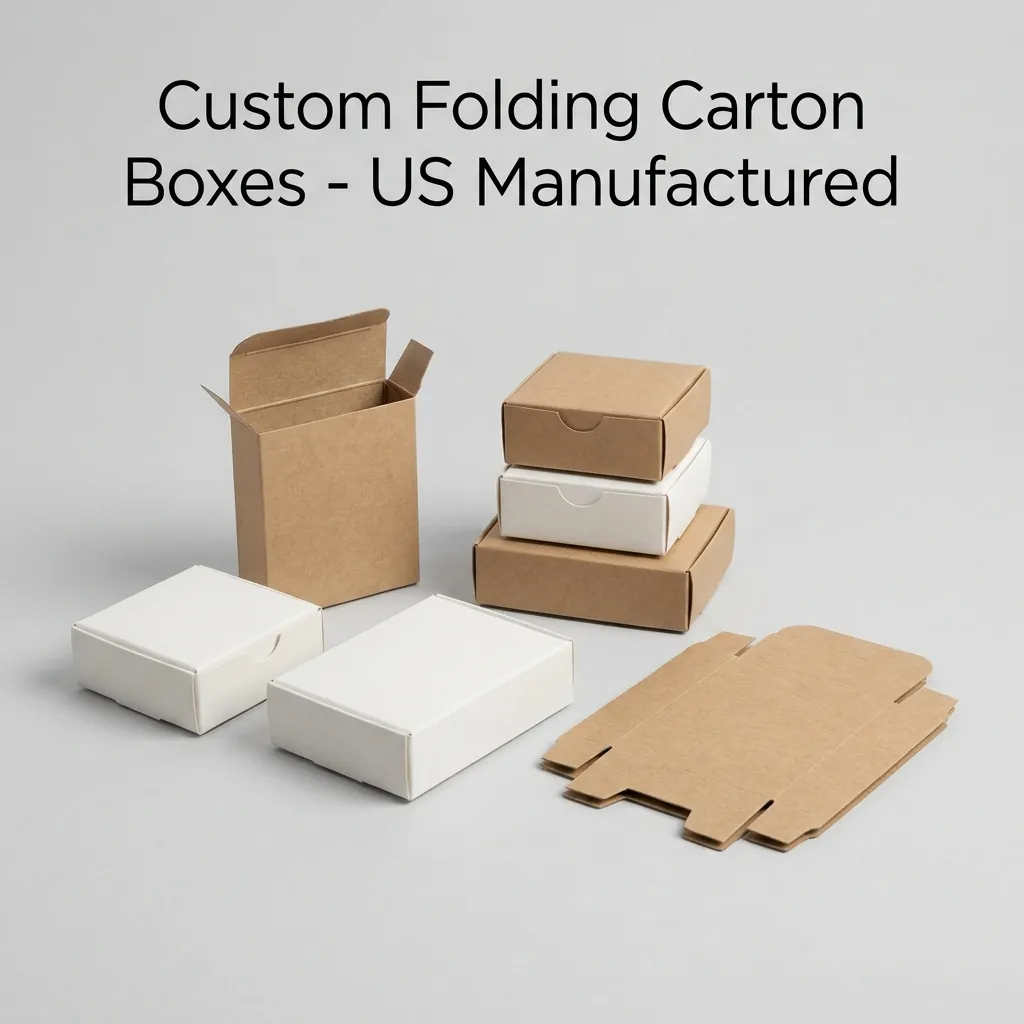
Walk any grocery, pharmacy, or beauty aisle. Nearly every boxed item is a folding carton. That is the printed paperboard box that ships flat, sets up at the fill line, and gets your product onto a shelf. It is the backbone of consumer packaged goods.
It is a production format as much as a box. Caliper, closure, and how it runs through a filling machine matter as much as the art – but the art is where product branding earns its shelf. This guide is for retail and CPG brands picking a carton spec, not just a look. For the structural basics, start with our folding cartons explainer. Then see the folding carton page.
Paperboard caliper and grade do the heavy lifting
A folding carton is defined first by its board. We run bleached SBS (solid bleached sulfate, a C1S/C2S paperboard) for crisp print and clean food-grade fills. We run natural kraft for an unbleached, organic look. And we run recycled or eco stocks for greener lines.
Caliper is the board thickness, usually measured in points. Pick it to match product weight and the rigidity your shelf presence needs. Use lighter board for a tea sachet carton. Use heavier caliper for a boxed appliance. Compare the substrate families in our paperboard vs corrugated guide. And see the SBS specifics in the SBS cardstock guide.
The closure is chosen for your fill line
This is where folding cartons stop being a generic box. How the carton closes has to fit how you pack it and how heavy the product is. So we tool the structure to your operation:
- Tuck-end cartons (straight or reverse) for hand-packed cosmetics, supplements, and lighter goods.
- Seal-end cartons glued top and bottom for high-speed automated lines, with tamper-evident options for food, pharma, and OTC.
- Snap-lock (1-2-3) bottoms that interlock to carry heavier contents securely.
- Auto-bottom (crash-lock) styles that pop open square for fast manual assembly when you fill by hand.
Working with a US-based team means you can dial the closure in right with the people drawing your dieline. You do not find out on a packing line that the carton fights your machine.
| Closure | Fill method | Product weight | Common use |
|---|---|---|---|
| Straight tuck-end | Hand pack | Light | Cosmetics, supplements |
| Reverse tuck-end | Hand pack | Light | Skincare, small OTC |
| Seal-end (glued) | Automated line | Light to mid | Food, pharma, OTC |
| Snap-lock (1-2-3) | Hand pack | Mid to heavy | Bottled goods, tools |
| Auto-bottom (crash-lock) | Fast hand pack | Mid to heavy | Retail sets, gift kits |
Ship flat, erect at fill, print sharp
Folding cartons ship and store as flat blanks. They only become boxes at the moment of filling. That keeps freight and warehouse space low.
On press we run full CMYK plus Pantone spot colors. Offset for long runs, digital for shorter ones. Color stays the same batch to batch.
Finishes turn a flat paperboard panel into real retail presence. That covers soft-touch or gloss lamination, foil stamping, embossing and debossing, spot UV, and patched windows. See what each adds in the box finishes guide.
Food, pharma, and OTC grades
Plenty of folding cartons hold things that are regulated. We offer food-grade SBS and tamper-evident seal-end builds. These suit US food, pharma, and over-the-counter packaging. The carton meets the closure and contact rules those categories need.
You confirm the rules for your product. We build the structure and pick the board to match. For contact-safety background, see the food-safe packaging guide.
Restock speed for fast-moving SKUs
A top-selling CPG product burns through cartons. The cost of running out is an empty shelf facing. A restock runs in about eight to ten working days after proof approval. Rush is on offer when a shelf date is close.
Your US project contact keeps your dieline and art on file for the same repeats. The minimum is just 100 boxes with no die, plate, or setup fee. That is low enough to launch a new SKU or seasonal item without a huge order. Shipping is included nationwide. Pricing drivers are in our packaging cost guide.
Who orders folding cartons
They are the retail standard for cosmetics, food and supplements, pharma and OTC, electronics, and everyday consumer goods. They are the core of consumer retail packaging. And they are one of the most-ordered formats in our custom box range. The folding carton is the default any time a printed paperboard box has to scale across a fill line and a shelf.
Ordering custom folding cartons
Send the product size, your fill method, the board grade and print you want, and the quantity. We return a free dieline and 3D mockup. Approve the structure and the look. Then we print and ship. Start a folding carton order with a free quote or contact the team.
You can also see custom folding carton styles at OLX Packaging for more layout ideas.
Frequently Asked Questions
How do I pick the right paperboard caliper?
Caliper is the board thickness. We match it to your product weight and the rigidity your shelf presence needs. Use lighter board for a small light item. Use heavier caliper for a weightier or more premium product. We suggest a grade and caliper on your mockup.
Which closure runs best on an automated filling line?
Glued seal-end cartons are built for high-speed automated lines. They also support tamper-evident fills. Auto-bottom styles suit fast manual assembly. We tool the closure to your kit and product weight so the carton runs cleanly.
Can you supply food-grade or pharma-grade cartons?
Yes. We offer food-grade SBS paperboard and tamper-evident seal-end builds. These suit US food, pharma, and OTC packaging. You confirm the rules for your product. We build the structure and pick the board to match.
What should I look for in a US-based folding carton supplier?
Look for help matching the closure to your fill line, clear board and caliper advice, and a proof you can check before printing. Low minimums, reorders from a dieline on file, and a single US point of contact matter too. We offer all of these, with 8–10 working-day production and free US shipping.
What is the minimum order?
One hundred boxes. No die, plate, or setup fee. So you can launch a new SKU or run a seasonal item without a huge order. Then reorder fast from your dieline on file.
What is a folding carton box?
A folding carton is a printed paperboard box that ships flat as a blank and gets erected at the fill line. It is the standard retail box for cosmetics, food, supplements, pharma, and everyday CPG. It is defined by its board (SBS, kraft, or recycled), its caliper (thickness), and its closure (tuck-end, seal-end, snap-lock, or auto-bottom). It is not the same as a corrugated shipper.
What is the difference between a folding carton and a rigid box?
Folding cartons ship flat and set up at fill. They use paperboard in the 12–28 point range and cost less per box. Rigid boxes arrive pre-formed with thick chipboard wrapped in printed paper. They have a solid, weighty feel and cost more but read premium. Folding cartons win on cost, freight, and fill-line speed. Rigid wins on prestige and unboxing.
How do I choose the right folding carton closure for my fill line?
Match the closure to how you pack. High-speed automated lines run best on glued seal-end cartons, often with tamper-evident features for food, pharma, or OTC. Hand-packed cosmetics and supplements suit tuck-end cartons (straight or reverse). Heavier products need a snap-lock (1-2-3) bottom.
Fast manual assembly runs on auto-bottom (crash-lock) styles that pop open square. Tell us the fill method and product weight.
How much does a custom folding carton cost from a US-based supplier?
Pricing is quote-based on board grade, caliper, closure, print, finish, and quantity. There are no die, plate, or setup fees. The minimum is 100 boxes and US shipping is free. Standard SBS tuck-end cartons run less than tamper-evident seal-end pharma builds or foil-embossed premium beauty cartons. Send product specs and target volume for a same-day quote.