Blog · By The Packaging Vista Team · June 20, 2026
Folding Cartons & Tuck-End Boxes: The Retail Standard

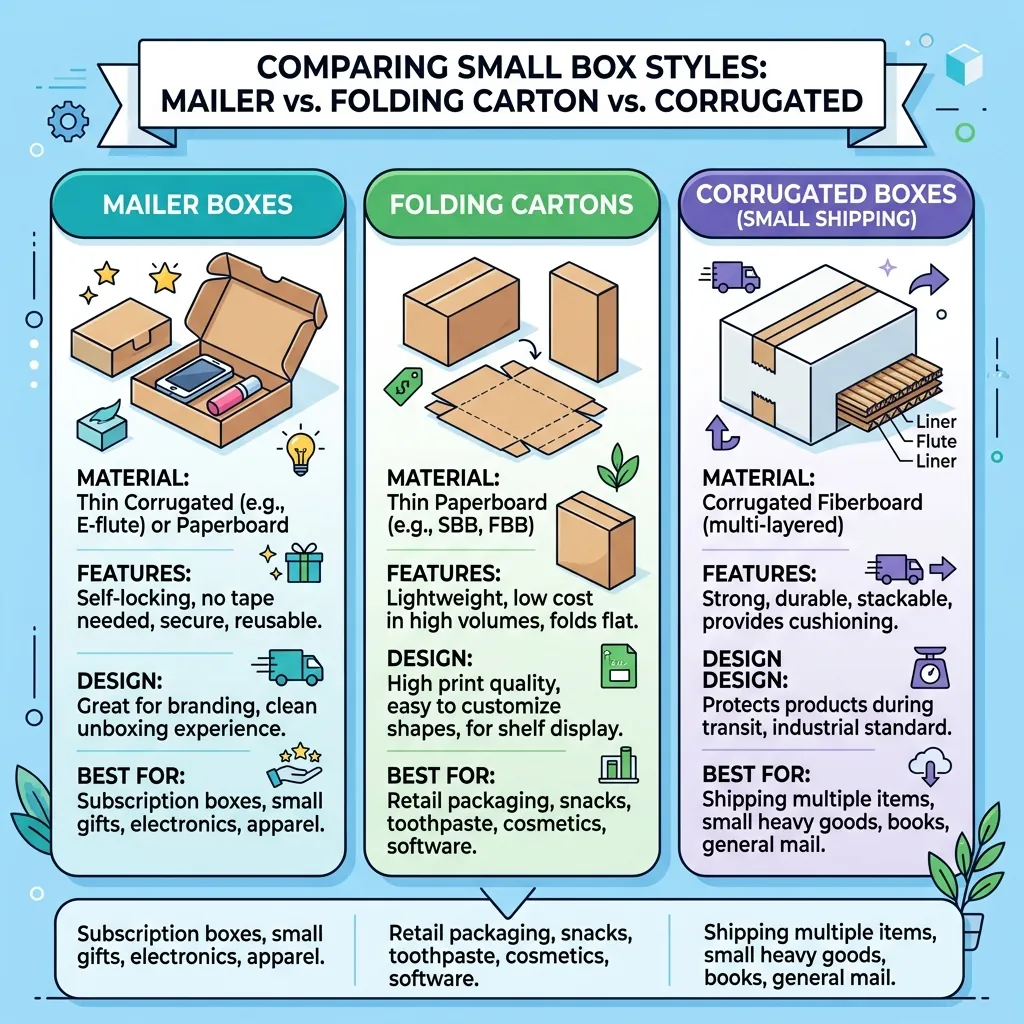
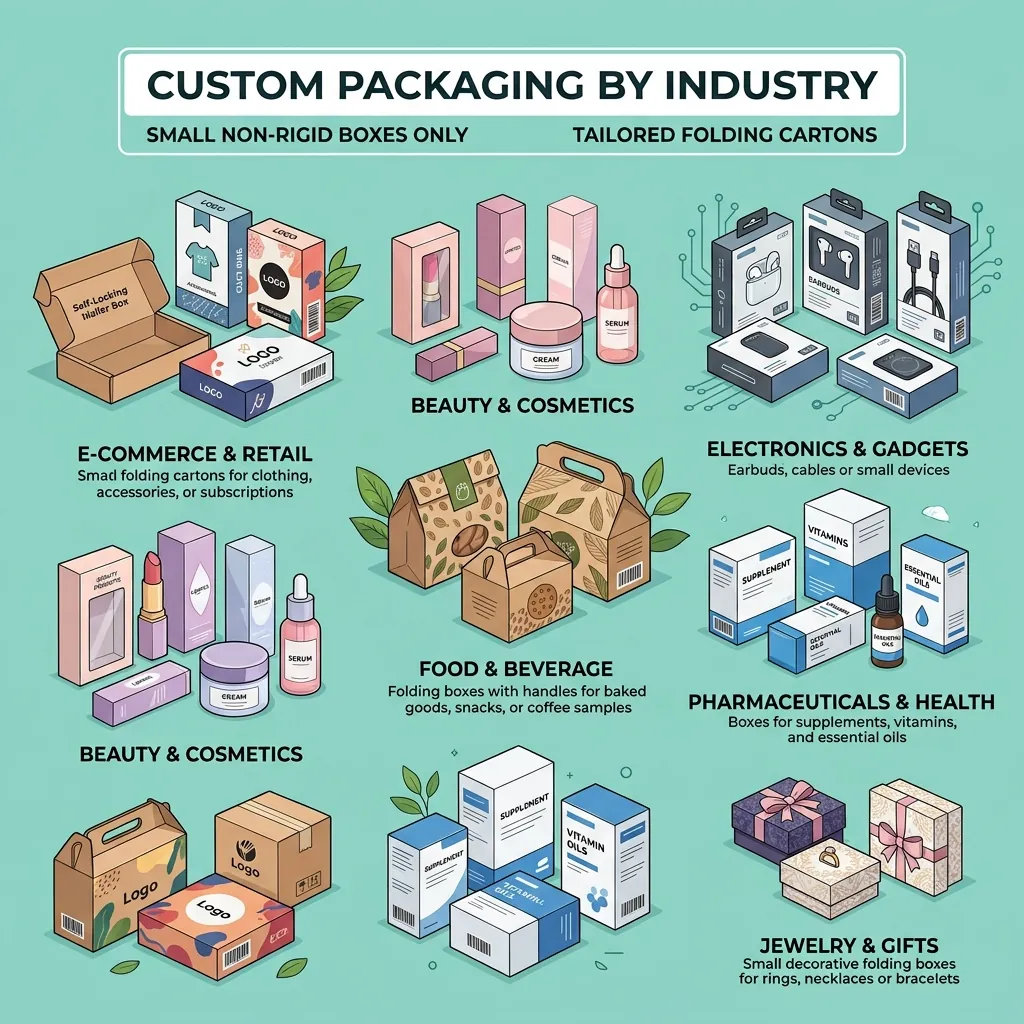
A folding carton is a light printed paperboard box that ships flat and folds up for use. It is the most common retail box there is, holding cosmetics, supplements, and packaged foods on a shelf as everyday paperboard retail boxes.
Tuck-end closures — straight tuck and reverse tuck — make the carton fast to fold and easy to fill. This guide to folding cartons and tuck-end boxes goes deeper than our box styles overview.
Why do folding cartons dominate retail?
They are cheap, mostly at volume. They use light paperboard and ship flat. They print well, fold easy, and fit almost any light retail product. See our custom folding carton boxes.
Shipping flat is a quiet superpower. It cuts inbound freight and storage cost a lot compared with pre-formed boxes. And the carton pops into shape in a second when you need it. For a brand that moves thousands of units, those savings add up across every reorder.
What is a folding carton made of?
Most folding cartons are printed on SBS cardstock for a bright white, smooth surface. Or on kraft paperboard for a natural, recyclable look.
The stock weight is picked to match the product. Heavier board for larger or heavier items. Lighter board for small cosmetics and supplements. Our paper weights and thickness guide covers how to pick the right caliper. So the carton feels solid without overpaying for board.
What are the tuck-end styles?
The most common closures are tuck-end designs. A flap that tucks into the box. A straight tuck has both flaps on the same side (cleaner front). A reverse tuck has them on opposite sides (easier to machine-pack). Both are easy to fold by hand. See our custom tuck-end carton boxes.
- Straight tuck end (STE) – both tuck flaps fold in from the same edge, keeping the front panel clean. Best when the front face is the hero of your design.
- Reverse tuck end (RTE) – flaps fold from opposite edges, which is simpler to set up and pack, including on automated lines. Best for high-volume or machine filling.
- Auto-bottom and tuck-top – for heavier products, a locking or glued bottom holds more weight than a simple tuck.
How do you choose a closure?
If the front of your box carries the brand and the product is light, a straight tuck gives the cleanest face. If you fill by machine or want the lowest folding effort, a reverse tuck is the practical pick.
For anything with real weight — a jar, a bottle, a dense supplement — a locking auto-bottom keeps the contents from pushing through the base. We help you match the closure to the product as part of the free dieline.
| Closure | Best for | Fill method |
|---|---|---|
| Straight tuck end (STE) | Front-panel branding, prestige retail | Hand-fill |
| Reverse tuck end (RTE) | High-volume retail, value pricing | Hand or machine |
| Auto-bottom (crash-lock) | Medium-weight products, fast erect | Hand-fill |
| Snap-lock (1-2-3) bottom | Heavier jars, bottles, stacks | Hand-fill |
| Seal-end (glued top and bottom) | High-speed automated lines, food and pharma | Machine fill |
When should you choose something else?
For shipping alone, step up to a self-locking corrugated mailer box or sturdy corrugated shipping box. For a premium feel, a luxury rigid gift box.
Folding cartons are for light retail, not heavy transit. A folding carton sent through the mail without an outer box usually arrives crushed. Paperboard is not built to absorb shipping abuse. If your product ships direct to buyers, read our e-commerce packaging guide for the right build.
How do you add a window or finish?
Folding cartons take windows and finishes well. A window to show the product. Or soft-touch and foil for a lift. See our box finishes guide.
The print surface is large and smooth. So folding cartons are an ideal canvas for foil stamping, embossing, and spot UV. A simple matte or gloss laminate also guards the print and changes the whole feel of the box.
How do you design for print and shelf punch?
The folding carton is, above all, a printing surface. Its large, smooth panels are where your brand fights for eyes.
The front face usually carries the logo and product name. The side panels carry features and benefits. The back carries the legal and ingredient copy. Designing with a clear order — one main message per panel — keeps the carton readable from arm's length on a shelf.
Bleed and safe zones matter here too. Trim and folding tolerances can clip art placed too close to an edge. Our bleed and safe zone guide and packaging artwork and dieline guide walk through how to set up press-ready files.
What are the cost drivers?
A few choices move the price of a folding carton more than anything else. The board weight. The size. The print coverage. And the finishes.
A lighter stock and tighter sizes cost less. Full-bleed heavy ink coverage costs more. And premium finishes such as foil or soft-touch add a step. We charge no die or plate fees and start at a low minimum of 100 boxes. So even short runs and test batches are cheap.
That makes folding cartons a low-risk way to launch or refresh a retail line. For a fuller breakdown, see our guide to what custom packaging costs.
What products use folding cartons?
- Custom cosmetic product cartons and lip gloss tube boxes – small, light, and brand-forward.
- Supplement and multivitamin cartons – printed cartons with dosage and compliance copy.
- Packaged foods such as printed cereal carton boxes and bakery and pastry boxes.
- Custom soap bar boxes and candle and jar retail packaging.
Frequently asked questions
What is a folding carton?
A folding carton is a lightweight printed paperboard box that ships flat and folds up for use. It is the most common retail box, used for cosmetics, supplements, packaged foods, and similar light products.
What is the difference between a straight tuck and a reverse tuck?
A straight tuck end has both closure flaps folding from the same edge, which keeps the front panel clean for branding. A reverse tuck end has flaps on opposite edges, which is simpler to set up and better for machine packing.
Can folding cartons be used for shipping?
Folding cartons are designed for light retail, not solo transit. For shipping, step up to a mailer or corrugated box, or place the folding carton inside a shipping box. For a premium feel, choose a rigid box.
What is the minimum order for custom folding cartons?
We produce custom folding cartons from a low minimum of 100 boxes, with no die or plate fees, a free dieline, and an 8–10 day turnaround.
How do I choose between straight tuck, reverse tuck, and auto-bottom?
Pick straight tuck end (STE) when the front panel is the hero of the design – both flaps fold from the same edge, keeping the face clean. Pick reverse tuck end (RTE) for high-volume filling and machine-pack lines – flaps fold from opposite edges, simpler to run at speed.
Pick auto-bottom (crash-lock) when the product has real weight (jars, bottles, dense supplements) – a locking bottom holds more than a simple tuck.
What are the benefits of folding cartons over other box styles?
Ship flat – a massive cost saving on inbound freight and storage vs. pre-formed rigid boxes. Fast to fold and fill by hand or machine. Print beautifully in CMYK plus Pantone on bright SBS or natural kraft. Take finishes (foil, spot UV, soft-touch) cleanly for premium retail.
And run cheap at a 100-box minimum with no die or plate fees. That combination is why folding cartons dominate light retail packaging.
How much do custom folding cartons cost?
Pricing is quote-based on size, stock, print coverage, finishes, and quantity, with no die, plate, or setup fees at the 100-box minimum. Board weight, size, ink coverage, and finishes are the main cost drivers. A tuck-end SBS carton with two-color print on 100 units is the low-cost entry point; adding foil, spot UV, or heavier board raises unit cost but keeps the run reachable.
Volume drops per-unit cost sharply as ink and setup amortize.
Which tuck-end style is best for a premium retail product?
Straight tuck end (STE) – because both tuck flaps fold from the same edge, the front face stays clean and unbroken for logo, product name, and hero image. Pair with a soft-touch base, one foil accent on the logo, and 18pt+ SBS stock for a premium retail feel that still ships flat and folds fast at packing. Reverse tuck can work too but slightly weakens the front panel line-up for hero branding.
Is a folding carton worth it over a plain stock box for a small retail product?
For any product sold on shelf or through e-commerce with brand exposure, yes. A stock box carries no branding, cannot fit compliance panels cleanly, and reads amateur next to printed competitors. A custom folding carton at 100 units gives you branded panels, exact fit that cuts damage, and finish options that lift perceived value – all at unit costs low enough for small runs to earn back on the first higher-price sale.
For more on this topic, see guide to folding cartons from OLX Packaging.
Tell us your product and size, and we will build a folding carton with a free dieline – no die or plate fees, from a 100-box minimum. See the full box styles guide, then request your free quote or contact our team.