Blog · By The Packaging Vista Team · October 19, 2026
How Much Does a Cardboard Box Weigh? Cardboard Thickness, Weight & Density Reference
A standard medium cardboard moving box (18 × 14 × 12 inches, single-wall C-flute corrugated) weighs approximately 1.2 to 1.6 pounds (545 to 725 grams) empty. A small moving box (16 × 12 × 12 in) weighs 0.9 to 1.2 lbs; a large moving box (24 × 18 × 18 in) weighs 2.0 to 2.6 lbs; and an extra-large/dish-pack moving box (24 × 18 × 24 in) weighs 2.6 to 3.4 lbs.
Exact weight depends on three variables: box dimensions (surface area of cardboard), flute type (single-wall E, B, or C flute vs double-wall BC flute), and paperboard grade (lightweight 125 lb test vs heavy-duty 275 lb test). This guide covers the full weight reference, how corrugated cardboard thickness is measured, and the density calculations behind the numbers.
Quick weight reference (single-wall C-flute, standard 200 lb-test corrugated)
- Small moving box (16 × 12 × 12 in): 0.9–1.2 lbs
- Medium moving box (18 × 14 × 12 in): 1.2–1.6 lbs
- Large moving box (24 × 18 × 18 in): 2.0–2.6 lbs
- Extra-large / dish-pack (24 × 18 × 24 in): 2.6–3.4 lbs
- Small shipping mailer (10 × 7 × 3 in E-flute): 0.15–0.25 lbs
- Standard shipping box (12 × 9 × 6 in B-flute): 0.35–0.55 lbs
How much does a cardboard box weigh? Full weight-by-size reference
Cardboard box weight scales with surface area (how much cardboard is in the box) and board grade (lightweight vs heavy-duty paper):
| Box size (L × W × H) | Use case | Flute | Single-wall weight (lbs) | Double-wall weight (lbs) |
|---|---|---|---|---|
| 8 × 6 × 4 in | Small e-commerce mailer | E-flute | 0.10–0.18 | N/A (single-wall only) |
| 10 × 7 × 3 in | Book, apparel mailer | E-flute | 0.15–0.25 | N/A |
| 12 × 9 × 6 in | Standard shipping box | B-flute | 0.35–0.55 | 0.65–0.95 |
| 14 × 10 × 10 in | Multi-item shipping | B or C-flute | 0.60–0.90 | 1.05–1.55 |
| 16 × 12 × 12 in | Small moving box | C-flute | 0.9–1.2 | 1.5–2.0 |
| 18 × 14 × 12 in | Medium moving box | C-flute | 1.2–1.6 | 2.0–2.7 |
| 20 × 16 × 14 in | Large shipping | C-flute | 1.5–2.0 | 2.5–3.3 |
| 24 × 18 × 18 in | Large moving box | C-flute | 2.0–2.6 | 3.3–4.3 |
| 24 × 18 × 24 in | Extra-large / dish-pack | C-flute | 2.6–3.4 | 4.3–5.6 |
| 30 × 24 × 24 in | Oversized freight | Double-wall BC | 3.8–5.2 (single) | 6.2–8.5 |
The ranges account for differences in paper weight (lighter 125 lb-test for light-duty applications, heavier 200–275 lb-test for shipping-grade boxes). Standard moving boxes sold at Home Depot, Lowe's, and U-Haul are typically 200 lb-test single-wall C-flute; heavy-duty shipping-grade boxes (Amazon fulfillment, Chewy, etc.) are often 275 lb-test or double-wall BC-flute.
How thick is cardboard? Thickness by flute type
Corrugated cardboard thickness is measured as the total board thickness — the full stack of liner + flute + liner. Standard flute types in US corrugated:
| Flute | Thickness | Flutes per linear foot | Best for |
|---|---|---|---|
| E-flute | 1/16 in (1.6 mm) | ~90 | Small retail boxes, mailers, high-detail print |
| F-flute | 1/32 in (0.8 mm) | ~128 | Cosmetic cartons, small retail with crisp print |
| B-flute | 1/8 in (3.2 mm) | ~47 | Standard shipping, retail-grade |
| C-flute | 3/16 in (4.0 mm) | ~41 | Standard moving boxes, general shipping |
| A-flute | 5/16 in (5.0 mm) | ~33 | Heavy cushioning, fragile shipping |
| BC double-wall | 5/16 in (8.0 mm) | ~41 (C) over ~47 (B) | Heavy-duty freight, industrial, fragile |
| EB double-wall | 3/16 in (4.8 mm) | ~47 (B) over ~90 (E) | Premium retail + shipping dual-purpose |
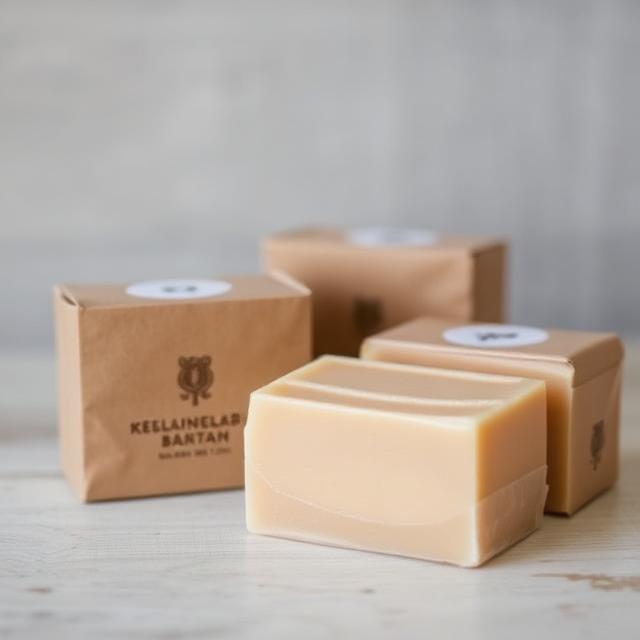
Non-corrugated solid paperboard (the "chipboard" or "boxboard" used in folding cartons — cereal boxes, cosmetic boxes, soap boxes) is measured in points (pt) or caliper, where 1 point = 0.001 inch:
- 14 pt (0.014 in / 0.36 mm) — lightweight folding cartons, cereal boxes, cosmetic cartons
- 18 pt (0.018 in / 0.46 mm) — standard retail folding cartons, soap boxes
- 22 pt (0.022 in / 0.56 mm) — premium folding cartons, cosmetics, supplement boxes
- 24 pt (0.024 in / 0.61 mm) — heavy-duty folding cartons
- 28 pt (0.028 in / 0.71 mm) — book covers, premium retail
- 2.0–3.0 mm chipboard — rigid two-piece boxes, luxury packaging
See our full material reference in the paperboard vs corrugated guide and paper weights and thickness guide.
Cardboard density: how heavy is a square foot of cardboard?
Corrugated cardboard density (weight per unit area) depends on flute type and liner grade. Reference figures for standard US corrugated:
- E-flute single-wall (125 lb-test): ~45–60 grams per square foot (gsf) / ~485–645 grams per square meter (gsm)
- B-flute single-wall (200 lb-test): ~65–85 gsf / ~700–915 gsm
- C-flute single-wall (200 lb-test): ~70–90 gsf / ~750–970 gsm
- C-flute single-wall (275 lb-test, heavy-duty): ~90–115 gsf / ~970–1,240 gsm
- BC-flute double-wall (275 lb-test): ~125–165 gsf / ~1,345–1,775 gsm
To estimate a box's weight: compute the box's total surface area in square feet, multiply by the gsf for your flute type. For an 18 × 14 × 12 inch box (medium moving box):
- Two 18 × 14 faces (top + bottom): 2 × (18 × 14 / 144) = 3.5 sq ft
- Two 18 × 12 faces (long sides): 2 × (18 × 12 / 144) = 3.0 sq ft
- Two 14 × 12 faces (short sides): 2 × (14 × 12 / 144) = 2.33 sq ft
- Total: 8.83 sq ft
- At ~80 gsf (C-flute 200 lb-test): 706 grams = ~1.56 lbs — matches the 1.2–1.6 lb reference above
Add 5–10% for glue, overlap, and flap waste in the dieline. The actual weight on the scale is almost always slightly higher than pure surface-area math predicts.
Why cardboard box weight matters: shipping cost and freight
Carriers charge based on the greater of actual weight or dimensional weight. For boxes shipped empty-or-near-empty (packaging-only wholesale shipments, flat-packed cartons sent to a co-packer), the actual weight of the cardboard itself can trigger billable weight. Flat-packed, a stack of 100 medium moving boxes weighs ~130–160 lbs — freight shipment-size.
For finished product shipping, the empty-box weight is a smaller fraction of the total. A 1.5-lb medium moving box filled with a 10-lb product has total weight 11.5 lbs, with cardboard being ~13% of total. On e-commerce mailer boxes (0.3–0.6 lb empty) the cardboard is 2–5% of total ship weight.
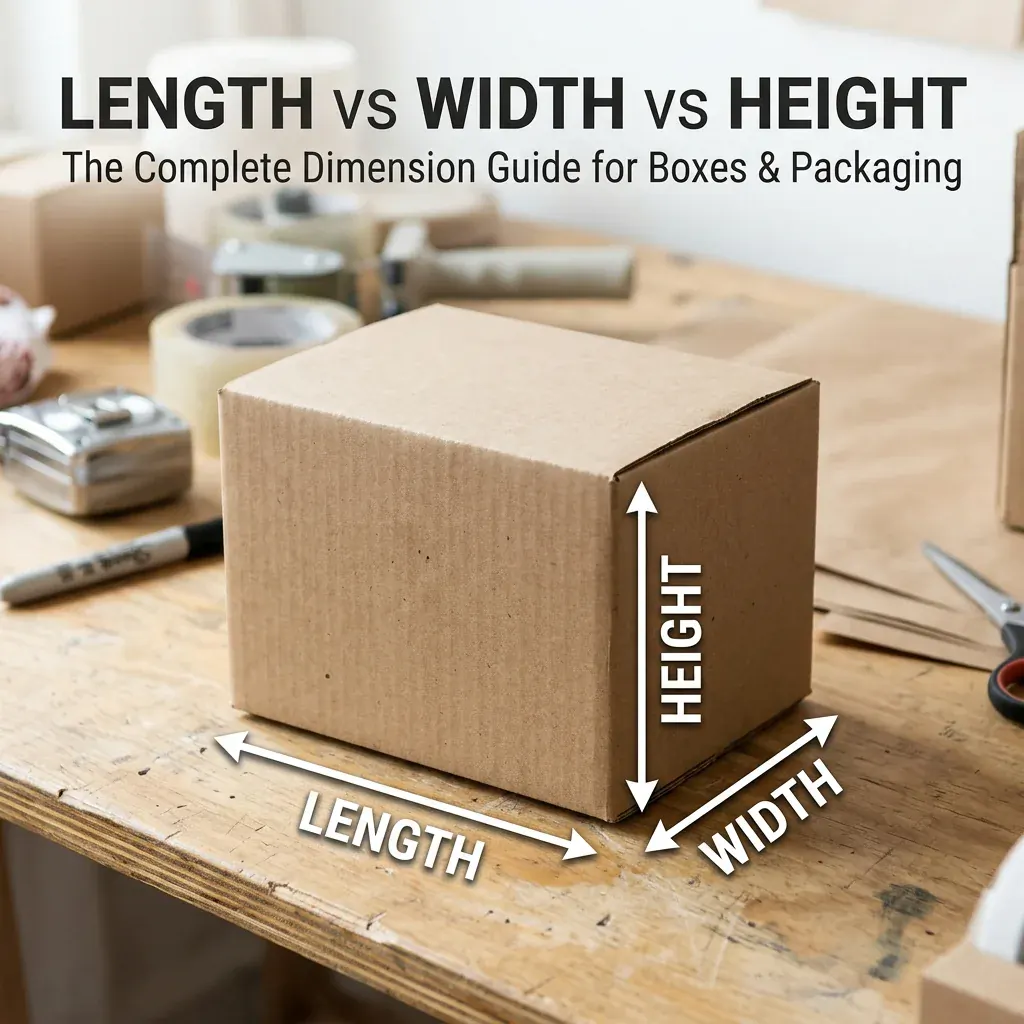
Right-sizing the box to the product has a bigger impact on dim-weight shipping than switching flute types. See our dimensional weight shipping guide and length vs width vs height guide for the full carrier math.
What is cardboard? Material definition and types
"Cardboard" is a loose term that refers to several related paper-based materials. The three main categories:
- Corrugated cardboard — the sandwich-structured material (liner + flute + liner) used in shipping boxes, mailers, moving boxes, and retail shipping. Flute types E/F/B/C/A, with BC and EB double-wall for heavy-duty applications. This is what people usually mean when they say "cardboard."
- Paperboard / boxboard / chipboard — solid single-ply paper stock used in folding cartons (cereal boxes, soap boxes, cosmetic cartons). Measured in points (pt) or caliper. Grades include SBS (solid bleached sulphate), FBB (folding boxboard), CCNB (clay-coated news-back), and uncoated kraft chipboard.
- Rigid chipboard / greyboard — thick solid board (1.5–3 mm) used in rigid two-piece gift boxes, luxury packaging, book covers, and PR packages. Measured in mm.
For a full comparison of corrugated vs paperboard — when to use each, cost differences, and typical specs — see our paperboard vs corrugated guide.
Frequently asked questions
How much does a cardboard box weigh?
A standard medium moving box (18 × 14 × 12 in, single-wall C-flute 200 lb-test corrugated) weighs about 1.2–1.6 lbs empty. Smaller shipping boxes (12 × 9 × 6 in B-flute) weigh 0.35–0.55 lbs. Larger moving boxes (24 × 18 × 18 in) weigh 2.0–2.6 lbs. Exact weight depends on size, flute type, and paper grade.
How much does an average cardboard moving box weigh?
A medium moving box (18 × 14 × 12 in) weighs 1.2–1.6 lbs. A small moving box (16 × 12 × 12 in) weighs 0.9–1.2 lbs. A large moving box (24 × 18 × 18 in) weighs 2.0–2.6 lbs. All assume single-wall C-flute 200 lb-test corrugated, which is the standard sold at Home Depot, Lowe's, and U-Haul.
How thick is cardboard?
Corrugated cardboard thickness depends on flute type: E-flute is 1/16 in (1.6 mm), B-flute is 1/8 in (3.2 mm), C-flute is 3/16 in (4.0 mm), A-flute is 5/16 in (5.0 mm), and double-wall BC is 5/16 in (8.0 mm). Non-corrugated folding-carton paperboard is measured in points (pt), with 18 pt being the retail-folding-carton standard at 0.018 in / 0.46 mm thick.
What is the standard thickness of corrugated cardboard?
C-flute (3/16 in / 4.0 mm) is the US standard for moving boxes and general-purpose shipping. B-flute (1/8 in / 3.2 mm) is the standard for retail-grade shipping boxes and smaller mailers. E-flute (1/16 in / 1.6 mm) is standard for small retail boxes and premium mailers with high-detail printing.
What is the density of cardboard?
Single-wall corrugated cardboard runs ~65–115 grams per square foot (gsf), depending on flute and liner grade. B-flute 200 lb-test is ~65–85 gsf; C-flute 200 lb-test is ~70–90 gsf; heavy-duty 275 lb-test is ~90–115 gsf. Double-wall BC-flute runs ~125–165 gsf.
How do I calculate the weight of a cardboard box?
Multiply the total surface area (in square feet) by the grams-per-square-foot for your flute and grade, then add ~5–10% for glue and flap waste. For a 18 × 14 × 12 inch box: total surface area is ~8.83 sq ft; at ~80 gsf for C-flute 200 lb-test that's 706 grams = 1.56 lbs, matching the standard medium-moving-box reference weight.
Does the weight of a cardboard box affect shipping cost?
Carriers charge based on the greater of actual weight or dimensional weight. For finished product shipments, the empty-box weight is 2–15% of total weight depending on product density. Right-sizing the box to the product has a bigger impact on billable dim-weight than switching flute types.
For bulk shipments of empty boxes (wholesale wholesale packaging to a co-packer), the cardboard weight is 100% of the shipment and triggers full freight.
What is 200 lb test cardboard?
"200 lb-test" refers to the Mullen Burst strength rating — the pounds per square inch of pressure the board can withstand before bursting. 200 lb-test is the US standard for single-wall C-flute corrugated used in moving boxes and most shipping.
Heavy-duty applications use 275 lb-test; light-duty retail uses 125 lb-test. Edge Crush Test (ECT) is an alternate measurement standard also used for carrier compliance.
Need custom cardboard boxes? Browse our corrugated boxes, cardboard boxes, and mailer boxes; see dimension conventions in our length vs width vs height guide; or request a free quote with your product's L × W × H and target quantity.
Part of our box materials guide — the pillar reference for every material topic on this blog.