Blog · By The Packaging Vista Team · October 19, 2026
What Is Die Cutting? Die-Cut Meaning, Process, and Custom Die-Cut Packaging Explained
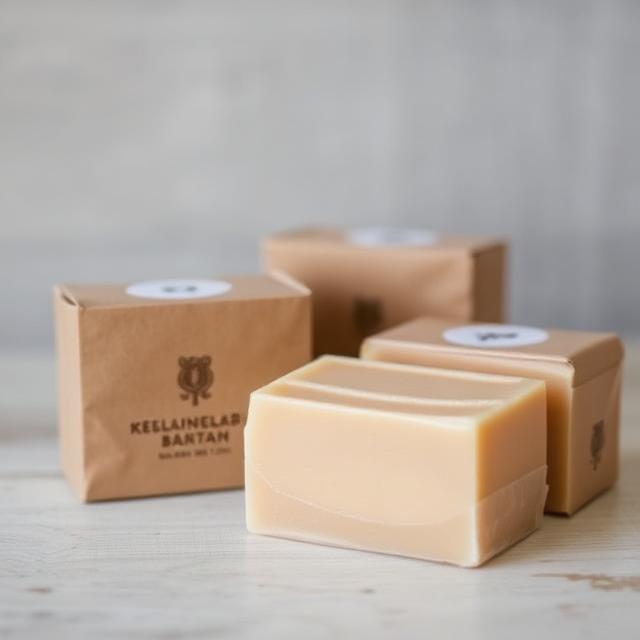
Die cutting is a manufacturing process that uses a steel-rule die — a sharpened metal blade bent to a specific outline — to cut, score, or emboss a precise shape out of a flat sheet of material. In packaging, die cutting is how every custom-shaped box, window cutout, pop-out tab, insert tray, and tuck flap gets its final silhouette.
The die acts like an industrial cookie cutter: the flat printed sheet feeds through a press, the die comes down under high pressure, and in a single stroke the sheet is cut into the box's unfolded dieline shape, with crease lines scored into the correct fold positions.
Die cutting is the step that turns a flat printed sheet into a product-ready carton outline.
Quick answer
- Die cutting = using a sharpened steel-rule die to cut a precise shape from flat material (paperboard, corrugated, foil, film, vinyl, fabric).
- Why it matters: every custom box shape, window cutout, insert tray, pop-out tab, and tuck flap is made with a die cut.
- Materials: paperboard, corrugated, kraft, cardstock, foil, film, PET, vinyl, foam, fabric, thin leather.
- At Packaging Vista: die cutting is included free on every custom box order — no die, plate, or setup fees on any run, 100-box MOQ.
What is die cutting?
Die cutting is a cold-stamping manufacturing process where a shaped metal blade (the die) is pressed into flat material to cut, score, perforate, or emboss a specific outline. The die itself is custom-built for each shape — a sharpened steel rule is bent into the exact outline needed, mounted onto a wooden or metal die board, and clamped into a die-cutting press.
When the press cycles, the die comes down on the flat sheet with high pressure, and the sharp edges of the rule cut through the material in a single stroke.
The term "die cut" is sometimes written as "di cut" or "cut and die" in casual search queries; all three refer to the same process. "Die-cut" (hyphenated) is the adjective form — a "die-cut box" is a box whose shape was produced by die cutting. "Die cutting" (two words) and "die-cutting" (hyphenated) both refer to the process itself.
In manufacturing specs you'll also see rotary die cutting (used for high-volume continuous web materials like roll stock labels and foil wrappers) and flatbed die cutting (used for sheet-fed packaging like folding cartons and rigid chipboard).
How does die cutting work? The 5-step process
From concept to finished die-cut piece, the standard flatbed die-cutting workflow in packaging:
- Dieline is designed — the digital artwork is laid out as a 2D flat outline of the unfolded carton (or sticker, label, insert, etc.) with all cut lines, score lines, and perforation lines marked. See our packaging artwork and dieline guide for how dielines are built.
- Steel-rule die is built — a specialist bends sharp steel rule to the dieline outline, mounts it on a laser-cut wooden die board at the exact kerf positions, adds crease rules (duller rules that score instead of cut) for folds, and installs rubber ejector around each cut to pop the piece free after cutting. Die build takes 1–3 days at commercial scale.
- Material is printed — the flat sheets of paperboard, corrugated, or whatever substrate are printed first (CMYK, Pantone, finishes applied). Printing has to be registered precisely to the dieline so the die cuts in the right place relative to the artwork.
- Die cutting on press — printed sheets feed into the die-cutting press one at a time. The die comes down under high pressure (several tons for corrugated), cuts and scores the sheet in a single stroke, and the ejector pops the piece out of the surrounding waste material. Modern presses run 3,000–10,000 sheets per hour.
- Waste stripping and finishing — the excess cardboard around each die-cut piece is stripped away, the cut pieces are stacked, and any remaining finishing (gluing, folding, assembly) happens downstream. Flat-packed cartons are shipped folded flat to save freight; rigid boxes are hand-assembled.
What is a die? Types of dies used in packaging
A die is the shaped tool used to cut, score, or emboss the material. In packaging, several types of dies are used:
- Steel-rule die (flatbed) — the standard for sheet-fed folding cartons and corrugated. Sharpened steel rule bent to the outline, mounted on a wooden die board. Lowest tooling cost; versatile; standard for most custom box runs.
- Rotary die (cylindrical) — a cylinder with raised cutting edges that rotates against the material web. Used for high-volume continuous production (label stock, foil wrappers, roll-fed packaging). Higher tooling cost; higher throughput.
- Metal etch die — precision-etched metal plates for very fine detail or high-tolerance cuts. Used in cosmetic cartons, pharmaceutical packaging, and high-precision applications.
- Laser cutting (die-less) — uses a focused laser instead of a physical die. Zero tooling cost per shape; slower throughput; perfect for prototyping, short runs, and intricate custom shapes. Modern laser cutters produce die-cut-equivalent results on paperboard up to ~2 mm thick.
- Digital die cutting — craft-scale digital cutters (Cricut, Silhouette, large-format plotters) use a knife blade that follows a vector path. Used for prototyping and craft-scale custom shapes, not commercial production.
At commercial packaging scale, steel-rule flatbed die cutting handles ~95% of custom-box production. Laser cutting handles the rest — prototypes, short-run specialty shapes, and ultra-intricate designs.
Die-cut packaging applications
Virtually every custom printed box, carton, or packaging insert goes through a die-cutting step. The most common applications:
- Custom-shape outer cartons — boxes that aren't standard rectangular, like heart-shaped Valentine's boxes, star-shaped promotional boxes, hexagonal cosmetic cartons, pyramid-shaped candy boxes, pillow boxes, and gable boxes.
- Window cutouts — the opening in a box front that lets shoppers see the product (soap window, candle window, cosmetic window, confectionery window). See our custom window boxes.
- Insert trays and dividers — the paperboard or molded-pulp inserts that hold a product in place inside the outer box. Each cavity is die-cut to the exact product silhouette.
- Pop-out tabs and locking features — tuck flaps, auto-lock bottoms, snap-locks, friction-fit tabs, and tear-strip openings all come from die cuts in specific positions on the dieline.
- Hangers and peg-hooks — the die-cut hole at the top of retail blister packs and peg-wall merchandising cartons.
- Promotional cutouts — custom brand-logo cutouts, text windows, pattern cutouts for layered reveals, perforated tear-away sections for sampling.
- Dust flaps and gluing panels — the small flaps that fold into the box interior to seal gaps and the panels where glue is applied for carton assembly.
- Scoring (fold lines) — crease rules on the die create pre-weakened fold lines so the flat sheet folds cleanly into the finished box shape without cracking or splitting.
- Perforations — sections of the die with intermittent cutting edges create tear-away perforations for easy-open features or detachable coupons.
- Embossing and debossing — raised dies that press a 3D texture or logo into the material without cutting through. See our custom box finishes guide.
Why "custom die-cut" matters: the box fits the product, not vice versa
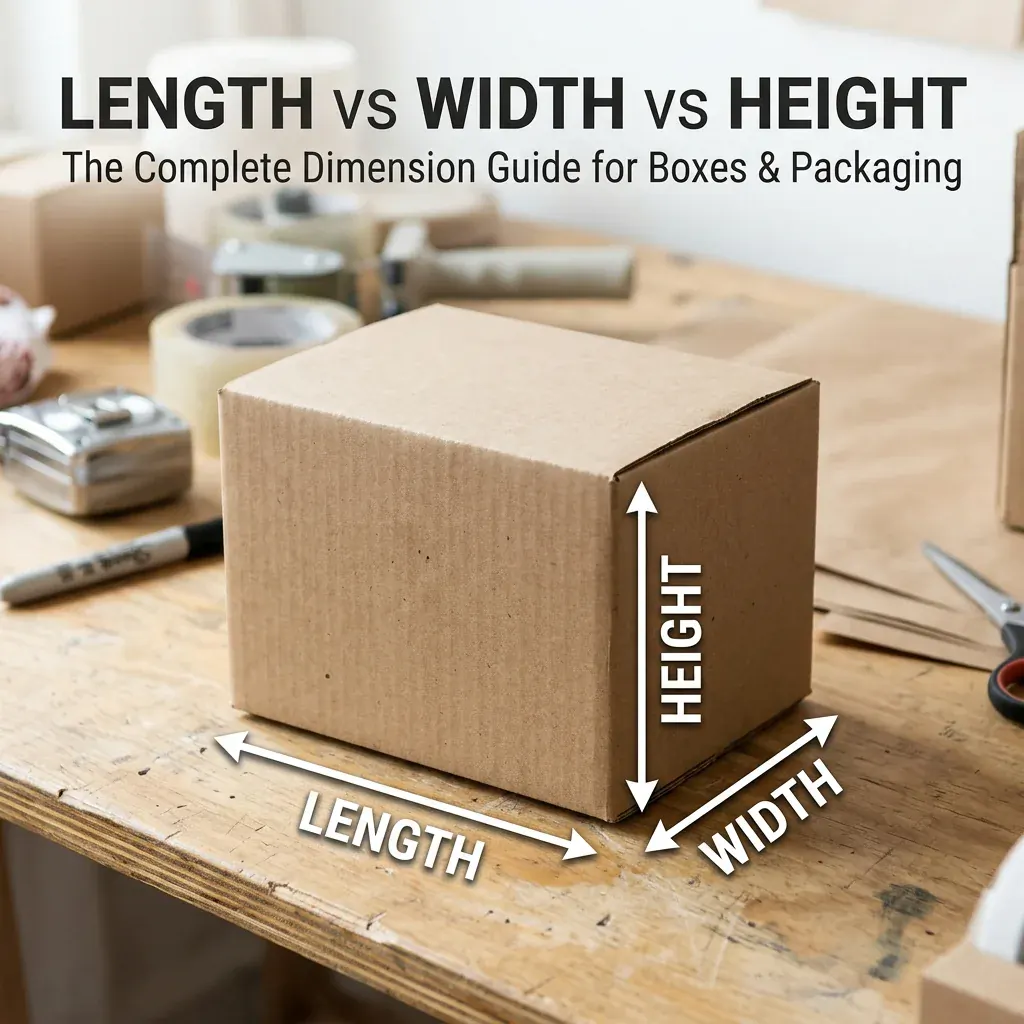
The alternative to custom die cutting is stock boxes — pre-made cartons in a limited set of standard sizes (10 × 7 × 3 inch, 12 × 9 × 6 inch, etc.). Stock boxes are cheap and fast but force your product to fit the box. Custom die-cut boxes do the opposite: the box is cut and scored to the exact dimensions and shape of your product, with the dieline built around the item's L × W × H plus 1/4-inch clearance per side (plus any insert cavity).
Three reasons brands move from stock to custom die-cut:
- Shipping cost (dim weight) — a right-sized custom die-cut box ships at a lower dim weight than an oversized stock box with void fill. Over 10,000 units/year, dim weight savings often exceed the cost premium for custom tooling. See dimensional weight shipping.
- Brand signaling — custom shapes, window cutouts, and die-cut logos signal "designed for this product" and are the retail-shelf standard in cosmetics, confectionery, and premium CPG.
- Product protection — a snug die-cut fit with precision insert cavities protects products from in-transit damage better than a loose fit with crumpled paper fill.
At Packaging Vista, there are no die, plate, or setup fees on any custom-box order, so switching from stock to custom die-cut has no tooling-cost barrier. The 100-box MOQ is the lowest-barrier entry to custom die-cut packaging in the US market. See our custom die-cut boxes product page for the full range.
Die cutting cost: what makes a die expensive (and why we don't charge for it)
At most packaging suppliers, custom die cutting carries a tooling cost that scales with die complexity and material. Typical industry pricing (for reference):
- Simple rectangular folding-carton die: $150–$400 per die (one-time)
- Mid-complexity die with window + tuck flaps: $400–$900 per die
- Complex custom shape with multiple windows + cavity inserts: $900–$2,500 per die
- Large-format corrugated die: $800–$3,000 per die
These are the industry "die charges" that most packaging suppliers bill. Packaging Vista does not charge for dies, plates, or setup — the tooling cost is baked into the per-box price, which means your first 100-box test run costs the same tooling as a 50,000-unit wholesale run.
This is why the 100-box MOQ is practical at PV in a way it isn't at most suppliers — typically a $500–$1,500 die charge makes a 100-box run economically irrational elsewhere.
Frequently asked questions
What is die cutting?
Die cutting is a manufacturing process that uses a sharpened steel-rule die to cut, score, or emboss a precise shape out of a flat sheet of material. In packaging, die cutting is how every custom-shaped box, window cutout, insert tray, and tuck flap is produced — the die acts like an industrial cookie cutter, cutting the printed flat sheet into the box's unfolded dieline shape in a single press stroke.
What does "die-cut" mean?
"Die-cut" (hyphenated, used as an adjective) means a piece that was produced by die cutting — cut to shape using a steel-rule die. A "die-cut box" is a box whose shape was produced by die cutting; a "die-cut sticker" is a sticker whose outline was cut by a die rather than left as a square or circle.
What are cutting dies used for?
Cutting dies are used to produce precise shapes in packaging, labels, stickers, apparel, electronics, and manufacturing. In packaging specifically, dies produce the shape of every custom carton, box window cutout, insert tray, tuck flap, locking feature, hanger hole, and promotional cutout.
Without dies, every custom box shape would have to be hand-cut — die cutting is what makes custom packaging economical at scale.
What is a steel-rule die?
A steel-rule die is the most common type of die used in packaging. It's a wooden die board with sharpened steel rules (narrow metal blades) bent to the shape of the dieline and inserted into laser-cut slots in the board. Rubber ejectors around each cut push the finished piece free after the press stroke.
Steel-rule dies are the industry standard for flatbed die cutting of folding cartons, corrugated boxes, and rigid chipboard.
How is die cutting different from laser cutting?
Die cutting uses a physical steel-rule die that presses into the material; laser cutting uses a focused laser beam that burns through the material along a vector path. Die cutting is faster at scale (thousands of pieces per hour) and better for standard-production runs; laser cutting has zero tooling cost per shape and is better for prototyping, short runs, and ultra-intricate shapes that would be impractical with a steel-rule die.
What materials can be die cut?
Paperboard, corrugated cardboard, kraft, cardstock, SBS, foam core, foil, film (PET, PVC, PLA, polypropylene), vinyl, fabric, thin leather, rubber, cork, and other soft to medium-density flat materials. Die cutting is most common on packaging substrates (paperboard, corrugated) but is also used in apparel (fabric cuts), electronics (gaskets, foam inserts), and craft (vinyl decals, fabric appliqués).
How much does a die cost?
Industry-standard die charges range from $150 for a simple folding-carton die to $2,500+ for complex multi-window custom shapes with inserts. At Packaging Vista, we don't charge separately for dies — the tooling cost is included in the per-box price with no die, plate, or setup fees on any run. This is what makes our 100-box MOQ practical when it isn't at most competitors.
What is the difference between die cutting and scoring?
Die cutting cuts fully through the material; scoring creates a pre-weakened fold line without cutting through. Both are produced on the same die — the cutting rules are sharpened steel; the scoring rules are duller crease rules that press into but don't cut through the material.
A single pass through the die cutter cuts and scores simultaneously, producing a flat sheet ready to fold into a 3D carton.
Can I custom die-cut any shape?
Yes — virtually any closed outline can be die-cut. Common custom shapes include heart, star, hexagon, pillow, pyramid, gable, custom brand logo cutouts, window cutouts in any shape (rectangular, oval, custom), and multi-piece inserts with product-fit cavities. The dieline is designed first (in 2D), the die is built to match, and production runs from there.
What is a dieline?
A dieline is the 2D flat outline of a die-cut shape, with cut lines, score lines (folds), and dust-flap positions all marked. It's the engineering drawing that the die manufacturer uses to build the die, and the layout artist uses to position printed artwork correctly relative to the final folded shape. See our packaging artwork and dieline guide for the full dieline-building workflow.
Need custom die-cut packaging? Browse our custom die-cut boxes, window boxes, and full custom boxes catalog; see finishing options in our custom box finishes guide; or request a free quote with your product dimensions, box style, and target quantity.
Part of our custom box printing guide — the pillar reference for every printing and die-cutting topic on this blog.