Blog · By The Packaging Vista Team · October 14, 2026
Deli Paper, Butcher Paper, and Sandwich Wraps: A US Food-Service Buyer's Guide
Deli paper, deli tissue, butcher paper, and wax paper look alike on the shelf but behave very differently in service. Pick the wrong one and your sandwich arrives soggy, your brisket loses its bark, or your cheese plate ends up smeared across the display.
This guide is written for US food-service operators, QSR brands, and small sandwich shops that need to pick the right wrap and understand what to ask a supplier.
Quick answer
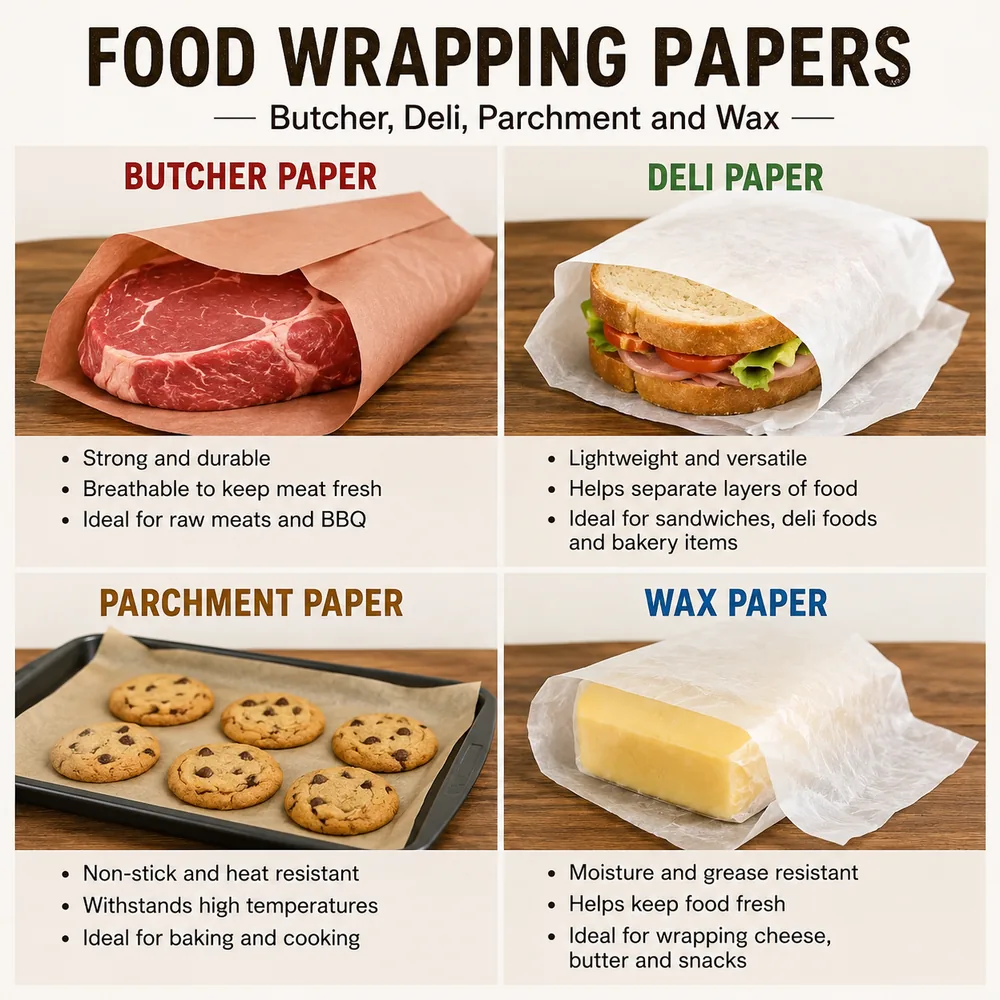
- Deli paper — thin, lightly waxed or dry, for sandwich wrapping and basket liners. The go-to for sub shops and delis.
- Deli tissue — the thin, interleaving tissue used behind the glass to pick up cheese, meat, or pastries without touching them with gloves.
- Butcher paper — thick, uncoated kraft paper for raw meat, barbecue brisket, and food-prep surfaces. Breathable, not grease-resistant.
- Wax paper — coated with wax, grease-resistant, oven-unsafe, used for cold wrapping and separating candy or baked goods.
- Parchment paper — silicone-coated, oven-safe, used for baking rather than wrapping.
What is deli paper?
Deli paper is a lightweight, grease-resistant paper used to wrap sandwiches, line baskets, and separate cold cuts behind the deli counter. Standard sheets run 12 x 12 in, 14 x 14 in, and 15 x 15 in. The paper is usually dry waxed (treated to resist grease) or lightly coated so it can hug a sandwich without soaking through.
Three common deli paper styles:
- Natural kraft deli paper — brown, uncoated feel, popular with artisanal sandwich shops
- White dry-waxed deli paper — the diner classic, holds up to oil and juice
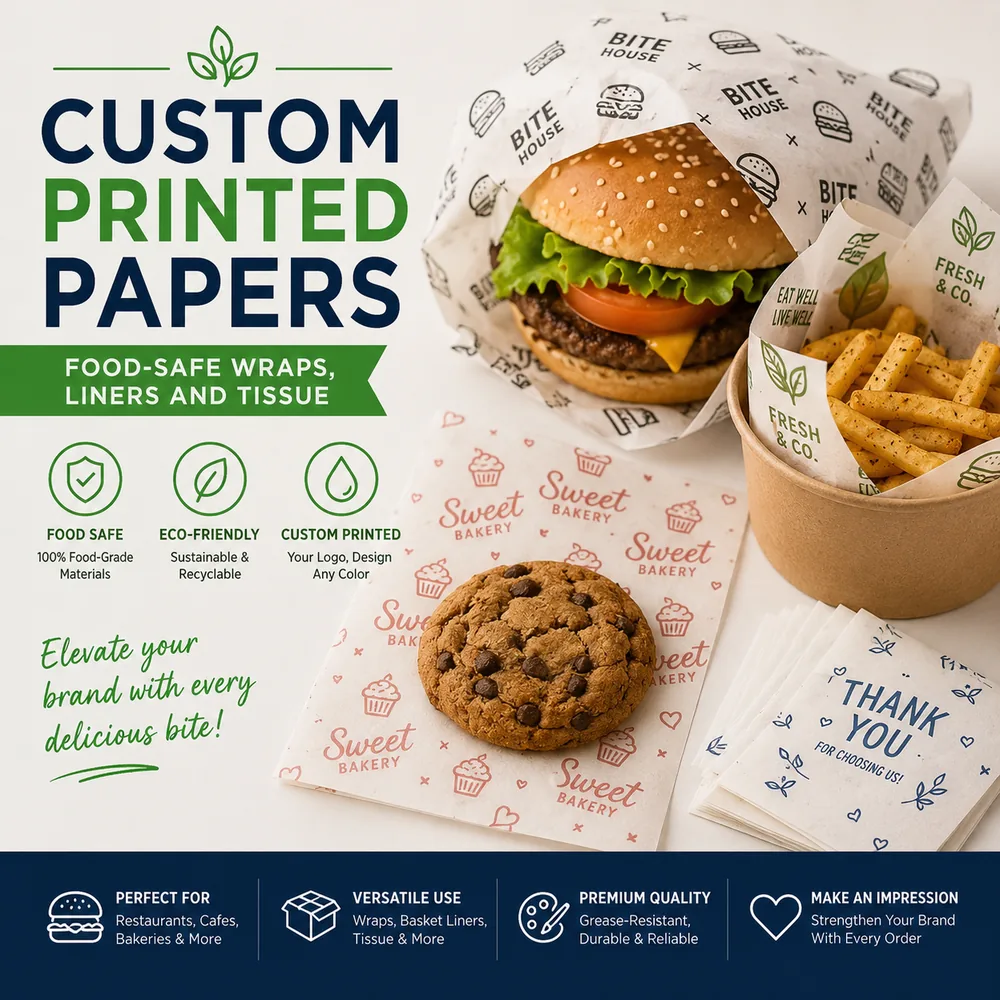
- Printed deli paper — branded with the shop's logo in a one or two-color repeat, the fastest wrapping-to-marketing upgrade a sandwich shop can run
Deli paper is not oven-safe. If the sandwich needs a quick press under a heat lamp or a toaster oven, pull the paper first or switch to a parchment liner. See our parchment paper oven safety guide for the thresholds.
Deli paper vs deli tissue
They sound the same, but they are not. Deli tissue is the ultra-thin, interleaving tissue (usually 10 x 10.75 in) that food-service staff use to pick up slices of cheese, cold cuts, bagels, or pastries without latex gloves. It is called "interleaving" because operators pull one sheet at a time out of a pop-up box.
Deli paper is the wrap. Deli tissue is the pick-up. A busy sandwich shop usually runs both: a pop-up box of tissue by the slicer, and a stack of deli paper at the wrapping station.
What is butcher paper?
Butcher paper is uncoated kraft paper used to wrap raw meat at the butcher counter and as a cover for food-prep surfaces. In barbecue, pink butcher paper (sometimes called peach paper) is used to wrap briskets and pork butts during the last hours of the cook because it breathes enough to keep the bark intact.
Key differences from deli paper:
- No wax or silicone coating. Butcher paper breathes and absorbs juice. Deli paper resists grease by design.
- Heavier basis weight. Butcher paper runs 40-60 lb basis weight. Deli paper runs 15-25 lb.
- Larger sheets or roll stock. Butcher is sold on 18-24 in rolls, deli as pre-cut sheets.
Butcher paper is also a common tabletop cover at casual restaurants (crayons optional). Confusing a butcher paper for a sandwich wrap leaves you with a wet, pulpy sandwich by the time the delivery courier arrives.
Best paper to wrap a sandwich
For a US sandwich shop, the shortlist is dry-waxed deli paper or natural kraft deli paper. Both resist grease, both tear cleanly, and both can be printed with your logo at a reasonable minimum. Within that shortlist:
| Sandwich type | Recommended wrap | Why |
|---|---|---|
| Classic deli sub, grinder, hoagie | White dry-waxed deli paper, 12 x 12 in | Resists oil and tomato juice; wraps a 6-10 in sub cleanly |
| Artisanal shop sandwich | Natural kraft deli paper, 12 x 12 in | Signals craft; prints well with earth-tone brand colors |
| Breakfast sandwich (QSR) | Foil-lined deli paper or foil wrap | Holds heat during a short hold or delivery |
| Burrito or wrap | Foil-lined deli paper, 14 x 14 in | Keeps shape and heat on 10-12 in tortillas |
| Cold sub for delivery | Dry-waxed deli paper + branded sticker | Keeps the sandwich tight so toppings do not shift |
How to wrap a sandwich (QSR fold)
The standard QSR deli fold is a four-step motion: place the sandwich diagonal on the sheet, fold the bottom corner up and over, roll tight toward one side corner, then fold the far side under the bundle so the sandwich sits seam-down. The whole motion takes under 10 seconds for a trained staff member.
The seam-down finish is important for delivery — it stops the wrap from unfolding in a bag and keeps the branded print facing up when the customer opens the box.
Wax paper vs deli paper vs parchment vs greaseproof
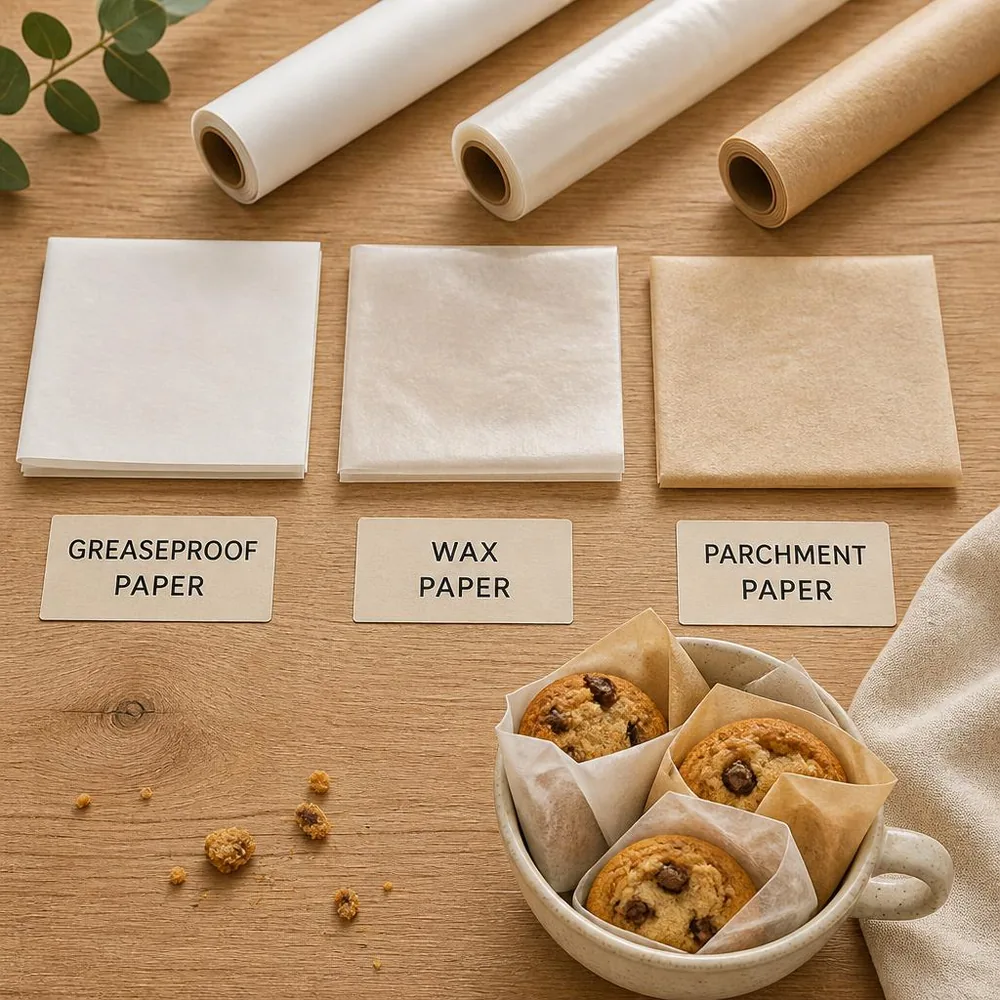
Here is where buyers get tripped up most often. All four papers resist grease to some degree, but their coatings and heat tolerances differ:
| Paper | Coating | Oven safe? | Best use |
|---|---|---|---|
| Deli paper | Dry wax or none | No (max ~200 F brief warm hold) | Sandwich wrap, basket liner |
| Wax paper | Paraffin or soy wax | No — wax melts | Cold wrap, candy, cheese layers |
| Parchment paper | Food-grade silicone | Yes, 420-450 F | Baking, oven liners |
| Greaseproof paper | None (densified) | Partial, lower limit | Food-service wrap, pastry liners |
| Butcher paper | None | Partial, pink BBQ grade up to ~250 F | Raw meat, BBQ wrap, prep surface |
If a customer asks "what paper can go in the oven," the answer is parchment, with butcher paper reserved for low-temp smoker use. The greaseproof vs wax vs parchment comparison drills into the first three in more detail.
FDA, PFAS, and food contact compliance
Food wrap paper that touches food in the US must meet 21 CFR 176.170 (indirect food additives) and the FDA's rules on substances in paper and paperboard. The practical ask from a buyer: get a letter of guarantee from your supplier that the paper is PFAS-free.
Several states (CA, NY, WA, ME, MN, VT, MD, RI, CT) have passed laws banning intentionally added PFAS in food packaging, with staggered 2024-2026 effective dates.
Most reputable US paper suppliers now default to PFAS-free grease resistance using dry-wax or alternative coatings. Ask explicitly if the spec sheet does not mention it — the state laws make this a liability issue, not just a marketing question.
Custom printed deli paper — what to expect
Printed deli paper is the fastest branding upgrade a sandwich shop can run. The paper is already in your hands — adding a logo print just turns the wrap into a billboard that the customer sees every bite.
Typical specs for US custom deli paper runs:
- Sheet sizes: 12 x 12 in, 14 x 14 in, 15 x 15 in
- Stock: dry-waxed white or natural kraft
- Print: 1 or 2 color flexo repeat (full color is possible but costs more)
- Minimum order: 100 units in our shop; higher at most paper mills
- Lead time: 8-10 business days after proof approval
We print custom tissue and wrapping paper at a 100-unit minimum with no die or plate fees. Common food-brand pairings: branded deli paper with matching food packaging boxes, custom Chinese takeout boxes, or bakery boxes.
Butcher paper for BBQ and prep
Pink butcher paper (peach paper) is the barbecue standard for wrapping brisket at the stall around 170 F internal, through to the finish temperature. It breathes enough to keep the bark firm, holds the meat juices, and tears clean off the bone. Standard roll width is 18 or 24 inches.
For prep-surface butcher paper, white or natural kraft at 40-60 lb basis weight is the common pick. Food-safe grades carry the same FDA 21 CFR compliance letter as the deli papers above.
Where to source food wrap paper in the US
Three sourcing lanes most US food-service operators use:
- Food-service distributors (Sysco, US Foods, Restaurant Depot) — good for stock SKUs in white and natural kraft, no custom printing
- Paper converters — direct source for roll stock and generic cut sheets, higher minimums (usually 1 case or more)
- Custom print shops like PackagingVista — for logo-printed deli paper and sandwich wrap at a 100-unit minimum
For a sandwich shop at 500 orders a week, printed deli paper usually pencils out at a few cents per wrap over the stock version. That is cheap advertising — the customer sees the brand every bite, and the delivery courier carries the brand through the apartment lobby.
FAQ
What is deli paper used for?
Wrapping sandwiches, lining baskets and trays, separating cold cuts, and serving pastries. The paper is dry-waxed or lightly coated so it resists grease without melting. Standard sheet sizes are 12 x 12 in, 14 x 14 in, and 15 x 15 in.
Is deli paper the same as wax paper?
No. Deli paper is usually dry-waxed (treated for grease resistance) or uncoated kraft; wax paper is heavily coated with paraffin or soy wax and will melt in the oven. For a sandwich at room temperature either can work, but a warm sandwich, a hot wrap, or a short reheat belongs on deli paper, not wax.
What is the best paper to wrap a sandwich?
White dry-waxed deli paper for a classic sub or deli grinder; natural kraft deli paper for an artisanal or farm-to-table positioning; foil-lined deli paper for a hot breakfast sandwich or burrito. All three resist grease and tear cleanly at the wrap station.
Can I put sandwich paper in the oven?
Not deli paper or wax paper. Parchment paper is the oven-safe option, rated to 420-450 F in US retail grades. If you need to warm a sandwich still in its wrap, pull the deli paper first or switch the wrap to parchment.
What is butcher paper used for?
Wrapping raw meat at the butcher counter, wrapping brisket and pork butt during a barbecue cook (the pink / peach butcher paper grade), and covering food-prep surfaces. It is thicker and breathable, unlike deli paper, which is thin and dry-waxed.
Is deli tissue the same as deli paper?
No. Deli tissue is the thin interleaving tissue (usually 10 x 10.75 in) in a pop-up box, used by food-service staff to pick up cheese, meat, bagels, or pastries without gloves. Deli paper is the wrapping sheet used after assembly.
Where can I source oil-resistant sandwich paper for QSR applications with FDA compliance in the US?
From a US-based packaging supplier that can print to spec and provide a food-contact letter of guarantee (21 CFR 176.170, PFAS-free). We print custom deli paper and sandwich wraps at a 100-unit minimum with no die or plate fees — request a free quote with your sheet size and run count.
Want to brand your wrap? Browse custom tissue and wrapping paper, pair with food packaging boxes, and request a free quote. For bakeries and takeout, see our bakery boxes and Chinese takeout boxes.